
The Big Island has more botanical gardens than any other Hawaiian island. The Hilo and Hāmākua coasts sit in one of the wettest regions in the world, and the result is rainforest-level density of tropical plants growing in wetter conditions than most gardens elsewhere.
Most of the gardens are on the east side, so if you’re based in Kona the drive to the best ones runs 1.5 to 2 hours each way. Admission ranges from free to $35 per adult, and six of the thirteen places below cost nothing to walk into.
Table of contents
Map of Botanical Gardens on the Big Island
There are gardens spread all over the Big Island, and you will very likely pass close by a couple of them during your travels. The map and table below list all thirteen, color-coded by type: botanical gardens, ordinary gardens, and arboretums. Use the filter buttons to show one type at a time, and sort the table by admission if cost matters most to you.
Details and map locations below last verified July 2026.
| Name | Type | Admission | Suggested time* |
|---|---|---|---|
| 1Hawaiʻi Tropical Botanical Garden (Details ↓) | Botanical garden | $35 | 90 min to 2 hrs |
| 2Panaʻewa Rainforest Zoo & Gardens (Details ↓) | Botanical garden | $12 / $4 resident | 1 hr |
| 3UH Hilo Botanical Gardens (Details ↓) | Botanical garden | Free | 30 to 45 min |
| 4Botanical World Adventures (Details ↓) | Botanical garden | Day pass, see booking | 2 to 3 hrs |
| 5Amy B.H. Greenwell Garden (Details ↓) | Botanical garden | Not published | 30 to 60 min |
| 6Sadie Seymour Botanical Gardens (Details ↓) | Botanical garden | Free, donations | 30 min |
| 7Paleaku Gardens Peace Sanctuary (Details ↓) | Botanical garden | $12 | 1 hr |
| 8Liliʻuokalani Gardens (Details ↓) | Garden | Free | 45 min |
| 9Akatsuka Orchid Gardens (Details ↓) | Garden | No fee published | 30 to 45 min |
| 10Ulu Laʻau (Waimea Nature Park) (Details ↓) | Garden | Free | 1 hr |
| 11Kalopa State Recreation Area (Details ↓) | Arboretum | Free | 1 hr |
| 12Manuka State Wayside (Details ↓) | Arboretum | Free | 1 to 2 hrs |
| 13Hilo Nursery Arboretum (Details ↓) | Arboretum | Free | 45 min |
| * Suggested times are our own estimate except for Hawaiʻi Tropical Botanical Garden, which publishes 90 minutes to 2 hours. Admission is per adult and was checked in July 2026. | |||
Suggested times are our own estimate, based on how much ground each place covers, except for Hawaiʻi Tropical Botanical Garden, which publishes its own guidance.
List of Botanical Gardens on the Big Island
The following botanical gardens are on the Big Island, most near Hilo and two near Kona.
- Hawaiʻi Tropical Botanical Garden
- Panaʻewa Rainforest Zoo & Botanical Gardens
- Botanical gardens at the University of Hilo
- World botanical gardens
- Amy B. H. Greenwell Ethnobotanical Garden
- Sadie Seymour botanical gardens
- Paleaku gardens
1: Hawaiʻi Tropical Botanical Garden (Hilo/Hāmākua)
The best botanical garden on the island, and one of the better ones in the United States. Forty acres along the Hāmākua coast with more than 2,000 tropical plant species, including collections you won’t find grouped together anywhere else. The garden runs down a valley with a stream at the bottom, so you move through distinct microclimates as you descend.
Admission: $35 adults, $25 children ages 6 to 12, under 6 free. Kamaʻāina (Hawaiʻi residents) pay $33 and active military $28, both with ID and in person only. Open daily 10am to 6pm with last entry at 5pm, closed Thanksgiving, Christmas and New Year’s Day. Off Highway 19 between mile markers 7 and 8, north of Hilo. Allow 90 minutes to two hours; that is about right unless you stop for every label.
Website: Hawaiʻi Tropical Botanical Garden.
Good to know: This is hands-down our favorite botanical garden on the Big Island and is also one of our 5 favorite short hikes on the Big Island. If you don’t like walking that much you can also see it as part of one of our favorite scenic drives.
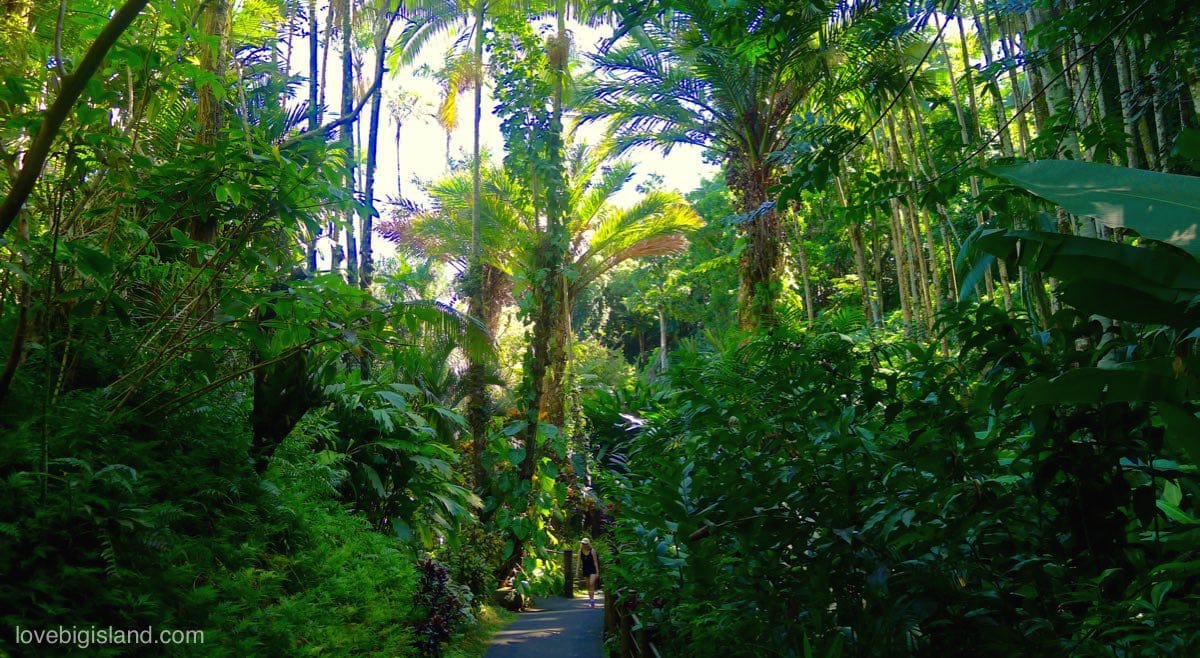
Path in the Hawaiʻi Tropical Botanical Garden near Hilo, Hawaii
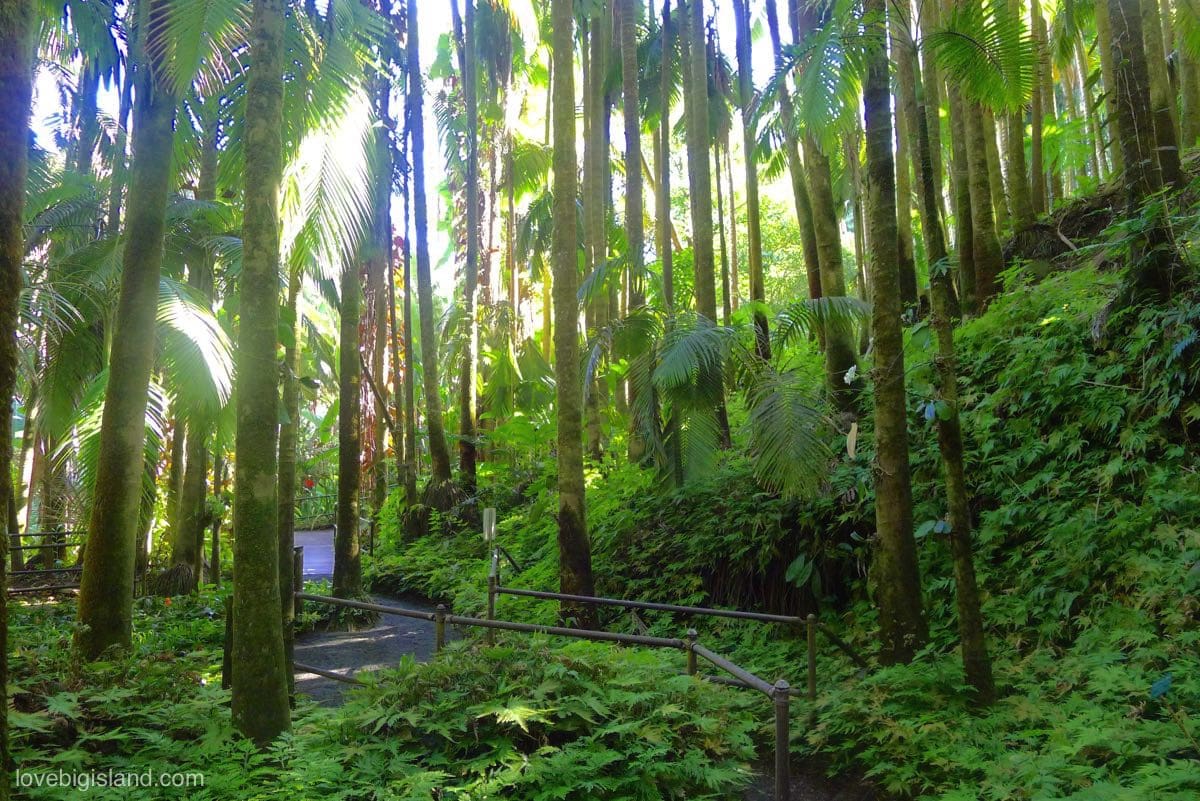
The Hawaiʻi Tropical Botanical Garden is our favorite place on the Big Island to admire rainforest plants and flowers
2: Panaʻewa Rainforest Zoo & Botanical Gardens (Hilo)
The only tropical rainforest zoo in the United States. The botanical side of this Hilo zoo includes more than 100 palm varieties, orchids, bromeliads, and sections of native forest. The animals keep children interested between the plants.
While walking through the park (reserve about an hour) you can see over 100 types of palm and many varieties of vireya (tropical rhododendron), bamboo, orchids, and bromeliads. There also is a small native forest of trees and plants and an agro-forest of edible varieties.
Admission and directions:
The Panaʻewa zoo is just south of Hilo at 800 Stainback Highway, Hilo, HI 96720. Open daily 10am to 4pm with last entry at 3:30pm, and closed on Christmas Day, New Year’s Day, and the first Thursday of every month for maintenance.
Good to know: the zoo used to be free and is not any more. Since August 2025 there is an admission charge, around $12 for non-resident adults and $4 for Big Island residents, with keiki (children) and kupuna (elders) free for residents. The zoo publishes its current rates as a printed sheet rather than on the website, so confirm on 808-959-7224 if the exact figure matters to your budget. Any source still telling you the zoo is free is out of date.
Read more about the Panaʻewa zoo on our website or visit the official Panaʻewa zoo website here.
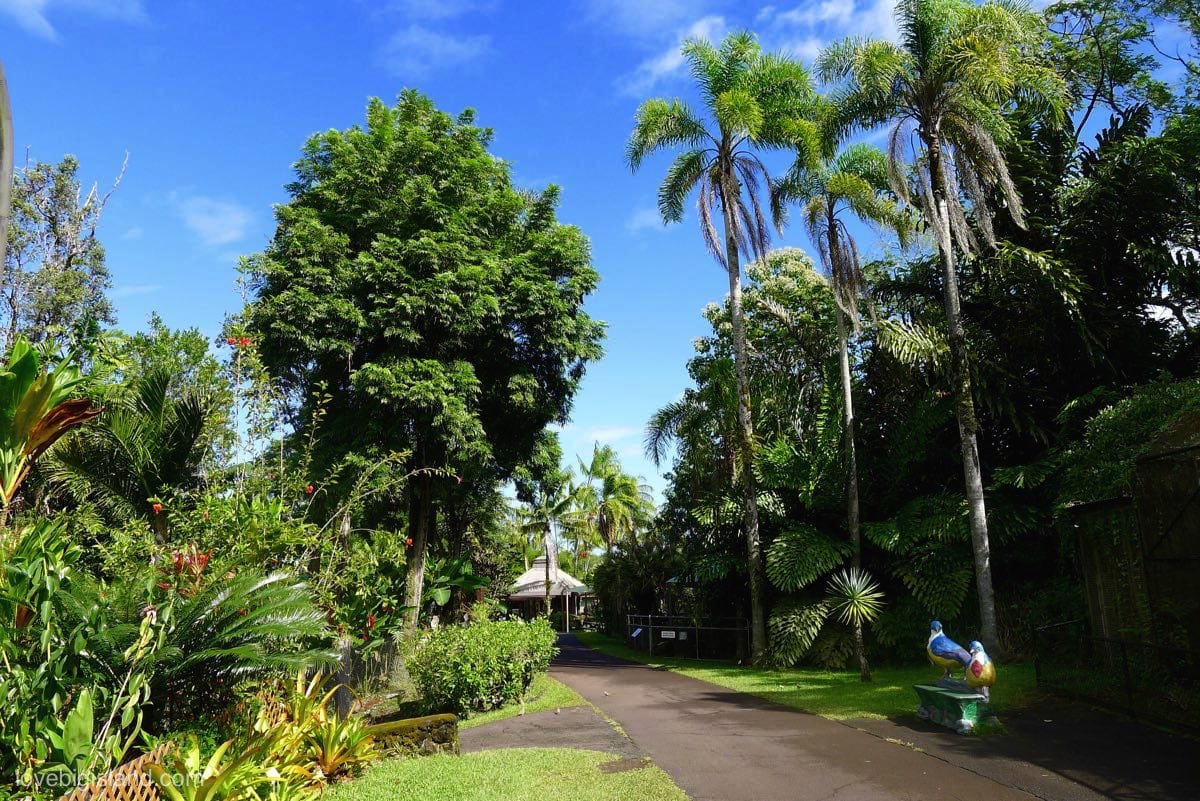
The Panaʻewa rainforest zoo is a zoological and botanical park specializing in rainforest and native species.
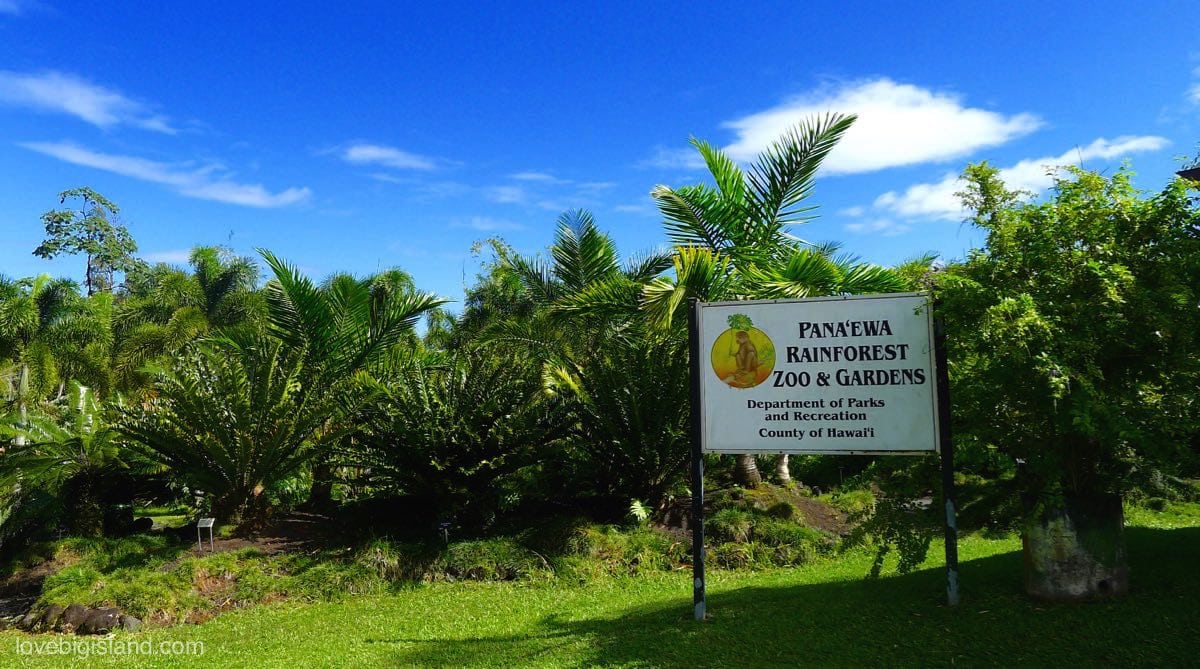
The Panaʻewa zoo sits in the tropical forest just south of Hilo (Big Island, Hawaiʻi)
3: Botanical Gardens at the University of Hawaii (Hilo)
The UH Hilo Botanical Gardens consist of three separate areas with cycads, bromeliads, and palms. Currently, they include one of the largest collections of cycads in Hawaiʻi with over 100 species. One section of the garden has over 40 species of Zamia from Mexico and Central and South America and other sections contain rare and endangered Encephalartos and Stangeria from Africa, Macrozamia, Lepidozamia, and Bowenia from Australia, and Cycas from China and Vietnam.
The botanical gardens at UH Hilo were started around 1990 by Don Hemmes, one of the professors of the UH when a student in a freshman biology course asked him “What’s a pine tree?“.
Admission and directions:
The gardens are open to visitors every day, and admission is free. The largest garden is off Lanikaula Street, between the Science and Technology Building and the Hale Kehau Dining Room at the Nowelo Street entrance.
Parking is free from 6am to midnight; UH Hilo currently does not require a paid permit or day pass during those standard hours. That is described as a temporary program rather than a permanent change, so check the campus parking page before you go. Overnight parking still needs an approved pass.
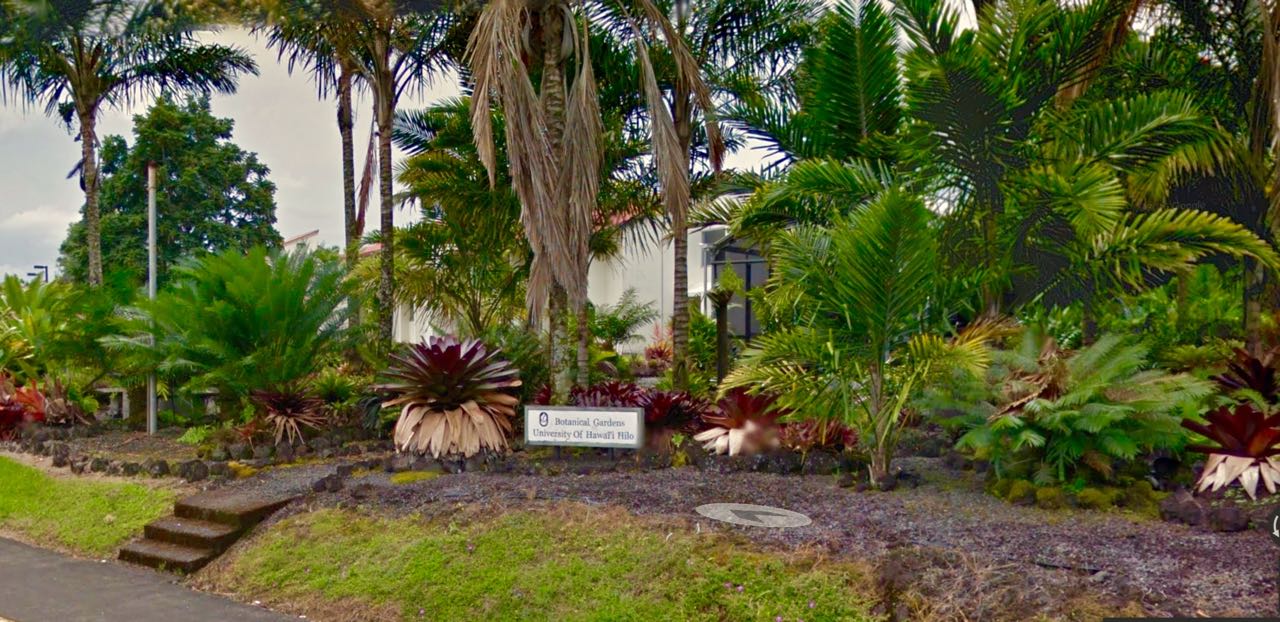
The Botanical Gardens at the University of Hilo (West Lanikaula St. with Nowelo St.). Entrance is free. Image adapted from Google Street View
4: World Botanical Gardens (Hilo/Hāmākua)
The largest botanical garden on the island at 300 acres, though much of that is undeveloped land. The property has Kamaʻeʻe Falls, visible from an overlook, and a 10-acre maze that keeps kids busy. The gardens themselves are decent but less curated than Hawaiʻi Tropical Botanical Garden. Worth a stop if you’re already on the Hāmākua coast.
Admission and directions for the World Botanical Gardens
The gardens sit on Highway 19, 16 miles (26 km) north of Hilo, between the slopes of Mauna Kea and the Pacific Ocean. They trade as Botanical World Adventures and also run a zip line and off-road segway operation on the same property.
They sell a self-guided garden day pass, with separate adult, teen, youth and child rates plus a cheaper waterfall-overlook-only ticket and a one-week pass. Current prices are on the booking page. You can also see the gardens as part of a zip line guided tour. For current rates and online booking see here.
5: Amy B. H. Greenwell Ethnobotanical Garden (Captain Cook/south Kona)
This garden grows the 200-plus plant species of traditional Kona farms and native forests from before European contact, so the visit is part history and part botany. Fifteen acres, including a five-acre archaeological site preserving part of the Kona Field System. Panels line a short looping trail at the center, and plants throughout have labels explaining their traditional uses. Most self-guided visitors spend half an hour to an hour.
Good to know: this garden closed in 2016, when Bishop Museum ended its stewardship, and a lot of older travel writing still says it is shut. It is not. A community non-profit, the Friends of Amy B. H. Greenwell Ethnobotanical Garden, took it over in 2019 and it has been open since.
Current hours are Tuesday to Saturday, 9am to 4pm, with Sunday visits depending on tour availability. The nursery is open Friday and Saturday mornings, and the Pure Kona Green Market runs on the property every Sunday morning. Admission is by donation, so bring something for the box.
The garden sits on the Hawaii Belt Road in Captain Cook, South Kona. Check current hours on their website before visiting.
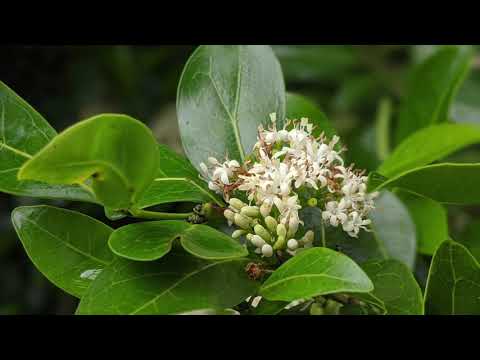
If you are passing by, you can also stop at the Kona coffee living history farm across the street for a Kona coffee farm tour.
6: Sadie Seymour Botanical Gardens (Kona)
Small at 1.5 acres, but free and an easy stop in Kona. The garden is laid out in ecosystem terraces, so you move through distinct planting zones in a short walk. Good option for visitors based on the west side who don’t want to drive to Hilo for a garden visit.
The property also has the Kona Educational Center and a thrift store. The gardens can be hard to find because of the lack of signage if you don’t use GPS. Keep your eyes open for the thrift store flag at the top of the driveway and park on the upper level for the garden.
If you pass by and like botanical gardens make sure to stop here, but don’t plan your trip around them. The gardens on the Hilo side, especially the Hawaiʻi Tropical Botanical Garden, are far more impressive.
Admission and directions:
- The gardens are open Monday to Friday, 9am to 4pm. The garden runs on donations, so bring a few dollars.
- Address: 76-6280 Kuakini Hwy, Kailua-Kona. Phone number: 808-329-7286.
- The garden is run by the Kona Educational Center. The Kona Outdoor Circle, which used to manage it, is reorganizing and its page no longer carries garden information.
7: Paleaku Gardens Peace Sanctuary (Captain Cook, south Kona)
Seven acres in South Kona with endemic Hawaiian plants alongside a collection of multi-denominational spiritual sculptures. The mix of endemic plants and multi-denominational sculptures is unusual for a Big Island garden. There is also a walk-through butterfly garden with free-flying tropical and native Hawaiian species.
You can read more about the Paleaku gardens in this Ke Ola Magazine article, or get a preview of the gardens with this virtual tour (using Google Maps).
Admission, opening hours, and directions:
The Paleaku gardens are at 83-5401 Painted Church Road in Captain Cook. This is right in the middle of two of our favorite snorkeling spots and close to the small painted church.
An adult day pass is $12. Kamaʻāina, military and seniors over 65 pay $10, children 5 to 11 pay $4, and under 5 are free. The gardens are open Tuesday to Saturday, 9:00am to 4:00pm, and closed on Easter, Thanksgiving, Christmas and New Year’s Day. Self-guided tours run during opening hours and guided tours can be booked by phone or email.
Website of the Paleaku gardens.
Gardens on the Big Island
These three places are worth a visit, though plant education and conservation aren’t their main purpose.
1: Liliʻuokalani Gardens (Hilo)
Technically a Japanese garden park rather than a botanical garden, but worth including for the setting alone. Thirty acres of koi ponds, stone bridges, pagodas, and a tea house along the Hilo bayfront. Free to enter and open daily. One of the largest Japanese gardens outside Japan and a good stop to pair with a visit to downtown Hilo or Coconut Island nearby.
Both the gardens and the island are good places to take a break when visiting Hilo, for example for a picnic lunch.
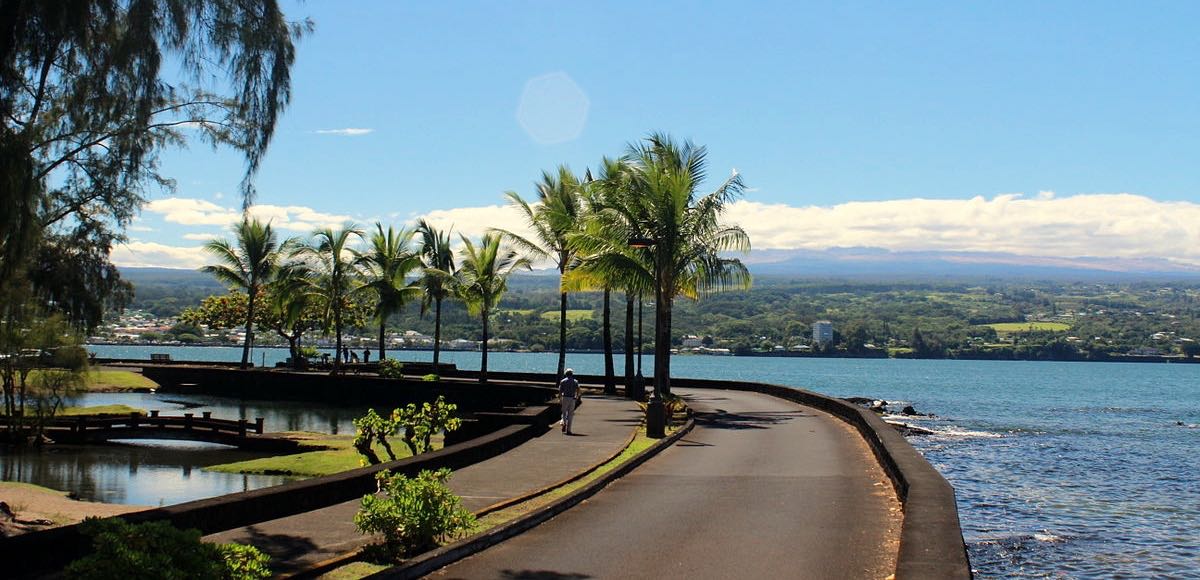
Hilo Bay from Liliʻuokalani Gardens. Image adapted from work by AlaskaDave – Own work, CC BY-SA 3.0, Link
2: Akatsuka orchid gardens (Volcano)
A working commercial orchid nursery in the Volcano area, and the growing operation runs at full commercial scale, of interest if you like the plants. It has shifted over the years from a garden attraction toward a retail and mail-order nursery, and the visiting hours have narrowed with it.
Good to know: walk-in visitor hours are now Mondays, Tuesdays and Wednesdays only, 9:00am to 1:00pm, at 11-3051 Volcano Road. Ask the admission price when you call. Worth pairing with a Hawaiʻi Volcanoes National Park day, which is a few minutes up the road, but check the day of the week first.
Read more about the Akatsuka orchid gardens on our website.
3: The Waimea Nature Park, Ulu Laʻau (Waimea)
Ten acres at 2,600 feet elevation in Waimea, focused on native Hawaiian plant education. Free admission, open 7:30am to 5:30pm, with self-guided tour booklets at the entrance. The cooler upland climate grows different plants from the Hilo gardens, focused on native Hawaiian species. Compact and easy to walk in an hour.
Good to know: the gate is locked at 5:30pm, so park outside if you think you might run late. The Waimea Outdoor Circle warns that branches come down in strong wind, common at this 2,600-foot elevation.
Read more about the park on the Waimea Nature Park website or in this article in Ke Ola magazine.
Arboretums on the Big Island
The three arboretums on the island are less visited and more utilitarian than the botanical gardens, but they’re all free, and they are the better choice if you want to get into native forest.
1: Kalopa state recreation area and arboretum
The arboretum is inside the Kalopa State Recreation Area, approximately 40 miles northwest of Hilo. The park sits at 2,000 feet, where the weather is damp and cool, and a number of rare plants grow in the arboretum area, including endangered loulu palms and several rare native hibiscus.
There is also an easy 0.7-mile loop trail through a forest of native ʻōhiʻa lehua trees in the park.
Day use is free and the gate is open 7:00am to 8:00pm. As part of the arboretum you can find picnic tables, restrooms, and campsites (permit required). Only camping costs, and non-residents pay more than residents.
Kalopa state recreation area website.
You can also explore the arboretum as part of a digital walking tour.
2: Manuka State Wayside Park and arboretum
Surrounded by the 35,000-acre Manuka Forest Reserve, Manuka State Wayside Park is 13.4 acres planted with a collection of native and introduced trees. The park also features the Manuka Nature Trail, a two-mile nature hike through the adjacent Manuka Natural Area Reserve.
Entry is free and the park is open during daylight hours. The state describes this as a tree collection rather than a formal arboretum, and there is no camping at the wayside itself.
3: Hilo Nursery arboretum
Also known as the Hilo Division of Forestry & Wildlife Arboretum, the Hilo Nursery Arboretum sits in central Hilo, where more than 50 trees are scattered across 19.4 acres. It became a public park in 1964 and is still run by the state.
There are no organized tours, but you can explore on your own. Check in at the office off East Kawili Street first, between 7:30am and 3:30pm, and pick up the sheet that matches species to the numbers on the trees. Admission is free. This is a working nursery rather than a visitor attraction, so call 808-974-4221 ahead if you are making a special trip.
Read more about visiting the Hilo Nursery Arboretum.
Botanical gardens, gardens, and arboretums. What is the difference?
Botanical gardens are curated plant collections maintained for education, research, and conservation. Arboretums focus specifically on trees and woody plants. The label describes what grows there; it says nothing about how good the visit is.