
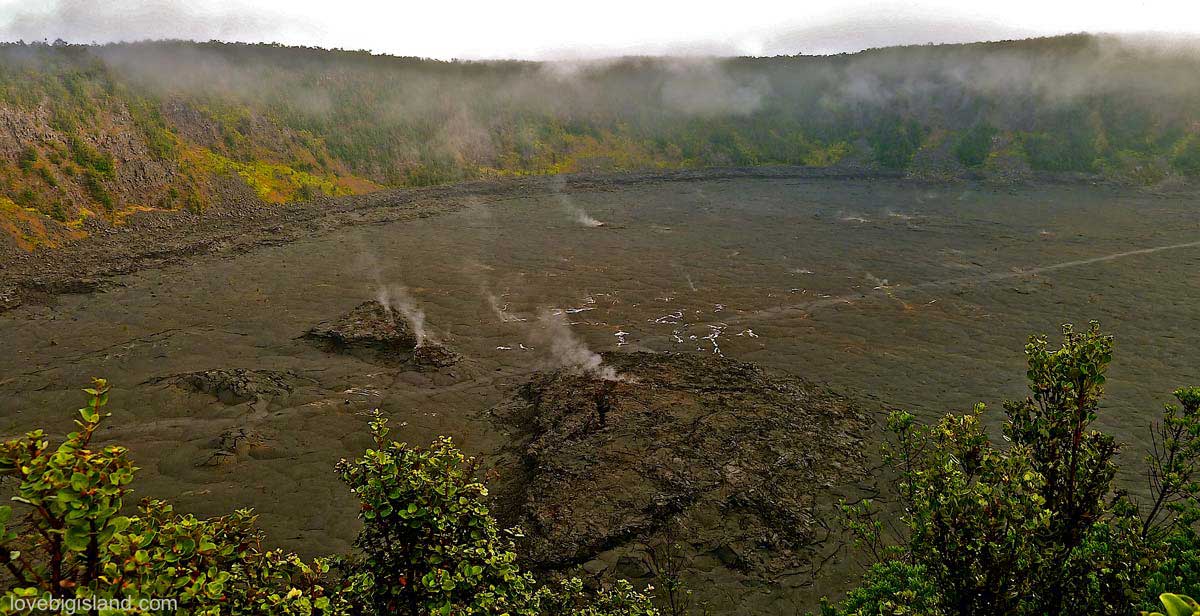
In one day you can see Kīlauea and one more stop. Hawaiʻi Volcanoes National Park is open 24 hours, so you can start early from Kona or drive up for the evening. The summit has erupted in episodes inside Halemaʻumaʻu since December 2024, most of them fountaining under 12 hours with pauses that have run past three weeks, so check the USGS daily update before you commit to the drive.
Doing it without a rental car means booking a seat on a circle-island tour and accepting someone else’s route. If you have the choice, stay a night instead: on an island this size, one day is two stops and a lot of driving.
Table of contents
- Seeing the island with a tour: One day, circle-island tours
- Do it yourself: See the Big Island highlights on your own
Circle-island tours: let someone else drive
On a circle-island tour, someone else picks the route and drives, which is worth more on a one-day trip than on a week-long one. It costs money, and you can’t stop where you want.
Circle island helicopter tours
A helicopter reaches the parts of the island no road does: the Hāmākua sea cliffs and the waterfalls in the valleys behind them. A flight is expensive, but on a single day it is the only way to see those cliffs and valleys.
Circle island tours with a car
These run from the Kona side.
Wasabi Tours runs an 11-hour circle-island day at $249 per adult, so four adult seats come to $996. That covers lunch and all national park entrance fees. Compare that with the $30 you pay at the gate with a rental car. Pickup and drop-off are along the Kona coast, the group caps at 13 so it stays a van rather than a coach, and the tour stops at a lava tube, a Kona coffee farm, Hawaiʻi Volcanoes National Park and Rainbow Falls.
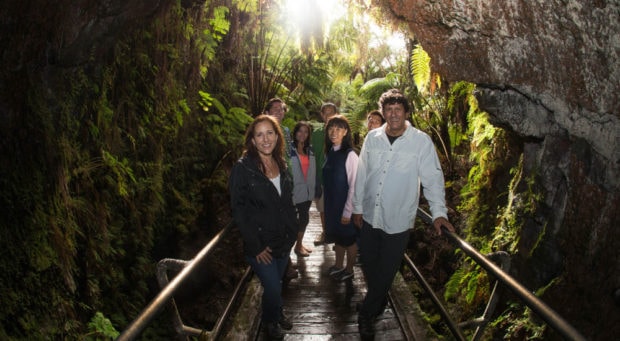
Big Island Grand Circle Island Tour
Guides check eruption status the morning of your trip and reorder the route to improve your chances of seeing active lava. One small-group loop covers Kona coffee, Punaluʻu turtles, two waterfalls, and Volcanoes National Park.
from:
$249
What is a suggested tour?Our suggested tours are hand-picked tours that receive consistent good reviews, give back to the community, and work hard to minimize their impact on the environment. Read more about these tours on our website.Doing it yourself: the volcano plus one more stop
Give the park the bulk of the day and add one more stop after it, or two if you don’t mind the driving.
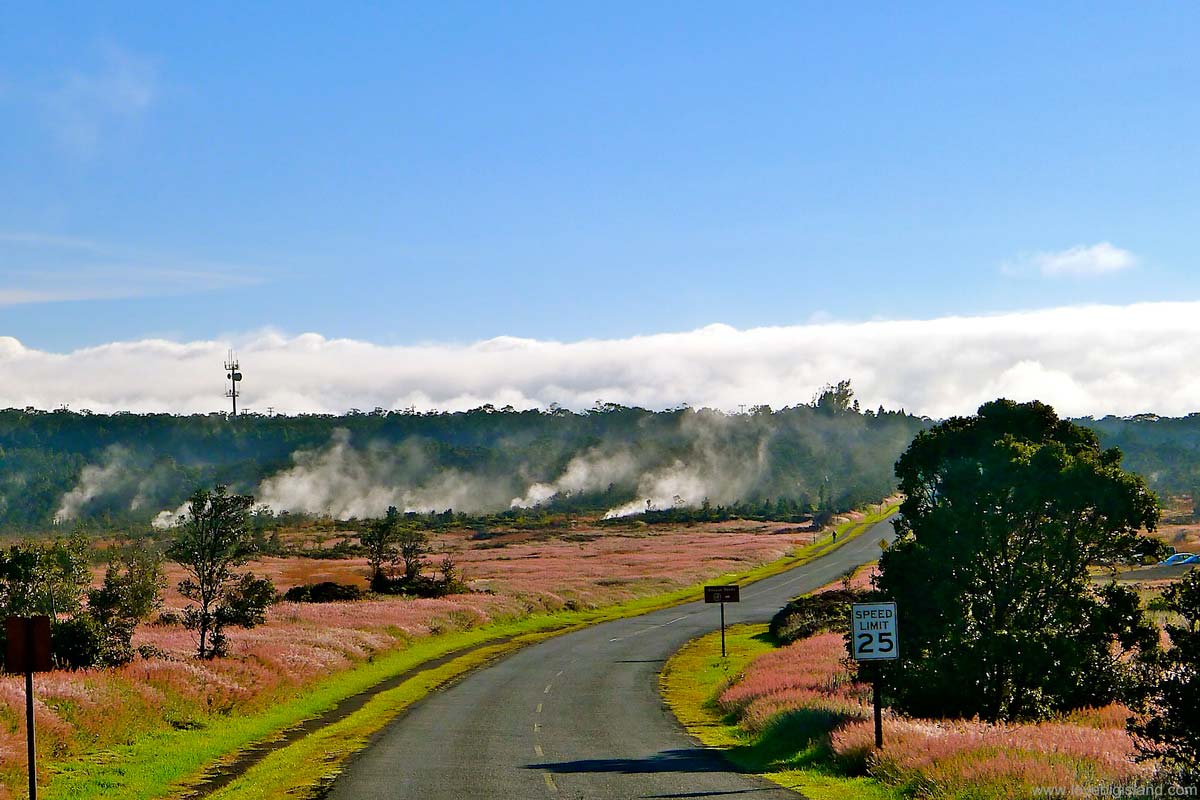
Steam vents in Hawaiʻi Volcanoes National Park, a few minutes from the visitor center.
Hawaiʻi Volcanoes National Park
Hawaiʻi Volcanoes National Park sits on the most active volcano in the state. In a day there you can see a lava tube and a crater floor you walk across, plus rainforest trails a few steps off the road. Entry is $30 per private vehicle and good for seven days, $15 if you walk or cycle in, and the park takes card only, no cash.
Whether you see lava depends on the day. Read the USGS daily update the morning you go; the observatory also keeps a recorded summary line on (808) 967-8862.
Read our guide on visiting the lava.
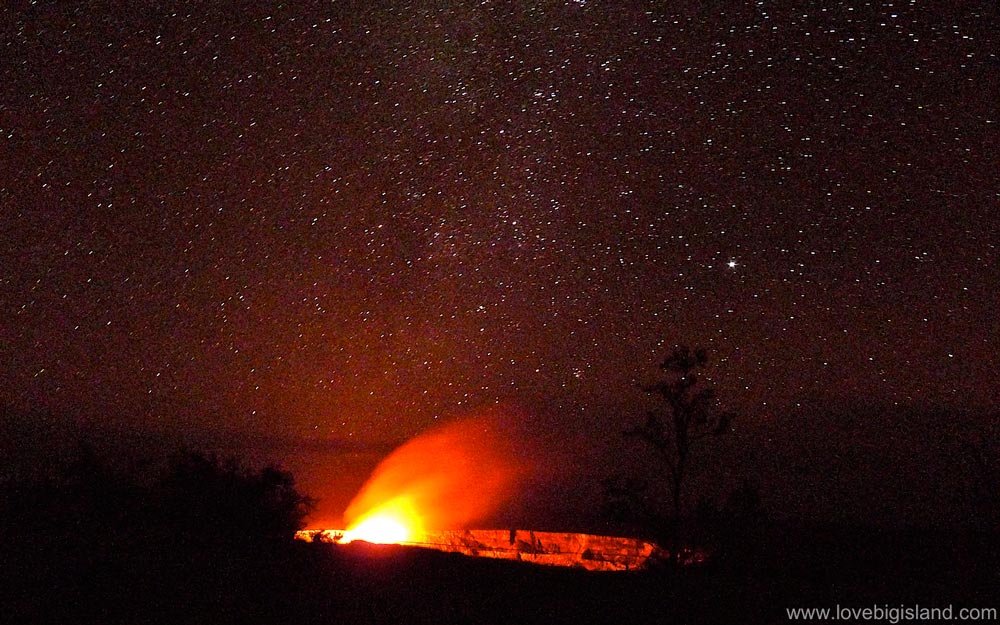
The glow from the Halemaʻumaʻu crater at night in the Volcanoes National Park, seen from the (now closed) Jaggar Museum overlook
One extra adventure [a]: seeing Hawaiʻi from the sky
If you can afford it, a flight is the fastest way to see the most. It leaves from Kona or Hilo and is short enough to leave the rest of the day intact.
Read more about helicopter tours on the Big Island.
One extra adventure [b]: snorkeling and the beach
If you’d rather spend the afternoon in the water, rent snorkel gear before you leave town and bring sunscreen.
On the Kona side, go to Kahaluʻu Beach Park, nicknamed turtle beach for the honu that graze the reef there. The water is shallow and protected. It gets busy.
On the Hilo side there are seven free beach parks just east of town, all within a few miles of each other. Onekahakaha has a protected lagoon with lifeguards daily. Carlsmith stays calm even when the ocean outside the reef is moving, the easier one with small children. Richardson, at the far end, has dark olivine sand that looks green in full sun.
If you’re willing to drive, Punaluʻu Black Sand Beach sits 31 miles past Volcano Village on Highway 11, on the far side of the national park. Stop there on the way out.
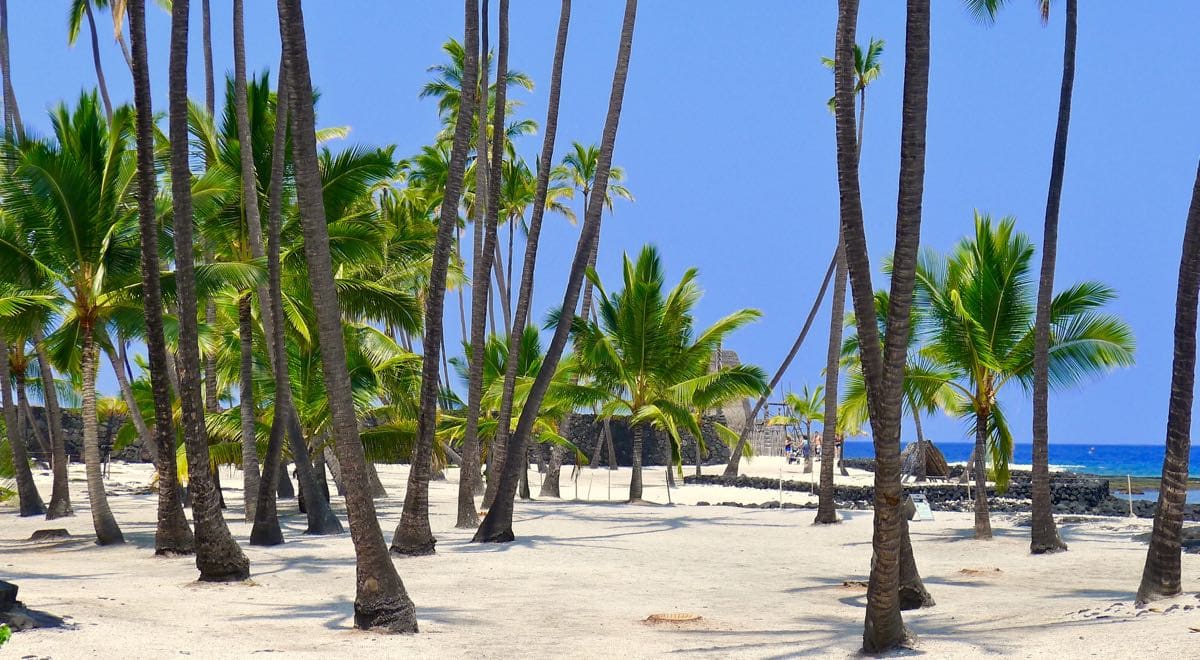
Puʻuhonua o Hōnaunau National Park on the Big Island of Hawaiʻi is where you can see Hawaiian historical sites. Next door, 300 feet from the park entrance, is one of the best snorkeling spots on the island.
Read more about going to the beach in Hawaiʻi.
One extra adventure [c]: a hike
If you want a hike, take Kīlauea Iki. It runs 3.3 miles round trip over two to three hours, and it starts inside the park you’re already in. The floor it crosses held a lava lake in 1959. It drops 400 feet to that floor and climbs the same back out, which is the only hard part of it.
Park at the Kīlauea Iki Overlook if you can. NPS calls that lot extremely limited and it fills early, so aim to be there by 8am; otherwise you are walking in from the visitor center.
Waipiʻo Valley is not an option. Hawaiʻi County’s standing emergency rule has prohibited all pedestrians on Waipiʻo Valley Road since February 2022, with no exception for hikers. Vehicle access is limited to county residents, permitted tour operators, and Native Hawaiians exercising traditional and customary rights, so a rented 4WD doesn’t qualify.
The rim lookout at the end of Highway 240 is open and free, and you can see it in twenty minutes. The only way onto the valley floor now is the Waipio Valley Shuttle, $67 for adults and $36.50 for children, 1.5 to 2 hours.
Distances and current access for both are in our guide to the island’s easy hikes.
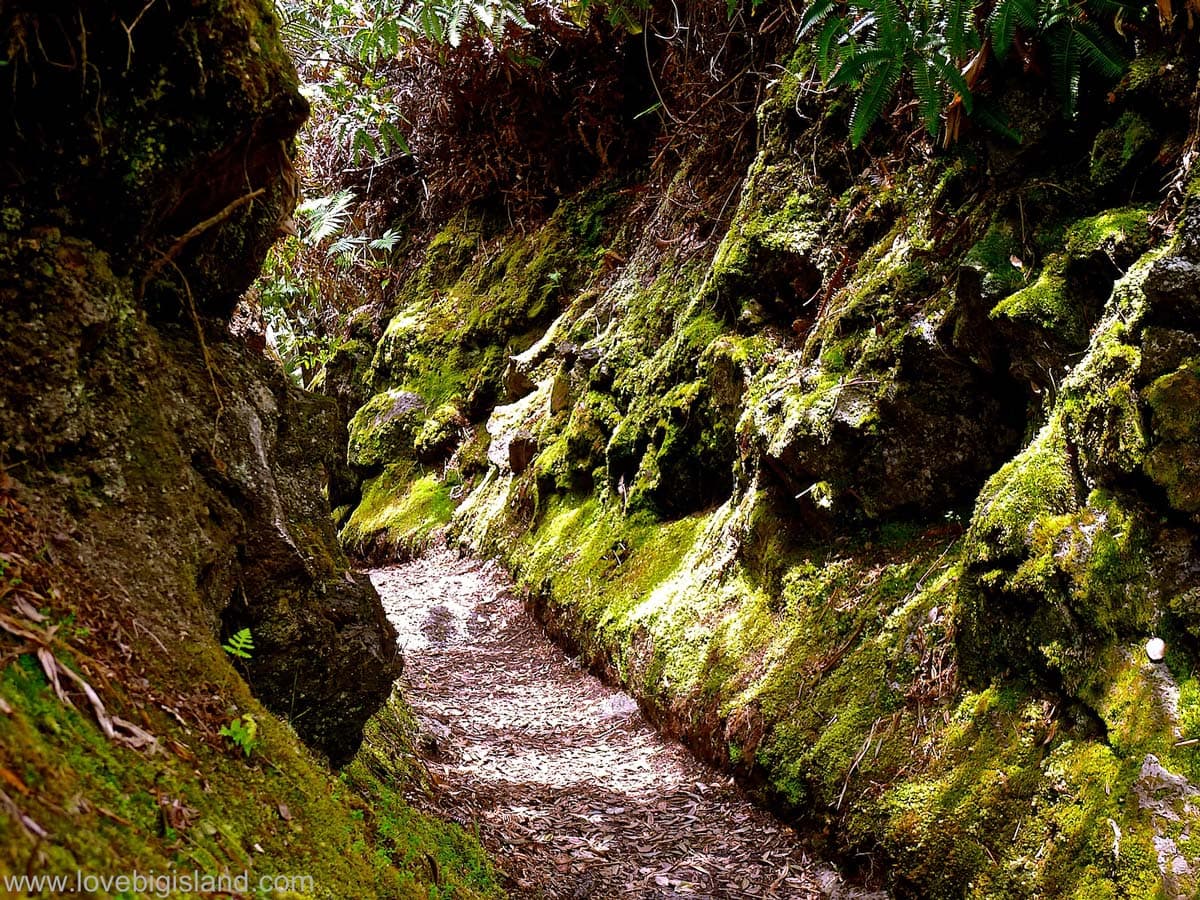
Part of the Halemaʻumaʻu trail in Hawaiʻi Volcanoes National Park, which takes you from the visitor center down to the crater floor
One extra adventure [d]: or pick your own
If you already know what you want out of the day, our guide to things to do on the Big Island lists more options for the day.