
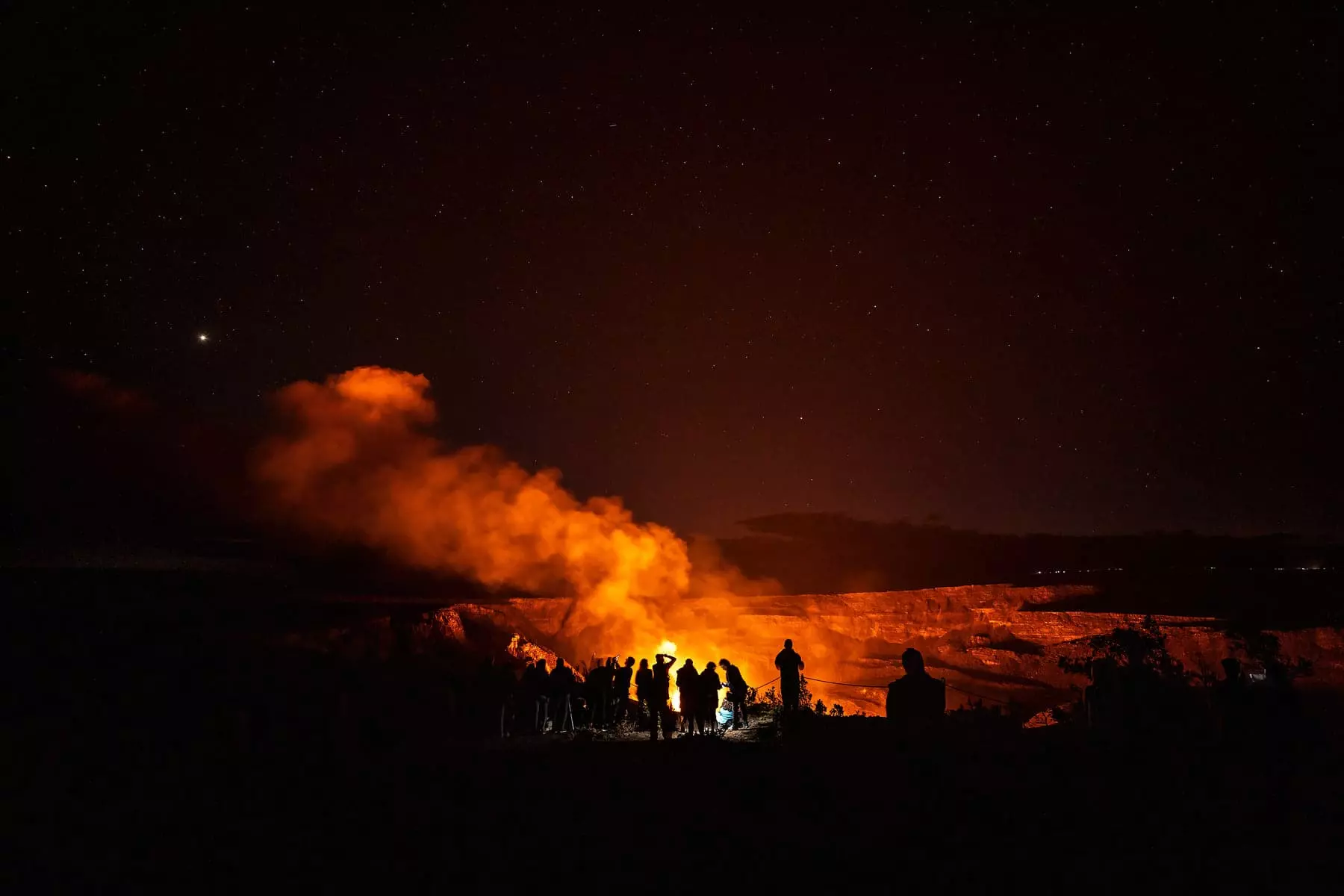
Lava update: There is currently no active lava on the ground. The north and west vents continue to glow and emit flames. Minor summit inflation occurred overnight. There is no anomalous activity outside of the summit. Read more.
Since December 2024, Kīlauea has been in an episodic fountaining eruption that has set the all-time record for most fountaining episodes in a single eruption of this type. Each episode lasts hours to days: the summit fountains, pauses while it re-inflates, then begins again. The status banner at the top of this page shows whether the eruption is currently active or between episodes.
Whether you have a few hours for a crater overlook or want a full guided hike to the flow, we cover timing, parking, and the gear list that matters at 4,000 feet at night.
Table of contents
- Is lava visible right now?
- 4 ways to see lava (and what to do when there is none)
- Planning your visit
- Safety
- Lava Q&A
Is lava visible right now?
Kīlauea is in an active episodic eruption phase, meaning the volcano erupts and pauses every few days to a few weeks. Check the live webcams and the USGS update before you leave for the park.
The ongoing Kīlauea episodic eruption (December 2024 to present)
Kīlauea has been erupting in episodes since December 23, 2024. The eruption is not continuous: each episode lasts hours to days, then pauses while the summit re-inflates before the next episode begins. You can see an up-to-date timeline of all episodes on the USGS eruption information page.
-> Current Kīlauea eruption status: Kīlauea is currently experiencing highly episodic, on-and-off eruptions with intermittent high-fountaining episodes that last 8 to 10 hours.
For a full timeline of all episodes and past eruptions, see our Kīlauea eruption history page.
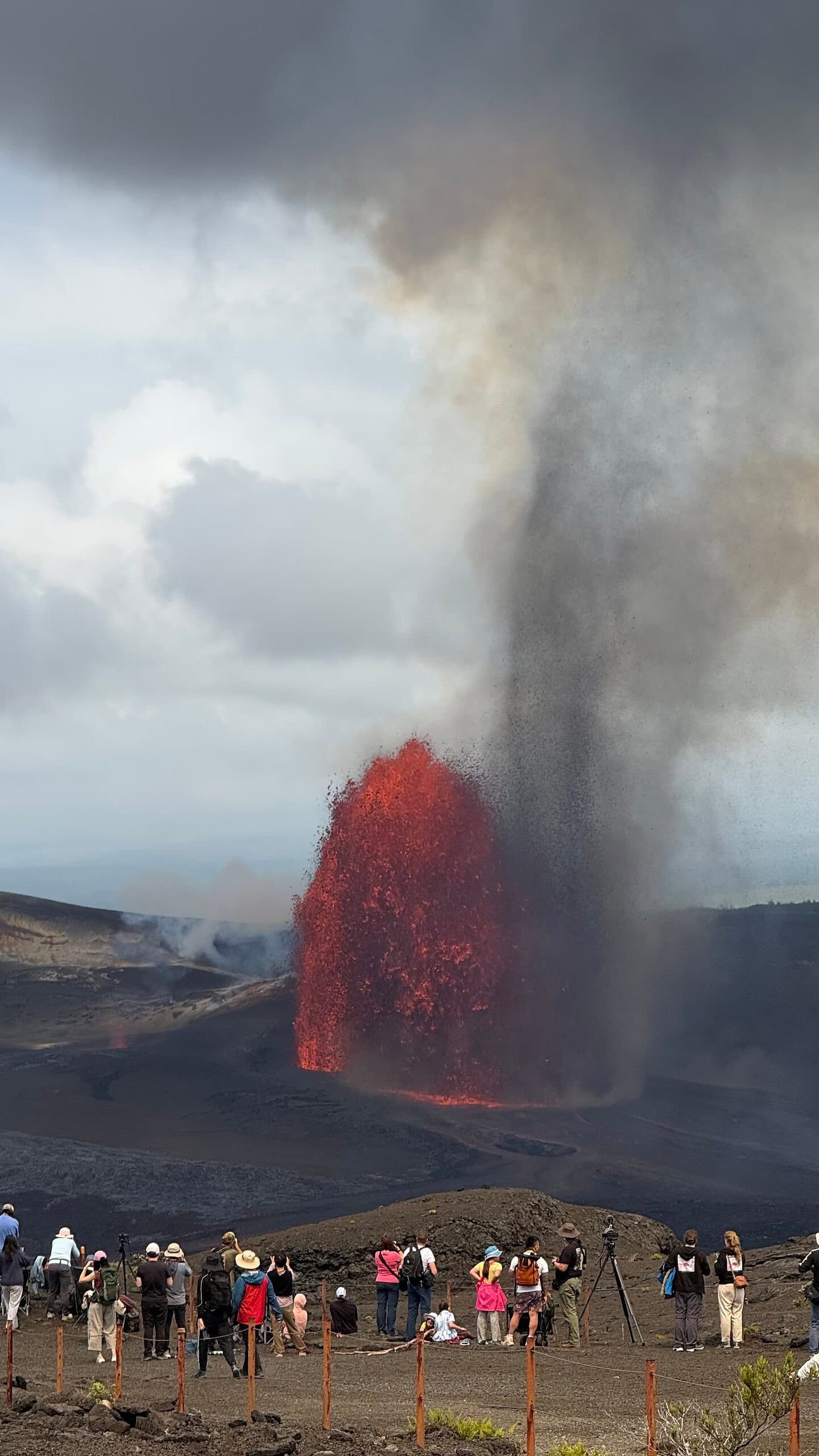
Visitors at Keanakākoʻi Overlook watch episode 47 of the Kīlauea eruption, with fountains reaching 600 feet (183 meters). The overlook is a 0.5-mile hike from the parking area, the closest viewpoint to the active vents along Crater Rim Drive.
Live webcams
West Halemaʻumaʻu crater (V1cam):
![[V1cam] Kīlauea volcano, Hawaii (west Halemaʻumaʻu crater)](https://www.lovebigisland.com/wp-content/plugins/wp-youtube-lyte/lyteCache.php?origThumbUrl=https%3A%2F%2Fi.ytimg.com%2Fvi%2FHggWKlZv9yk%2F0.jpg)
East Halemaʻumaʻu crater (V2cam):
![[V2cam] Kīlauea volcano, Hawaii (east Halemaʻumaʻu crater)](https://www.lovebigisland.com/wp-content/plugins/wp-youtube-lyte/lyteCache.php?origThumbUrl=https%3A%2F%2Fi.ytimg.com%2Fvi%2Ff9-oSpYpubg%2F0.jpg)
South Halemaʻumaʻu crater (V3cam):
![[V3cam] Kīlauea volcano, Hawaii (south Halemaʻumaʻu crater)](https://www.lovebigisland.com/wp-content/plugins/wp-youtube-lyte/lyteCache.php?origThumbUrl=https%3A%2F%2Fi.ytimg.com%2Fvi%2FgXKuUyKt8mc%2F0.jpg)
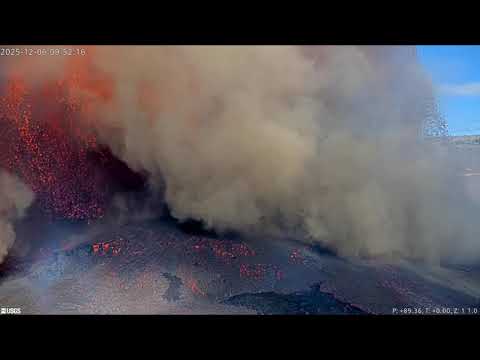
The V3cam was destroyed on December 6, 2025 by a lava fountain during Episode 38. You can see the last 10 minutes before it was engulfed:
When and where to see it (during an active episode)
When the eruption is in an active episode, you can see it yourself from the crater rim overlooks (sunrise is the best time to beat the crowds) or join one of several guided tours.
- Where? Kīlauea is erupting within Halemaʻumaʻu crater.
- How? It is located in the southwest corner of Halemaʻumaʻu crater, visible from several viewpoints along the Crater Rim Trail: Uēkahuna, Kīlauea Overlook, Wahinekapu (Steaming Bluff), Kūpinaʻi Pali (Waldron Ledge), Volcano House, Keanakākoʻi, and other overlooks.
- How to avoid the crowds? The best time to see the lava is when it’s dark. An hour before sunrise is the best time to skip the crowds, or late at night (after 10 p.m.) if you don’t like early mornings. Sunset viewing is possible, but expect traffic jams in the park between 5 p.m. and 9 p.m.
- Prepare in advance: Don’t forget your flashlight, warm attire, rain gear, and sturdy shoes. Keep an eye on the weather, as rain and fog can obstruct the view.
- Stay safe! Stay out of closed areas. Rope lines and hazard signs are in place to protect you from volcanic fumes, unexpected rim collapses, and hidden cracks. Volcanic gas is a particular risk for people with respiratory issues, young children, and pregnant women.
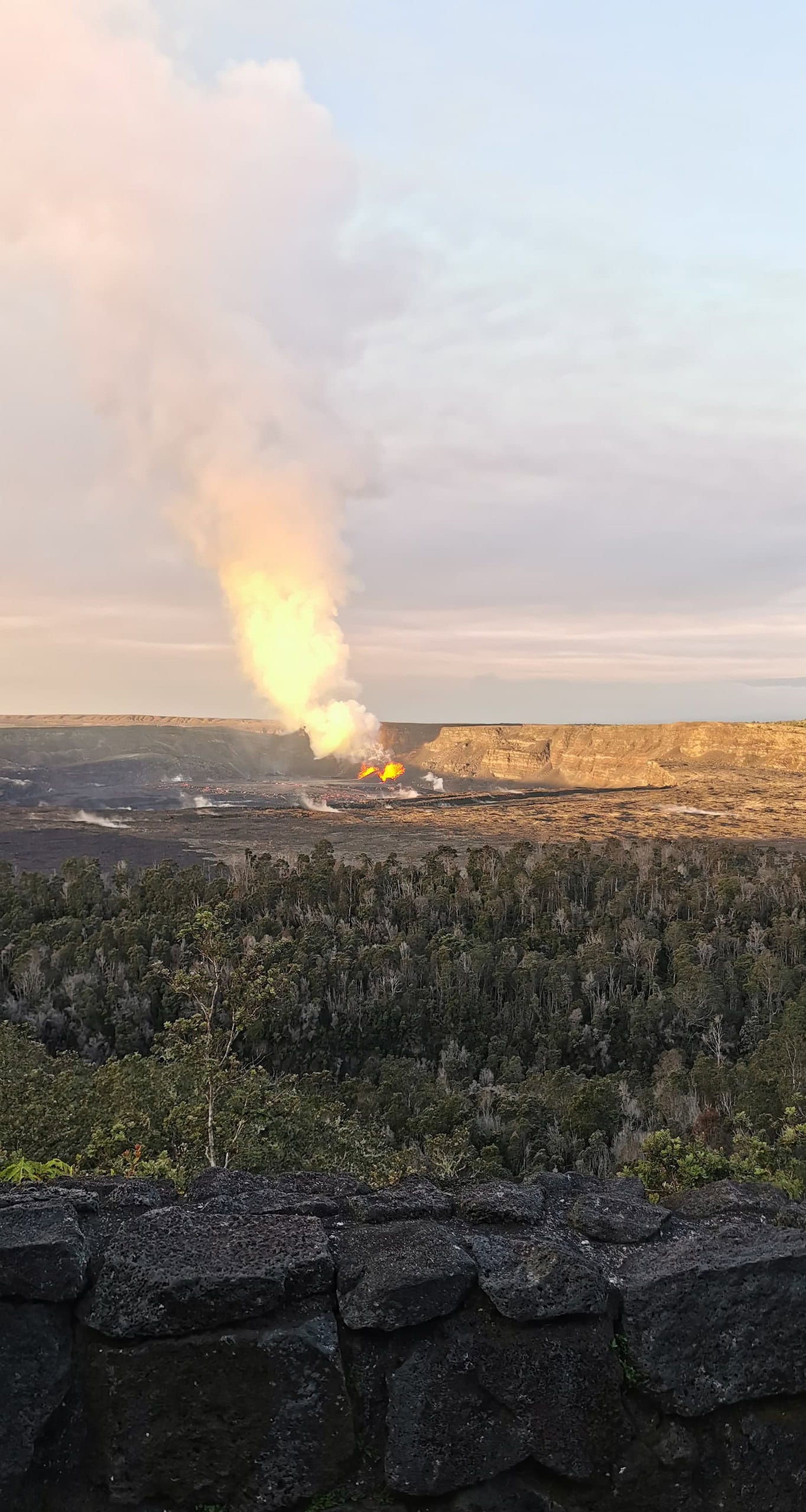
Eruption viewing from the Volcano House, also a good place for breakfast with a view. Keanakākoʻi Overlook is a 0.5-mile hike and closer to the vents; Volcano House has breakfast and a crater view.
Kīlauea Activity Update for Saturday, September 19, 2026
Summary: There is currently no active lava on the ground. The north and west vents continue to glow and emit flames. Minor summit inflation occurred overnight. There is no anomalous activity outside of the summit.
Overview: Glow and flames continued from the north and west vents throughout the night, the south vent was dark. None of the new vents along the crater wall showed any signs of activity in the past 24 hours. Slow inflation continues at the summit, gaining approximately 1 microradian over the past day. Tremor bursts continue to be the dominant seismic signal across the summit. No anomalous seismic activity or deformation has occurred outside of the summit region.
The system is within 1-2 days of reaching the maximum inflation of 16 microradians of tilt recovered since episode 54 fountaining ended. When this peak pressurization is reached, it is possible that activity will resume at the north-south-west vent complex, or reactivate the vent 1-6 system, or intrude another weak area in the summit region.
Eruption History: There have been 54 episodes of lava fountaining since the Halemaʻumaʻu eruption began in late December 2024 at the summit of Kīlauea. Each episode was preceded by a period of summit inflation as magma accumulated in the shallow chamber beneath Halemaʻumaʻu followed by rapid summit deflation during lava fountaining. New fountaining episodes usually occur when inflation recovers the amount lost in the previous fountaining episode indicating the system has repressurized. This repeating pattern coupled with uniform inflation as measured on summit tiltmeters has allowed the USGS Hawaiian Volcano Observatory to track the pressurization required to initiate fountaining episodes and issue forecast windows of several days for the onset of fountaining for about 50 of the episodes.
Read the most recent update here.
Mauna Loa: no active eruption
The 2022 Mauna Loa eruption is over and there is no active lava visible on the surface.
-> Current Mauna Loa eruption status: Mauna Loa is not erupting.
4 ways to see lava (and what to do when there is none)
How close you can get to the lava depends on where the flow is active and what terrain is accessible. Right now, with the eruption contained within the national park boundary, the crater overlooks are where you can see it now. When surface flows are on public land, you have four ways to get close.
- From up close as it flows over land and/or into the ocean, conditions permitting:
- From a distance, via:
- No lava? No problem:
1: Hiking to the lava (DIY and guided)
Hiking to the lava is the closest you can get, but it needs two conditions: surface flows must be accessible, and the flow must be on public land. The current eruption is within a closed area of Hawaiʻi Volcanoes National Park, so surface hikes to active lava are not currently possible.
IF access to the flow is possible AND on public land, you will find several companies offering guided hikes during daytime or at night.
- How to hike to the lava yourself, and
- When, why, and how to choose a guided Lava Tour.
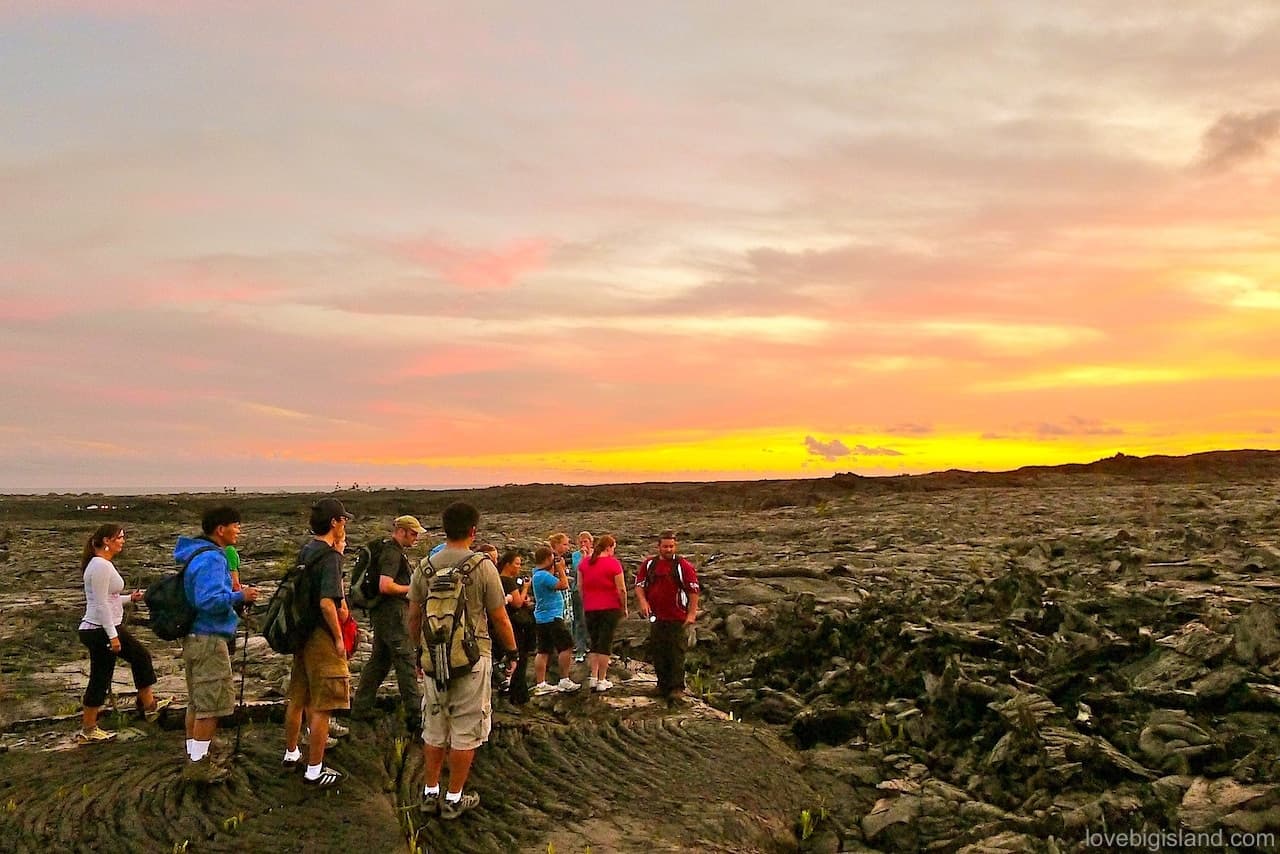
Hiking to the lava yourself
Sometimes it is straightforward to find your way to the lava without a guide. If you plan a DIY hike, educate yourself on the risks, dress properly, and bring plenty of water and sunscreen. Start with our lava hiking safety section.
Whether you can hike to the lava yourself depends on where it is flowing:
- Within the national park? If the park determines that access to the flow is safe, you can hike to it. Viewing conditions change daily, so check the NPS “What’s going on with the Volcano” page before you go.
- On private land? If the flow is outside the park boundary, you will likely be trespassing if you hike out without permission. The easiest solution is a lava tour guide with proper permissions.
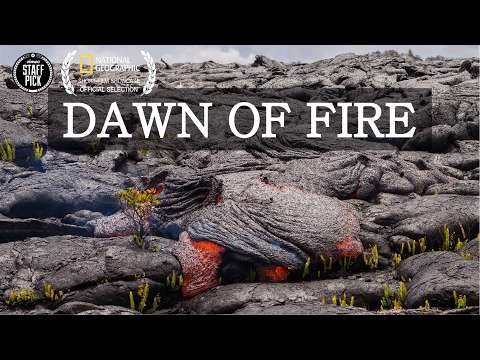
The following video by filmmaker Tyler Hulett, “Dawn of Fire,” shows a time-lapse of the slow-moving Kīlauea lava flows and gives a good sense of what hiking to the lava looks like:
Big Island lava tours
Guided lava tours have the know-how, equipment, and access to restricted terrain where needed. Their guides know the area well and can explain what the eruption is doing while you watch.
Tours range from one hour to a full day depending on how accessible the lava is. The hike almost always crosses uneven terrain, so have an honest conversation with the operator about what the hike requires before booking.
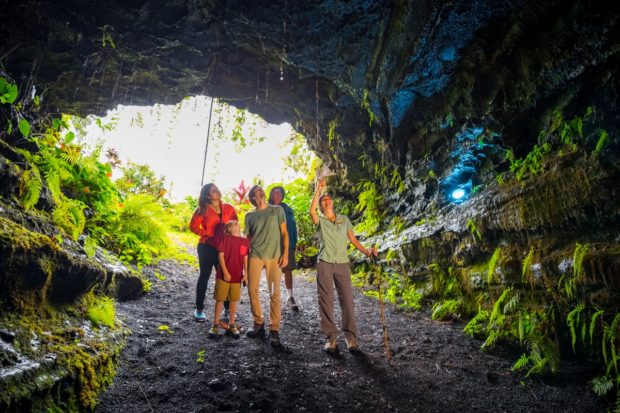
A strong option for a guided tour that explores Hawaiʻi Volcanoes National Park and stays in the park after dark to see the glow is the day-long “Volcano Unveiled” tour by Hawaii Forest & Trail:
Volcano, Chocolate, & Waterfalls (in-depth volcano experience from Kona or Hilo)
Small-group volcano tour with a certified guide through Hawaii Volcanoes National Park, plus a tree-to-bar cacao experience and private waterfall tasting. 11-12 hours from Kona
from:
$295
What is a suggested tour?Our suggested tours are hand-picked tours that receive consistent good reviews, give back to the community, and work hard to minimize their impact on the environment. Read more about these tours on our website.Booking a lava hike tour far in advance is risky, because at the time of your visit the lava may no longer be flowing. Review cancellation conditions carefully and, if they are strict, don’t book more than a few weeks out.
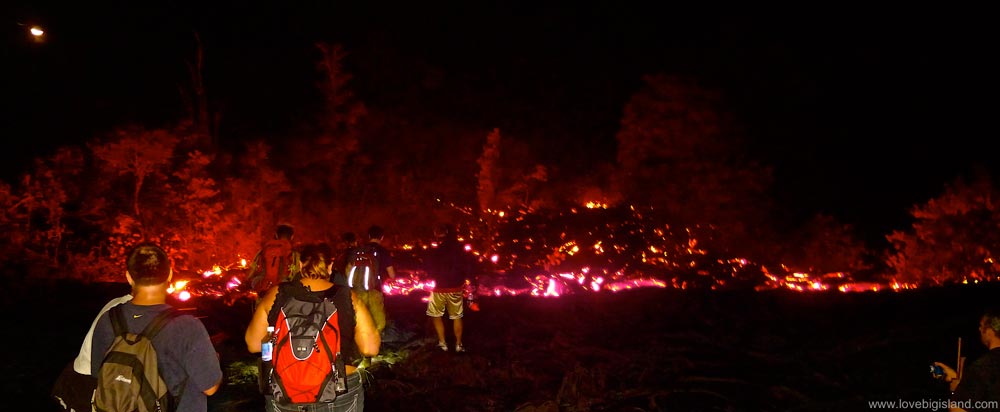
2: Lava boat tours (when lava reaches the ocean)
Lava boat tours run only when lava is actively flowing into the ocean. When that happens, operators depart from Hilo Harbor and take you to within 300 meters (984 feet) of the ocean entry point, with permitted operators occasionally getting closer.
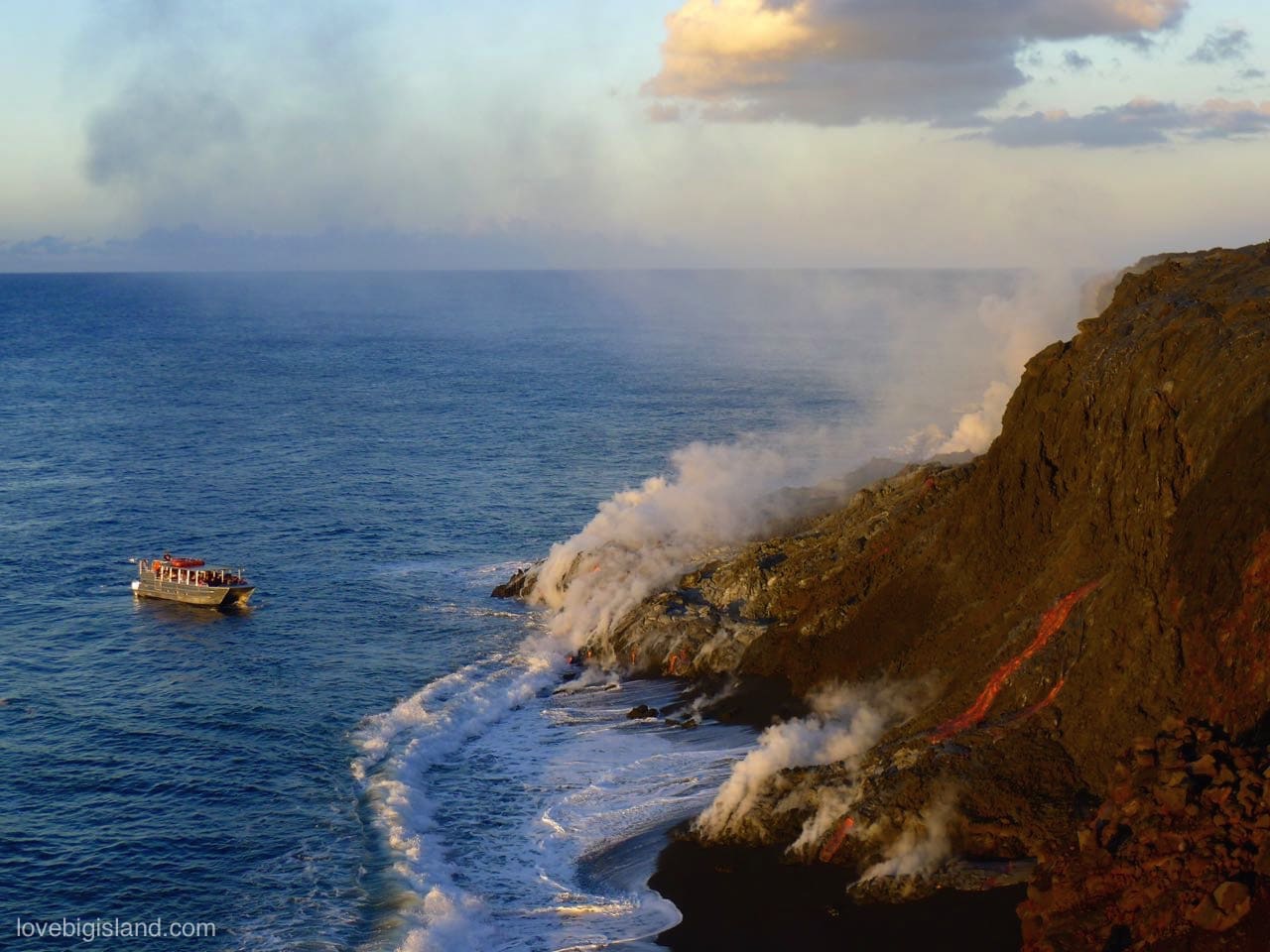
Lava enters the ocean while a lava boat gets close to the action. Photo taken in 2017 during the 61g Kamokuna ocean entry.
Safety and licensed lava boat tour operators
Seeing lava enter the ocean has two main hazards, bench collapse and a toxic gas plume; our lava ocean entry safety guide covers both. Choose your operator with care and always confirm they are licensed to operate in the lava safety zone.
3: Helicopter tours
Helicopter tours give you access to terrain you cannot reach on foot or by boat: the crater interior, surface flows in restricted zones, and lava moving through forest. They still fly when ground access is closed, and they book out weeks in advance during active eruptions.
Tours depart from both Hilo and Kona. Hilo departures are shorter and significantly cheaper. The following tour from Hilo gives you a good view of the current eruption activity:
- See Hilo and the Volcanoes (Blue Hawaiian Helicopter Tours)
A Kona departure from Rainbow Helicopters covers more ground but costs roughly twice as much and takes twice as long:
See our guide to helicopter tours on the Big Island for a full comparison of operators and routes.
4: Crater overlooks and public viewing areas
During an active eruption within Halemaʻumaʻu crater, six overlooks along Crater Rim Drive give you a direct view. The most visited is Uēkahuna (large parking area, paved path). Keanakākoʻi is closest to the fountain vents but needs a 0.5-mile hike. Kīlauea Overlook and Kūpinaʻi Pali (Waldron Ledge) are good middle options.
Viewing the crater glow from the overlooks
The current episodic eruption takes place within Halemaʻumaʻu crater. During active episodes, lava fountains and crater glow are visible from the overlooks. During pauses between episodes, a faint residual glow may still be visible at night.
- One of the best viewpoints is the Kīlauea Overlook and anywhere along the caldera rim to Kūpinaʻi Pali. The parking lot here can fill up quickly on busy days, so have a backup overlook in mind.
- The Keanakākoʻi and Uēkahuna viewing areas are at times closed due to unsafe air quality and tephra fallout. Signs and road closures mark them clearly. Please stay out of any closed areas.
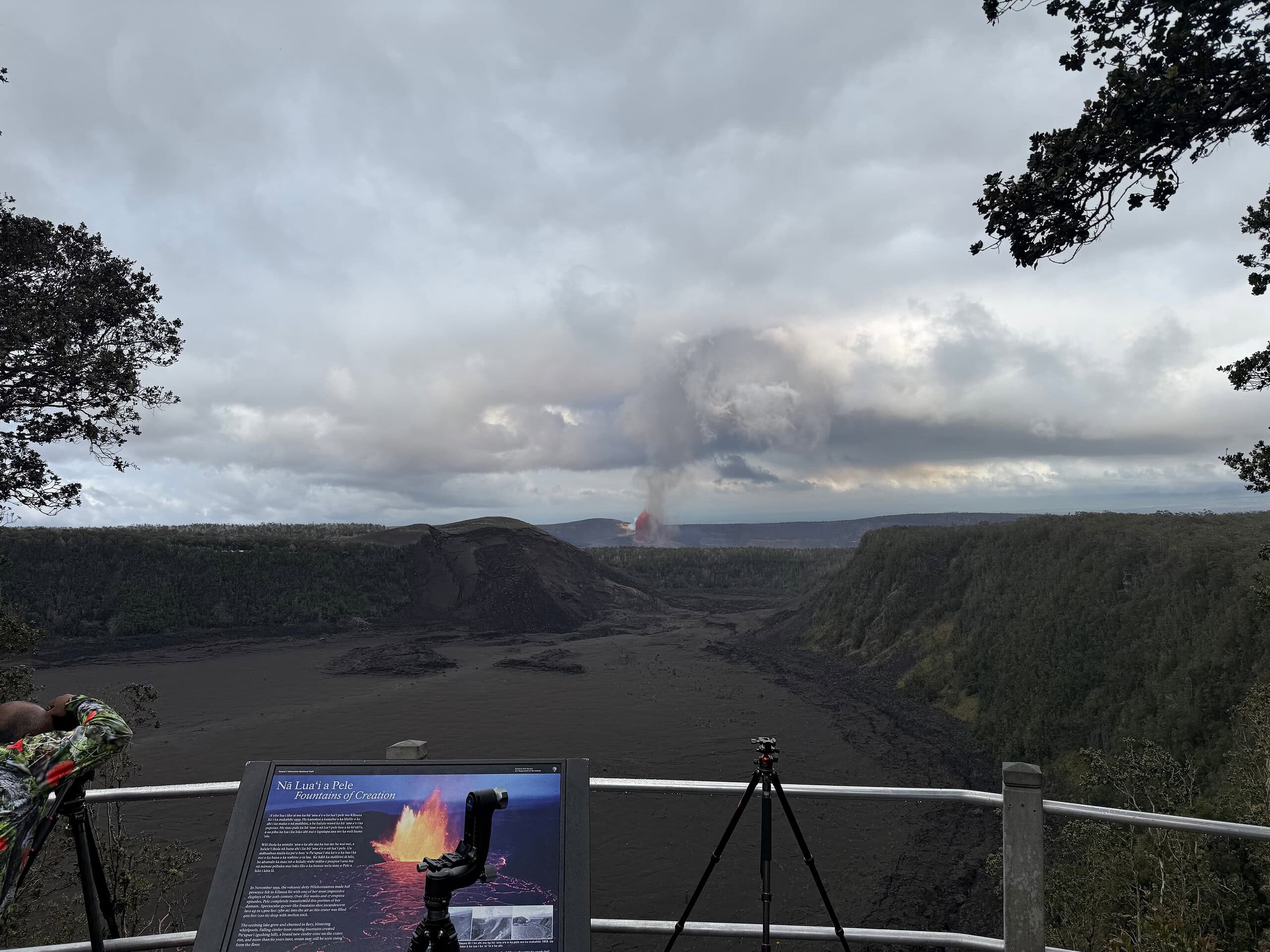
Episode 47 of the Kīlauea eruption, seen from the Kīlauea Iki Overlook. At 600 feet (183 meters), the fountains were visible from overlooks across the caldera.
When there’s no active lava
The park itself, the 2018 LERZ eruption zone in lower Puna, and the island’s lava tubes show what these volcanoes have built and destroyed. The Big Island is 100% volcanic in origin.
See the aftermath of the 2018 LERZ eruption
The 2018 Lower East Rift Zone (LERZ) eruption zone in lower Puna is one of the more sobering landscapes on the island. Miles of new lava rock, rebuilt roads, and neighborhoods that no longer exist show what 1 billion cubic yards of lava looks like.
Starting in Pāhoa, stop in for a look at the Pahoa Lava Zone Museum. It’s a small building with artifacts from the eruption, photographs taken by locals, and exhibits from the now-closed Jaggar Museum.
From Pāhoa, follow Highway 132 south and east. This road was rebuilt over still-cooling lava flows from 2018, and along it you see how far the eruption reached. Follow it to what used to be called “4 Corners”: now just one corner and the end of the road. Be careful with parking, and don’t touch the ground in rocky areas: some of it is still hot. On a clear day you can see all the way to the ocean.
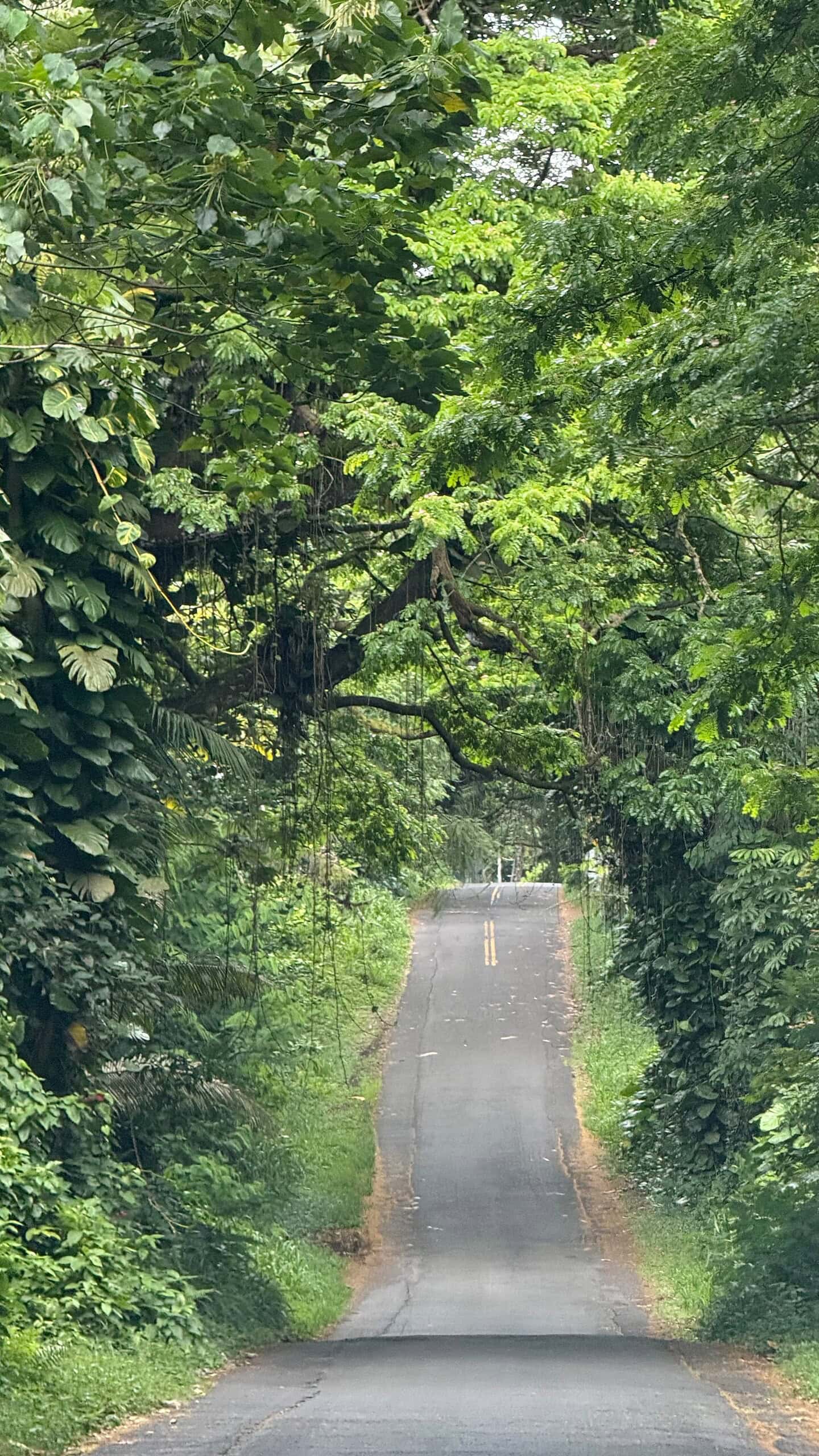
The Kalapana-Kapoho scenic drive passes through dense forest canopy before the landscape shifts abruptly to black lava fields.
Visit the Leilani Estates
Leilani Estates was ground zero of the 2018 LERZ eruption and home to Ahuʻailaʻau (known at the time as “Fissure 8”). It is still a residential neighborhood, and all roads except Leilani Avenue are private. You cannot park along Leilani Avenue, and residents have been clear that they do not want disaster tourism in the neighborhood. You can see enough from Highway 130 heading south from Pāhoa, or from Lava Tree State Monument.
Following Highway 130 further south brings you to Kalapana, after which Highway 137 takes you to Pohoiki, which was nearly covered by the 2018 eruption. This is one of our favorite scenic drives on the island.
What to see in the park with no active lava
Hawaiʻi Volcanoes National Park has more than enough for a full day even with no active lava: the Kīlauea Iki trail, Thurston Lava Tube (Nāhuku), Chain of Craters Road, and the petroglyphs at Puʻuloa.
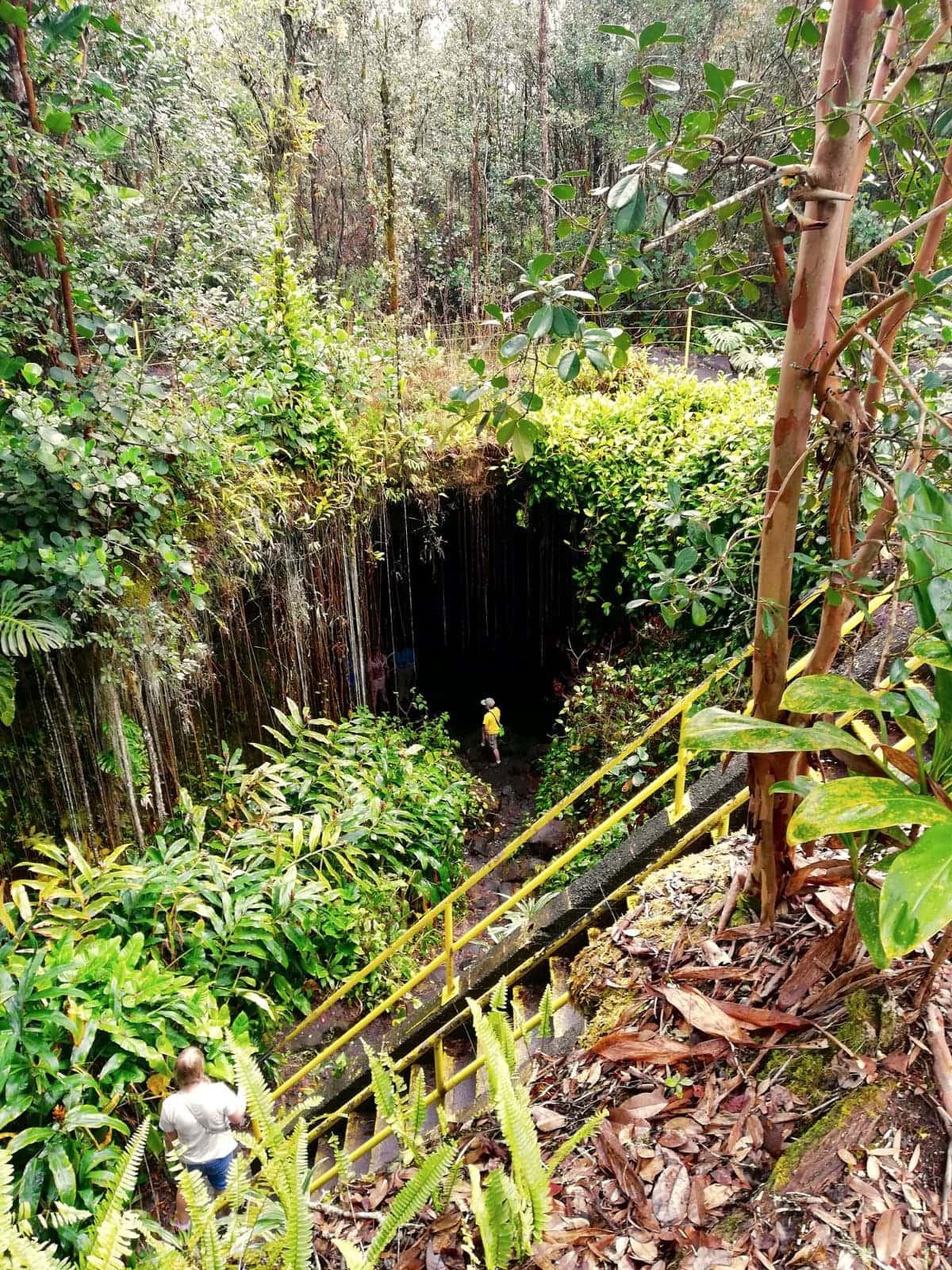
Climb down a steep ladder to reach the lava tube entrance at Kaumana Caves, close to Hilo.
Guided volcano tours are worth considering when there is no eruption. They take you into the park, private lava tubes, and terrain that is difficult to navigate without a guide.
Volcano, Chocolate, & Waterfalls (in-depth volcano experience from Kona or Hilo)
Small-group volcano tour with a certified guide through Hawaii Volcanoes National Park, plus a tree-to-bar cacao experience and private waterfall tasting. 11-12 hours from Kona
from:
$295
What is a suggested tour?Our suggested tours are hand-picked tours that receive consistent good reviews, give back to the community, and work hard to minimize their impact on the environment. Read more about these tours on our website.We list tour operators in our volcano tours section.
Planning your visit
Hawaiʻi Volcanoes National Park is open 24 hours a day, every day of the year. Entry is $30 per vehicle, or $15 per person on foot or bicycle. The America the Beautiful interagency annual pass is also accepted.
Best time to visit
The best time to see an active eruption is at night, when the glow from the crater is visible against a dark sky. If the eruption is in an active episode, plan to arrive one to two hours before sunrise: viewpoints are nearly empty at that hour, and Avoid the park between 6 and 9 p.m. if you are not a fan of crowds.
Parking
The main parking lots along Crater Rim Drive fill by 10 a.m. on busy days. The Thurston lava tube parking lot fills first. If you want to visit consider parking at the Kīlauea Iki parking lot and slotting in an extra 10 minute walk through the rainforest and overlooking the crater rim.
What to bring
The summit sits at about 4,000 feet. Nights regularly drop to 50 to 55°F, sometimes colder with wind, and rain is common year-round. Visitors arriving from Kona (where it’s 80°F and sunny) are often underprepared. Bring: a warm layer, a rain jacket, sturdy closed-toe shoes, one flashlight per person, at least 2 liters of water if you’re hiking, and sunscreen.
From Kona or Hilo?
From Hilo, the park entrance is about 30 miles and 45 minutes. From Kona, it’s around 95 miles and 1.5 hours each way. For an evening or pre-dawn visit from Kona, budget a 3-hour round trip minimum plus your time in the park. If night viewing is the goal, staying in Volcano Village (right outside the park gate) is a much better setup than driving from Kona.
Accessibility
Hawaiʻi Volcanoes National Park is a working volcanic landscape, and accessibility conditions can change when the terrain does. For eruption viewing, Kīlauea Overlook is accessible via a short asphalt path from the parking area. The Sulphur Banks Trail is mostly manageable for wheelchairs starting from the Kūkamāhuākea (Steam Vents) parking lot; the 0.1-mile gravel trail from there to Wahinekapu (Steaming Bluff) is also possible. Wheelchairs are available at the Welcome Center on a first-come, first-served basis. The Welcome Center, Volcano House, and Volcano Art Center are all fully accessible.
Accessible restrooms or vault toilets are at Kīlauea Iki, the Devastation parking lot, Maunaulu, Kīpukapuaulu picnic area, Maunaloa Lookout, and the Chain of Craters Road turnaround. Drinking water is available at Volcano House.
Check the NPS accessibility page for current conditions before you go.
Safety
Volcanic fumes are a health risk. People with respiratory or heart conditions, pregnant women, infants, and elderly visitors should check current vog and air quality levels before visiting. Getting close to an active lava flow is risky, and and unprepared hikers often turn back before reaching it.
1: Hiking to the lava: stay out of closed areas and come prepared
Wear hiking boots, not sandals. Lava surfaces are jagged basalt and the terrain is uneven throughout. Pack sunscreen and water together with your camera. If you plan to view the lava after dusk, bring one flashlight per person and replacement batteries. Viewing conditions change daily: even a park-organized viewing area does not guarantee close access to the lava. Often a 1+ hour hike over rough terrain is needed to reach the flow front.
If you want to be well prepared, take 4 minutes and watch this video about safe lava viewing at ocean entries, made by Hawaiʻi Volcanoes National Park:
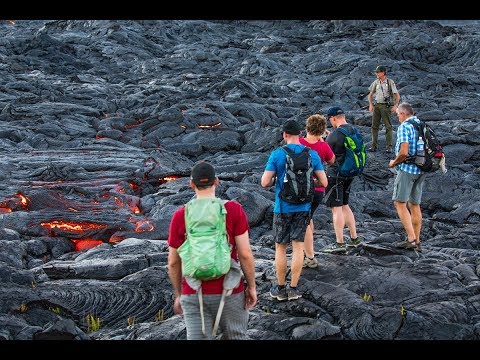
Visitors sometimes arrive at a lava hike in sandals and flip flops. That footwear is not safe on rough lava surfaces and may force you to turn back before you get close. If you plan on staying past sunset (recommended), each person needs their own flashlight for the walk back. See “Guided lava tours” if you want the hike handled for you.
2: Safety concerns at the lava ocean entry
Lava ocean entries create two distinct hazards: the instability of newly formed land, and the noxious gases released when lava meets seawater.
- The stability of the new land you are standing on (the lava bench)
- The noxious gases released when lava meets the ocean
Stability of the new land
Newly created land is inherently unstable and much of it will collapse back into the ocean over time.
Park rangers monitor the stability of the lava bench and set viewing distance limits based on visual inspection and thermal imaging. That distance was set at 1/2 mile (820 meters) for the now-inactive Kamokuna episode.
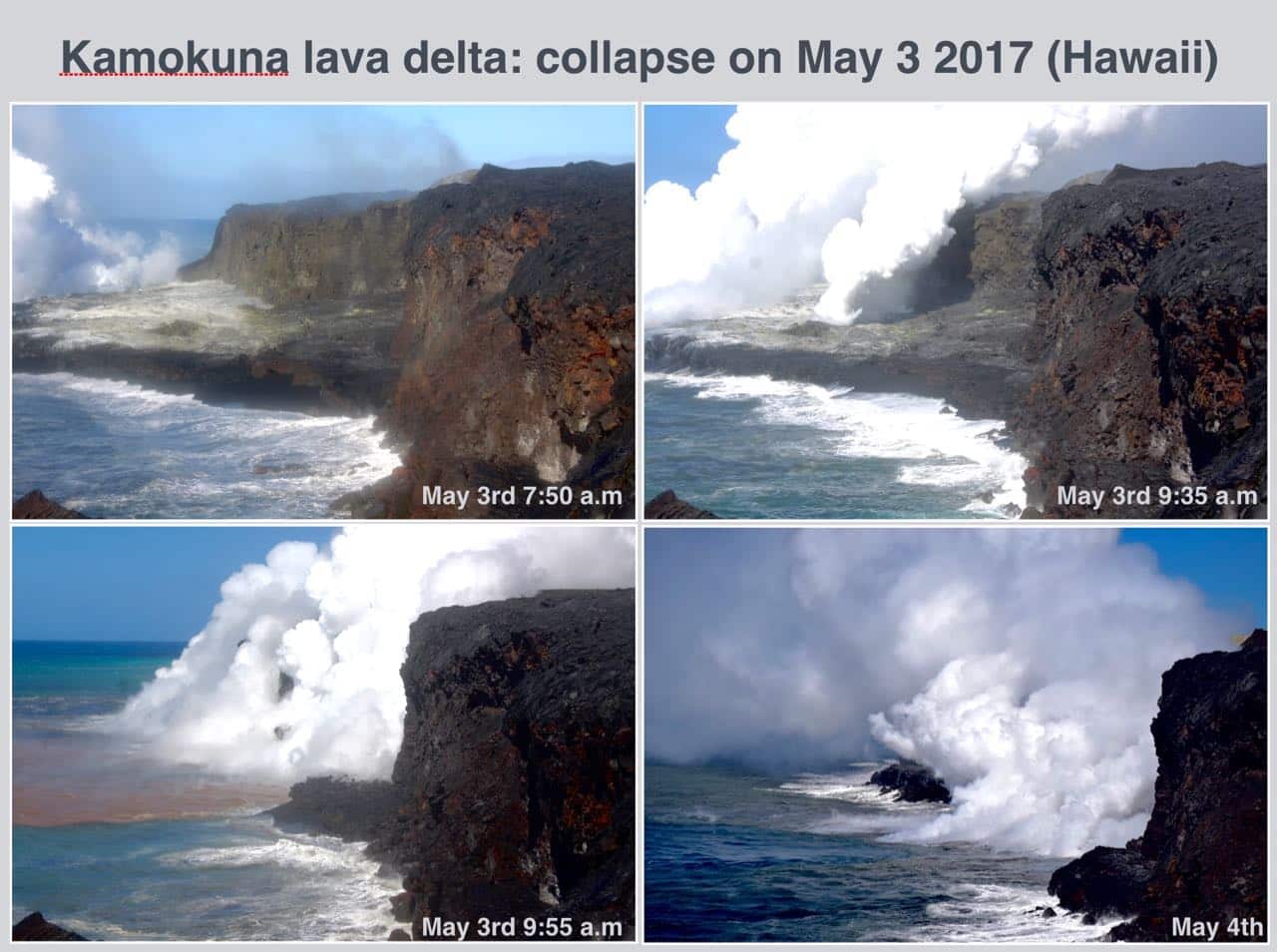
On May 3rd a large part of the Kamokuna lava delta collapsed into the ocean within minutes. Collapsing lava benches can cause a small tsunami and hurl hot rocks over a large distance. Credit: USGS
Collapses like this can trigger small tsunamis of scalding hot water. Follow any instructions given by park rangers regarding safe viewing distance.
Noxious Gases
Stay away from the plume when watching lava enter the ocean. The wind generally carries the ocean entry plume offshore during nighttime and early morning. From mid-morning through late afternoon, the wind sometimes shifts and brings the plume onshore.
The white plume is very hot and contains super-heated steam and chemicals that range from unhealthy to lethal. The water droplets in the plume can be as corrosive as battery acid. Read more on the USGS website.
3: Vog (volcanic air pollution)
The Big Island has an air pollution problem during active surface flows. It’s called vog (volcanic smog), and the areas southwest of the eruption site get the worst of it on most days.
Vog is created when sulfur dioxide emitted by the Kīlauea volcano reacts with oxygen and moisture in the presence of sunlight. Because the dominant wind directions are east and northeast, the areas most affected are those south and southwest of the eruption site. The USGS Interagency Vog Dashboard has specific vog advice for visitors to Hawaiʻi and associated health effects information.
Lava Q&A
Q: Can you see lava in Hawaii right now?
Kīlauea is in an episodic eruption phase that started December 23, 2024. The eruption pauses between episodes, sometimes for days or weeks. Check the live webcams or the USGS update on this page for current status, or see our viewing tips for how to plan your visit.
Q: Can you hike to the lava flow?
Not right now. The ongoing eruption of Kīlauea is occurring within a closed area of Hawaiʻi Volcanoes National Park. See our guide to hiking to the lava flow to learn about your options when lava moves into publicly accessible areas.
Q: Should I pay for a lava tour?
A tour is not required to see the eruption from the crater overlooks. We recommend guided tours for visitors who want the added context of a professional naturalist guide, or who want access to restricted terrain when surface flows are on private land. Read more in our guided volcano tours section.
Q: Are there currently lava boat tours?
No. Lava boat tours run only when lava is flowing into the ocean. For details, see our lava boat tour section.
Q: Is it safe to see the lava?
Yes, when you follow the safety guidance provided by Hawaiʻi Volcanoes National Park staff. Read more in our safety section.
Q: Is Kīlauea erupting right now?
Kīlauea is in an episodic eruption phase (started December 23, 2024). Activity pauses between episodes and resumes within days to weeks. Check the USGS volcano update linked on this page for current status.
Q: How can you avoid the crowds?
Go before sunrise. Viewpoints like Uēkahuna, Kūpinaʻi Pali, and Keanakākoʻi are packed at sunset but nearly empty one to two hours before dawn. Late night (after 10 p.m.) is another good window.
Q: Is Mauna Loa erupting now?
No. Mauna Loa is not erupting. You can read more about the most recent Mauna Loa eruption here.
Q: What does it cost to enter Hawaiʻi Volcanoes National Park?
Park entry is $30 per vehicle or $15 per person on foot or bicycle. The America the Beautiful interagency annual pass is accepted. The park is open 24 hours a day. (Verify current fee at nps.gov/havo.)