
Hāpuna is the longest white-sand beach on the Big Island, half a mile of it. Almost no rain, shade from the trees, and a lifeguard on duty year-round make it the family beach we send people to first.
Summer seas are calm enough for easy swimming and snorkeling at either end. In winter the surf comes up. Waves over 3 feet bring rip currents that are for experts only. The lot fills fast on weekends, so come early if you want a tree to sit under, or try Waialea (Beach 69) just south.
Table of contents
- practicalities (getting there, parking, fees, and facilities)
- beach activities (swimming, snorkeling, and hiking)
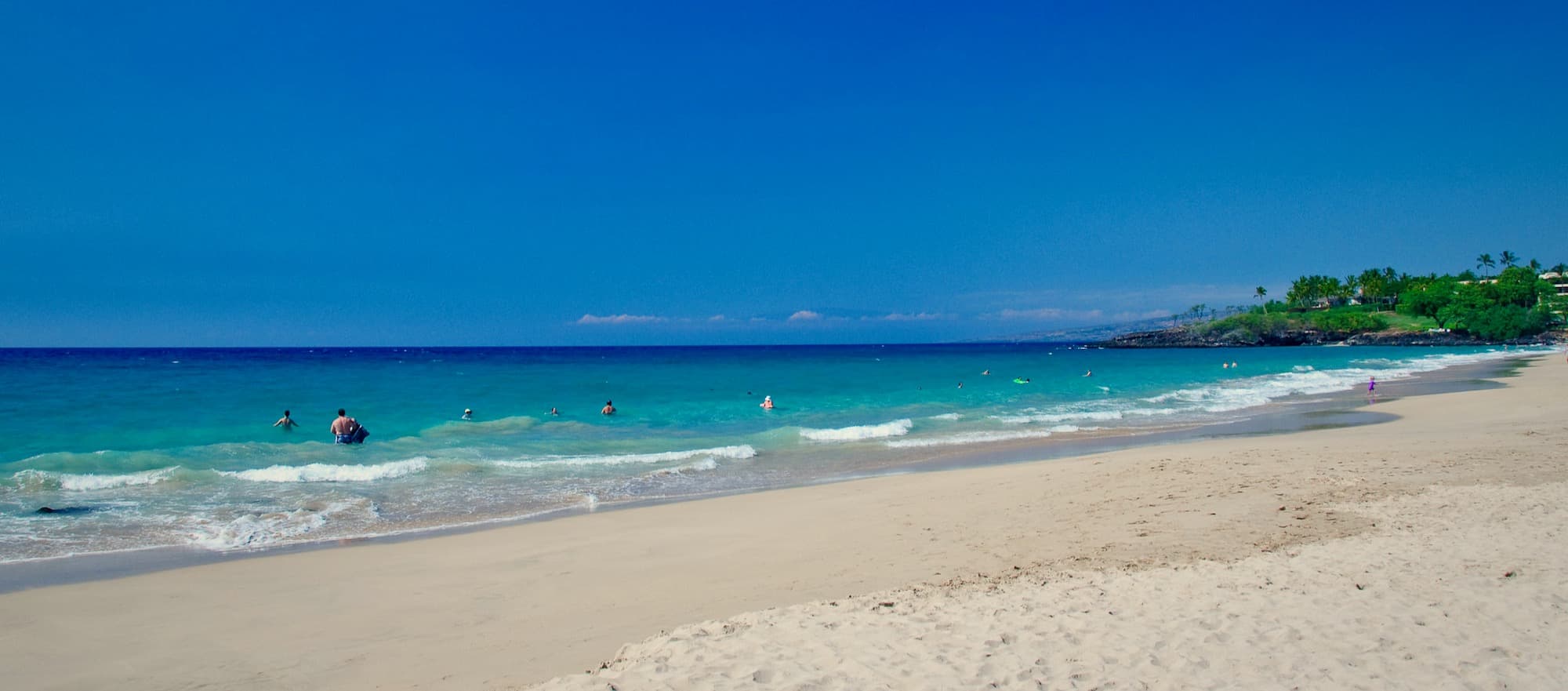
Hāpuna Beach, Hawaiʻi: half a mile of white sand. | Photograph by Phil Price on Flickr
Getting there, parking, and food
Hāpuna is one of the easier beaches to reach on this coast. The parking lot sits a quarter mile off the highway, close to the sand.
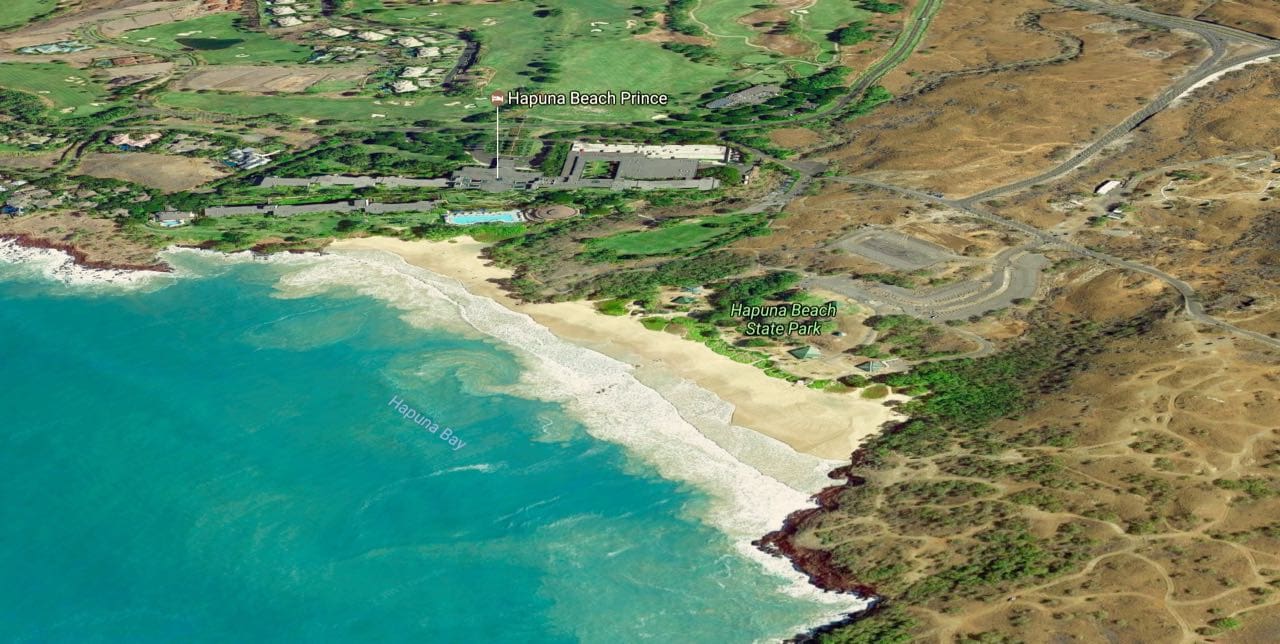
Overview of Hāpuna Beach and Bay. The Mauna Kea Golf course is visible on the left, together with the Westin Hapuna Beach Resort (formerly the Hapuna Beach Prince Hotel). Image adapted from Google Maps.
Getting to Hāpuna Beach
Hāpuna Beach sits north of Kailua Kona, close to mile marker 70 of Hwy 19, in the south Kohala district. Turn makai (toward the ocean) at the sign for Hāpuna Beach State Park and drive a quarter mile to the parking lot. Don’t leave valuables in the car.
Hāpuna Beach parking, fees, and facilities
An entrance fee and a parking fee both go toward maintaining the park, and both are waived for Hawaiʻi residents who show a valid state ID or driver’s license.
- The entrance fee is $5 per person for non-residents, payable by credit card only. Children 3 and under are free.
- The parking fee is $10 per vehicle for non-residents.
Neither is bookable ahead; you pay at the gate on arrival. The park is open daily from 7am and the gates close at 8pm. Behind the sand you’ll find restrooms, cold showers, a drinking fountain, and a covered picnic pavilion.
You can find up-to-date information about ongoing improvements, beach closures, and fees on the DLNR website.
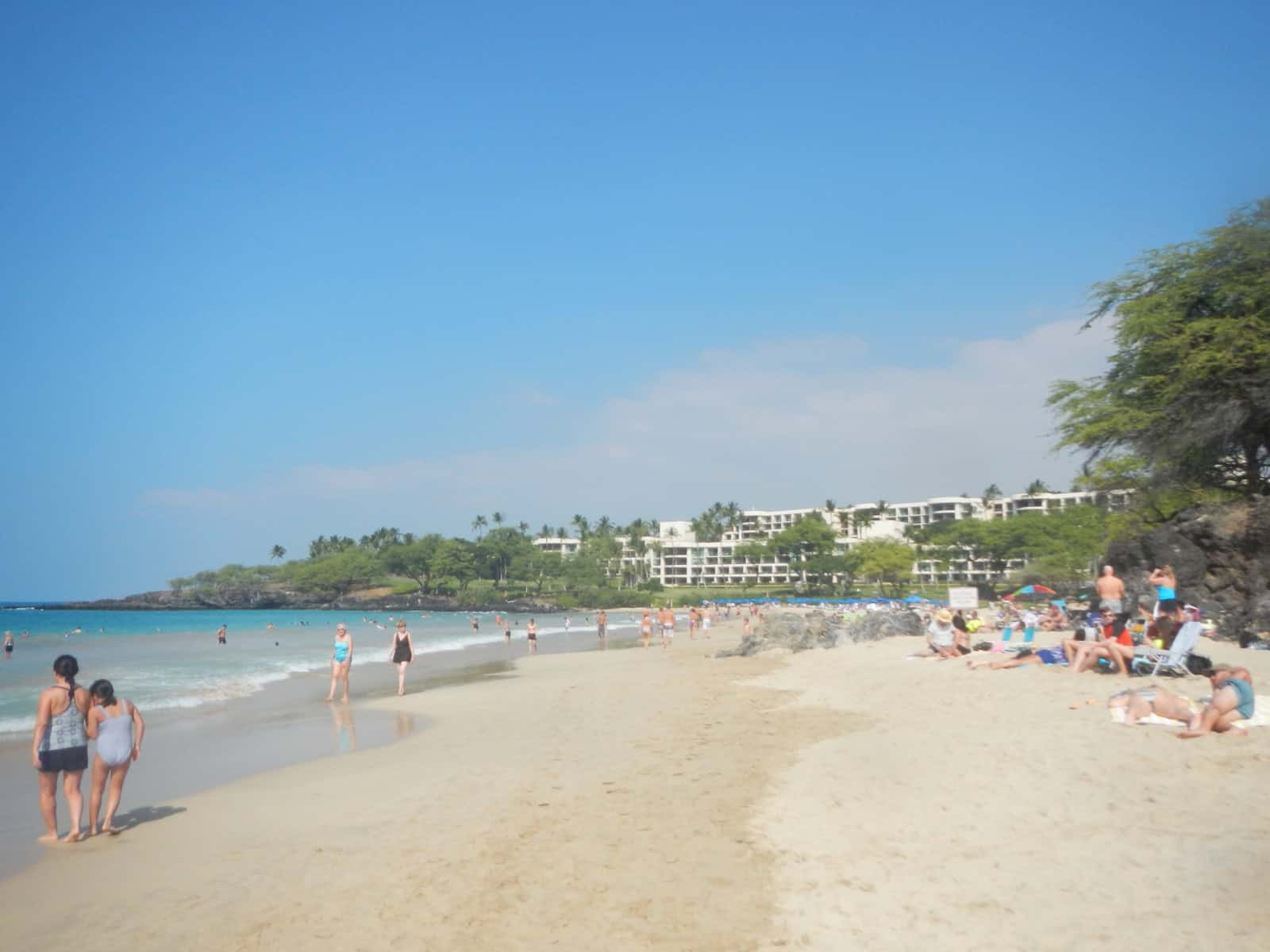
The north end of the bay is where the resort and most of the shade sit.
Food and rentals
There is no food or gear concession operating at the park right now. State Parks has the on-site concession out for bid for a new mobile food vendor, so for the moment you can’t buy lunch or rent a boogie board, umbrella, or snorkel gear on the beach. Bring your own food and water, and pick up or rent any beach gear before you arrive. The nearest stores are up the hill in Waimea.
Things to do at Hāpuna Beach
As the longest white sand beach on the island, Hāpuna appears on nearly every “best beaches in Hawaiʻi” list, and it gets crowded. The lot and the shady spots both fill early, especially on weekends. Waialea beach (Beach 69), just south, stays quieter.
Swimming
During calm seas the swimming is easy, and when the surf picks up you can play in the shore break. Once waves get over 3 feet (1 meter) it’s for experts only: dangerous rip currents and a pounding shore break.
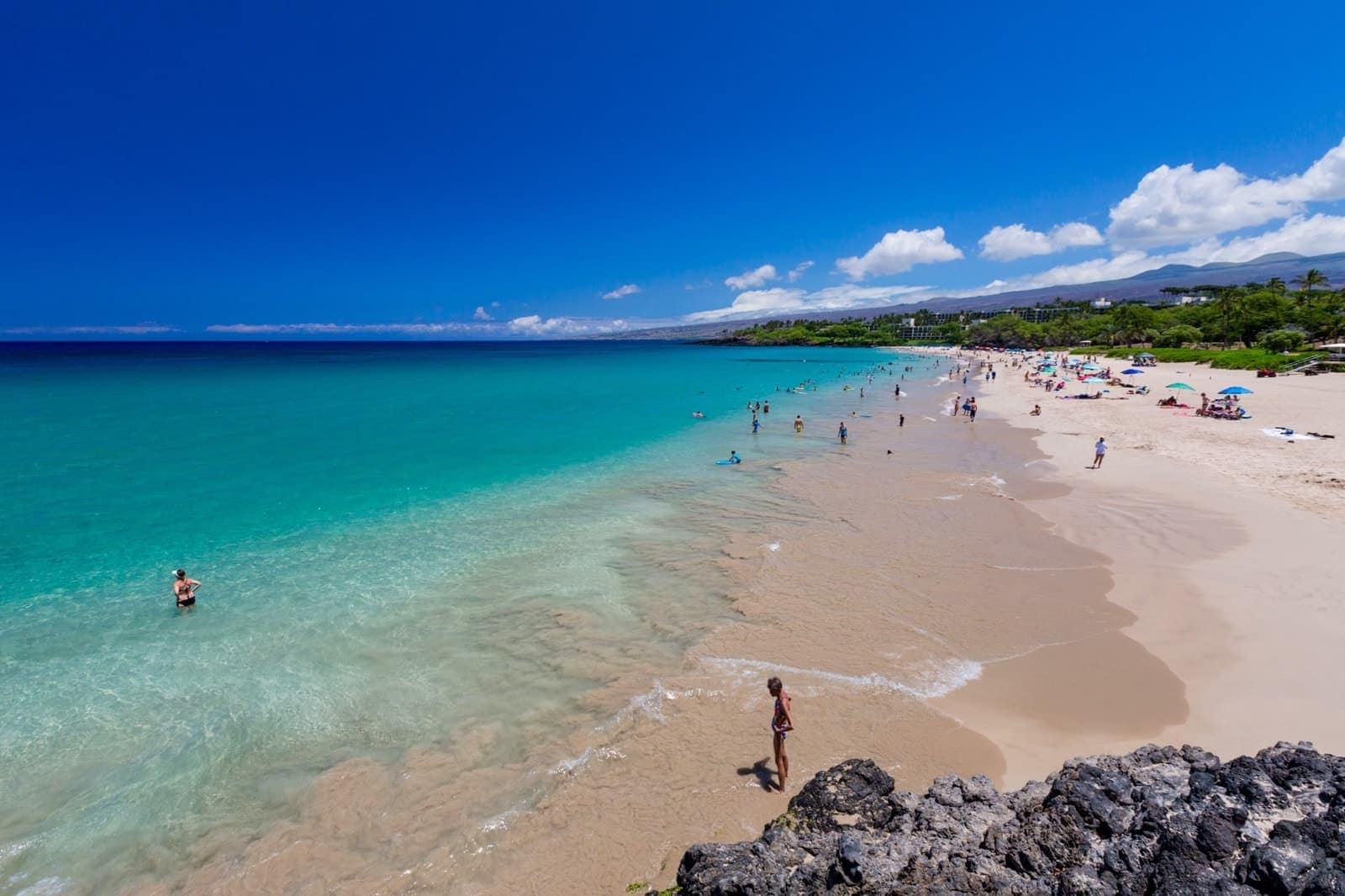
Hāpuna is the longest white sand beach on the Big Island. Credit: Hawaii Tourism Authority (HTA) / Tor Johnson
Snorkeling
Snorkeling here is good when the water is calm. Head for either end of the beach: the small cliff at the north end, or the rocky point at the south end.
Visibility close to shore is low, from sand mixed into the water and an occasional freshwater layer on top, so you’ll need to swim out a bit to reach the better stretches. Don’t go alone. You won’t be in sight of the lifeguards out there.
Read more about snorkeling at Hāpuna on the Tropical Snorkeling website.
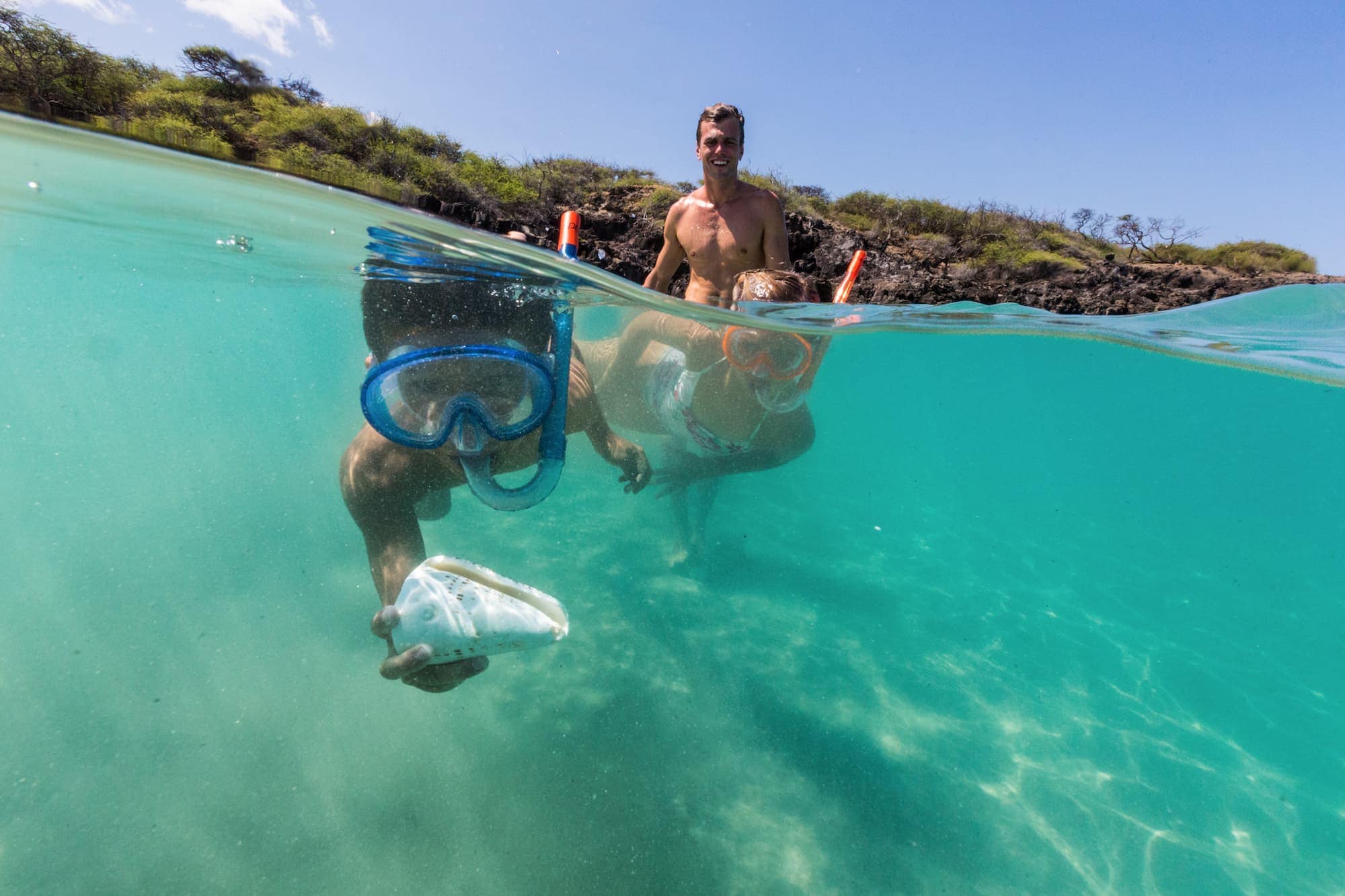
A young snorkeler surfaces with a shell near the rocky end of the bay.
Hiking: the Ala Kahakai trail
If you’d rather walk than lie on the sand, the Ala Kahakai coastal trail runs right past the beach. Hāpuna sits about midway along the Kawaihae to ʻAnaehoʻomalu section, so you can head north toward Spencer Beach and the Mauna Kea resort, or south toward Mauna Lani and Waikoloa, and turn back whenever you like.
The trail follows the coastline over ancient fishermen’s paths and old Hawaiian Kingdom roads. It stays nearly flat, about 30 feet of elevation over the whole 15.4-mile route. It links a string of beaches and undeveloped shoreline between the resorts, passing several anchialine ponds (landlocked pools with an underground connection to the sea). Only the Spencer to Puakō stretch is signed. The rest gets little maintenance, and in places it runs along the edge of sea cliffs. Carry water: there is none on the trail.
For maps and access points, see the official DLNR resource: Ala Kahakai Trail (Kawaihae to ʻAnaehoʻomalu).