
The island of Kaua‘i is nicknamed “The Garden Island,” and it’s not because everyone is growing vegetables in their side yards. Much of the island is composed of undeveloped and wild landscape on the slopes of Mt. Wai‘ale‘ale, headlined by the Nāpali Coast on the north shore and Waimea Canyon down south. In between, you have an abundance of open space that includes ranch lands and lush forests, blessed by lots of rain.
If you’re into exploring nature and the natural world, Kaua‘i is a wonderful island to visit, especially considering its compact nature, which allows you to get a great overview of it in just a matter of days.
Table of contents
Read on to discover everything Kaua‘i has to offer in its natural and wildlife areas.
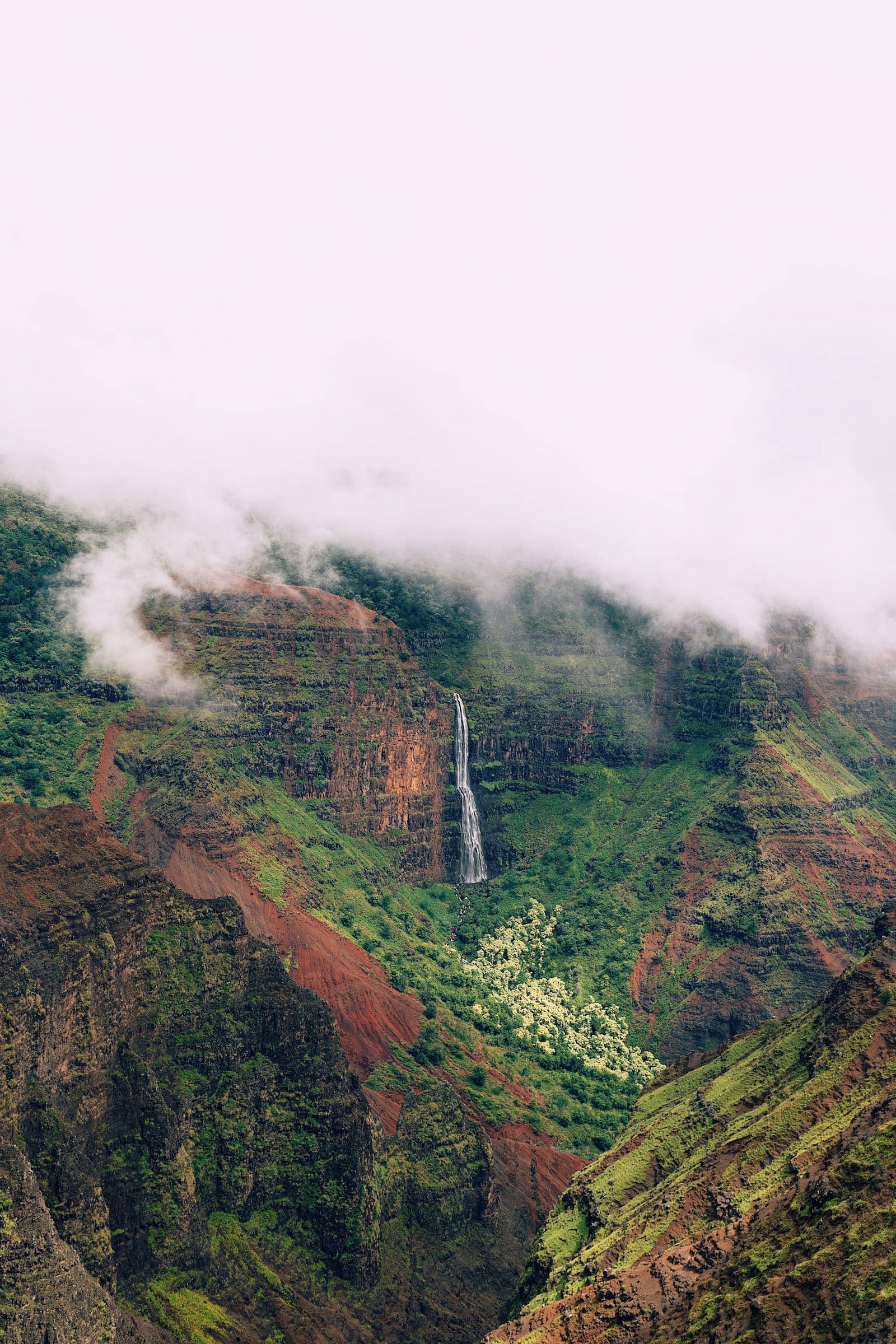
Lots of rain, erosion, and lush rainforests make Kauaʻi a paradise for lovers of dramatic landscapes. Photo by Sebastien Gabriel on Unsplash
ps: if you are also interested in seeing nature and wildlife on the other islands, we recommend you bookmark our following guides:
- Seeing nature and wildlife on Oʻahu.
- Seeing nature and wildlife on the Big Island
- Seeing nature and wildlife on Maui
Marine life and coral reefs on Kaua‘i
No matter which island you visit in Hawai‘i, there’s a beautiful underwater world waiting to be explored. Hawaiian coral reefs are full of life, including more than 400 species of tropical fish and a variety of larger, beloved marine animals, such as turtles, dolphins, whales, and seals.
Exploring Kaua‘i’s coral reefs can be done by snorkeling from the beach or by taking a boat tour out to a more remote reef. Below, we explain the best options.
- Fish and coral reefs
- Larger marine life (turtles, dolphins, whales)
- Kaua‘i Ocean Discovery
THE BEST PLACES TO SEE FISH AND CORAL REEFS
In Hawai‘i, you can discover something in the water anytime/anywhere by simply donning some goggles and going for a swim. However, some places are more colorful than others, offering a higher density of marine life and a higher likelihood of seeing fish and other marine animals.
On Maui, Big Island, and O‘ahu, there exists protected Marine Life Conservation Districts where marine life can be found in abundance thanks to strict regulations on human impact. Normally, we like to direct visitors to these areas; however, no such area exists on Kaua‘i, so advanced local knowledge of the coast is essential.
You can see a list of our top underwater sites as well as our recommended boat and snorkel tours on Kaua‘i here. As you peruse the list and make your selections, be sure to note the following:
- Be real about your experience level. Kaua‘i’s waters are no joke. In fact, the island experiences some of the roughest currents in the entire Hawaiian Island chain (due to its position in the far north of the modern-day chain). Be sure to note that some spots in our list are for advanced or experienced snorkelers only.
- Get out on a boat tour. In our opinion, no island is better for a snorkel boat tour than Kaua‘i. Some of Kaua‘i’s most pristine reefs are located along the Nāpali Coast and are only accessible by boat. Plus, going with experienced guides helps you navigate the island’s notoriously rough waters.
- Always snorkel with a buddy. Do not go out alone, even if you are experienced!
LARGER MARINE ANIMALS ON KAUA‘I
In addition to tropical fish, Hawaiian waters attract an array of larger marine animals. Whale season in Hawai‘i runs from November through March, while turtles, dolphins, and monk seals can be seen all year round.
Good to know: Hawaiian sea turtles and other larger marine animals are protected under state and federal laws and should not be harassed or followed closely. While this is an easy rule to follow for, say, whales and sharks, turtles and dolphins deserve the same respect. Hawaiian sea turtles need at least 10 feet (3 meters) of space, whales need 100 yards (or 90 meters), and 50 yards (or 45 meters) is required for dolphins and monk seals.
WHERE AND HOW TO SEE WHALES
Humpback whales can be found in the Hawaiian Islands from November through March (and often a few weeks before and after, depending on the year). Though the whale population is not as numerous on Kaua‘i as, say, Maui, there is still ample opportunity to spot these gentle giants throughout the season.
Whale watching boats depart from Port Allen harbor in the south of the island, and Hanalei Bay in the north.
WHERE AND HOW TO SEE TURTLES
Turtles can be found in the water or resting on land. Here’s where you can usually find them on Kaua‘i:
- In the water: Want to increase your chances of snorkeling with a sea turtle? Head to Anini Beach (north shore) or Kōloa Landing, Brennecke’s, or Po‘ipū Beach, all on the south shore.
- On land: Many of the south shore beaches offer a nice chance of seeing sea turtles resting on the beach, including those in and around Po‘ipū.
WHERE AND HOW TO SEE DOLPHINS
Dolphins inhabit the waters surrounding the Hawaiian Islands and can be seen from any of the major islands. Though you can see them from shore sometimes – perhaps from an overlook spot like Kīlauea Lighthouse – the best chance of seeing them on Kaua‘i (or any island) is from the water. For the best chance, we recommend hopping on a Nāpali Coast boat tour, perhaps one that involves snorkeling (see below) or a dolphin-specific tour, such as this one from Nāpali Riders.
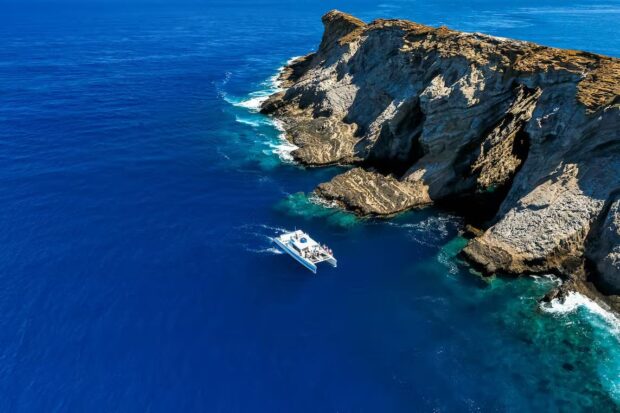
Niʻihau + Nāpali Coast 7 hour long Super Tour
EXCELLENT value 7-hour Napali Coast tour to Niihau with snorkeling, breakfast, lunch, and drinks included.
from:
$315
What is a suggested tour?Our suggested tours are hand-picked tours that receive consistent good reviews, give back to the community, and work hard to minimize their impact on the environment. Read more about these tours on our website.Before choosing your tour company, check out our guide to seeing and swimming with dolphins to learn more about the do’s and don’ts of interacting with dolphins.
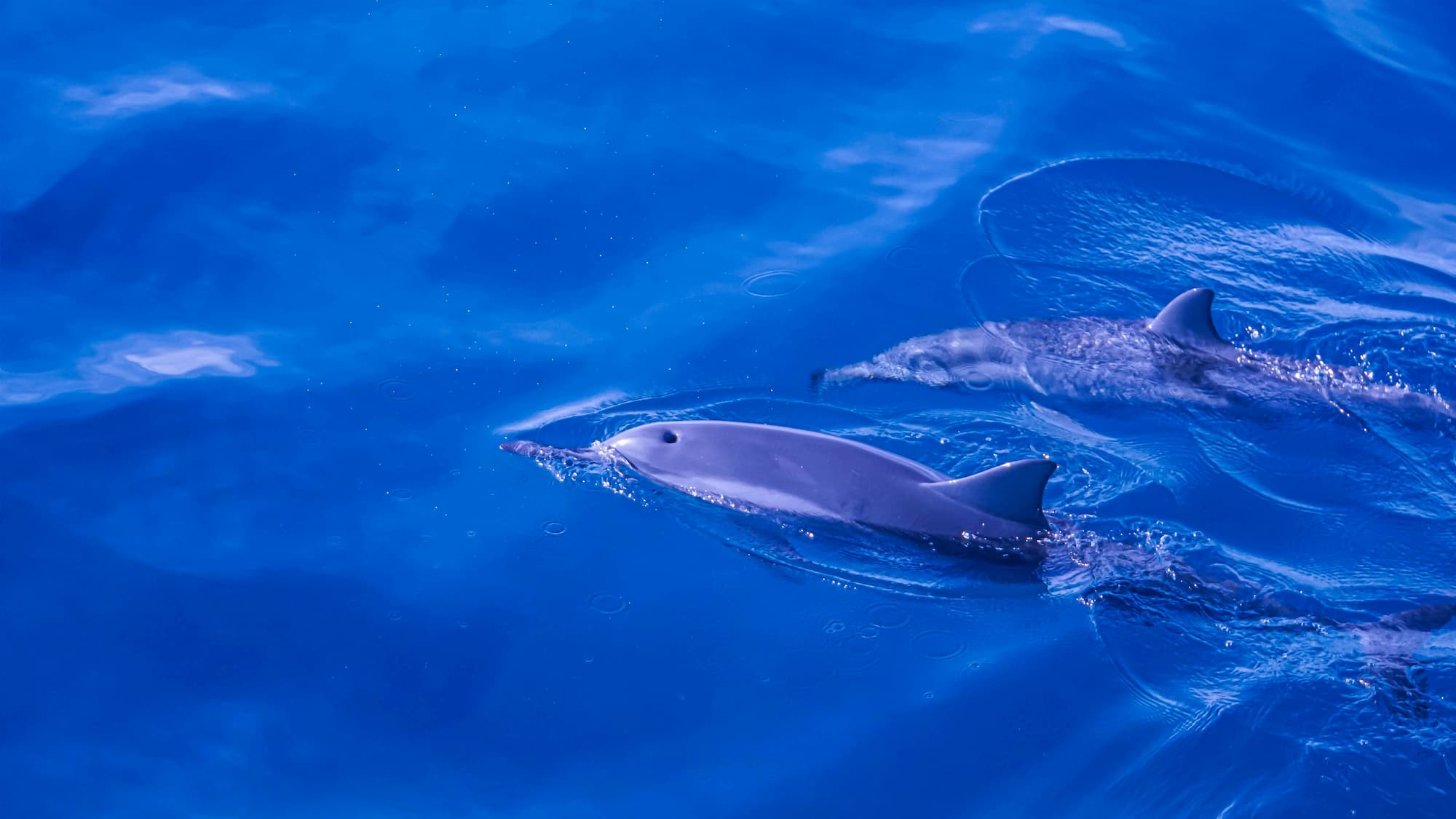
Two bottlenose dolphins swimming off the coast of Kauaʻi. Photo by Srikanta H. U on Unsplash
WHERE TO SEE THE HAWAIIAN MONK SEALS
Hawaiian Monk Seals are native to Hawai‘i and one of the most endangered seal species in the world. Their current population is less than 1,500 and only a small percentage of those live in the waters around the main Hawaiian Islands, with most preferring to live around the uninhabited Hawaiian Islands to the northwest of Kaua‘i.
As a result, they are protected by the Endangered Species Act and also hard to find. If you’re lucky, though, you can spot them from time-to-time resting on the beach – usually one in a remote area away from crowds, such as along the Nāpali Coast. But, occasionally, they will pop up on one of the beaches along the south shore near Po‘ipū.
For the best chance of seeing a monk seal, head for remote beaches or get out to more popular areas in the early morning. Seeing a monk seal is not something to build your trip around, but a nice surprise should you come across one.
WHERE TO LEARN MORE ABOUT KAUA‘I’S MARINE LIFE
Kaua‘i has one educational center where you can learn more about its marine life:
Kaua‘i Ocean Discovery
Before you jump in the water, we recommend grabbing a quick overview of our Hawaiian waters at Kaua‘i Ocean Discovery. Located in Līhuʻe, it will give you an overview of some of the species you may encounter in the water, as well as some background on the Hawaiian Island chain. Stop by for a quick visit if it’s convenient.
NATIVE PLANTS, TREES, AND FLOWERS
As one of the most isolated land masses and island chains in the entire world, the Hawaiian Islands are home to a wide variety of native and endemic species. In total, the Hawaiian Islands have more than 11,000 native and 10,000 endemic species, with more than 3,000 different plants, 1,150 of which are endemic.
Read more about Hawaiian native and endemic species in our blog.
To experience some of the local flora, it’s best to get out on a hiking trail, into a natural reserve, or visit a botanical garden.
BOTANICAL GARDENS
As the Garden Island, Kauaʻi is home to some spectacular botanical gardens. In fact, three of the nation’s five National Tropical Botanical Gardens are found on Kauaʻi: Allerton Garden, McBryde Garden, and Limahuli Garden.
- Allerton Garden: Features the giant Moreton Bay Fig Trees (Australian Banyan).
- McBryde Garden: Home to the largest collection of native Hawaiian flora in the world.
- Limahuli Garden: Views of the North Shore complement the collection of endangered native plants and agricultural terraces.
Another botanical garden to consider is Na ‘Aina Kai, featuring artistic bronze statues and more than 240-acres of tropical landscape.
HIKING IN NATURAL RESERVES
Kaua‘i might not have any marine sanctuaries, but it certainly makes up for it on land with its myriad forest reserves, perfect for hiking and bird watching.
From the big ticket items like Waimea Canyon, Kokeʻe State Park, and the Nāpali Coast State Wilderness Park to the array of smaller forest reserves, there’s a hiking trail for everyone. Check out our 15 favorite hikes on Kaua‘i to get an overview of the best trails and what they offer.
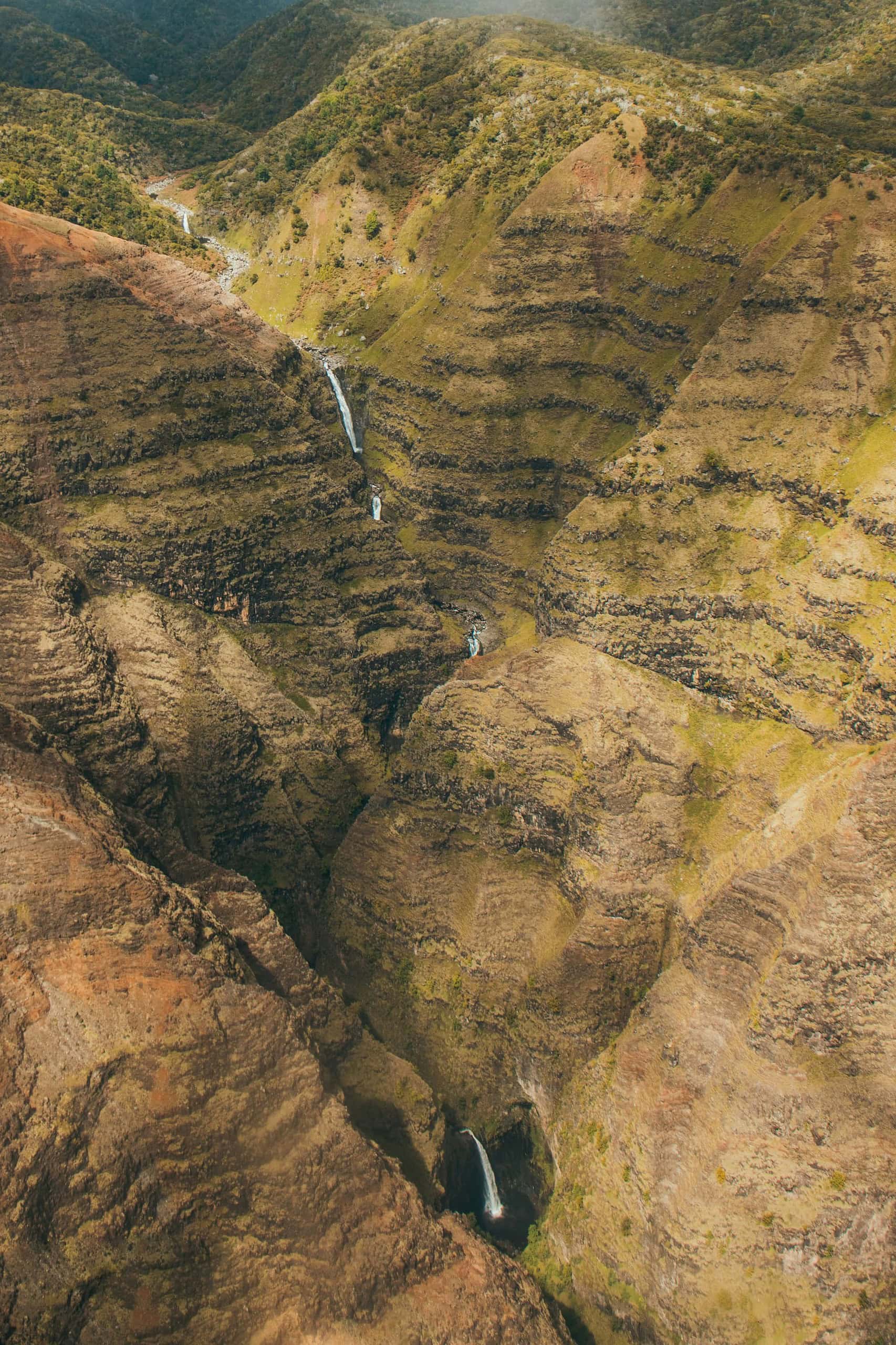
Waimea Canyon offers some truly spectacular hiking opportunities. Photo by Helen Ngoc N. on Unsplash
TERRESTRIAL WILDLIFE ON KAUA‘I
Living in the middle of nowhere in the heart of the Pacific Ocean means that most land mammals in the world are not found in Hawai‘i. Anything that made it to these islands would have had to arrive via one of the “three Ws”: Wind, Water, or Wings. So it makes sense then that while we have a lot of native fish and birds, there are only two native mammals in the islands: a bat and the aforementioned monk seal.
BIRD WATCHING ON KAUA‘I
Bird lovers, rejoice: The Hawaiian Islands have 294 different bird species, with 63 being native.
One of the best places to begin your birding adventure is at the Kīlauea National Wildlife Refuge, where many different types of seabirds can be found, including red-footed boobies and Laysan albatross.
For native forest birds, head to Koke‘e State Park for elevated forests, or the Wailua River Valley for rainforest terrain.
If you’re really into birding, jump on a tour with Kaua‘i Birding Tours, or with Timber’s Kaua‘i. You can always ask your concierge to connect you with bird tours and experts.
For more information on birding on Kaua‘i and Hawai‘i in general, there’s information available via the Hawaiʻi Aubon Society or the Hawaiʻi Birding Trails website. Or, check out this website for a list of native bird calls.
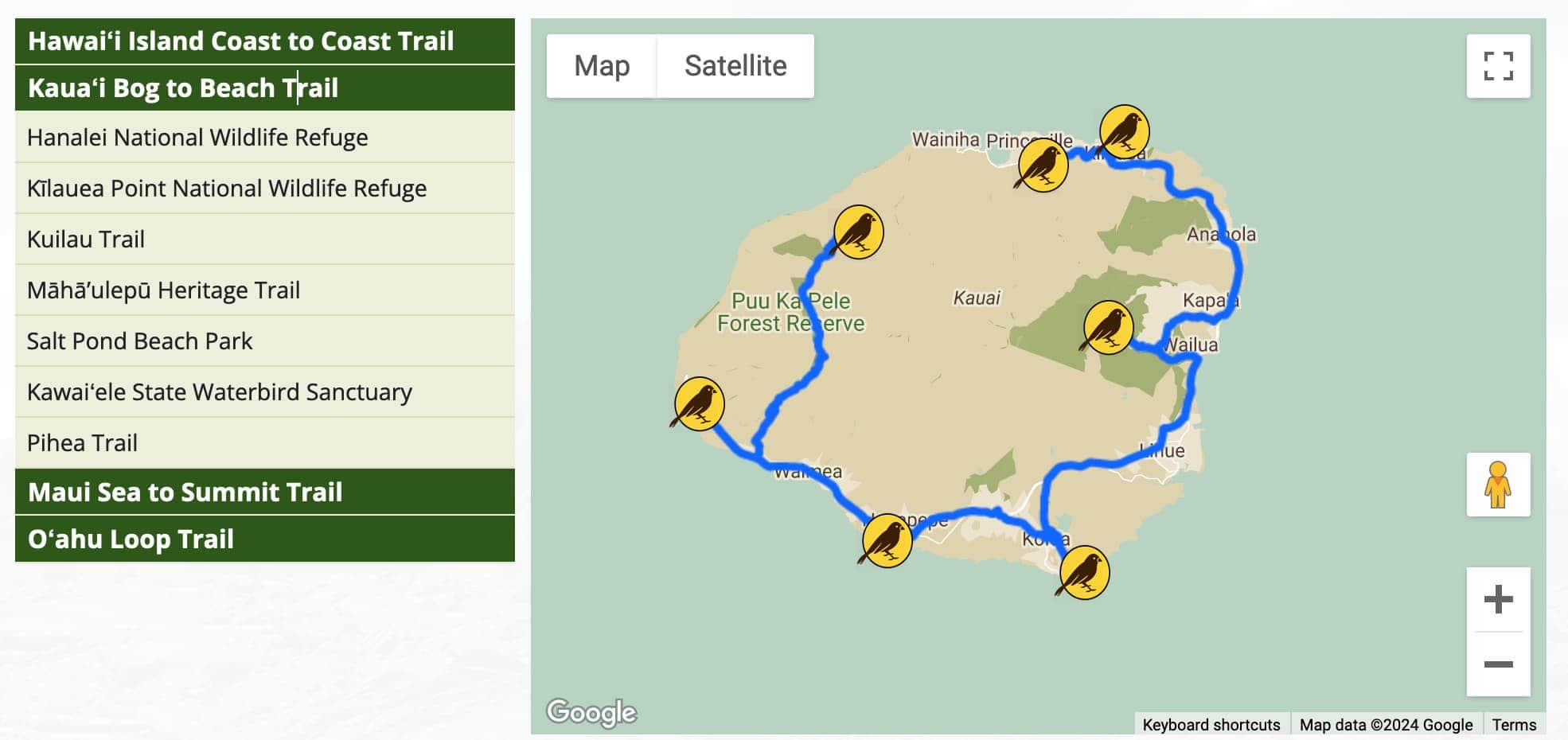
There are 7 birding trails on Kauaʻi. Image from the Hawaii Birding Trails website.