Wailua Falls drops 173 feet, 5 miles north of the Līhuʻe airport, and the parking is at the top of the falls rather than the bottom. Līhuʻe is Kauaʻi’s airport town and island capital, and its ten main stops sit within a few minutes of each other, including a 3,000-acre working cattle ranch and a saimin counter open since 1952.
The Līhuʻe hotels are the cheapest on Kauaʻi, so the town works as a base for a whole island trip. Costs run from $15 at the Kauaʻi Museum to $150 for a morning on the Hulēʻia River.
Table of contents
The ten entries are listed alphabetically, not ranked. For the rest of the island, see our guide to sights and destinations on Kauaʻi.
Golf
There are two golf courses in Līhuʻe, the Puakea Golf Course and the Ocean Course at Hokuala. Just north, technically in Wailua/Kapaʻa but only 5 miles from Līhuʻe, is the Wailua Municipal Golf Course.
Why Go: Nearly every hole on these three courses has an ocean or a mountain view, and the trade winds blow across all of them. Puakea posts $149 for 18 holes booked online, and the Ocean Course at Hokuala publishes no green fee at all, pricing its tee times through a booking widget instead. Wailua Municipal is the county-run course of the three.
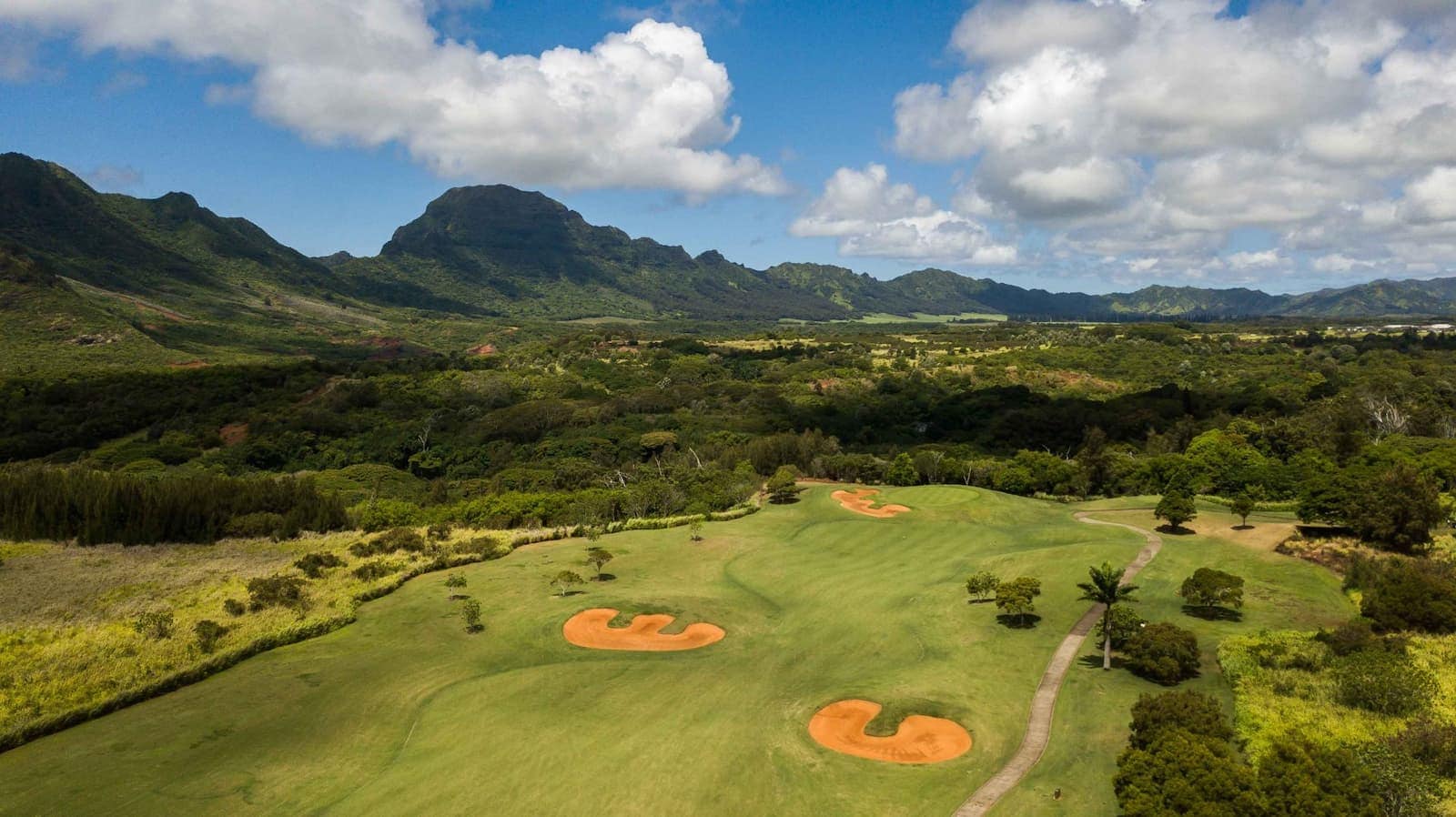
The Puakea golf course has pali views on about three-quarters of the holes and ocean views on the rest. Image: Puakea Golf Course.
Hulēʻia River Kayaking and the Alakoko Fish Pond Overlook
The area surrounding the Hulēʻia River is a national wildlife refuge, and the jungle starts a few minutes from downtown Līhuʻe. The Hulēʻia National Wildlife Refuge can be seen from an overlook maintained by the State of Hawaiʻi at the Alakoko (Menehune) Fish Pond.
Several outfitters run tours of the Hulēʻia River by kayak, and some, like Outfitters Kauaʻi, add a hike to a waterfall along the way.
Why Go: You can’t go into the refuge, but the kayak tours run the river alongside it. Outfitters Kauaʻi runs its Hidden Valley Falls trip in 2.5 to 3 hours, at $150 per adult and $140 for ages 5 to 17. The paddle out suits beginners, and the hike is 1.5 miles over uneven rainforest ground. A twin-hull canoe motors the group back, so nobody paddles upstream. Wear shoes you don’t mind soaking.
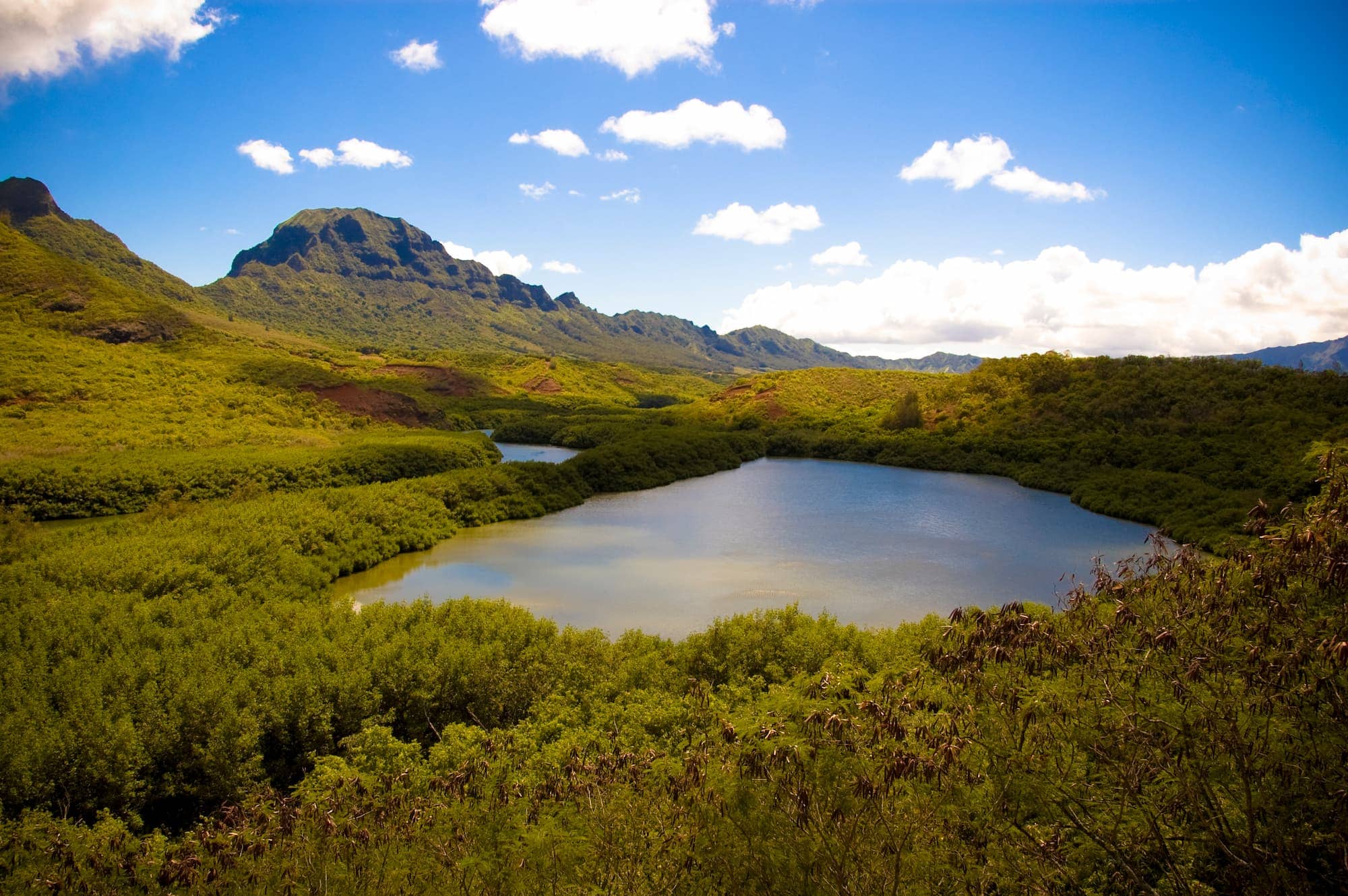
On the southeast side of Kauaʻi near the town of Līhuʻe, the Hulēʻia National Wildlife Refuge sits next to the Alakoko (Menehune) Fishpond, which is listed on the National Register of Historic Places. Image credit: KAVEBEAR, source.
Kalapaki Beach
Kalapaki is the main beach in Līhuʻe, walkable from many of the hotels. It’s also a hub for watersports, with surf shops renting boards and snorkel gear. If you want to walk to the sand from your room, book one of the hotels on the bay rather than a place in town.
Why Go: The surf here is calm enough for beginners most days. The shoreline is walkable end to end, and the hotel restaurants are a minute back from the sand.
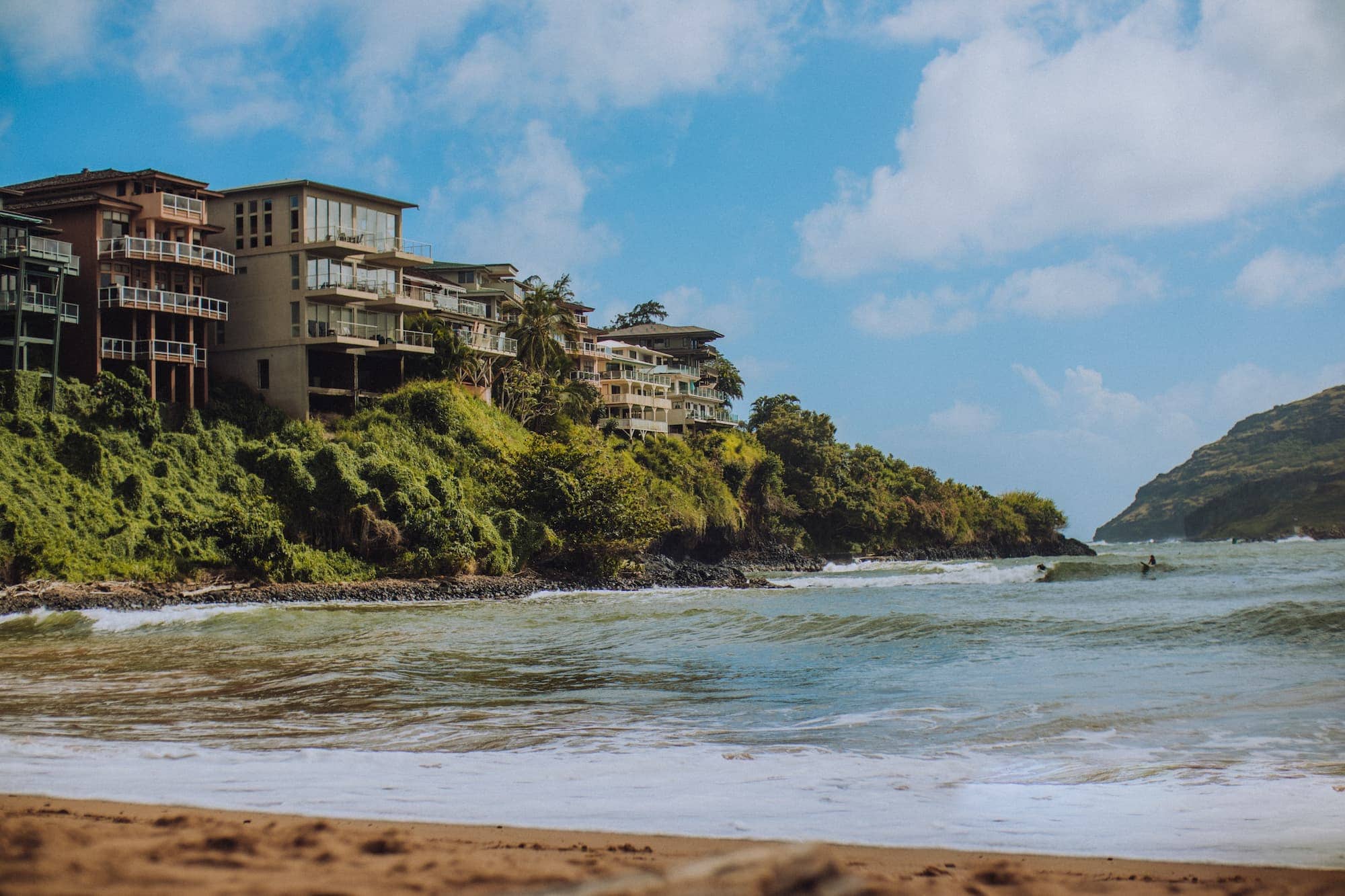
Just outside downtown Līhuʻe, Kalapaki Beach is a convenient place to swim and sunbathe in the city. Photo by Zane Persaud on Unsplash
Kauaʻi Bakery
Līhuʻe has a resident population, so the small family-run places stay open year-round rather than living off hotel traffic. Kauaʻi Bakery is one of them.
Why Go: A malasada is a Portuguese donut and one of the standard local treats in Hawaiʻi. Kauaʻi Bakery makes them fresh in the mornings, so go before they sell out.
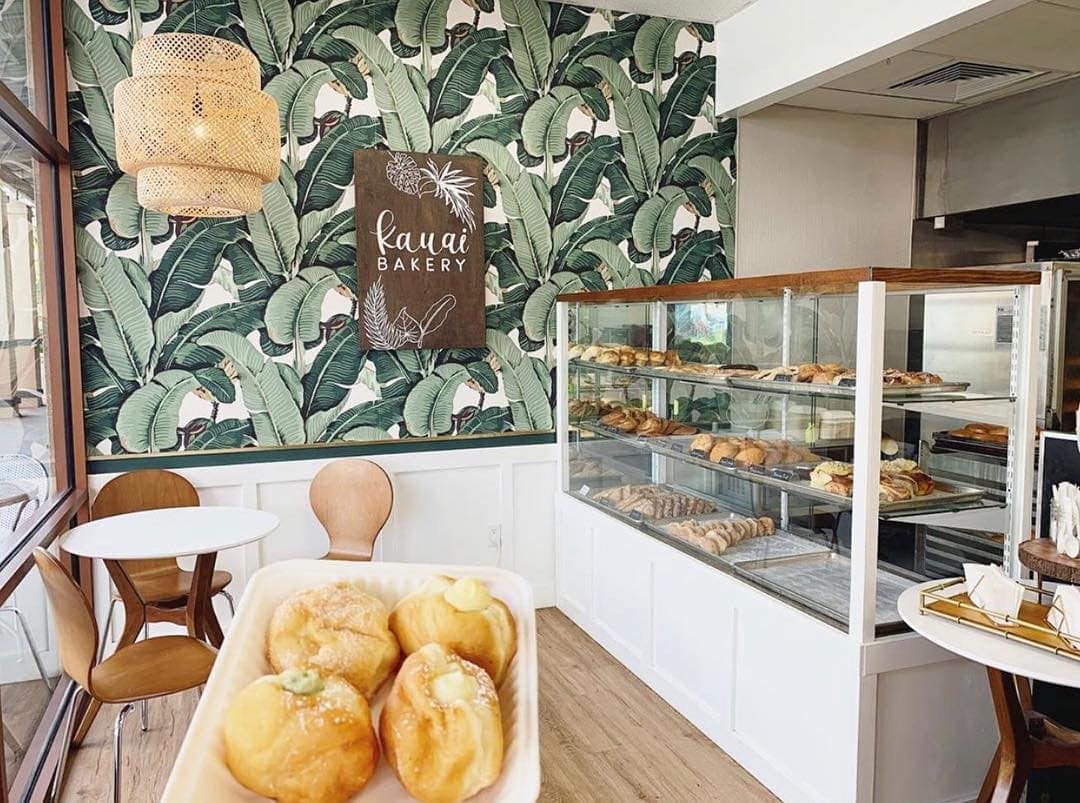
Malasadas at the Kauaʻi Bakery. Image: the Kauaʻi Bakery.
Kauaʻi Museum
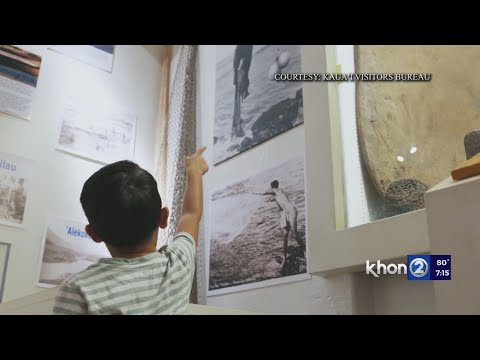
We know there are plenty of other distractions in Hawaiʻi that may keep you from a museum. Fair enough. But if you’re after a little perspective on the island, the Kauaʻi Museum in downtown Līhuʻe covers the royal families that once ruled Kauaʻi and the island’s natural history.
Why Go: Captain Cook is most remembered for his final days on the Big Island, but Kauaʻi was the first place he landed in Hawaiʻi. It was also the only island King Kamehameha never conquered in his campaign to unite the archipelago. Adult admission is $15. It’s open 9am to 4pm on weekdays and 9am to 2pm on Saturdays, closed Sundays. An hour or two covers it.
Related: our list of cultural and historical activities on Kauaʻi.
Kilohana Plantation
An old sugar cane estate, the Kilohana Plantation now holds several restaurants and the Lūʻau Kalamaku. Most of what else runs on the grounds is built around sugar cane, past and present.
Hawaiʻi has a long history of sugar cane production dating to the mid-1800s. It’s no longer grown commercially at scale, but small amounts still go to local use.
Why Go: The Kilohana Plantation Train is a 40-minute narrated ride through the grounds, stopping at the family orchard and the animal farm. It runs hourly from 10am to 2pm every day, with two later departures on Tuesdays and Fridays at 4:30pm and 5:30pm. Adults pay $23.50, ages 3 to 12 pay $16.50.
Kōloa Rum has its tasting room on the same grounds and runs tastings every hour from 11am to 4pm, Monday to Saturday. The tasting is free, with a $5 booking fee. Reserve ahead, because walk-ins aren’t guaranteed, and everyone in the party has to be 21 and carrying physical photo ID.
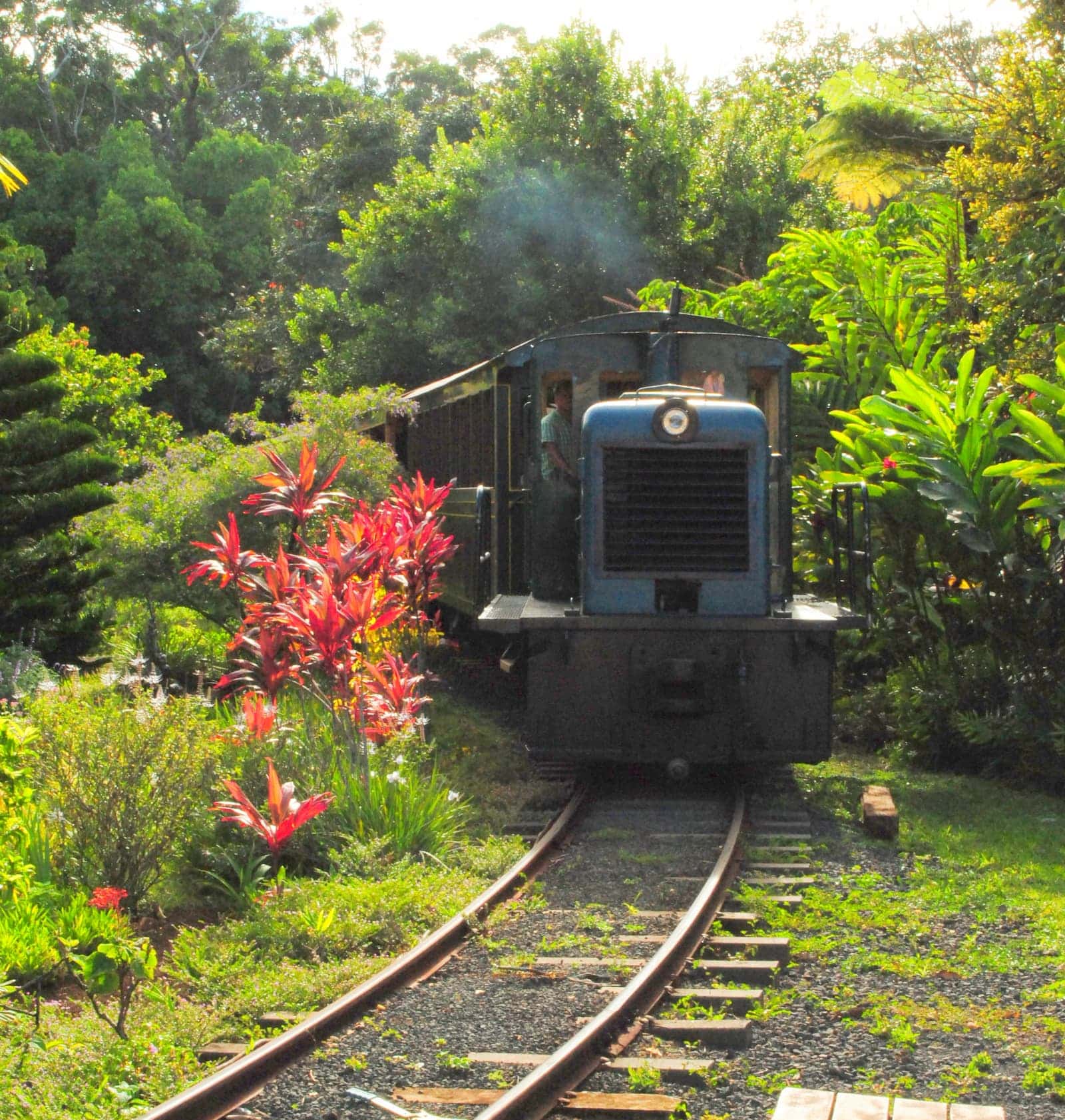
The Kilohana Plantation Train in operation. By Rwminix, Own work, CC BY-SA 3.0, source.
Kīpu Ranch ATV Tours
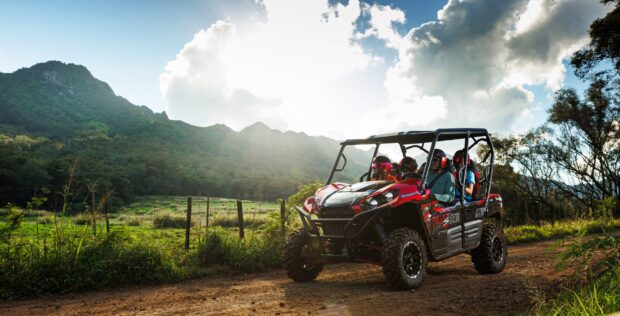
Kīpu Ranch is a private 3,000-acre cattle ranch outside Līhuʻe that opens to visitors only on its ATV tours.
Why Go: It’s still a working cattle operation, and the three-hour tours cross it on ranch roads past waterfalls and lookouts, from $187 per adult. Drivers have to be 18 or older with a physical driver’s license, not a photo of one. Kids can ride along as passengers from age 9.
Waterfall Trail Expedition: 4×4 UTV Ride to a Private Kauaʻi Waterfall
Drive your own Kawasaki 4x4 across a 3,000-acre Kauaʻi cattle ranch, crossing open pasture, mountain, and bamboo jungle trails to a private waterfall with an optional swim.
from:
$187
What is a suggested tour?Our suggested tours are hand-picked tours that receive consistent good reviews, give back to the community, and work hard to minimize their impact on the environment. Read more about these tours on our website.
Lūʻaus
There are two lūʻaus in Līhuʻe: Lūʻau Kalamaku at Kilohana Plantation, and Feast of the Pacific at the Royal Sonesta Kauaʻi Resort on Kalapaki Bay, one of the few on Kauaʻi staged directly on the sand. Our Kauaʻi lūʻau guide carries the current prices and show nights for both.
Why Go: Both shows run two to three hours over dinner, built around a stage performance that draws from across Polynesia rather than Hawaiʻi alone. Dinner is where you’ll find kalua pork and poi. Lūʻau Kalamaku includes an open bar.
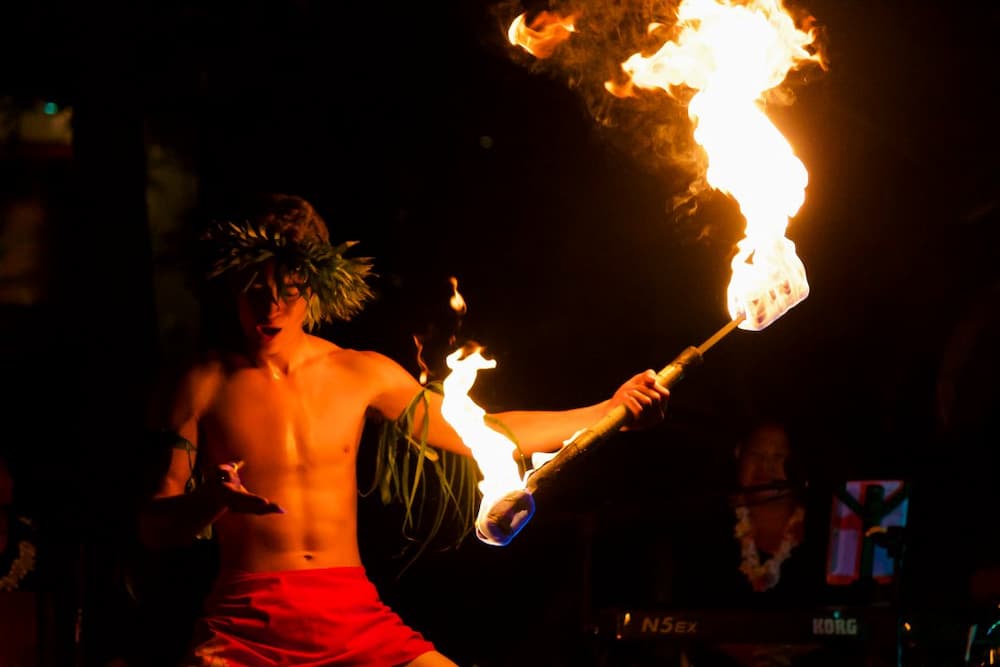
Fire dancers at a lūʻau on Kauaʻi. Image credit: the Hawaiʻi Alive Lūʻau Facebook page.
Saimin
You’ll find saimin on menus across Līhuʻe. The saimin noodle is similar to ramen, though chewier and a bit more flavorful. It’s often served as a soup, in a clear broth with pork.
Saimin came out of Hawaiʻi’s plantation camps, where Japanese and Chinese noodle traditions blended with everything else in the pot, and it has been on local menus ever since. Try it at Hamura Saimin or Garden Island Barbecue, both in Līhuʻe.
Why Go: Hamura Saimin has been serving bowls since 1952 and won a James Beard America’s Classics award for them.
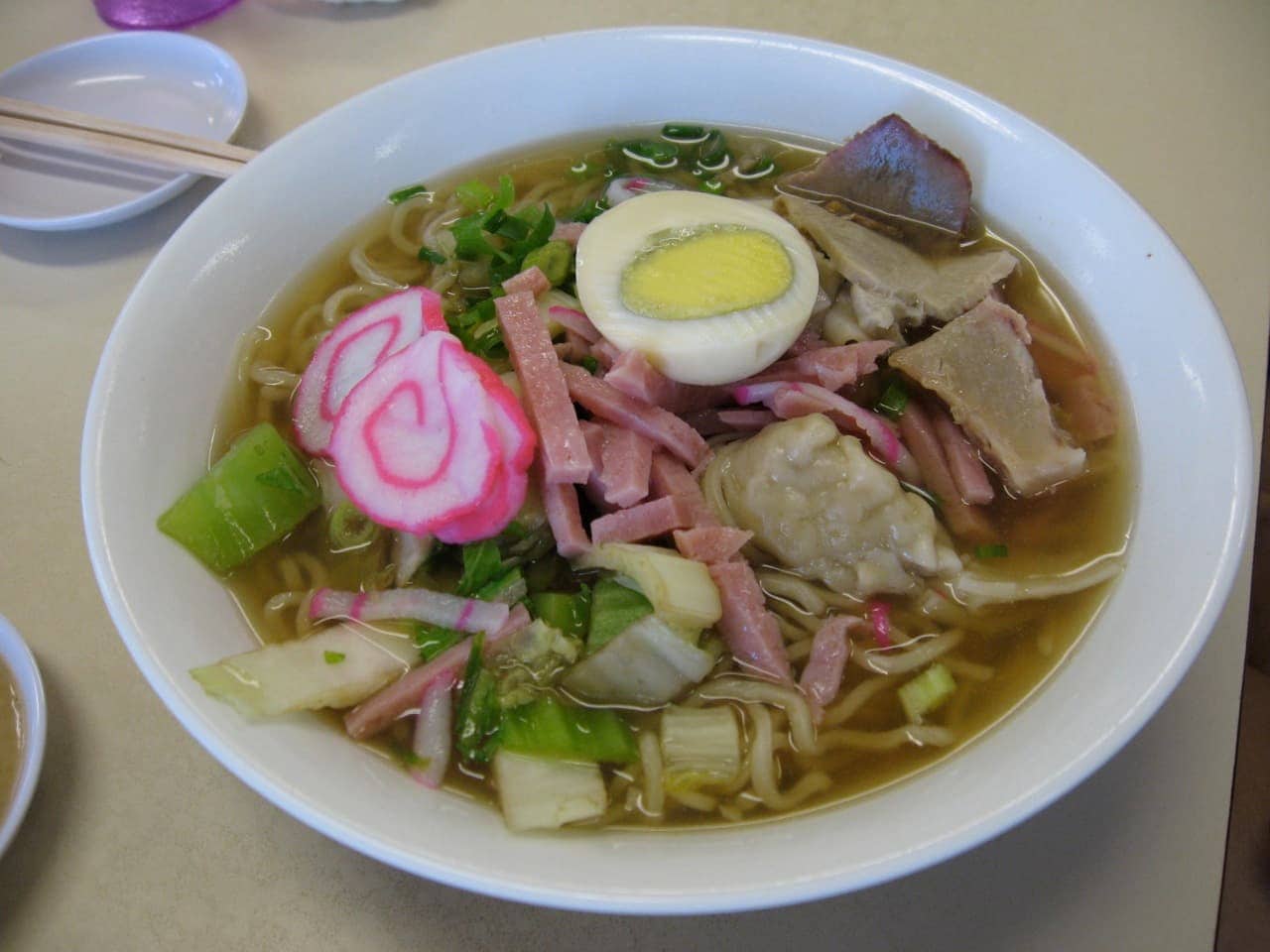
A bowl of saimin at Hamura Saimin in Līhuʻe. Image by Arnold Gatilau on Flickr.
Wailua Falls
Wailua Falls sits in Wailua River State Park, north of town. The lot is at the top of the falls, so you look down into the pool rather than up at the drop.
Why Go: The overlook is a few steps from the car. Go early in the morning or late in the afternoon to beat the crowds.
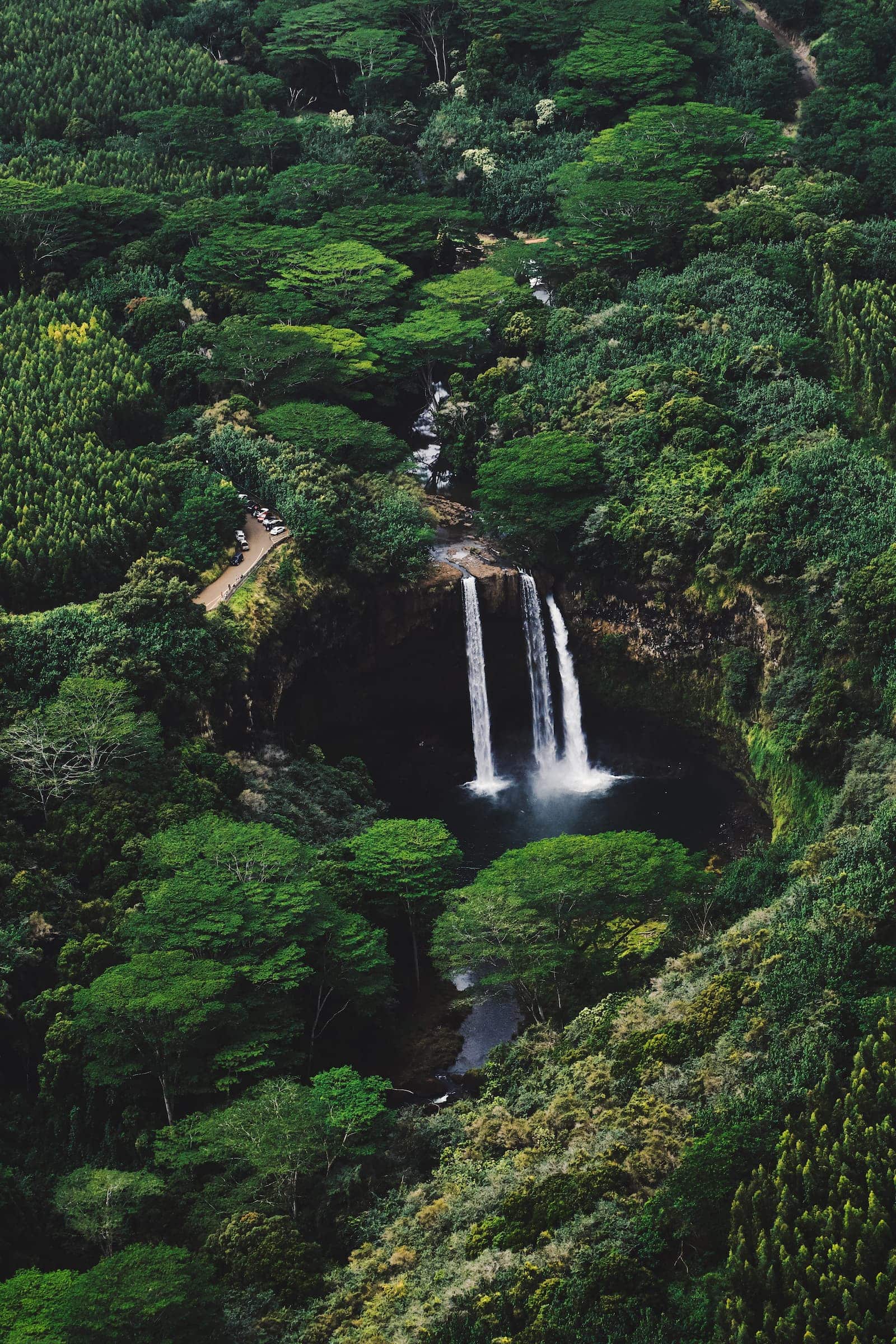
The Wailua Falls. Credit: Hawaiʻi Tourism Authority (HTA) / Jakob Owens