
Whale season on the Big Island runs from November through April, and it’s the only time of year you’ll see humpbacks offshore. In winter, snow can close the Mauna Kea summit for days at a time, while the eruptions at Kīlauea keep going regardless of season.
Hilo gets over 100 inches of rain a year while Kona sees 20 to 30, so staying on the west side in winter is the simplest way to dodge most of the wet season. From there, the right month depends on whether you’re chasing beach days, lower prices, or fewer crowds.
Table of contents
- Why visit?
- What is the best time to visit the Big Island:
- Seasonal weather trends: a month-by-month breakdown for the Big Island
- How to avoid rain during the rainy season on Big Island.
Details below last verified July 2026.
| Name | Best time | Why |
|---|---|---|
| 1Beach days (Details ↓) | Summer, though May-October all work | Warmest, most consistent sun |
| 2Whale watching (Details ↓) | November through April | The only window humpbacks are here |
| 3Snorkeling (Details ↓) | Spring, summer, or fall | Winter brings more swell and storm risk |
| 4Lava and volcano access (Details ↓) | Any season for eruptions; summer for the Mauna Kea summit | Eruptions aren't seasonal, but winter snow can close the summit |
| 5Hiking (Details ↓) | Winter for coastal lava fields, summer for high elevation | Heat and elevation trade off by season |
| 6The cheapest rates (Details ↓) | September, also August, October, November, and May | January and February run above average (whales, snowbirds); December is priciest |
| 7Fewer crowds (Details ↓) | September, also November and May | January runs busier than the shoulder months around it; summer and December draw the most visitors |
| 8Driest weather (Details ↓) | Kona (west side) in winter | Hilo gets 100+ inches of rain a year, Kona just 20 to 30 |
Why Visit the Big Island?
The Big Island is larger than all the other Hawaiian islands combined, and it holds 8 of the world’s 13 climate zones on one landmass.
On a visit, you can taste fresh Kona coffee in the morning, stand amongst the snow atop Mauna Kea at nearly 14,000 feet in the afternoon, and then explore white, black, and green sand beaches at sea level at sunset. The island has five volcanoes, including Kīlauea, one of the world’s most active volcanoes, as well as many historical and cultural sites.
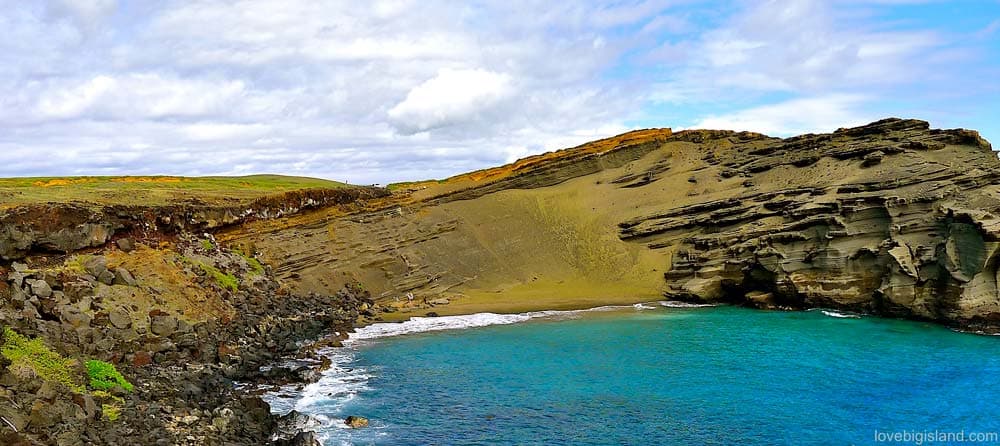
Green Sand Beach (Papakōlea) on the Big Island is one of only two green sand beaches in the United States.
What is the best time to visit the Big Island?
Temperatures barely swing here, but ocean conditions, rain, and daylight hours shift enough to change what’s possible on any given trip.
The answer to “what’s the best time to visit” is: it depends on what you’re doing and what you’re willing to pay.
- for the beaches?
- to see whales?
- for snorkeling?
- for the volcanoes?
- “on the cheap?”
- to skip the crowds?
- for the weather?
What is the best time to visit the Big Island for the beaches?
Summer has the best beach days, with spring and fall close behind. Winter still has sunny days, just fewer of them, so for the most consistent beach weather, plan between May and October.
- Check out our list of beaches on the Big Island to start planning.
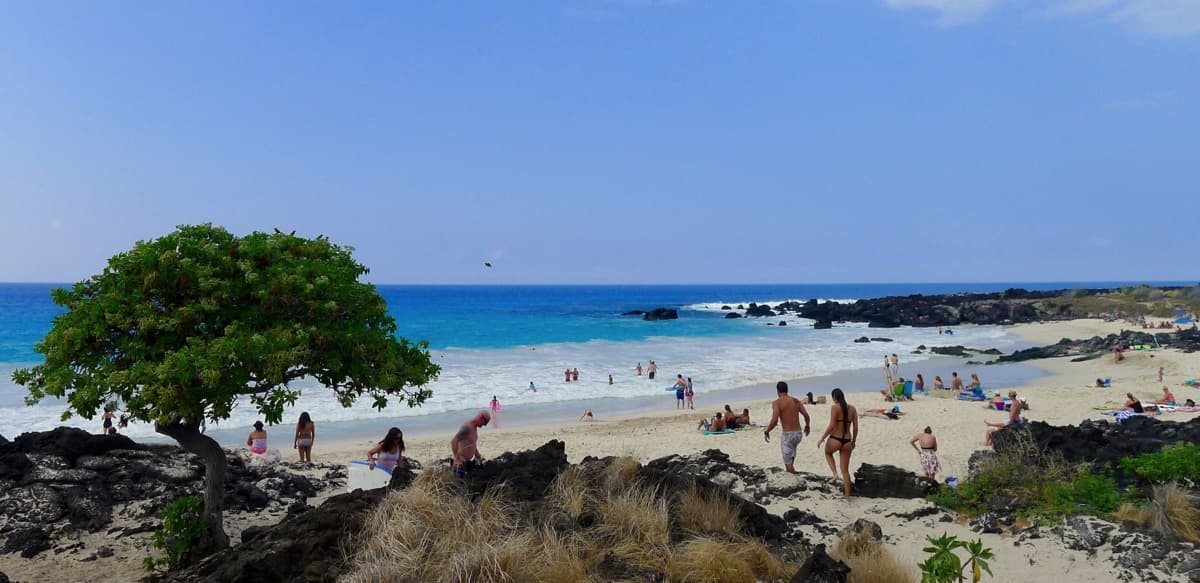
Kua Bay beach is one of our favorite Big Island beaches.
What is the best time to visit the Big Island to see whales?
Whale season runs during the winter months, from November through April. This is the only time frame you can see humpback whales in the islands; whale watching tours get busier from mid-December and run until early April. January and February tend to be the peak months for whales.
- Have a look at our complete guide to whale watching on the Big Island (DIY and boat tours) for the full picture.
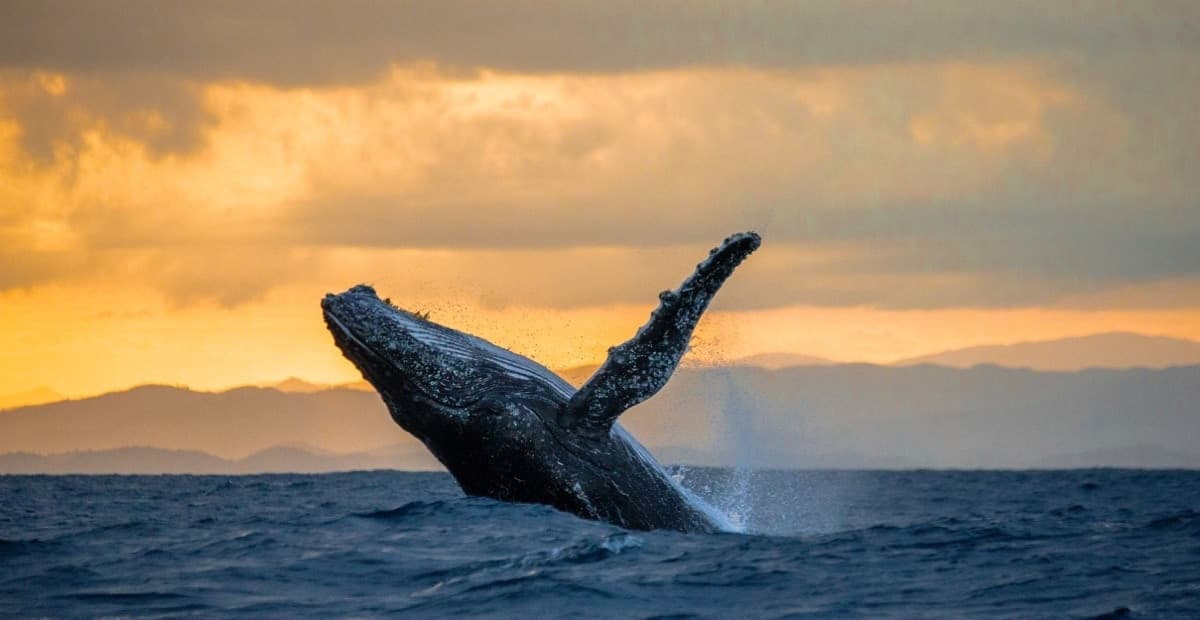
A humpback whale breaches the surface.
What is the best time to visit the Big Island for snorkeling?
Snorkeling works on the Big Island in any season, but the water is calmer more often in spring, summer, and fall. In winter, swell and storm swings are more likely, and can shut down a session with little warning.
If you have your heart set on multiple days of snorkeling in multiple places, you should plan for the summer months, just to be safe. If you want to snorkel maybe once or twice and aren’t too particular about it, you can feel free to go any time of year.

Choose the summer months for your visit if snorkeling is the main focus of your visit to the Big Island. Photo by Subtle Cinematics on Unsplash.
Here are a few resources to start planning your snorkeling trip:
- Our 3 favorite snorkeling spots on the Big Island
- The best snorkeling spots for beginners
- the 14 best snorkeling spots on the Kona Coast
- and our overview article about snorkeling on the Big Island
What is the best time to visit the Big Island for the volcanoes?
Nothing in the seasons will affect the activity of the volcanoes on the Big Island. They erupt (or don’t erupt) in winter just the same as they do in summer, and there is no data to support that eruptions are more likely at certain times of the year.
The weather at the summits does change with the seasons. Kīlauea’s summit sits inside Hawaiʻi Volcanoes National Park at 4,000 feet above sea level, while the summit of Mauna Kea is about 13,800 feet. Only 4WD vehicles are allowed past the Visitor Information Station at 9,200 feet on Mauna Kea, year-round, and most rental cars aren’t permitted to make the drive, so check with your rental company before you plan on it. During winter, the summit road can also close outright for snow and ice. (A cool winter day at Kīlauea, meanwhile, is often the easiest time to hike the lava fields, which turn brutally hot by midsummer.)
There will be, however, more variable weather patterns in winter, and a higher chance of rain and wind. For those wanting to visit the summit of Mauna Kea and do some stargazing, spring, summer, and fall are the best options.
- See our guide on how to see lava on the Big Island for planning details.
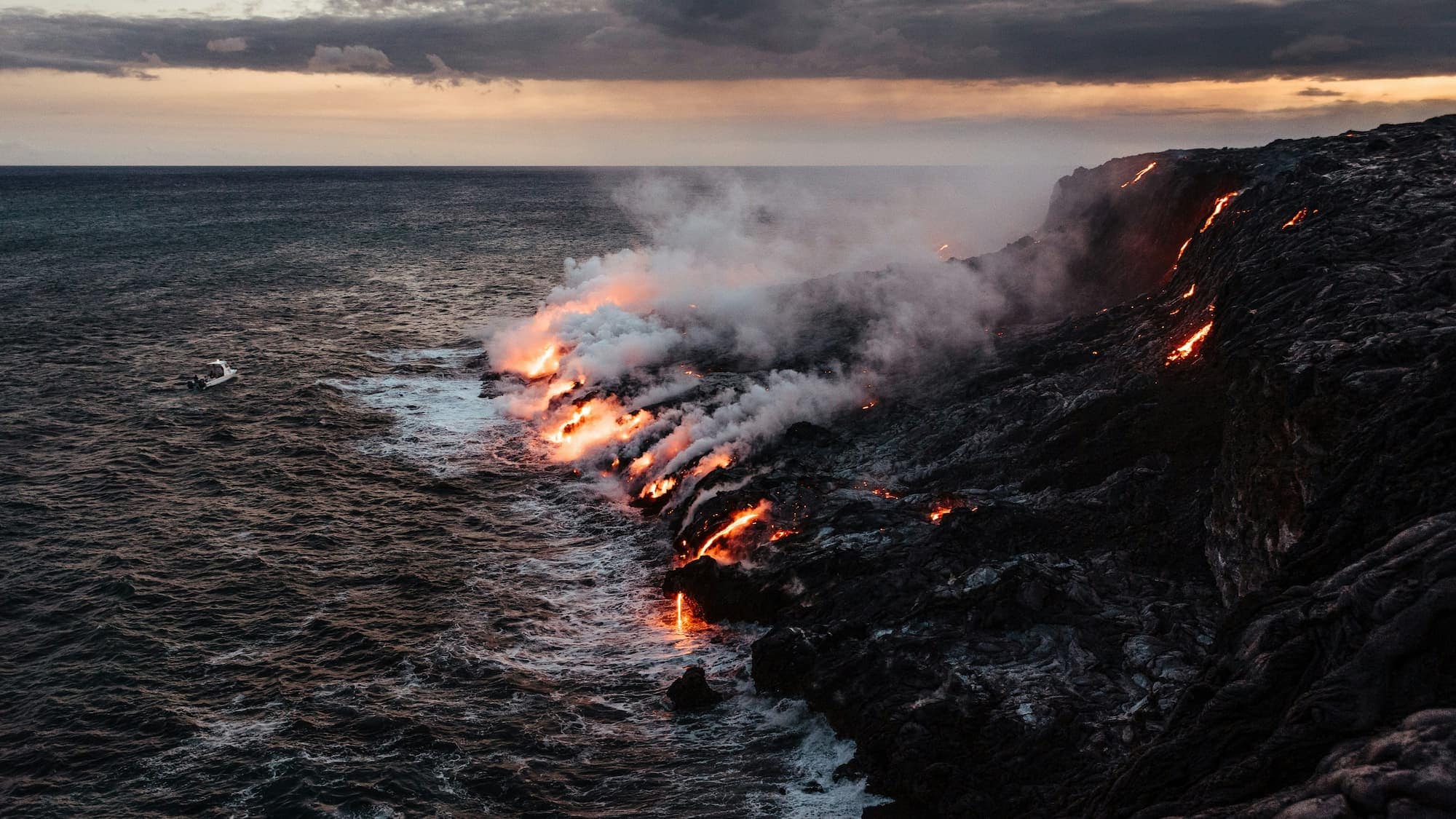
Kīlauea has been erupting on and off at its summit since December 2024, with intermittent lava fountaining episodes. Check the USGS Hawaiian Volcano Observatory for the current status before you go. Image by Cedric Letsch on Unsplash.
What is the best time to visit the Big Island for hiking?
Winter: Coolest temperatures, great for exploring coastal lava fields. Cold temperatures at higher elevations could make certain hikes undesirable, such as the summit area of Mauna Loa.
Spring: A great time to explore the rainforests, when the waterfalls run fullest after the winter rain.
Summer: Best time to explore high elevations. Rainforests, summit areas, and forest hikes have lots of shade during hot days. Hikes without shade, such as coastal lava fields, may be uncomfortably hot.
Fall: Cooler, dry weather makes hiking pleasant almost anywhere, though higher elevations call for a bit more gear as temperatures drop.
- Walk through our 5 favorite short hikes on the Big Island as a warm-up.
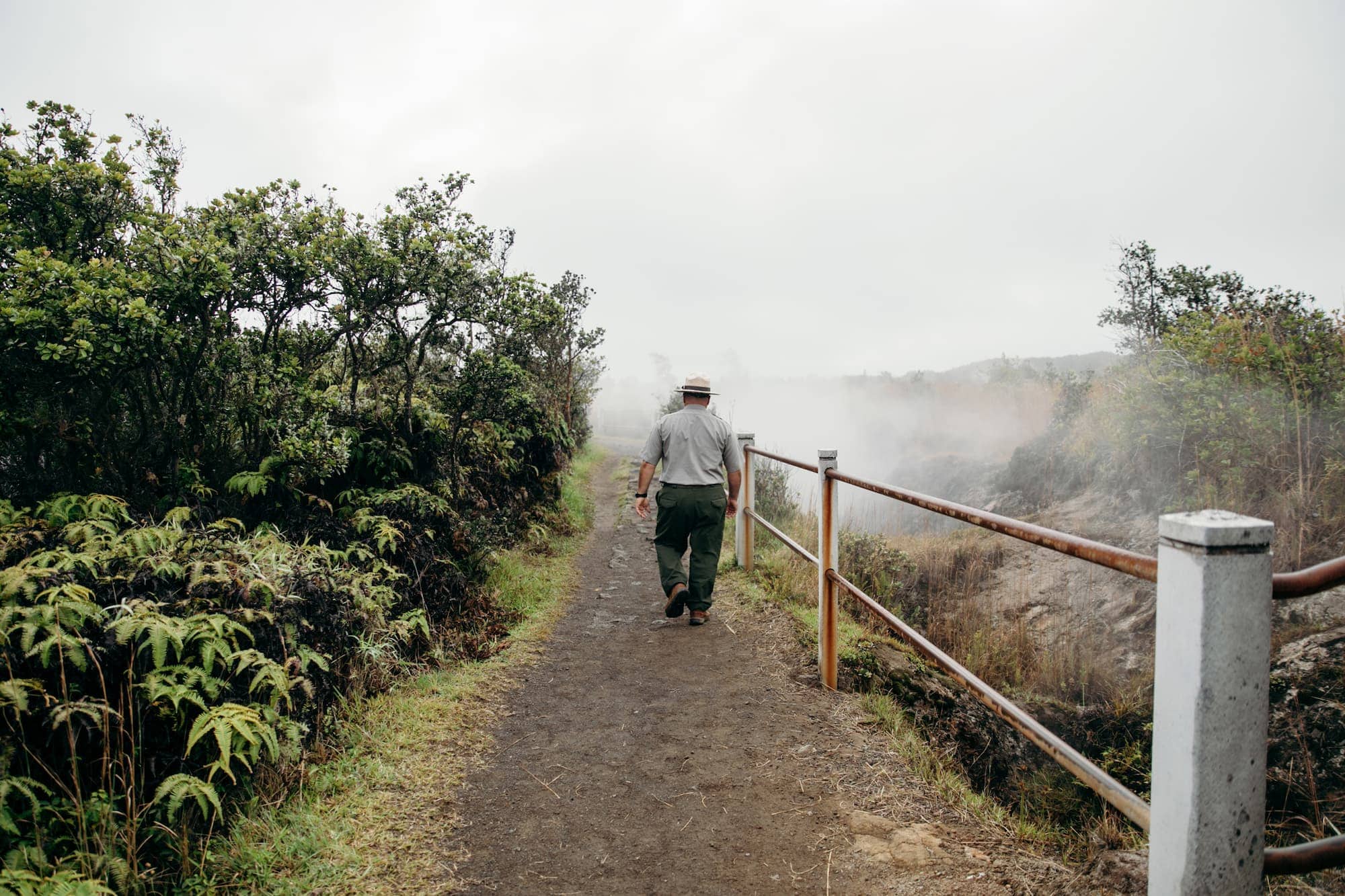
Hiking in Hawaiʻi Volcanoes National Park. Hawaii Tourism Authority (HTA) / Heather Goodman / @hbgoodie
What is the best time to visit the Big Island “on the cheap?”
September is the cheapest month for Big Island accommodation, with August, October, November, and May also running below average. Summer rates are high too, but the single priciest stretch is the holiday season, Thanksgiving through New Year’s.
January and February are winter months that are not cheap: whale season and mainland snowbirds keep both months running above the annual average, so don’t expect a shoulder-season discount then.
The Big Island has fewer accommodation options than, say, Oʻahu, so don’t expect prices to swing wildly, especially in the most popular areas, such as downtown Kailua-Kona.
Save some money with our following guides:
- See our guide to where to stay on the Kona Coast for ANY budget.
- Our list of free and cheap things to do on the Big Island
- Another good read is our guide titled “6 Ways to Save Money when Planning a Trip to Hawaiʻi“.
How nightly rates move through the year
Vacation rental and hotel rates on the Big Island climb for the December holidays and the summer break, then drop in the spring and fall shoulder weeks. Both track three years of Hawaiʻi Tourism Authority reporting and update as new months come in.


What is the best time to visit the Big Island if you want to skip the crowds?
September is the quietest month on the Big Island, with November and May also running well below average. By HTA’s average daily census, whale season and mainland snowbirds make December, January, and February the three fullest months on the island. March and April vary week to week with spring break, and summer runs above average too.
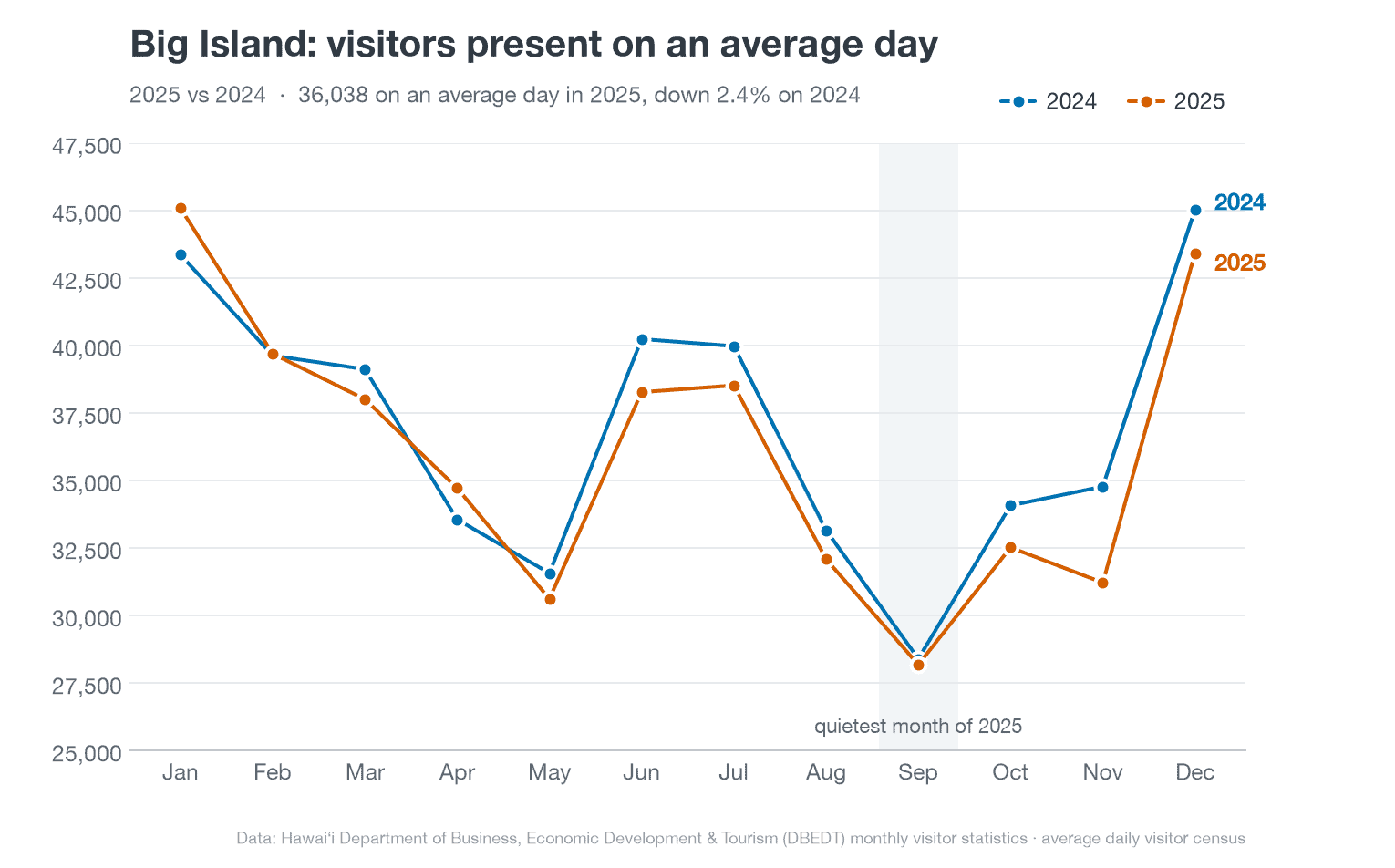
Visitors on the Big Island on an average day, by month, 2024 and 2025. September is the emptiest month by a wide margin, with May, August, and November also below the yearly average. December and January are the fullest.
More tips & tricks on how to skip the crowds
Our tips on how to skip the crowds and have a peaceful Hawaiʻi holiday.
What is the best time to visit the Big Island for the weather?
It depends on what weather you prefer.
Summer has the most sun. Winter has the waterfalls running full, and more clouds.
What is the best time to visit the Big Island for active travelers?
June days on the Big Island run about 2.5 hours longer than December days.
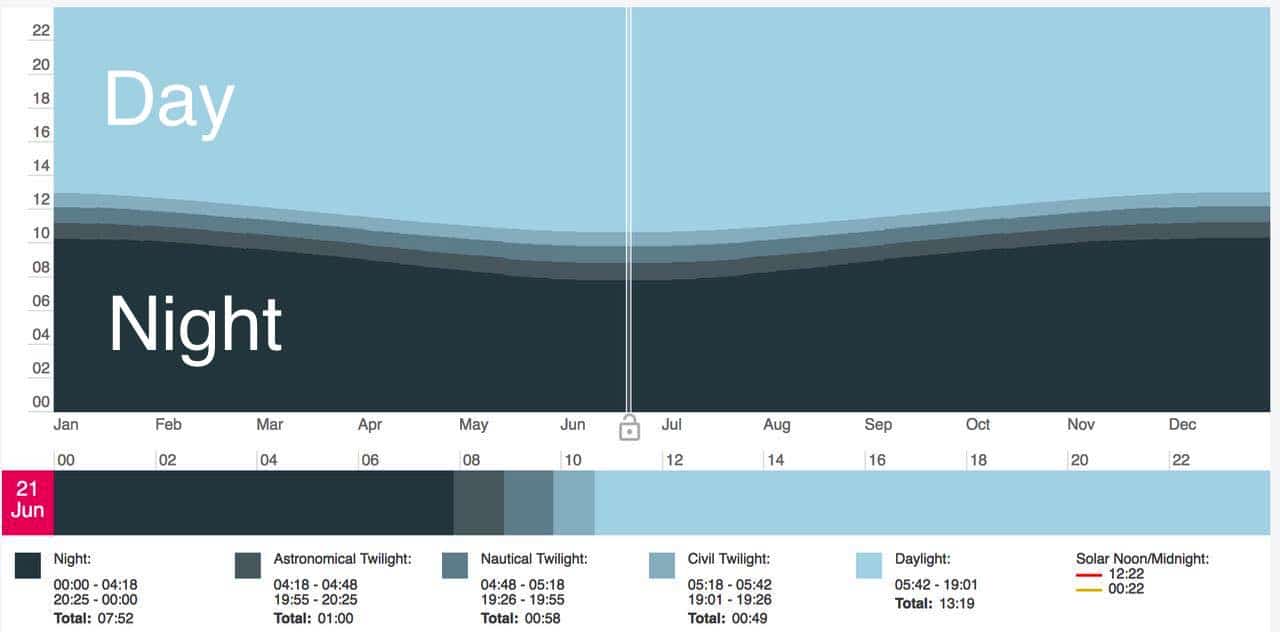
The longest day in Hawaiʻi has 20% more daylight than the shortest day. Image source: timeanddate
A Month-by-Month Breakdown of Big Island Weather
Each season below covers rain, temperatures and surf.
Spring: Late March through May
Mostly pleasant weather with some leftover showers from the winter rainy season. East and north facing shores could still receive some bigger swells, but overall, it will be trending toward calmer conditions. Waterfalls will be at their max after months of winter rain. Temperatures are in the mid-to-high 70s.
Summer: June through Early September
Temperatures will climb into the 80s and even low 90s at times on the western shores of the Big Island. Passing tropical showers are normal, but day-after-day of rain is unlikely, especially on the west side. The ocean is relatively predictable and calm, with the majority of beaches fit for swimming.
Fall: Late September through Early November
Late August through early October is the hottest, most humid stretch of the year, and it overlaps the tail of hurricane season (June through November, peak August and September; direct hits are rare, but a passing storm can close shops and parks for a day or two).
Temperatures ease to the high 70s or low 80s by mid-October. The second half of fall brings the beginning of the rainy season, with a greater chance of inclement weather in November.
Winter: Late November through Early March
The winter, or “makahiki” (the traditional Hawaiian season of harvest and rest) in the islands, is when there is the greatest chance of rain and stormy weather. Sunny days are still common, although the islands get their heaviest rain during these months, especially on the eastern shores. Temperatures are in the low 70s with cooler nights. The ocean is more turbulent during the winter, which could complicate some activities, like swimming or snorkeling.
Cooler temperatures make hiking more comfortable, however.
How to Avoid Rain During the Winter Season on Big Island
Winter is wetter, but it’s also whale season, big-wave surf season, and the season when waterfalls run full and prices and crowds drop.
Storm systems do roll through in winter, but rain on the Big Island falls in specific places, not everywhere at once.
For example: The eastern (windward) sides of the Big Island (and all Hawaiian Islands) get the most rain. The western or leeward coast is drier. On Big Island, Hilo (east side) receives more than 100 inches of rain per year; meanwhile, parts of Kona (west side) receive just 20-30 inches per year.
If it’s raining on the east side, the west side is often sunny.
If dodging rain matters more to you than anything else, book your winter stay on the Kona side.
See also our list of things to do while it rains.
Where These Price and Crowd Numbers Come From
Hotel and vacation rental rates come from our own trip cost calculator’s rate tracker, averaged across 2023 through 2025 by month. Crowd levels come from Hawaiʻi Tourism Authority data for 2024 and 2025: the chart and the busy-or-quiet calls in the text both use HTA’s average daily census, the count of visitors on the island on a given day. We revisit both periodically as new data comes in, most recently in July 2026.