
Most of Kauaʻi’s scenery is free to see. The Waimea Canyon lookouts, the Nāpali Coast, and every beach on the island charge nothing, since all Hawaiʻi beaches are public. The paid gates are few: Waimea Canyon and Kōkeʻe State Parks charge non-residents $5 a person plus $10 per vehicle to park, and Hāʻena State Park needs a reservation at gohaena.com for Kēʻē Beach and the Kalalau trailhead.
A full day of sightseeing can run to nothing more than gas and parking. Start with the beaches and the canyon lookouts, where the only cost is the drive.
Table of contents
Below are our favorite free and low-cost activities on Kauaʻi, grouped by type.
Free and Cheap Kauaʻi, at a Glance
Every option in this guide is in the sorted table below, cheapest first, so the free ones sit at the top with a Free label. Each row shows the price, whether you need to reserve ahead, and a quick note. Scroll down for the full write-up on any of them.
Prices, details, and map locations below last verified September 2026.
| Name | Category | Price | Reservation? | Note |
|---|---|---|---|---|
| 1Ke Ala Hele Makalae path (Details ↓) | Outdoor Adventures | Free | No | Paved, flat coastal path through Kapaʻa; easy walking or cycling with kids. |
| 2Shipwreck + Māhāʻulepū (Details ↓) | Outdoor Adventures | Free | No | Free beach and coast trail. Big shore break, a scenic spot, not a jump spot. |
| 3Anini Beach (Details ↓) | Outdoor Adventures | Free | No | Calm reef, safe for little kids. Watch reef-cut rips; county camping needs a permit. |
| 4Tunnels Beach (Makua) (Details ↓) | Outdoor Adventures | Free | No | Best free snorkel. Park at the free county lot at Hāʻena Beach Park (fills early); Tunnels sits outside the Hāʻena reservation. |
| 5Wailua Falls (Details ↓) | Outdoor Adventures | Free | No | Free roadside waterfall lookout. View from the top only; the trail down is unofficial. |
| 6Lydgate Park (Details ↓) | Outdoor Adventures | Free | No | Free Wailua park; two rock-walled ocean ponds, calm swim + snorkel for kids, lifeguards and a playground. |
| 7Borrow a shelter dog (Details ↓) | Outdoor Adventures | Free | No | Take a Kauaʻi Humane Society dog to a beach or trail for the day; free, sign up at kauaihumane.org. Puhi. |
| 8Poʻipū Beach (turtles & monk seals) (Details ↓) | Free wildlife watching | Free | No | Free wildlife viewing. Keep back, no flash, honor the barriers. |
| 9Whale watching from shore (Details ↓) | Free wildlife watching | Free | No | Free Nov-March from the south and north shores; a boat is more reliable for a close-up. |
| 10Kōloa Heritage Trail (Details ↓) | History & Culture | Free | No | Free self-guided trail; 14 marked stops over about 10 miles on the south shore. |
| 11Hanapēpē Swinging Bridge (Details ↓) | History & Culture | Free | No | Free swinging footbridge over the river in old Hanapēpē town; pairs with the Friday art night. |
| 12Kauaʻi Coffee Co. (Details ↓) | Agritourism | Free | No | Free self-guided farm tour and tastings at the Kalāheo estate. |
| 13Waimea Canyon / Kalalau Lookout (Details ↓) | Outdoor Adventures | $5pp + $10/veh | No | Non-resident park fee; no reservation. Go early before the clouds. |
| 14Hanakāpīʻai day-hike (Kalalau Trail) (Details ↓) | Outdoor Adventures | $5pp + $20/car | Yes | Free trail, but Hāʻena entry and parking via gohaena.com ($20/car per timeslot). |
| 15Kōkeʻe trails (Details ↓) | Outdoor Adventures | $5pp + $10/veh | No | Free day-hikes at the top of the canyon (Pihea, Alakaʻi Swamp, Awaʻawapuhi); non-resident park entry applies. Go early. |
| 16Kauaʻi Museum (Details ↓) | History & Culture | $15 | No | Island-history museum in downtown Līhuʻe; open weekdays and Saturday morning. |
| 17Allerton & McBryde Gardens (Details ↓) | Agritourism | $30+ | Yes (Allerton) | McBryde self-guided $30; Allerton guided $50, reserve ahead. South-shore NTBG gardens. |
| 18Kōkeʻe Natural History Museum (Details ↓) | History & Culture | Donation | No | Donation-based museum inside Kōkeʻe State Park; park entry and parking fees apply. |
| 19Ishihara Market poke, Waimea (Details ↓) | Food, Drink, and Shopping | Free/cheap | No | Cheap grab-and-go for a beach picnic before the canyon. |
| 20Costco (Līhuʻe) (Details ↓) | Food, Drink, and Shopping | Membership | No | Warehouse near Līhuʻe airport; stock a condo kitchen + cheapest gas. Membership required. |
Outdoor Adventures
Free or low-cost ways to get into Kauaʻi’s outdoors:
Mountain Hikes
Kauaʻi has a lot of trail for a small island, with steep mountains and deep canyons. The best known are the coastal Kalalau Trail up north and the Waimea Canyon trail system down south. Note that the Kalalau trailhead sits inside Hāʻena State Park, so reaching it needs the reservation and parking covered in the Nāpali Coast section below.
Have a look at our guide to hiking on Kauaʻi to find the trail(s) for you.
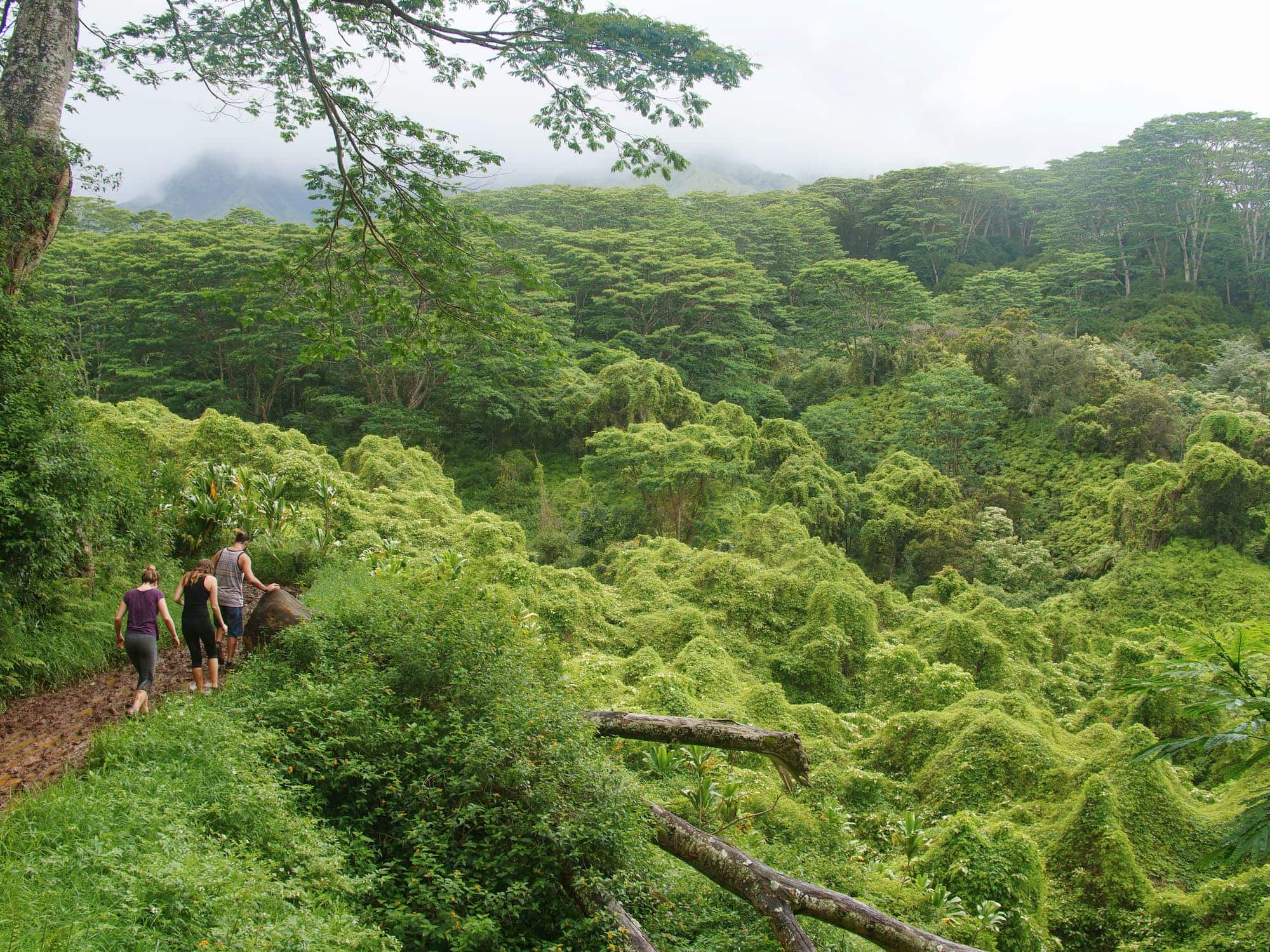
The Kuilau Ridge Trail is a gentle hike, easy with kids. Image: Hawaii Tourism Authority (HTA)
Coastal Walks and Beach Walks
For flatter walking, Kauaʻi has paved paths and seaside trails, and you can walk almost any beach too.
Ke Ala Hele Makalae (Kapaʻa)
Paved and flat, the Ke Ala Hele Makalae path runs along the east shore through Kapaʻa, about 7.5 miles of a planned 20. It’s easy walking or cycling with kids or a stroller, and it stays close to the water most of the way. Go early, before the trade wind picks up in the afternoon.
Shipwreck Beach and the Māhāʻulepū coast
Shipwreck Beach sits at the east end of Poʻipū, and the Māhāʻulepū Trail picks up from there along the cliffs. The beach has a strong shore break: good for walking and watching, not for a casual swim. The coast trail is free and fully exposed, so bring water and go in the morning.
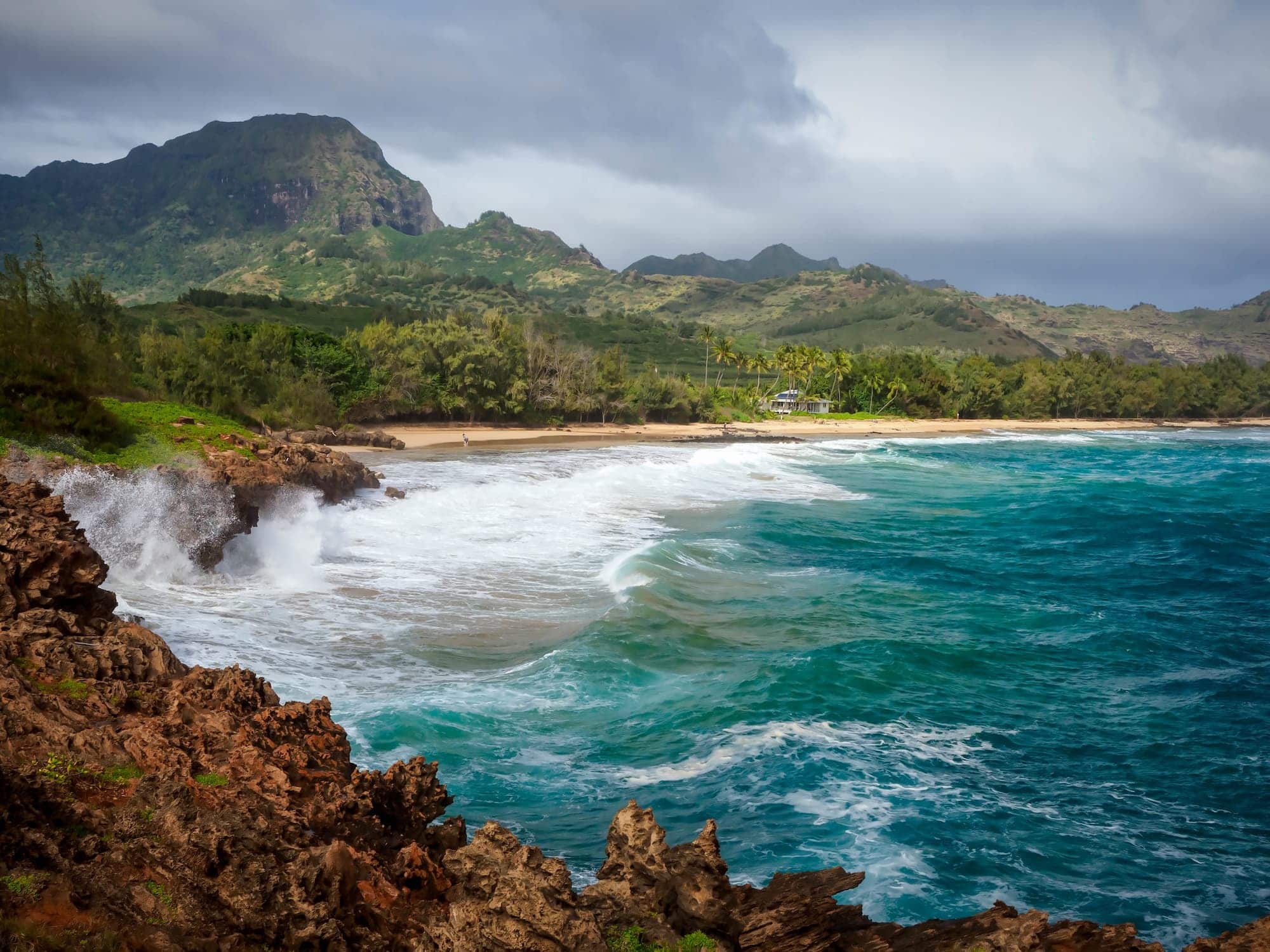
View from the Māhāʻulepū Heritage Trail on Kauaʻi. Image credit: Gary Eyring on Flickr.
Beaches
Every beach in Hawaiʻi is free and open to the public. There are no private beaches and no slice of sand charges for entry or “beach tags,” so all you need is a chair and a towel. The sand is always free, but a few beaches sit inside state parks that charge to park, like Kēʻē at Hāʻena.
Anini Beach
Anini Beach, on the north shore near Kīlauea, sits behind one of the longest fringing reefs on Kauaʻi, so the water inside it stays calm and shallow. That makes it one of the safest beaches on the island for small children. Watch for reef-cut channels where the current runs out, and note that camping at the county park needs a permit.
Check out our list of (what we think are) Kauaʻi’s best beaches (+ map).
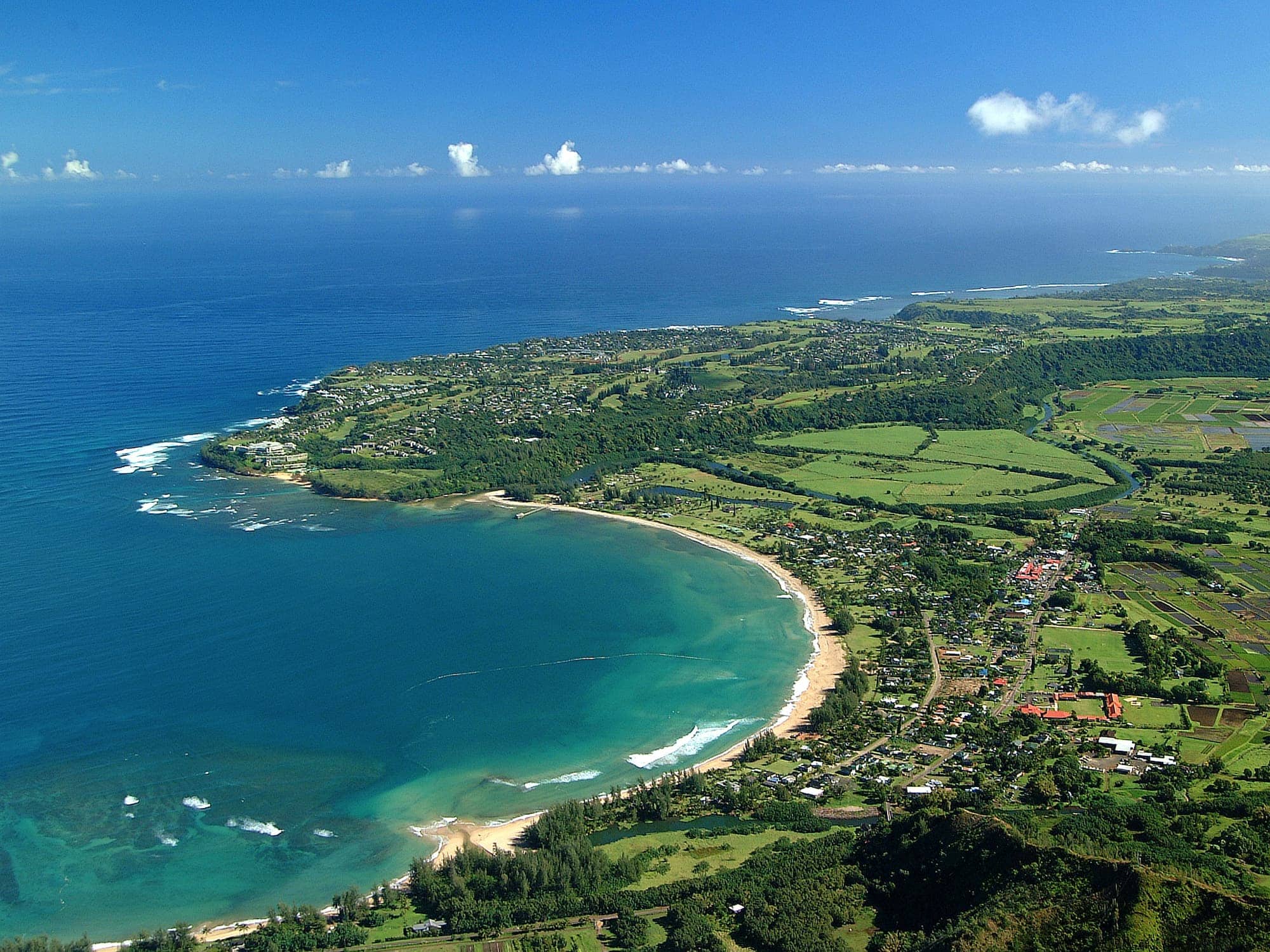
Hanalei Bay is a wide crescent bay ringed by sand. Credit: Hawaii Tourism Authority (HTA) / Ron Garnett
Lydgate Park (Wailua)
Lydgate Beach Park in Wailua has two rock-walled ocean ponds that stay calm when the rest of the coast is rough. The larger pond is deep enough to snorkel and holds a few fish; the smaller one is shallow for small kids. Both are free, with lifeguards, restrooms, and the big Kamalani playground next to the sand. It’s the easiest place to put a nervous swimmer in the ocean on the east side.
Snorkeling
Snorkeling is one of the cheapest ways to spend a day here once you have gear. Guided snorkel tours run upwards of $100, but a mask, snorkel, and fins cost far less to rent or buy, and Kauaʻi has plenty of free, easy-to-reach snorkel sites from shore.
Tunnels Beach (Makua)
Tunnels Beach, also called Makua, is the best free shore snorkel on the north shore, over a wide reef with good coral and fish when the water is calm in summer. Park at the free county lot at Hāʻena Beach Park, which fills early, since Tunnels itself sits outside the Hāʻena State Park reservation. In winter the water is too rough to snorkel.
Check out our 11 favorite snorkeling spots on Kauaʻi.
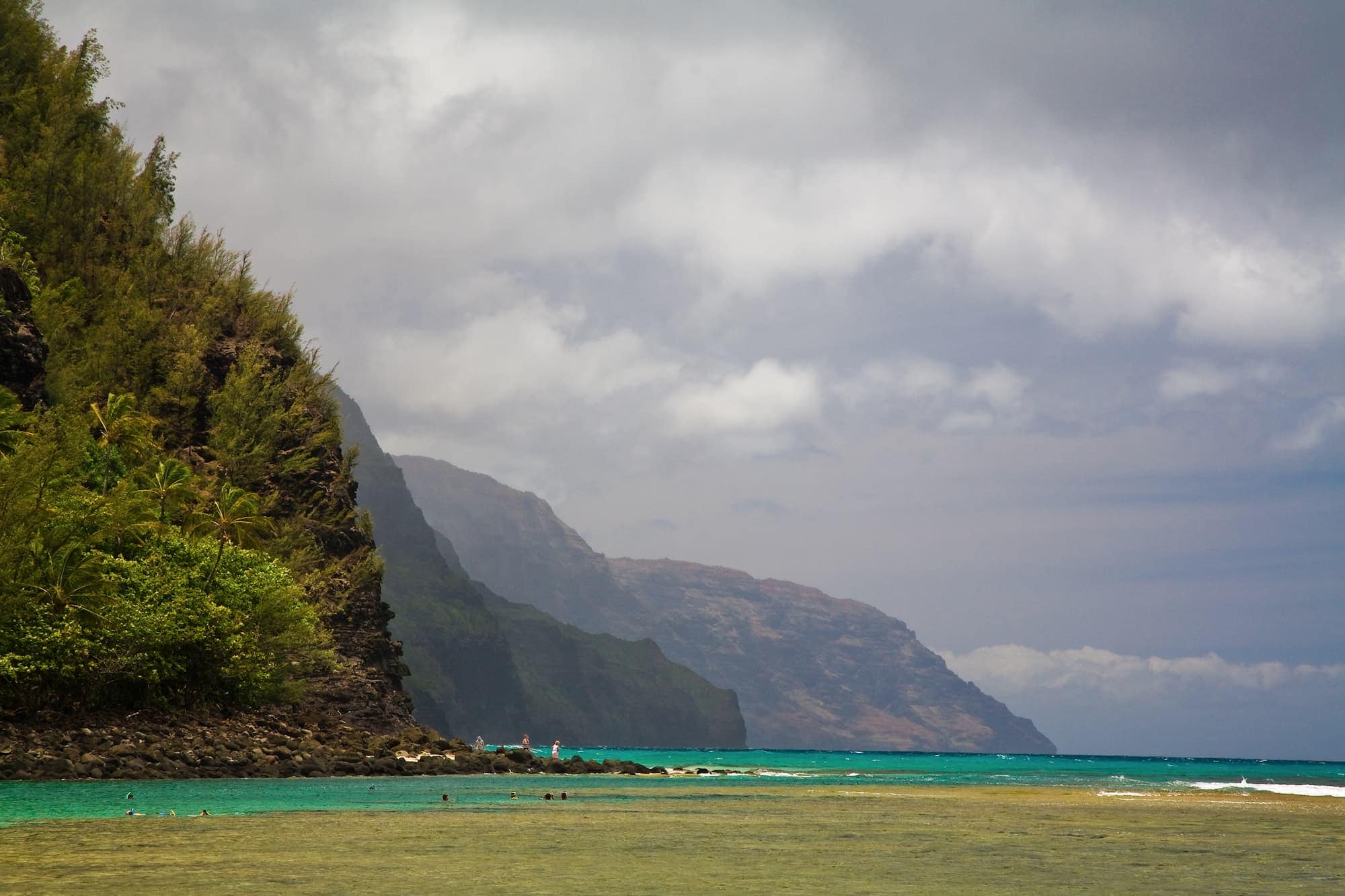
Kēʻē Beach sits where the road ends and the Nāpali Coast begins, with good scenery above and below the water. Credit: Hawaii Tourism Authority (HTA) / Tor Johnson
Surfing
After the upfront cost of a lesson, surfing gets cheap. Board rentals on Kauaʻi run higher than in Waikīkī but stay reasonable, at roughly $40 a day or $150 a week at some shops. For some of the best surf in the world, that’s a fair price.
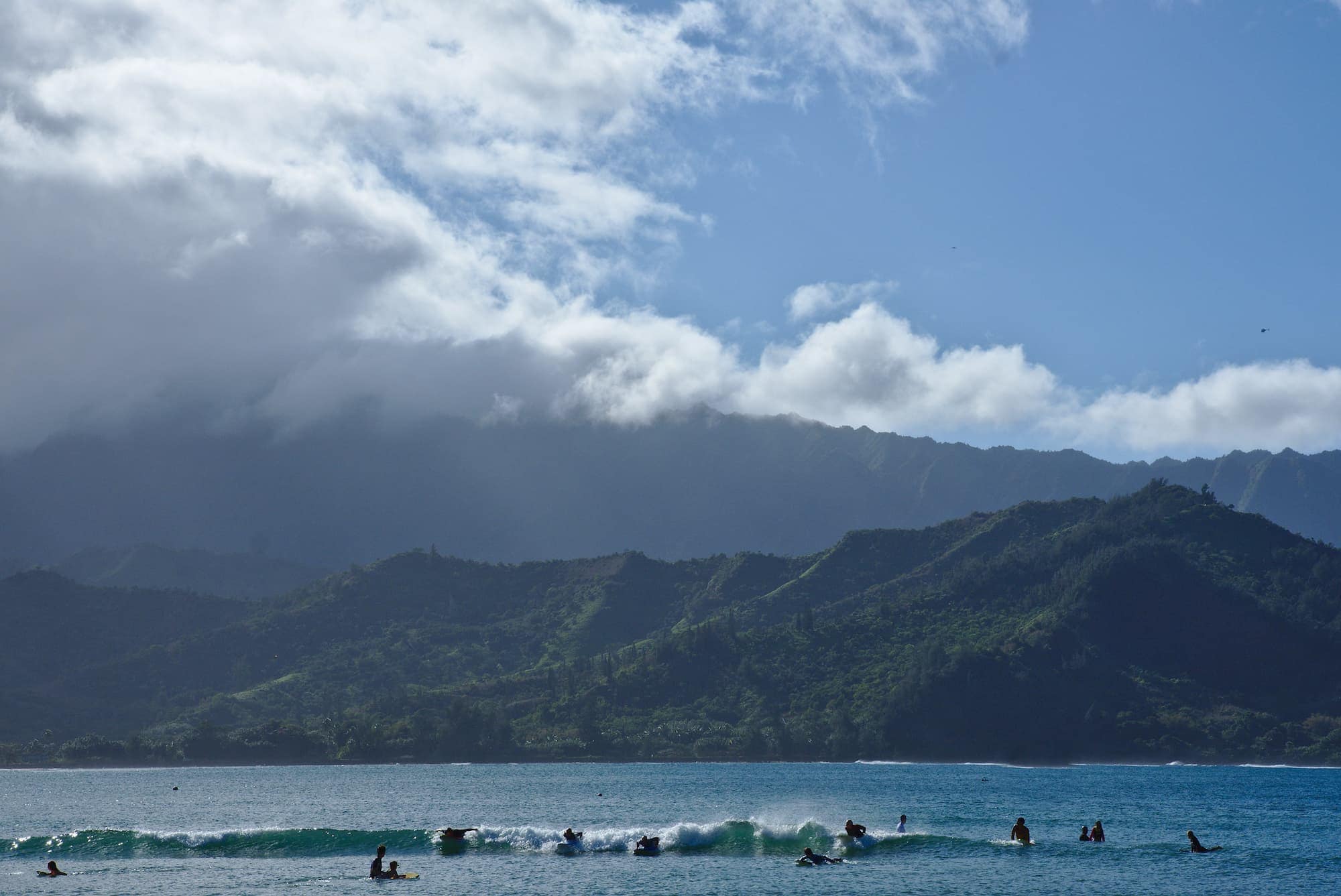
The jagged mountains ringing Hanalei rise right behind the surf at Hanalei Bay. Image credit: Mary and Andrew on Flickr.
Sunset Picnic
Skip the waterview restaurant and take the sunset for free. Pack a cooler with store-bought poke and a few snacks, then find a spot in the sand. The savings add up over a week’s stay. Note that alcohol is not allowed on Hawaiʻi beaches or in county parks, so keep drinks non-alcoholic if you’re on the sand.
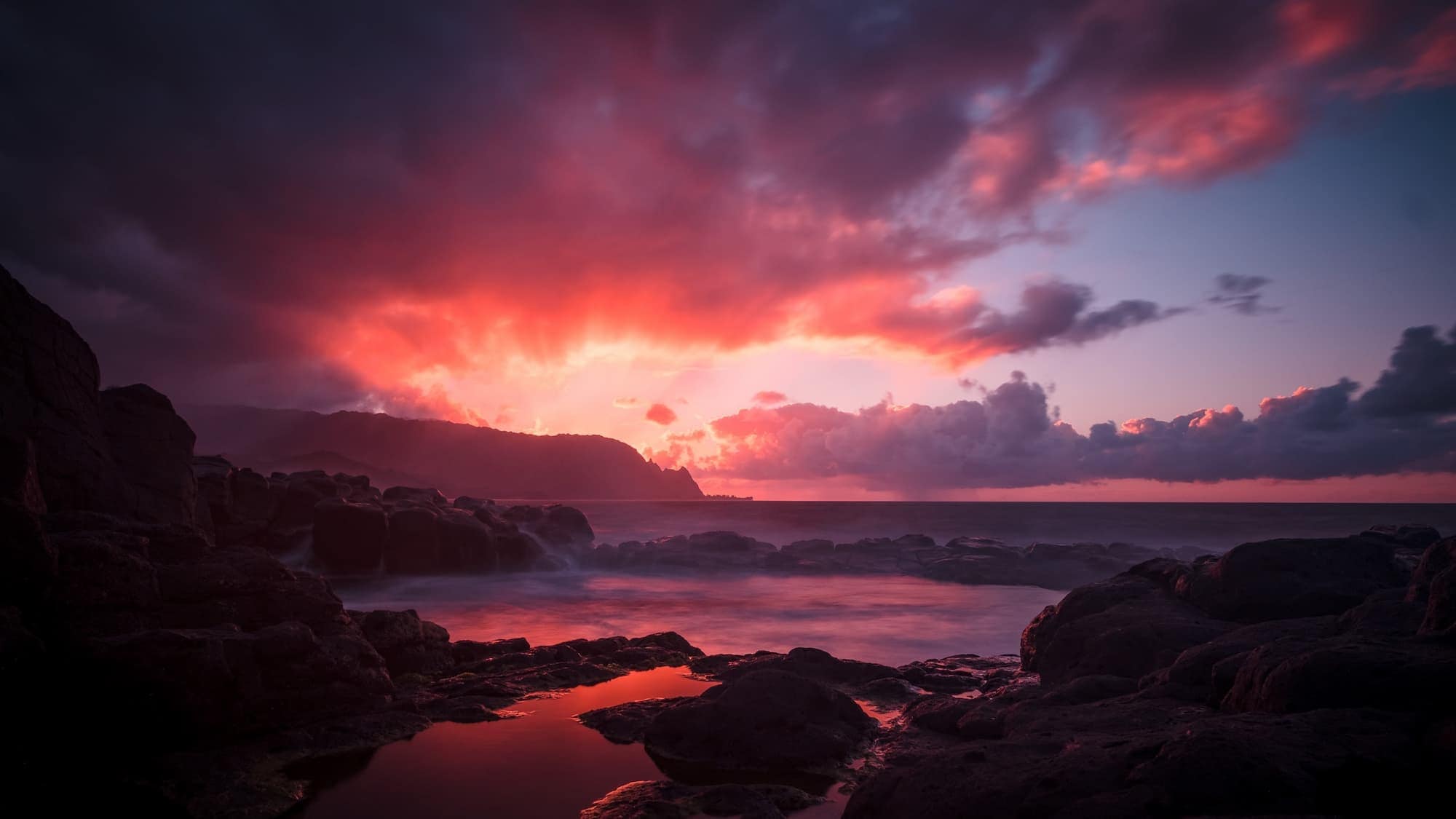
Nāpali coast sunset. Photo by Spencer Watson on Unsplash
Have a look at our favorite Kauaʻi sunset spots.
Wailua Falls
Wailua Falls is a roadside waterfall lookout on the east side above Līhuʻe, right off the highway with no hike to reach it. The view is from the top only. A trail drops toward the base, but it’s unofficial, steep, and slick, so view the falls from the overlook and skip it.
Waimea Canyon
Waimea Canyon, nicknamed “The Grand Canyon of the Pacific,” runs three to four thousand feet deep and about 10 miles long, with scenic lookouts, day hikes, backpacking trails, and camping.
Waimea Canyon and Kōkeʻe State Parks charge non-resident visitors $5 per person to enter plus $10 per vehicle to park, and one parking ticket covers both parks’ lots. Hawaiʻi residents get in free with ID. See our guide to Waimea Canyon for planning help.
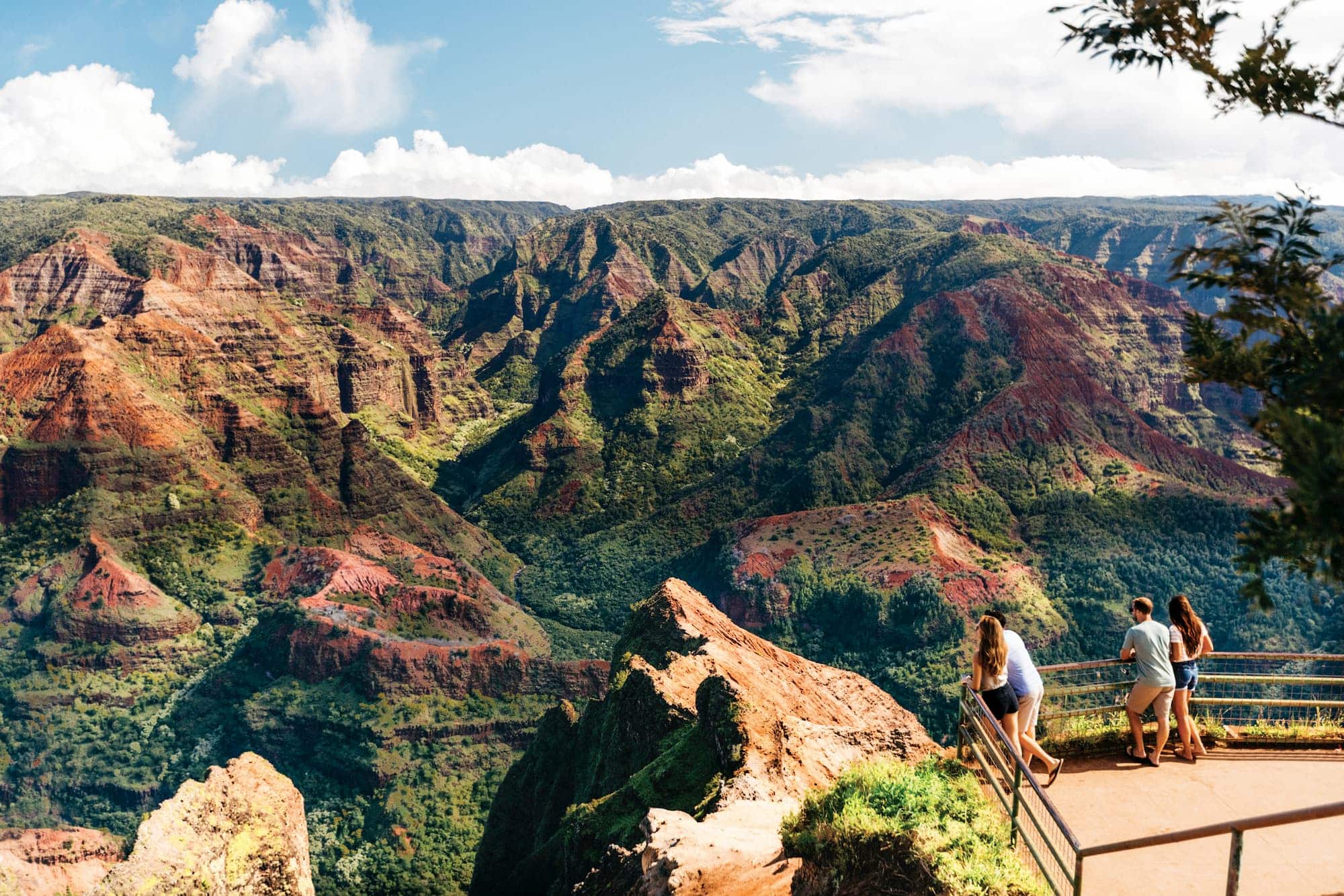
The Waimea Canyon Lookout is right off the road and looks straight down the canyon. Image credit: Hawaii Tourism Authority (HTA) / Ben Ono
Kōkeʻe trails
Most of Kauaʻi’s best free hiking sits at the top of the canyon in Kōkeʻe State Park. The Pihea Trail and the Alakaʻi Swamp boardwalk cross the high plateau, and the Awaʻawapuhi and Canyon trails drop toward Nāpali and the canyon rim. The trails are free; you pay only the state-park entry that also covers the Waimea Canyon lookouts, $5 per person plus $10 per vehicle for non-residents.
The swamp boardwalk is flat but long and often muddy; the Awaʻawapuhi is a steep climb back out. Go early, before the afternoon clouds roll in. Our Waimea Canyon and Kōkeʻe guide has the trailheads and fees.
Nāpali Coast
The Nāpali Coast, on the island’s northwest side, has the island’s best scenery for little more than park fees. Reaching the end of the road at Hāʻena State Park now takes planning: non-residents reserve a timeslot at gohaena.com, which opens 30 days ahead. Entry is $5 per person, parking is $20 per car per timeslot, and the Kēʻē shuttle runs about $40 round trip for adults if you skip the drive.
Once you’re in, it’s a full day of beaches and hikes under the carved ridgelines, and the coast itself costs nothing to walk. See our guide to the Nāpali Coast for what to see and do.
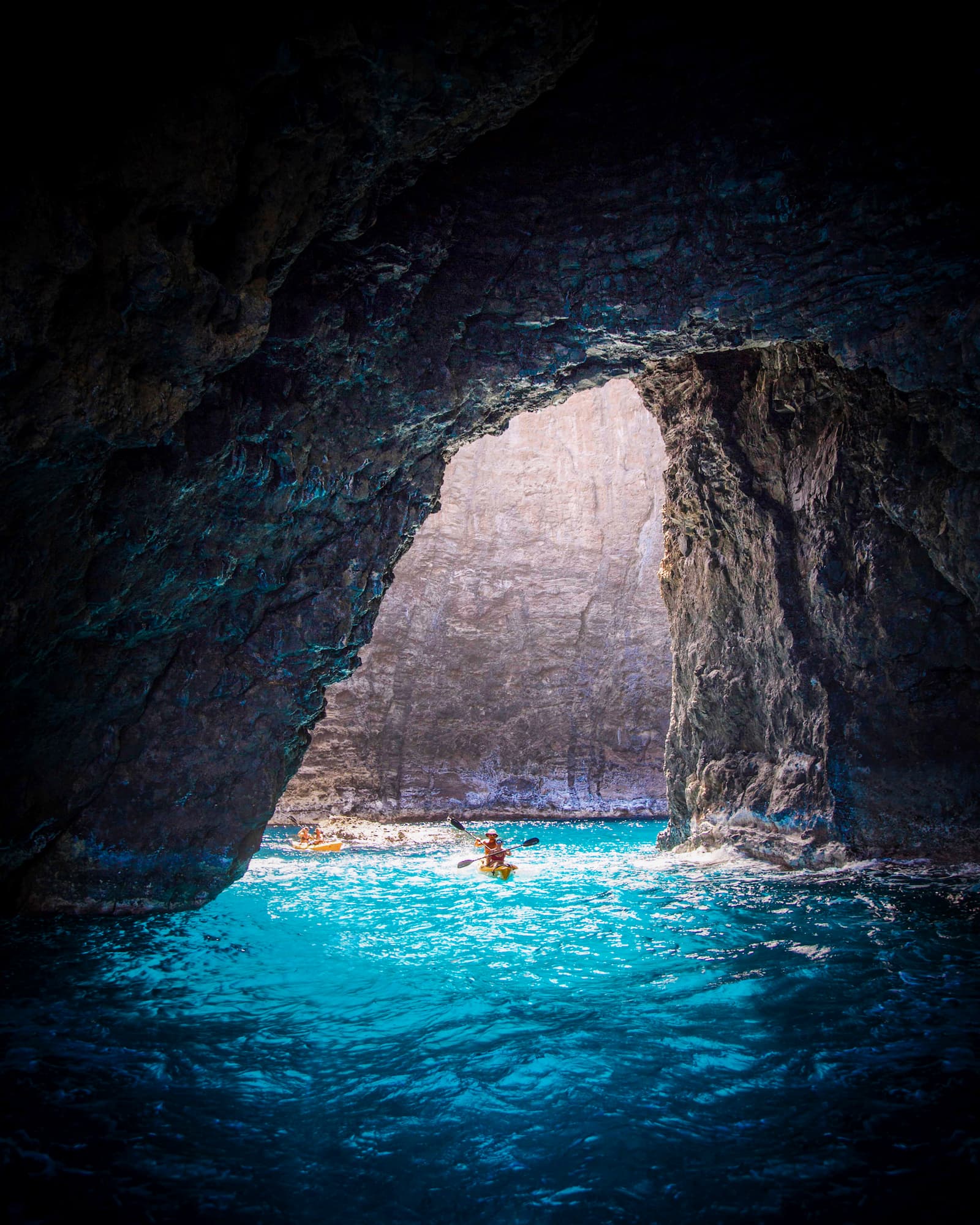
There are many sea caves along the Nāpali coast on Kauaʻi. Of those caves, Pukalani (the Open Ceiling Cave) is the most popular one. Credit: Hawaii Tourism Authority (HTA) / Tommy Lundberg
Hanakāpīʻai day-hike (Kalalau Trail)
From the Kalalau trailhead at Kēʻē, the first two miles of the Kalalau Trail climb and drop to Hanakāpīʻai Beach, a hard, often muddy day-hike with long coastal views. The trail is free, but reaching the trailhead means the Hāʻena State Park reservation: $5 per person and $20 per car per timeslot at gohaena.com. The beach has a dangerous current, so rest there but don’t swim.
Borrow a shelter dog for the day
The Kauaʻi Humane Society in Puhi lets you take a shelter dog out for the day through its Field Trips for Shelter Dogs program. You bring an adoptable dog to a beach or trail and return it the same day, and the shelter provides the gear you need. There’s no charge to take part, and it gives a kennel dog a day out. Sign up on kauaihumane.org before you go, since dogs and slots are limited.
Free wildlife watching
Kauaʻi’s easiest wildlife sightings cost nothing and need no boat.
Poʻipū Beach (monk seals and turtles)
Poʻipū Beach on the south shore is a favorite napping spot for Hawaiian monk seals, one of the rarest seals in the world. When one hauls out, volunteers rope off the sand around it; stay outside the ropes and keep quiet. Green sea turtles feed just off the same beach. Watching costs nothing.
Whale watching from shore
Humpback whales pass Kauaʻi from November to March, visible from the south and north shores on a clear winter day, though for a reliable close-up you want a whale-watching boat out of Port Allen or Hanalei.
History & Culture
Kauaʻi’s history and culture are cheap to dig into, and they add context to the rest of your trip.
Museums
Kauaʻi has two cheap museums, both a good break from the sun.
Kauaʻi Museum (Līhuʻe)
The Kauaʻi Museum in downtown Līhuʻe covers the island’s history and runs $15 for adults. It’s open weekdays 9am to 4pm and Saturday until 2pm, an easy stop on a rainy afternoon or a hot one.
Kōkeʻe Natural History Museum
Up the mountain, the Kōkeʻe Natural History Museum runs on donations. It sits inside Kōkeʻe State Park, so the park’s entry and parking fees apply to reach it, the same $5 per person and $10 per vehicle as the canyon lookouts.
Check out our guide to history and culture on Kauaʻi.
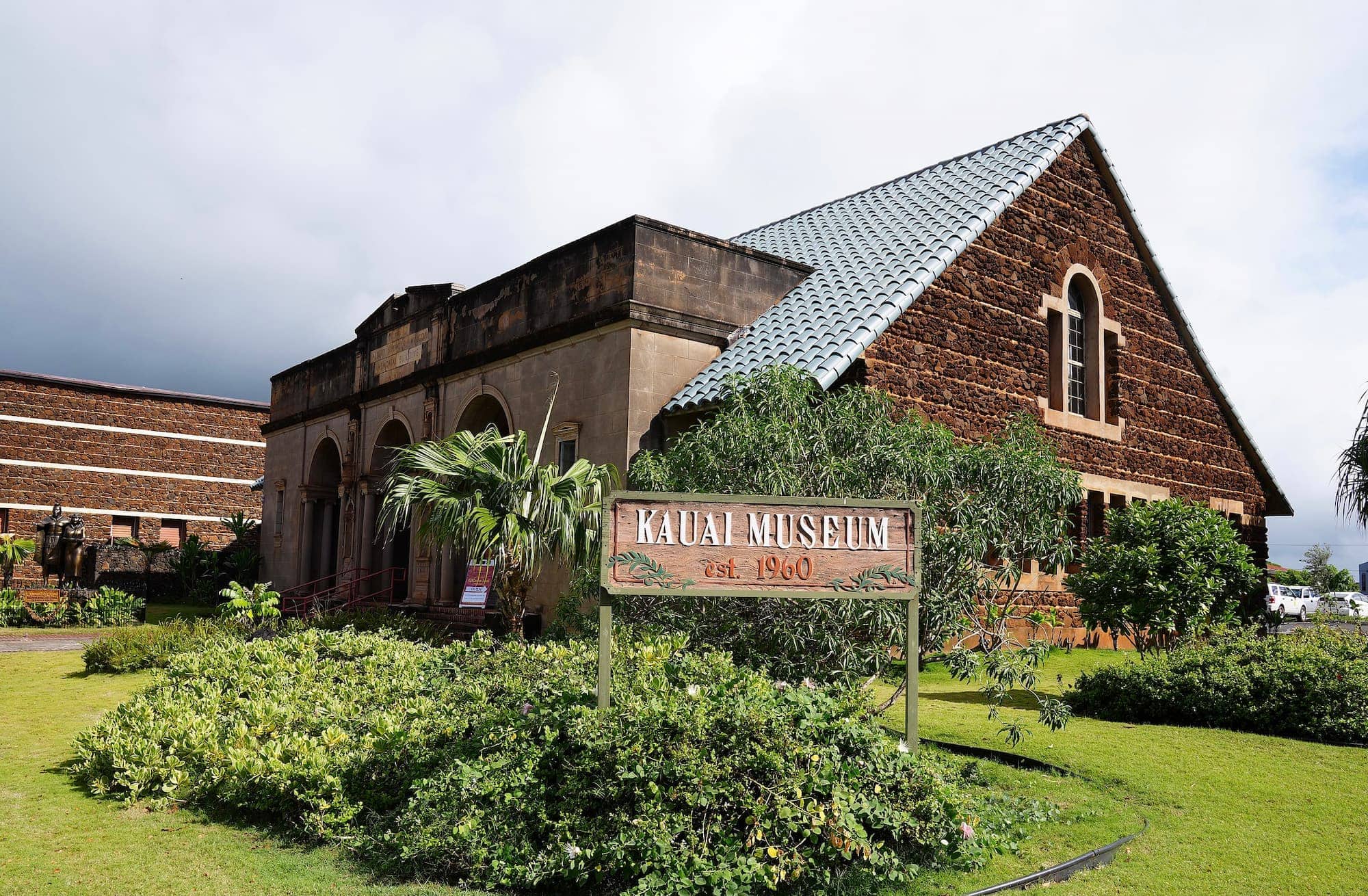
Kauaʻi Museum on Kauaʻi. Image by Richard N Horne, Own work, CC BY-SA 4.0, https://commons.wikimedia.org/w/index.php?curid=107329426
Makauwahi Cave (now closed)
The Makauwahi Cave, on the south shore, is the only known limestone cave in the Hawaiian Islands, and the reserve around it is closed until further notice. The leaseholders handed the property back to the landowner, Grove Farm Company, after 33 years, and the reserve’s own site gives no reopening date.
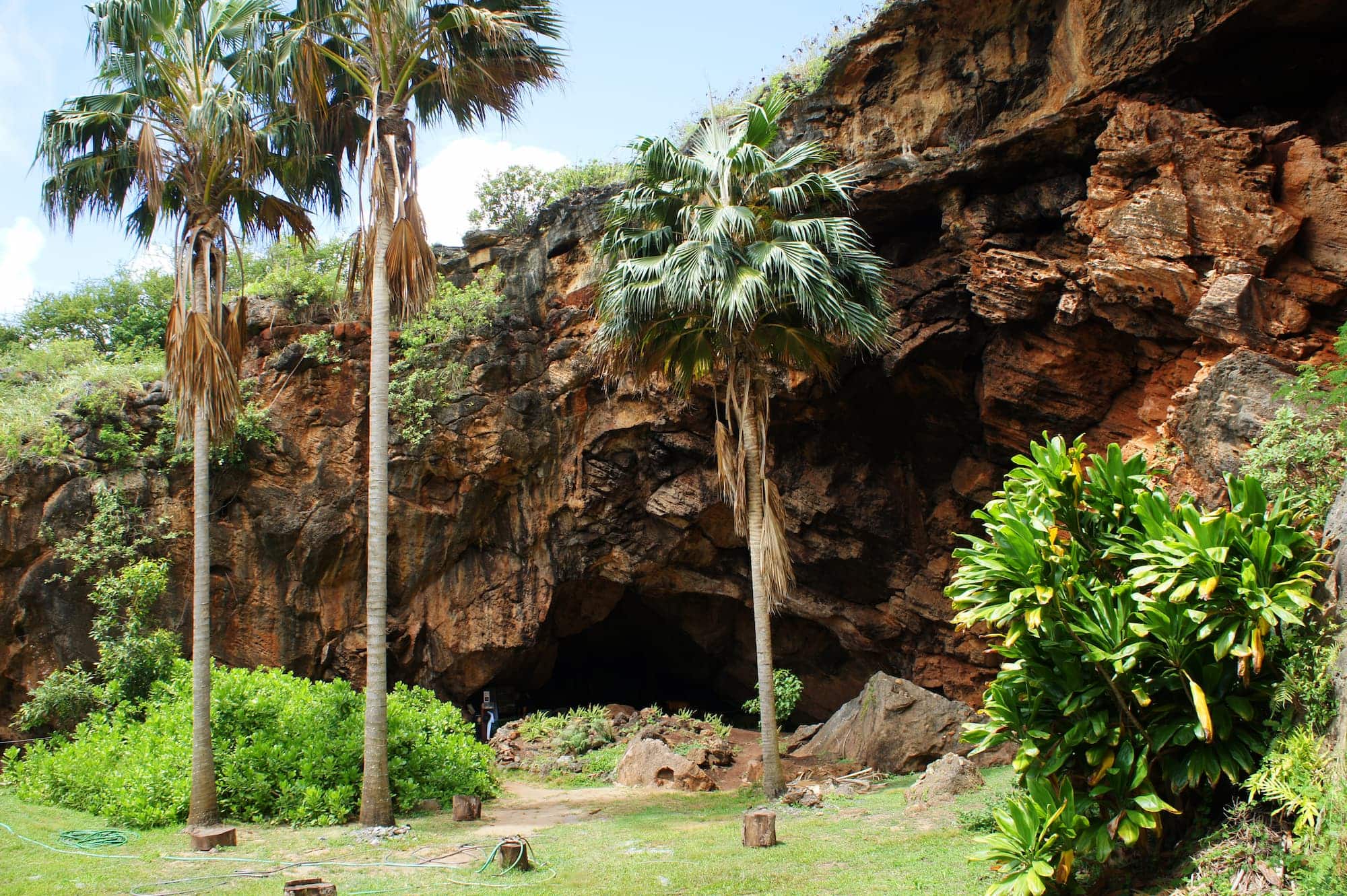
The Makauwahi Cave Reserve on Kauaʻi. The reserve is closed until further notice. Nearby Gillin’s and Māhāʻulepū Beach are a calmer stretch of the south shore. Image credit: Wolfram Burner, source.
Kōloa Heritage Trail
Kōloa, just inland of Poʻipū on the south shore, held Hawaiʻi’s first commercial sugar plantation. The free, self-guided Kōloa Heritage Trail links 14 marked stops over about 10 miles, covering the plantation era along with cultural and geological sites in the area.
Walk or drive them back-to-back, or just keep the stops in mind as you pass through the south shore.
Hanapēpē Swinging Bridge
The swinging footbridge over the Hanapēpē River is free to cross and bounces the whole way over. It was rebuilt after Hurricane ʻIniki and sits in old Hanapēpē town, where the galleries stay open late and food trucks line up on Friday art nights. Park on the main street and follow the signs to the bridge. Pair it with the art night if your dates line up.
Agritourism
Agritourism means visiting farms and producers to see how local food is grown or made. The visits are usually cheap and give an inside look at how Kauaʻi’s specialties are produced.
Allerton and McBryde Gardens
The National Tropical Botanical Garden runs two gardens on Kauaʻi’s south shore. Allerton Garden is guided-tour-only, with reservations and a shuttle from the visitor center, and it’s the pricier of the two. McBryde Garden next door is self-guided and the cheaper way in if you’re watching cost. Allerton also holds Queen Emma’s Cottage, a look at how Hawaiian royalty once lived. Check current tour prices when you book.
Farm Tours
Kauaʻi, the Garden Isle, has farms and ranches between the mountains and the coast.
Kauaʻi Coffee Company
For coffee, the Kauaʻi Coffee Company estate at Kalāheo runs tours of a working plantation. The self-guided walk through the fields and the tasting bar are both free. It sits on the way to or from Waimea Canyon.
Hanalei Taro Farm (tours paused)
Hanalei Taro up north has paused its in-person tours since the pandemic and the 2021 flooding, so check whether they have reopened before driving out.
See our guide to culinary and farm tours on Kauaʻi.
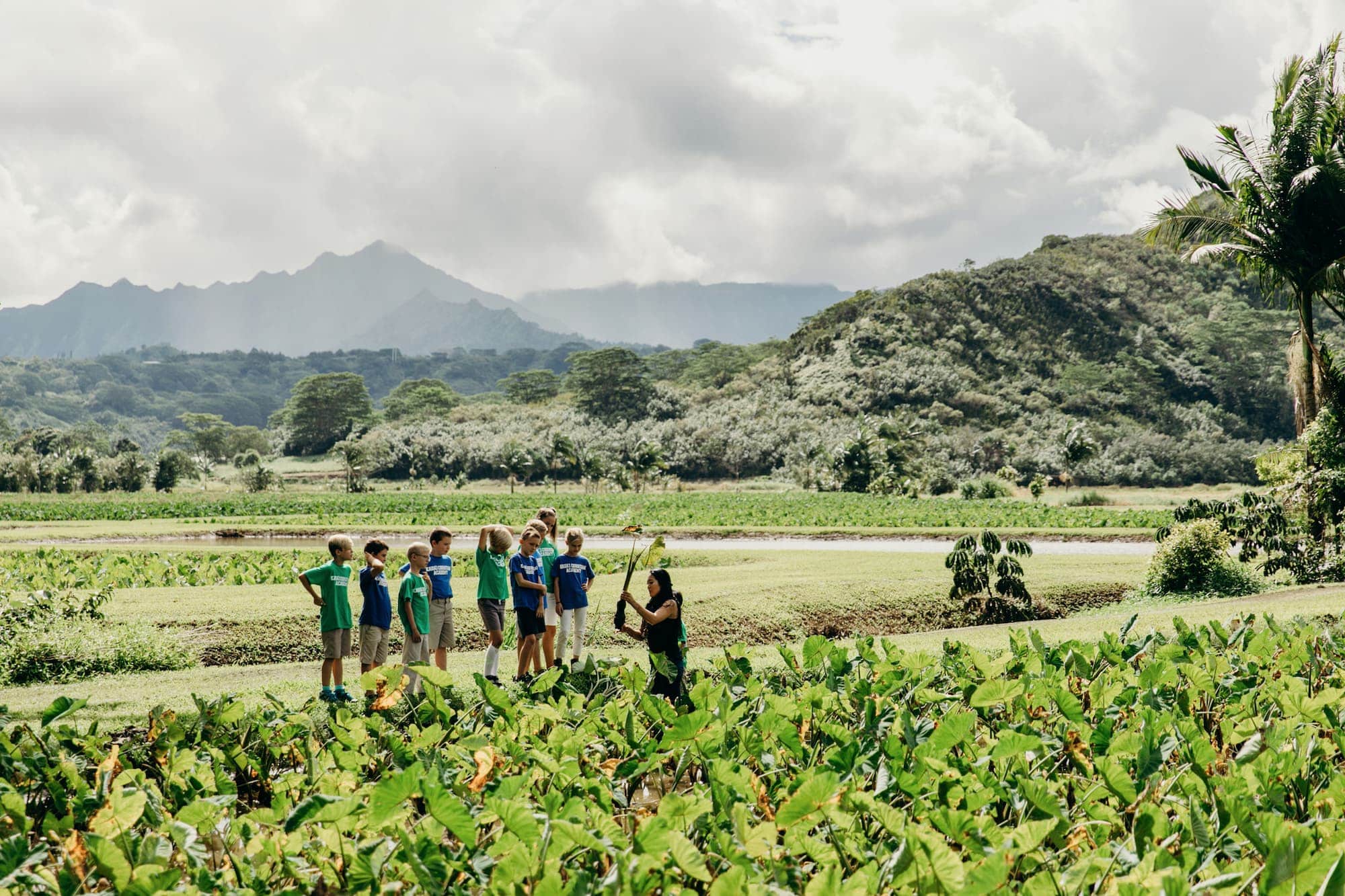
Touring a Taro Farm close to Hanalei. Credit: Hawaii Tourism Authority (HTA) / Heather Goodman @hbgoodie
Food, Drink, and Shopping
Eating and drinking in the islands can be expensive. Here are some tricks to save money like a local:
Beach Picnics
A couple of drinks and a meal out in Hawaiʻi can hit triple digits for two. Picnic on the beach instead and skip that bill. Poke is pricey by the plate in a restaurant but reasonable bought by the pound at a grocery deli. A poke bowl over rice runs about $10 to $15 depending on the store.
Pick up provisions and find a slice of sand for a free waterfront view.
Ishihara Market (Waimea)
On the west side, Ishihara Market in Waimea sells poke and plate lunches to go. It’s a cheap place to stock up before the drive up Waimea Canyon.
Stock up at Costco
A Costco run is the standard local move for a cheap trip. The Līhuʻe warehouse is a few minutes from the airport, an easy first stop to fill a condo kitchen: produce, poke, prepared meals, and the cheapest gas on the island. You need a membership to shop. Cooking even half your meals cuts your biggest expense on a Kauaʻi trip, since a sit-down dinner for four runs well past $100 here.
Local Grocery Stores
Cooking your own meals from the grocery store saves money over a week, given how high restaurant prices run in the islands. If you can, book a place to stay with a kitchen to cut your food and drink costs.
ABC Stores
ABC Stores are everywhere in Hawaiʻi, Kauaʻi included, mostly in the resort areas and bigger towns. We’d rather send you to locally owned shops, but when you need a cheap souvenir or a last-minute beach snack, ABC does the job. Sunscreen and beach snacks cost less there than at the resort gift shops.
More free and affordable activities guides
More budget guides for the other islands:
- Our list of cheap and free things to do on Maui
- The same for cheap and free things to do on Oʻahu
- And our Big Island on a budget list