
Kaumana Caves in Hilo drop into a lava tube Mauna Loa’s 1881 flow carved for 25 miles. No permit, no tour operator, just walk in. That’s the extreme case on this island-by-island list of 13 stops: lava tubes you enter on foot, sea caves you can only reach by boat or snorkel, and blowholes like Spouting Horn that need no entry at all. Thurston Lava Tube (Nāhuku) on the Big Island and Kaʻeleku Caverns on Maui, the latter roughly 500 years old, sit between those extremes.
Some of these are five-minute roadside stops with paved parking. Others need a guide or a rental car with clearance for a gravel lot, and a couple need a swimsuit. Below, we sort all 13 by island, with a closing section on how inland lava tubes, coastal tubes, blowholes, and underwater sea caves differ.
Table of contents
- Lava Tubes on Oʻahu
- Lava Tubes on the Big Island
- Lava Tubes on Maui
- Lava Tubes on Kauaʻi
- 4 Types of Lava Tubes (with examples and where to find them)
A note to our readers: please be respectful and use common sense while visiting a lava tube. Please don’t break off rocks or take loose rocks out of the caves, don’t leave trash, and don’t vandalize the cave walls using spray paint or sharp objects. Mahalo nui loa!
Oʻahu Lava Tubes
Oʻahu is the most developed island in the chain and still has lava tubes and their remnants.
Halona Blowhole
Why go: There aren’t many blowholes in the Hawaiian Islands. The Halona Blowhole sits on Oʻahu’s south shore with easy parking, right along the scenic drive on this part of the coast.
Good to know: There’s a small path on the west side of the parking area that leads down to a small beach cove. Feel free to explore, but be mindful on the path going down and watch the ocean closely when exploring the beach and rocks. We don’t recommend swimming here due to strong waves and sharp rocks.
How to visit: The parking lot for Halona Blowhole is next to Sandy Beach Park. It is clearly marked. Drive slow and watch for cars entering and exiting.
Combine with: A scenic drive along the southeast shore, past large sea cliffs and notable stops like Koko Crater, Hawaiʻi Kai Marina, Hanauma Bay, the easy Makapuʻu Lighthouse trail, and Sandy Beach Park.
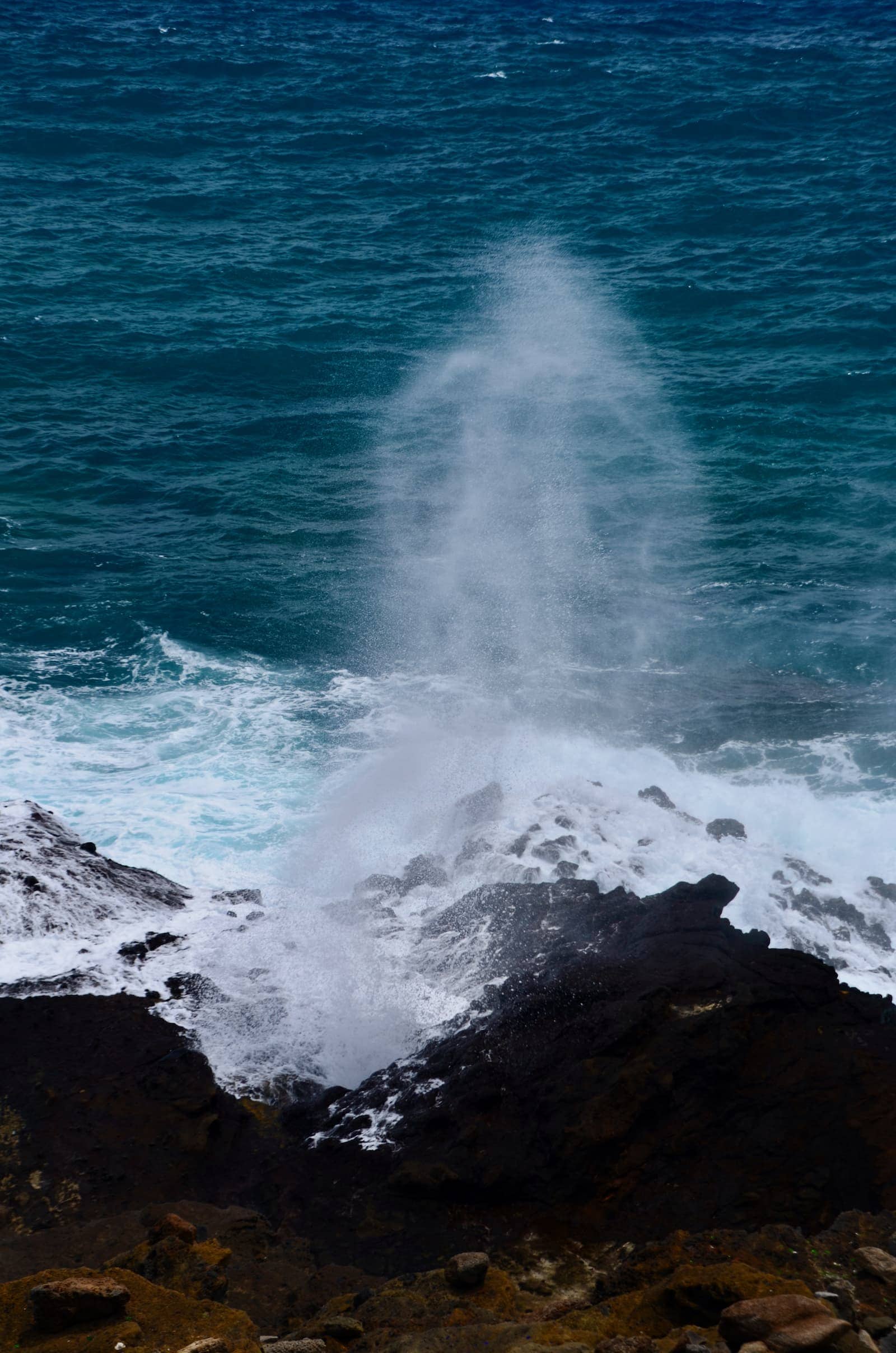
The Halona Blowhole on Oʻahu. © CC BY-SA Thomas Tunsch / Halona Blowhole (source)
Shark’s Cove
Why go: Shark’s Cove is a popular snorkeling area for both beginner and experienced swimmers. You can think of the main area at Shark’s Cove as one large tide pool, with calm water in summer and a safe place for children to snorkel and swim.
Outside that main area are underwater sea arches and caves left over from lava flows, for experienced snorkelers and divers.
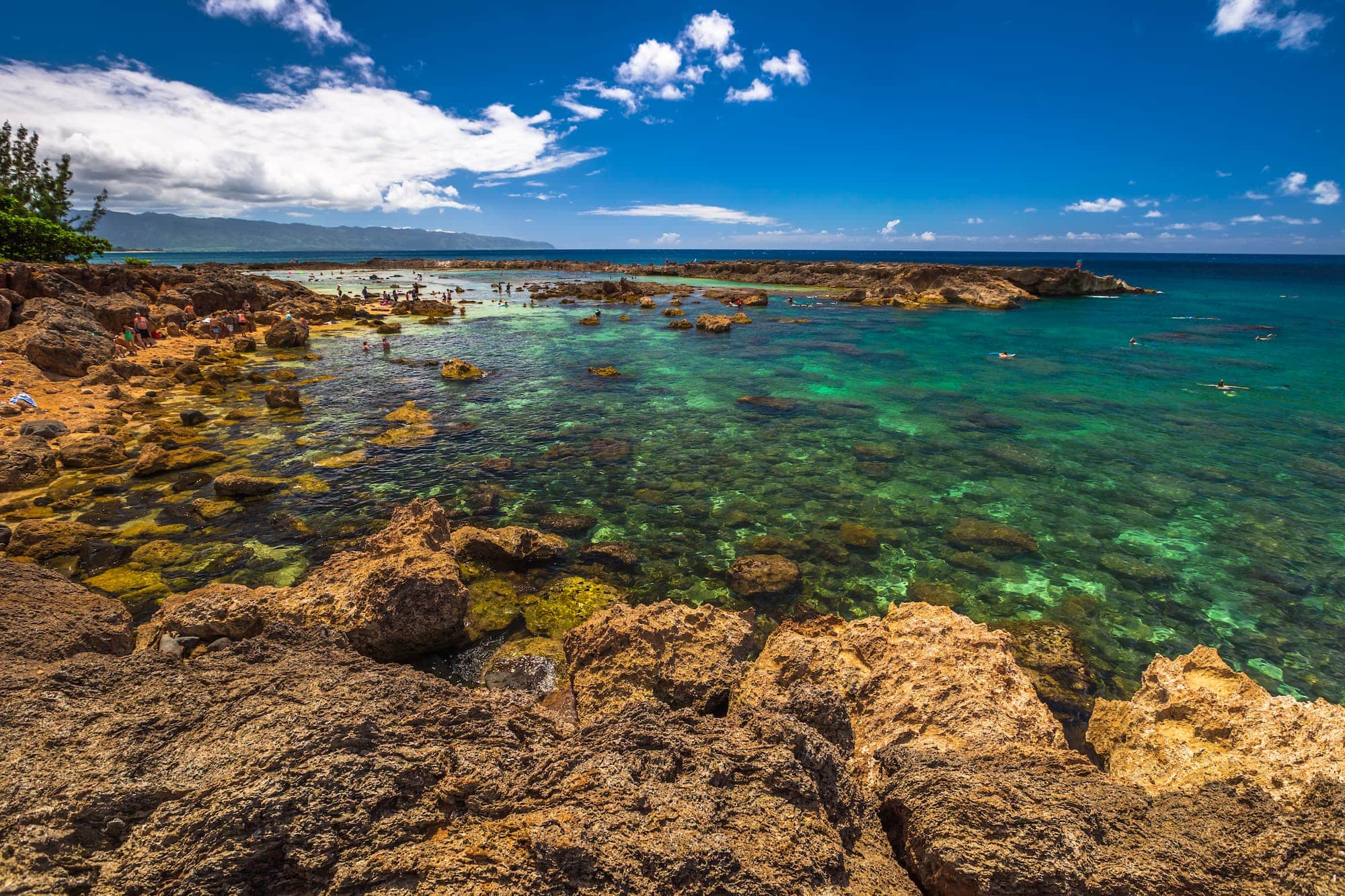
Shark’s Cove in Pupukea on the Oʻahu North Shore.
Good to know: Shark’s Cove is safe for swimming and snorkeling only in the summer months. During the winter, it receives big swells and strong currents, and we don’t recommend getting in the water during this time of year. As always, consult locals and lifeguards when in doubt.
How to visit: Shark’s Cove doesn’t have an official parking lot, so look for street parking nearby or grab a spot in the nearby Pūpūkea Beach Lot.
Combine with: Shark’s Cove sits across the street from a food truck park, an easy lunch stop while cruising along the North Shore.
Mermaid Caves
Why go: The Mermaid Caves are the remnants of old lava flows, carved out over time by the ocean to form sea caves; you can explore them via skylights in the rocky, porous coastline. On days with calm conditions at low tide, you can enter the caves and poke around inside. Usually, there will be a couple inches to a foot of water inside.
Good to know: The Mermaid Caves hold a couple inches to a foot of water at low tide, and conditions can turn dangerous fast if a swell rolls in. Go only at low tide, and always keep an eye on the conditions. A surge of current or oversized wave can unexpectedly fill the cave with water, sometimes with great force. If in doubt, stay on top of the caves and enjoy the view from above through the skylights.
How to visit: The Mermaid Caves are south of Nānākuli Beach Park. Park in the lot for the beach, then walk along the rocky coast south. It is marked on the map.
Combine with: Electric Beach, on the same stretch of Oʻahu’s west coast, has some of the best snorkeling on the island.
Big Island Lava Tubes
The Big Island is the youngest island in the chain and still forming, so it has many lava tubes, a lot of them well preserved and easy to reach.
Our overview of lava tubes on the Big Island lists the other caves on the island you can enter.
Kaumana Caves
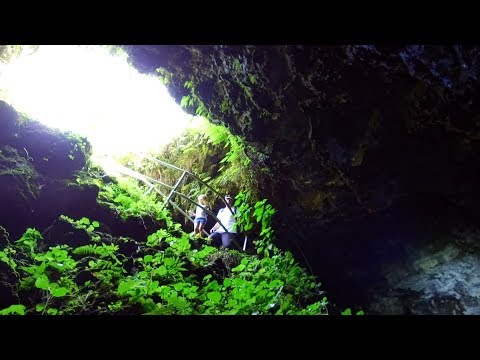
Why go: Kaumana Caves Park sits at the entrance to a 25-mile lava tube created by Mauna Loa’s 1881 flow. You can enter the lava tube and explore about two miles of it via the entrance at this park. Hiking through the tube feels like caving, with some caverns reaching 30 feet in height.
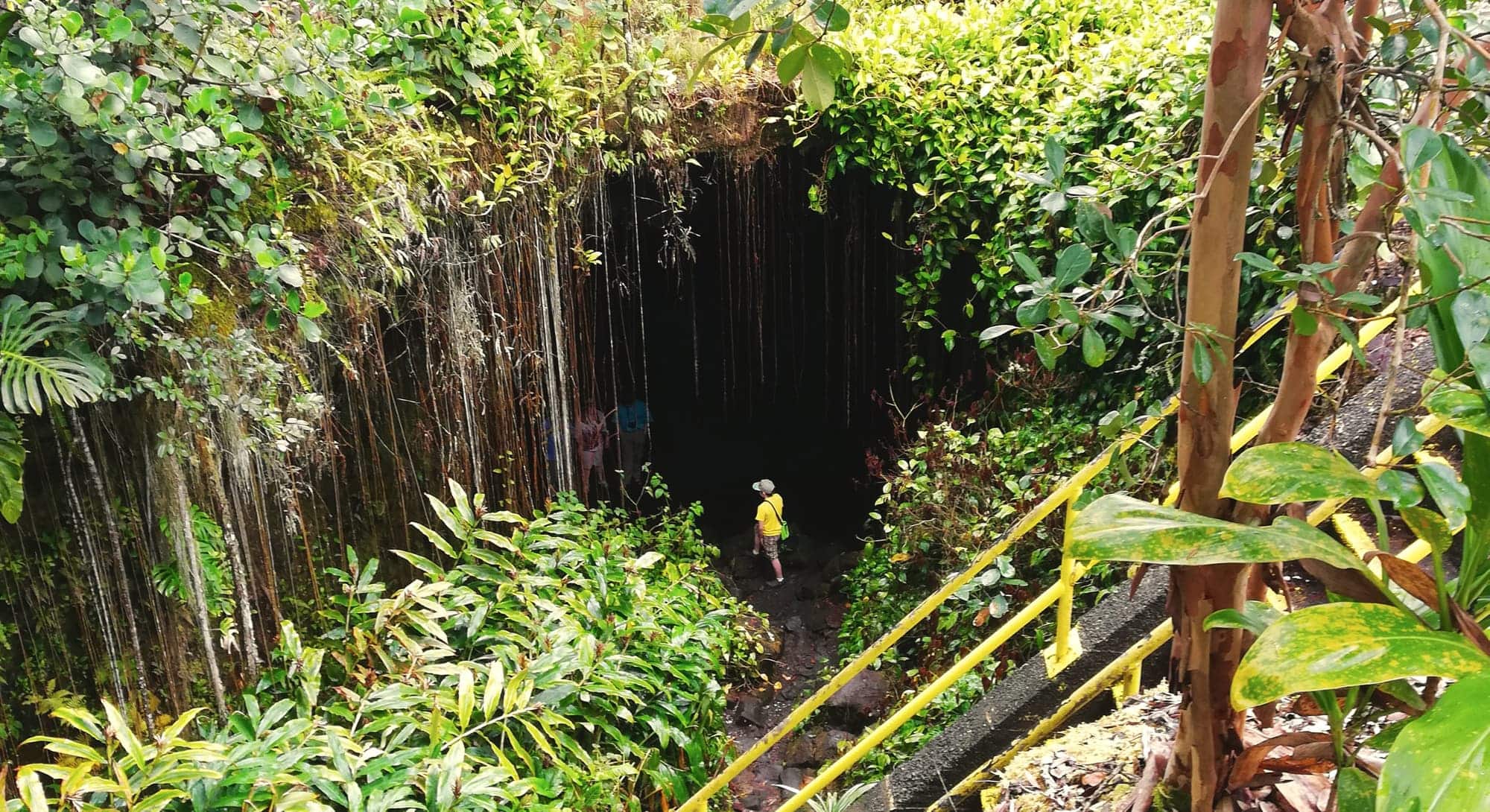
Climb down a steep ladder to get to the lava tube entrance of the Kaumana Caves
Good to know: Entering a lava tube such as the Kaumana Caves requires proper preparation, as low ceilings, ledges, and outcroppings make it easy to bump your head or trip and fall. The height of the cave varies from 30 feet to less than 3 feet in some deeper sections. A few other tips:
- To hike beyond the first 100 yards, you will need to bring a source of light, preferably a headlamp, so you can keep both hands free. Otherwise, a bright handheld flashlight is recommended (i.e., something stronger than your phone).
- Wear appropriate clothing (long pants, sleeves) and sturdy footwear (boots with heavy soles) to protect yourself against the sharp lava rock.
- Walk carefully; it can be slippery inside the cave, and falling on lava rock is not fun. If in doubt, observe the tube/cave from the entrance and tip your hat to its mana, or energy.
How to visit: Follow Saddle Road (Hwy 200) from Hilo to between the 4 and 5 mile marker. The caves sit across the road from the parking lot.
To get to the caves you need to climb about 20 ft. down steep stairs, after which you can enter either the left or the right tube.
The left starts with a big hall that appears to be a dead end. Look to your right to see a small (4 to 5 ft) opening that you can work yourself through. The cave opens up afterwards and you can follow it for another 15 minutes. The cave on the right is, at least at the start, more easily accessible and can be followed longer.
The park grounds also include picnic tables, a tap with drinking water, and restrooms. No entry fee is required.
Combine with: Explore the caves, then check out nearby Rainbow Falls along the Wailuku River. Both of these sites are great stops when traveling between Kona and the Hawaiʻi Volcanoes National Park.
Thurston Lava Tube (Nāhuku)
Why go: Thurston Lava Tube, or Nāhuku (which literally means “the protuberances” in the Hawaiian language), is one of the most interesting and easily-accessible lava tubes in the entire island chain. Unlike the Kaumana caves, which are raw and wild, Thurston Lava Tube is completely safe and accessible for people of all abilities.
Entering this 500-year-old cave requires only a short walk down a staircase, then following a paved path through rainforest to the entrance. Inside, you can see the solidified drips and waves of once-liquid lava, along with the colors of leftover minerals that have drained from the rocks.
It’s one of the main attractions of the Hawaiʻi Volcanoes National Park.
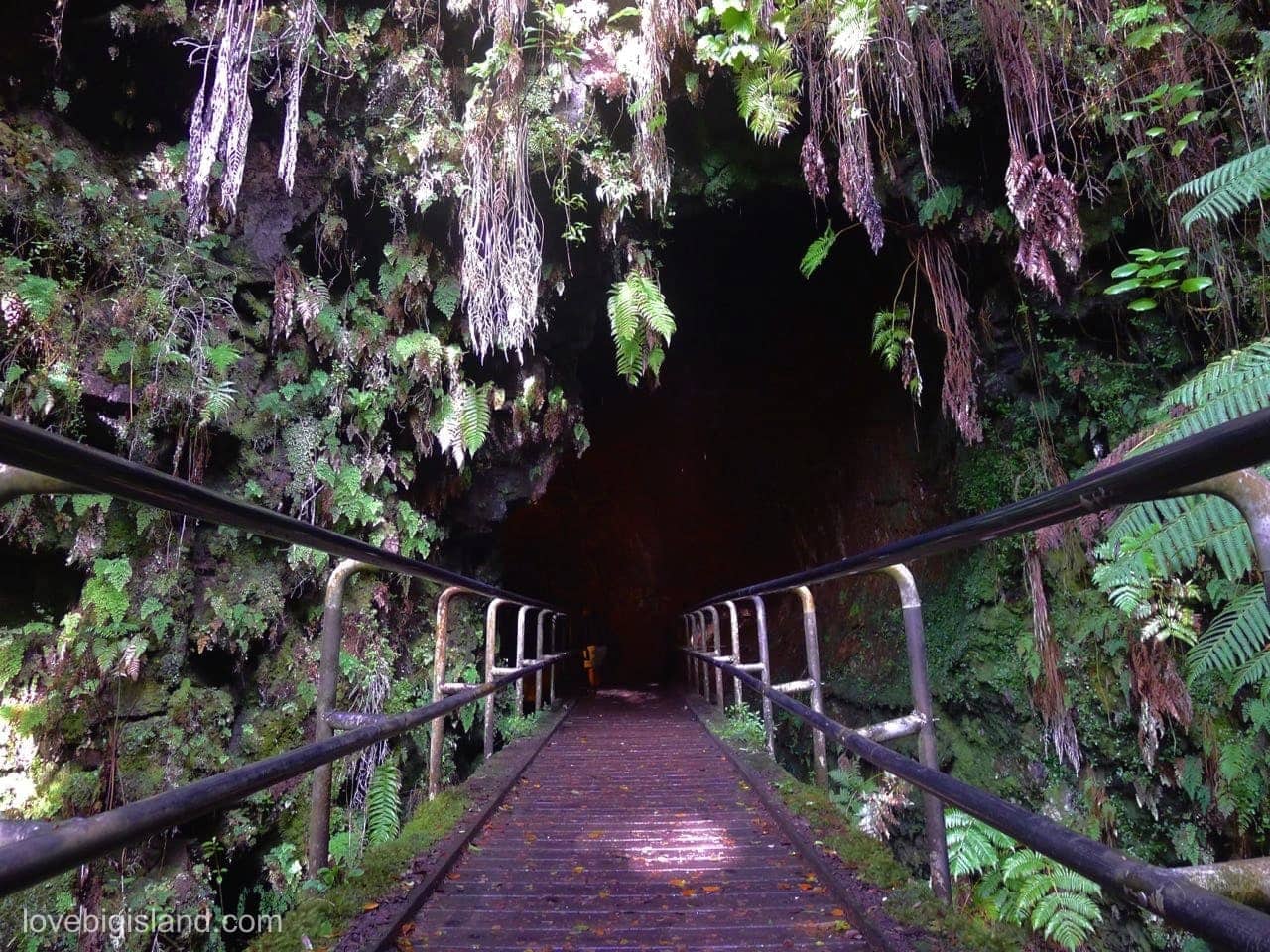
This lava tube was discovered in 1913 by Lorrin Thurston, a local newspaper publisher. At that time the roof of the tube was covered with lava stalactites, but those soon disappeared to souvenir collectors.
Good to know: This site sits within Hawaiʻi Volcanoes National Park, so the park entrance fee is required to visit. Parking is very limited at the Nāhuku parking lot so be patient; it is likely you will have to make several passes. Go early (before 9 am) or later (after 4 pm) to avoid peak hours. If you’re up for a hike, park at the Kīlauea Iki Overlook. You can walk to Thurston from there via a very scenic, half-mile trail.
How to visit: Follow Crater Rim Drive for 1.7 miles (2.7 km) to get to the Nāhuku parking lot.
Combine with: While you are in Hawaiʻi Volcanoes National Park, continue exploring: the summit crater, Halemaʻumaʻu, plus other hikes, geological sites, scenic drives, and coastal walks. Stay for the sunset over the crater, and stick around a bit longer for great stargazing.
Maui
Maui’s largest volcano, Haleakalā, formed the island’s lava tubes. You can visit these two:
Kaʻeleku Caverns
Why go: Kaʻeleku Caverns is a very large lava tube on Maui with a self-guided walk inside. Signs along the way point out details in the rock and explain how lava tubes form.
Good to know: The cave sits on private property; entry costs $15 and includes a flashlight.
How to visit: Kaʻeleku Caverns sits near Hāna. You can see its exact location here.
Combine with: The drive out is the Road to Hāna, a full day with stops along the way. Our Road to Hāna guide names the stops worth making.
Waiʻānapanapa State Park
Why go: If you want to check out a sea cave on Maui, head to Waiʻānapanapa State Park near Hāna. Descend the stairs to the black sand beach, then turn right and head along the coast to find the entrance. You can go inside to explore; just keep an eye out for incoming waves.
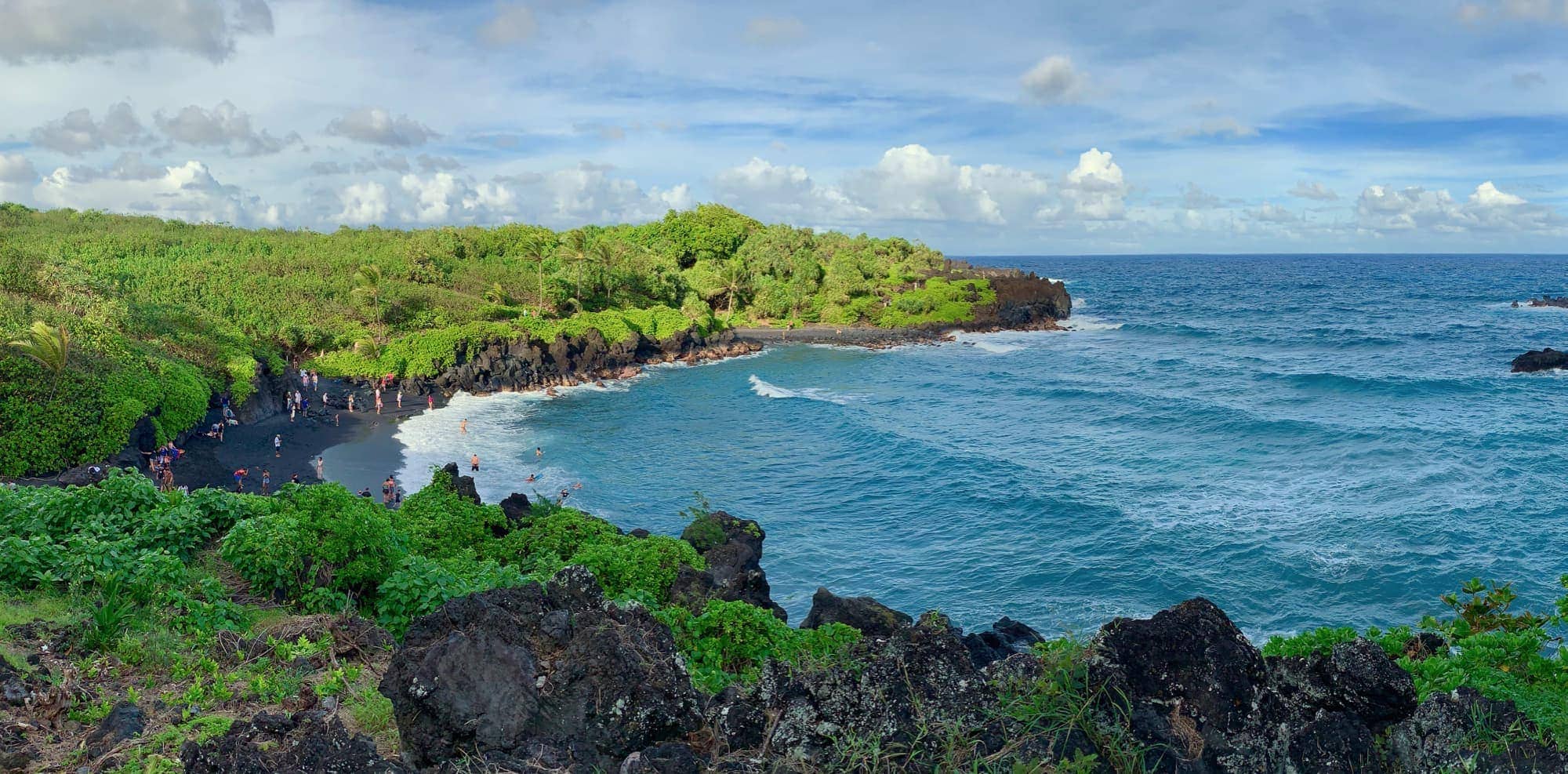
The volcanic black sand beach in the Waiʻānapanapa State Park black sand beach is one of the many “must stop” attractions along the Road to Hāna. Image credit: Anita Gould, source.
Good to know: Keep watch for blowholes north along the shoreline of Pailoa Bay, which were also formed by lava. There is also a sea arch within the state park.
How to visit: Reserve your entrance and parking online in advance; the state park requires it.
Combine with: Our Road to Hāna guide names the stops along the drive.
Kauaʻi
As the oldest island in the modern day chain, many of Kauaʻi’s lava tubes have been eroded and today take on other forms, including sea caves and blowholes.
- Tunnels Beach (snorkeling + diving)
- Nāpali Coast
- Spouting Horn Blowhole
Tunnels (Makua) Beach
Why go: The underwater world at Tunnels Beach includes coral reefs, tropical fish, and underwater caverns formed by lava tubes. Those underwater caverns make it one of the best Kauaʻi snorkeling spots and the top scuba diving destination on the island’s north shore; experienced free divers and snorkelers come for them too.
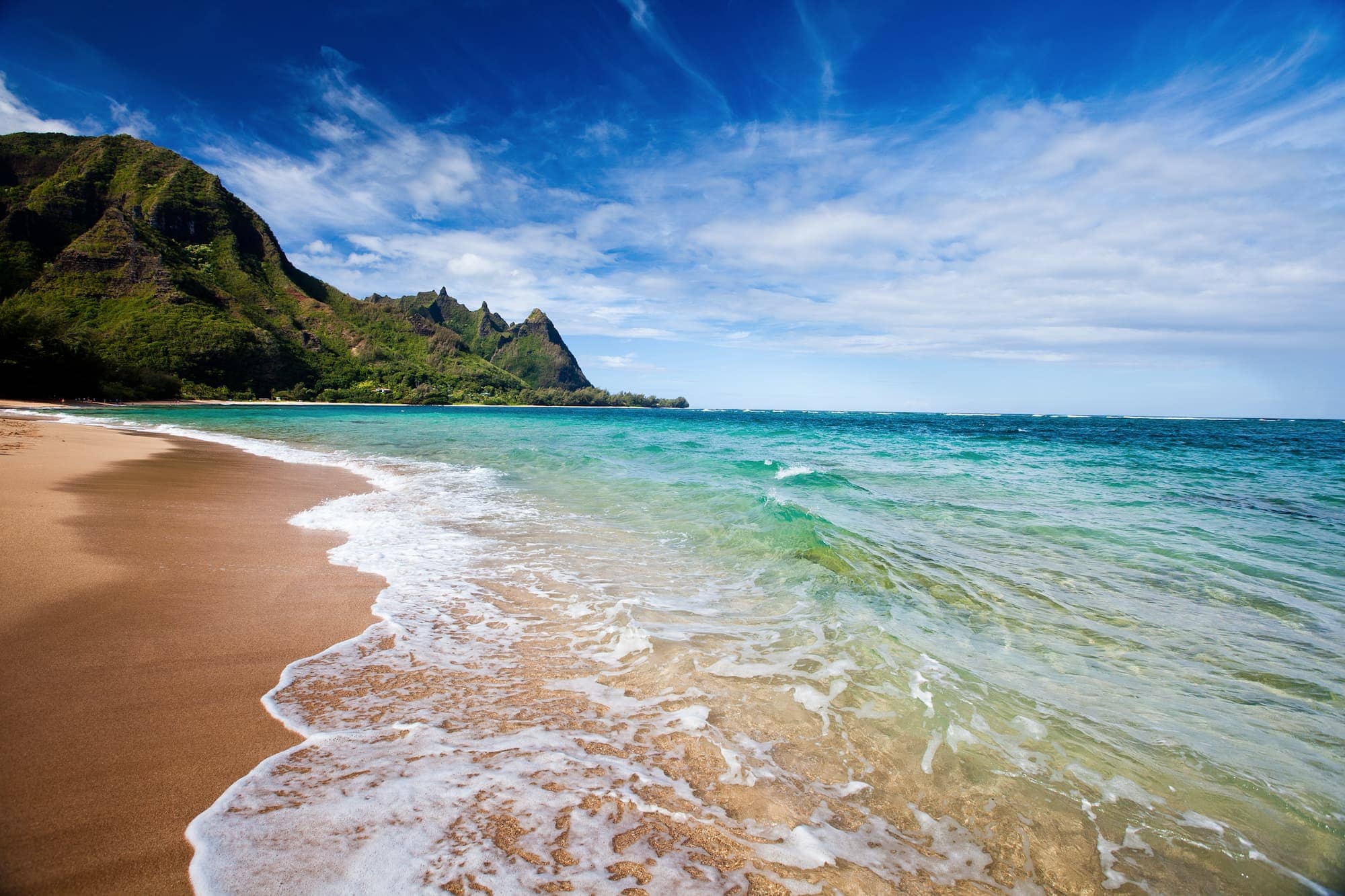
Makua Beach (“Tunnels”) is low-key white-sand beach with shallow reefs for snorkeling Credit: Hawaii Tourism Authority (HTA) / Tor Johnson
Good to know: Exploring the snorkeling area at Tunnels will take time, so bring water or a packed lunch and take plenty of breaks. There are smaller reefs close to shore, suitable for beginners, but the caves sit farther offshore.
How to visit: To get to Tunnels, you’ll have to reserve a parking spot or a seat on the shuttle to Hāʻena Beach Park. Bring your own snorkeling gear to Tunnels. Or, sign up for a scuba diving outing to explore collapsed lava tubes and unique topography features with Dive Kauaʻi.
Combine with: Since you will have to reserve parking or the shuttle, plan on spending the better part of the day at Tunnels and the other beaches on Kauaʻi’s north shore.
Nāpali Coast
Why go: The Nāpali Coast is an undeveloped stretch of Kauaʻi’s northwest coast. You can explore it on foot (via hiking the Kalalau Trail), by air (via helicopter tour), or on any of several boat tours that explore this coastline, full of jagged peaks, expansive valleys, waterfalls, cliffs, and, of course, sea caves and lava tubes.
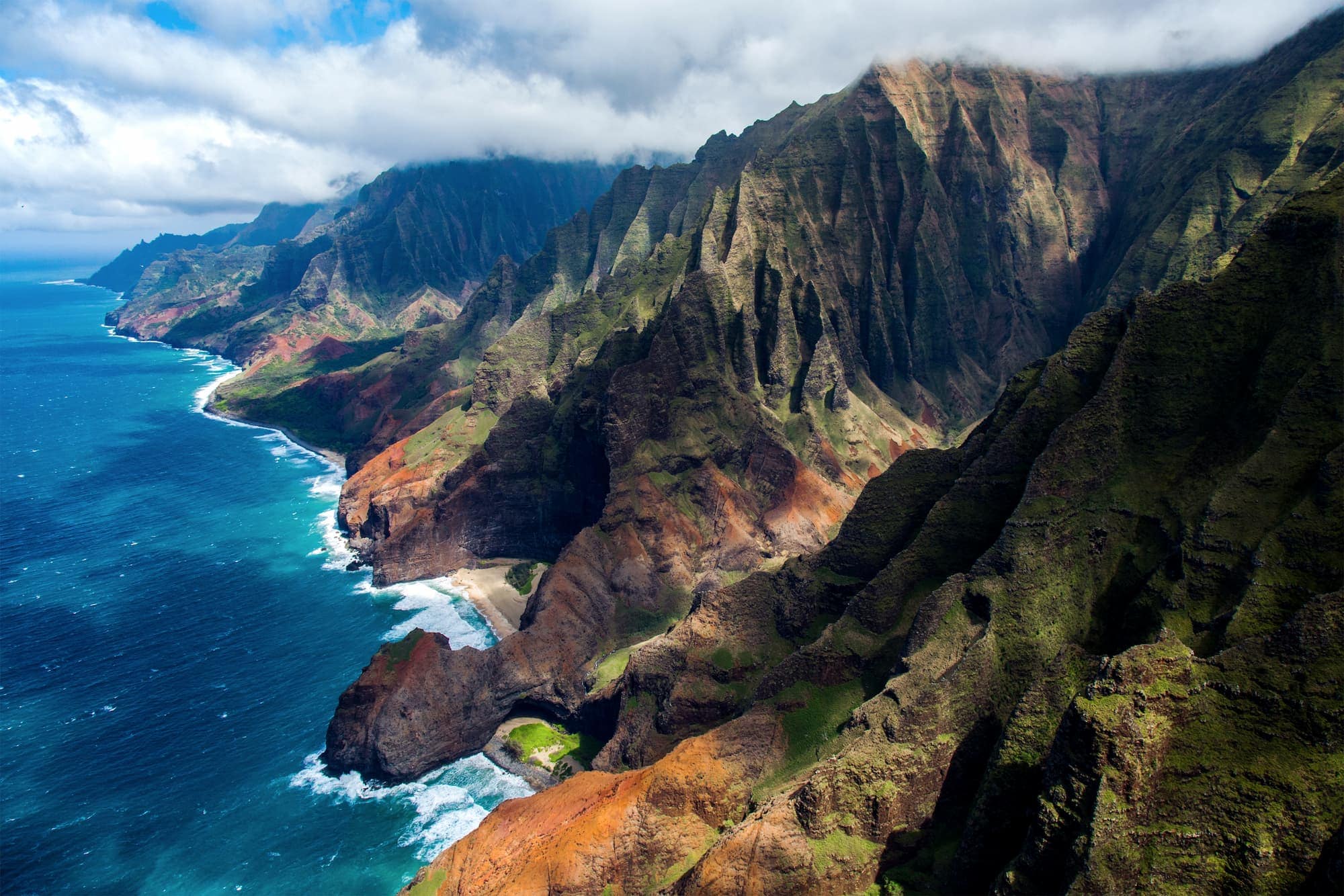
The Nāpali coast cliffs as seen from a helicopter. Credit: Hawaii Tourism Authority (HTA) / Ben Ono
How to visit: Jump on a boat tour to explore the Nāpali Coast. There are a variety of tours to choose from, depending on whether or not you want to snorkel, and the size of the boat. To experience sea caves, check out the Nāpali Experience.
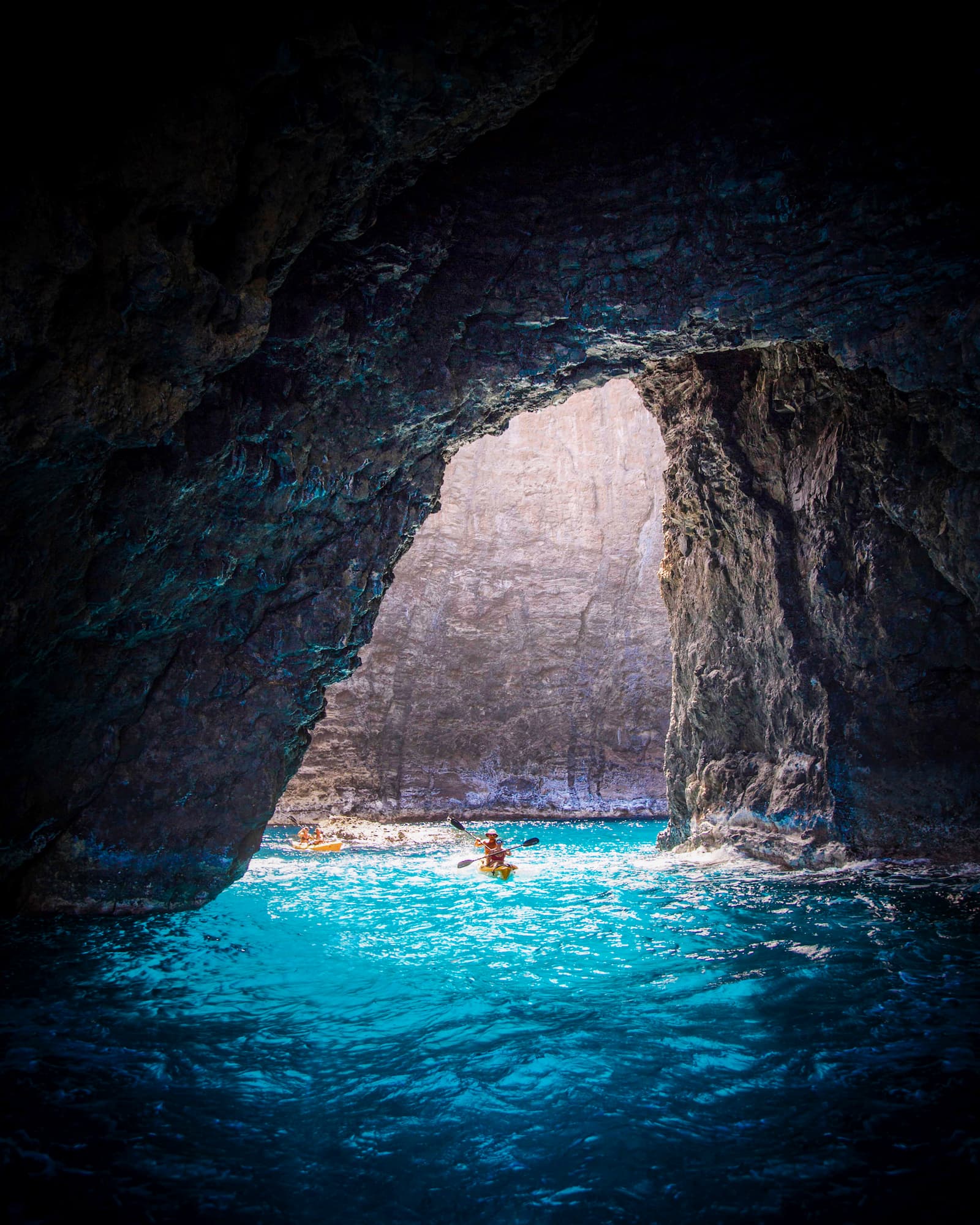
There are many sea caves along the Napali coast on Kauaʻi. Of those caves, Pukalani (the Open Ceiling Cave) is one of them. Credit: Hawaii Tourism Authority (HTA) / Tommy Lundberg
Combine with: This will be a half or three-quarter day outing, so consider it your main event for the day. Grab a late lunch or early happy hour after your tour.
Spouting Horn Blowhole
Why go: Spouting Horn blowhole is a short drive west of Poʻipū. On days with big swells the water shoots high into the air.
Good to know: There are picnic tables and a lot of grassy area at Spouting Horn Park, and it’s a scenic area for a packed lunch or snack.
How to visit: Spouting Horn Park sits west of Poʻipū. There is a parking lot, and no entry fee. The water comes out under a lot of pressure, so watch from a distance.
Combine with: After seeing the blowhole, check out the Allerton Garden, the National Tropical Botanical Garden. We recommend taking a guided tour to see the collection of massive trees and native plants and flowers.
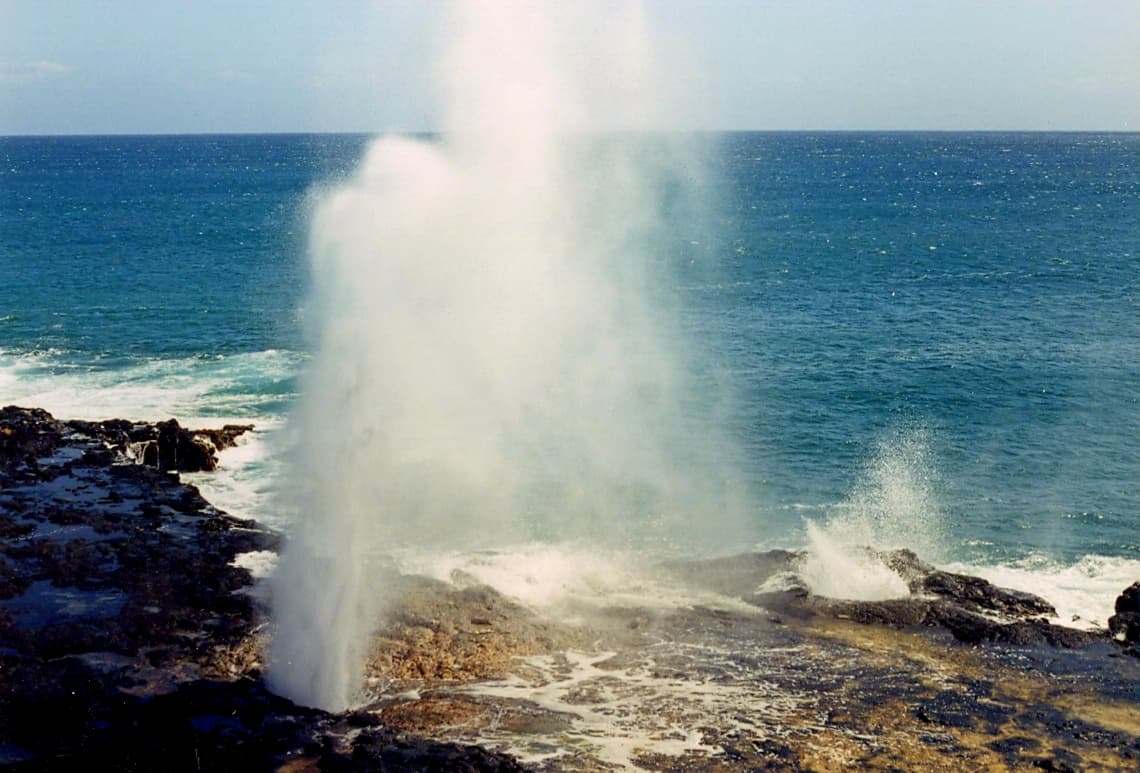
The Spouting Horn blowhole on Kauaʻi. Ron Clausen, CC BY-SA 4.0, via Wikimedia Commons
What’s in a Lava Tube: Caves, Blowholes, and Arches (and where to find them)
Lava tubes can take a variety of sizes and shapes, including caves, caverns, blowholes, and underwater sea caves that you can explore on foot, by boat, or by scuba or snorkeling.
1: Inland Lava Tubes (Caves and Caverns)
Inland, lava tubes take the form of caves and caverns. Some entrances are big and easy to walk into. Bring a flashlight or headlamp.
For example: the Kaumana Caves (Hilo, Big Island)
The Kaumana caves are part of a 25-mile lava tube created by an 1881 flow from Mauna Loa. You can explore the caves a short way in both directions before the lava tube enters private property.
Climb down a steep ladder to get to the lava tube entrance of the Kaumana Caves
2: Coastal Lava Tubes (Caves)
Many lava tubes ran down to the coast and carried lava into the ocean. Coastal caves survive across the islands; some you can see from the beach, others only from a boat tour.
For example: the sea caves at the Nāpali Coast (Kauaʻi)
The sea caves the boat tours visit are on the Nāpali Coast on Kauaʻi. You can only reach these caves over the water, by boat or kayak.
Pukalani (the Open Ceiling Cave) was once a far smaller lava tube. Waves wore at it for years until the ceiling collapsed, leaving the open-roofed cave the boat tours enter today.
There are many sea caves along the Napali coast on Kauaʻi. Of those caves, Pukalani (the Open Ceiling Cave) is one of them. Credit: Hawaii Tourism Authority (HTA) / Tommy Lundberg
3: Blowholes
In their youngest form, lava tubes are like enclosed, underground tubes. Over time, erosion breaks them open. Remnants of eroded lava tubes are all over the islands. Sometimes, they can take the form of blowholes, through which waves crash with great force. Always enjoy from a distance.
For example: the Halona blowhole on Oʻahu
The Halona blowhole on Oʻahu has its own overlook and parking lot, and Halona Beach Cove next to it is one of the smallest beaches in the state.
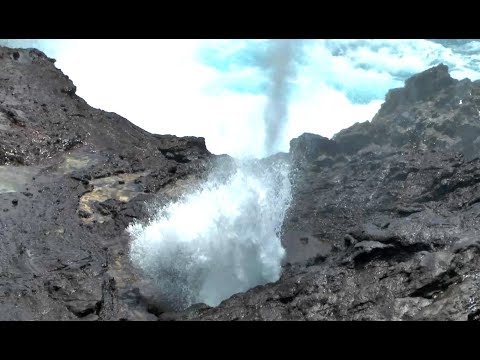
To see the blowhole you need to park at the Halona Blowhole Lookout parking lot, which also gives access to the Halona Beach Cove on Oʻahu.
4: Underwater Sea Caves and Arches
The Hawaiian islands are sinking. The Big Island, for example, is sinking at a rate of nearly one tenth of an inch each year. Over time that puts lava tubes that formed at the shoreline under water, so the islands have many underwater sea caves.
Many old lava tubes are submerged underwater in the form of sea caves, arches, and other rock formations. You can explore some of the sea caves by scuba, snorkeling, or free diving. When exploring underwater lava tubes, you must be extremely careful; only experienced divers should go inside.
For example: Tunnels (Makua) Beach on Kauaʻi
Tunnels is a popular snorkeling and diving spot on Kauaʻi because of the underwater caverns offshore.