
Hawaiʻi is unfortunately one of the most expensive destinations to visit in the United States. There is not much here that can be considered cheap or a bargain – airfare, accommodation, rental cars, organized tours, and food and drink will all push your budget to the limit (although there are a few tricks to save money on your Hawaiʻi trip).
That said, there are tricks to the trade once on the ground. Hawaiʻi boasts an abundance of free or cheap activities, many of them spectacular due to the abundance of nature, culture, and biodiversity present in the islands. Thanks to a major city on its shores, a variety of beach towns, and two volcano’s worth of mountains, Oʻahu has a blend of natural and metropolitan experiences that can be enjoyed for little to no cost.
Table of contents
Below, are some of our favorite free (or very cheap) activities on Oʻahu.
Free and Cheap Oʻahu, at a Glance
Every option in this guide is in the sorted table below, cheapest first, so the free ones sit at the top with a Free label. Each row shows the price, whether you need to reserve ahead, and a quick note. Scroll down for the full write-up on any of them.
Prices, details, and map locations below last verified September 2026.
| Name | Category | Price | Reservation? | Note |
|---|---|---|---|---|
| 1Mānoa Falls (Details ↓) | Outdoor Adventures | Free | No | Easy 1-hour rainforest hike to a waterfall; only cost is the parking lot. |
| 2Makapuʻu Lighthouse Trail (Details ↓) | Outdoor Adventures | Free | No | Easy paved coastal hike to a lighthouse overlook; winter whale spouts, little shade. |
| 3Kāʻena Point (Details ↓) | Outdoor Adventures | Free | No | Free coastal reserve: albatross and monk seals. About 5 miles round trip, no shade. |
| 4Kailua and Lanikai Beaches (Details ↓) | Outdoor Adventures | Free | No | Windward white-sand beaches (Kailua, Lanikai, Waimānalo); calm mornings, small lots. |
| 5Waikīkī Beach (Details ↓) | Outdoor Adventures | Free | No | Free public beach in Honolulu; board rentals from about $10 for 2 hours. |
| 6Ko Olina Lagoons (Details ↓) | Outdoor Adventures | Free | No | Calm west-side swim lagoons. Parking very limited for non-resort guests. |
| 7Sharks Cove and Three Tables (Details ↓) | Outdoor Adventures | Free | No | Free North Shore snorkel at Pūpūkea; flat and clear in summer, dangerous in winter surf. Lot across the highway. |
| 8Laniākea Beach (sea turtles) (Details ↓) | Free wildlife watching | Free | No | North Shore sea-turtle haul-out; volunteers rope off the animals. Keep 10 ft back. |
| 9Shore whale-watching (Details ↓) | Free wildlife watching | Free | No | Nov-Apr, watch for humpback spouts from the Makapuʻu Lighthouse Trail. |
| 10Free Waikīkī hula (Kūhiō Beach Hula Mound) (Details ↓) | History & Culture | Free | No | Sat 6:30-7:30pm, Kalākaua Ave by the Duke statue. Also Royal Hawaiian Center. |
| 11Pearl Harbor / USS Arizona (Details ↓) | History & Culture | Free | Yes | Memorial free; recreation.gov timed ticket (+$1). Parking $7. |
| 12Capitol Modern (State Art Museum) (Details ↓) | History & Culture | Free | No | Free state art museum (formerly HiSAM) downtown across from ʻIolani Palace; Hawaiʻi artists. |
| 13Koko Crater Botanical Garden (Details ↓) | Agritourism | Free | No | Free dry-forest garden loop, separate from the Koko Head stairs. Little shade. |
| 14Green World Coffee Farm (Details ↓) | Agritourism | Free | No | Free tastings and a free self-guided coffee-farm tour near Wahiawā. |
| 15Kākoʻo ʻŌiwi (Details ↓) | Agritourism | Free | Yes | Kāneʻohe taro farm; free volunteer workdays and paid tours, arranged ahead. |
| 16Heʻeia Fishpond (Details ↓) | Agritourism | Free | Yes | Restored Kāneʻohe fishpond; free volunteer workdays and tours, arranged ahead. |
| 17Hoʻomaluhia Botanical Garden (Details ↓) | Agritourism | Free | No | Free Kāneʻohe garden under the Koʻolau cliffs; loop road and trails, daily 9am-4pm. |
| 18Explore Chinatown and Kakaʻako (Details ↓) | City Exploration | Free | No | Walk downtown Honolulu: Chinatown and Kakaʻako galleries, shops, and murals. |
| 19Waiāhole Poi Factory & Highway Inn (Details ↓) | Food, Drink, and Shopping | Free | No | Cheap traditional Hawaiian plates, the budget answer to a paid luau. |
| 20Diamond Head (Lēʻahi) (Details ↓) | Outdoor Adventures | $5pp + $10/veh | Yes | Out-of-state visitors reserve entry and parking online. Residents free. |
| 21Foster Botanical Garden (Details ↓) | Agritourism | $5 | No | Downtown Honolulu old-growth trees; $5 adult ($3 resident, $1 kids), daily 9am-4pm. |
| 22Hanauma Bay (Details ↓) | Outdoor Adventures | $25pp + $3 | Yes | Non-resident $25 (ages 13+). Reserve 2 days ahead; closed Mon and Tue. |
| 23Waimea Valley (Details ↓) | Agritourism | $25 | No | Paved botanical walk to a swimmable waterfall. |
| 24Kahuku Farms (Details ↓) | Agritourism | $50 | Yes | One-hour North Shore farm tour with a tasting; booking required. |
| 25Bishop Museum (Details ↓) | History & Culture | Varies | No | Largest collection of Hawaiian artifacts in the state, in Honolulu. Check the museum site for admission. |
| 26ʻIolani Palace (Details ↓) | History & Culture | Varies | Yes | The only royal palace in the US; guided and self-led tours in downtown Honolulu. Book ahead. |
| 27Costco (Honolulu) (Details ↓) | Food, Drink, and Shopping | Membership | No | Iwilei warehouse near Waikīkī; stock a condo kitchen + cheapest gas. Membership required. |
Outdoor Adventures
Here are free or cheap things to check out as it relates to the natural world:
Mountain/Jungle Hiking
Despite being the most-developed island, Oʻahu is still a wonderful place for hiking, and almost all trails on the island are free to enjoy (there is a small fee to hike Diamond Head). You can traverse through the dense jungle and chase waterfalls on the windward side, catch panoramic views of Honolulu from the southern slopes, or climb Oʻahu’s highest peak, Mt. Kaʻala, on the west coast.
Not sure where to go? Check out our 15 favorite hikes on Oʻahu.
Mānoa Falls
A muddy, hour-long rainforest walk behind Mānoa Valley, above Honolulu, ends at a tall, thin waterfall. The hike itself is free; the only cost is the private lot at the trailhead, which fills by mid-morning, so go early. Wear shoes you don’t mind getting dirty, since the trail stays muddy most of the year.
Makapuʻu Lighthouse Trail
Paved the whole way, the climb to the overlook above the lighthouse is one of the easier hikes on Oʻahu for the view you get at the top, out over the island’s southeast point. There’s no shade at all, so bring water and go early or late. From November to April it doubles as a free whale-watching spot: scan the water below for humpback spouts.
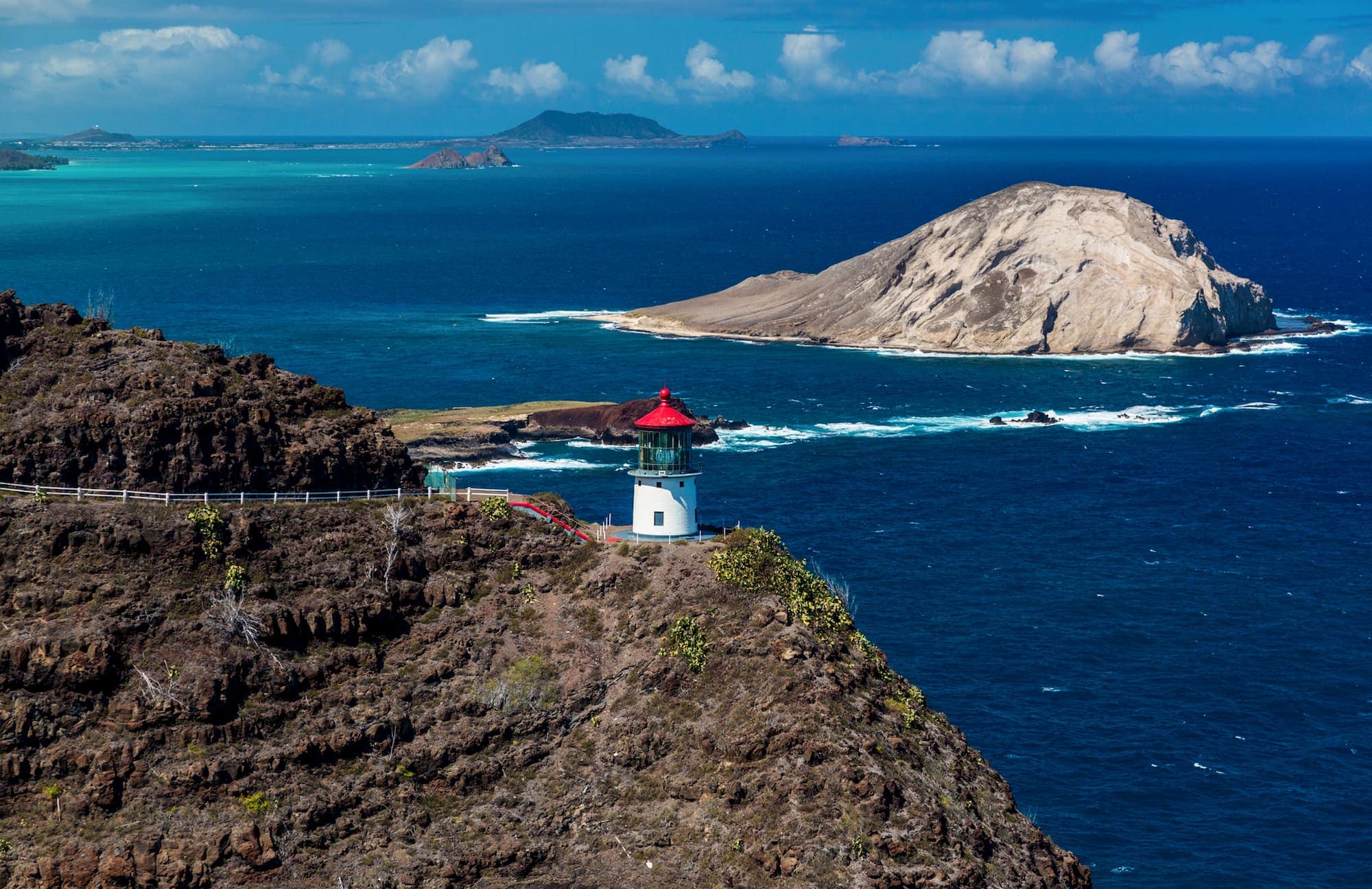
The short and easy Makapuʻu Lighthouse Trail takes you to an overlook with amazing views. Image credit: Hawai‘i Tourism Authority (HTA) / Tor Johnson
Diamond Head (Lēʻahi)
Diamond Head, or Lēʻahi, is the crater at the east end of Waikīkī, and a paved trail climbs the inside rim to a bunker and a lookout over Honolulu and the coast. Out-of-state visitors reserve both entry and parking online ahead of time, $5 per person plus $10 per vehicle; Hawaiʻi residents get in free with no reservation. The climb is short but fully exposed, with some stairs and a tunnel near the top. Go at opening to beat the heat and the crowds.
Coastal and Beach Walks
If you’d rather keep your heart rate down, the island has plenty of flat coastal walks. Any of them is best early, before the trade wind comes up and while the sand is still empty.
Kāʻena Point
The path out to Kāʻena Point on the North Shore is a flat coastal reserve trail with nesting albatross and, often, monk seals hauled out on the rocks. It runs about five miles round trip with no shade, so carry water and a hat. You can reach it from two trailheads, one from Mokulēʻia and one from the Waiʻanae side.
Kailua and Lanikai Beaches
The windward side has the island’s calmest, softest beaches. Kailua Beach and neighboring Lanikai are wide and white, usually gentle in the morning, and Waimānalo runs for miles just to the south. All are free, with public parking, though the Lanikai lots are small and residential, so come early.
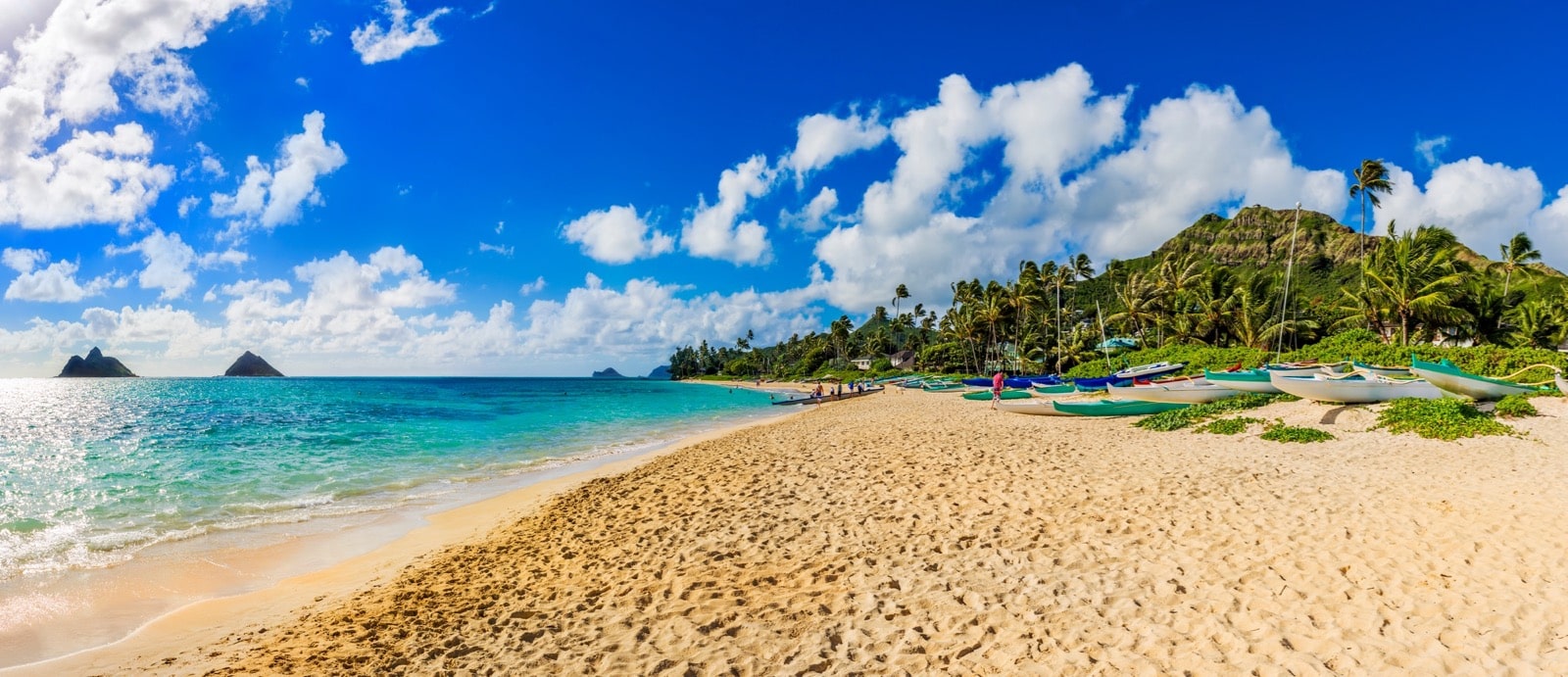
Lanikai Beach in Kailua with Nā Mokulua (the “Mokes”) on the left. Image credit: PBPhotos
Beach Bumming
Need we say more? All beaches in Hawaiʻi are public and free, so grab a chair, towel, and book and bounce around from beach to beach. Waikiki Beach (shown below) is but one of many of the amazing white-sand beaches on Oʻahu.
Waikīkī Beach
Waikīkī is the busiest beach on the island and free to walk onto. The sand is imported, and the water is calm and shallow, an easy spot for a first swim. Surfboards rent right on the beach from about $10 for two hours if you already know how to stand up. It’s packed by midday, so mornings and late afternoons are the calm windows.
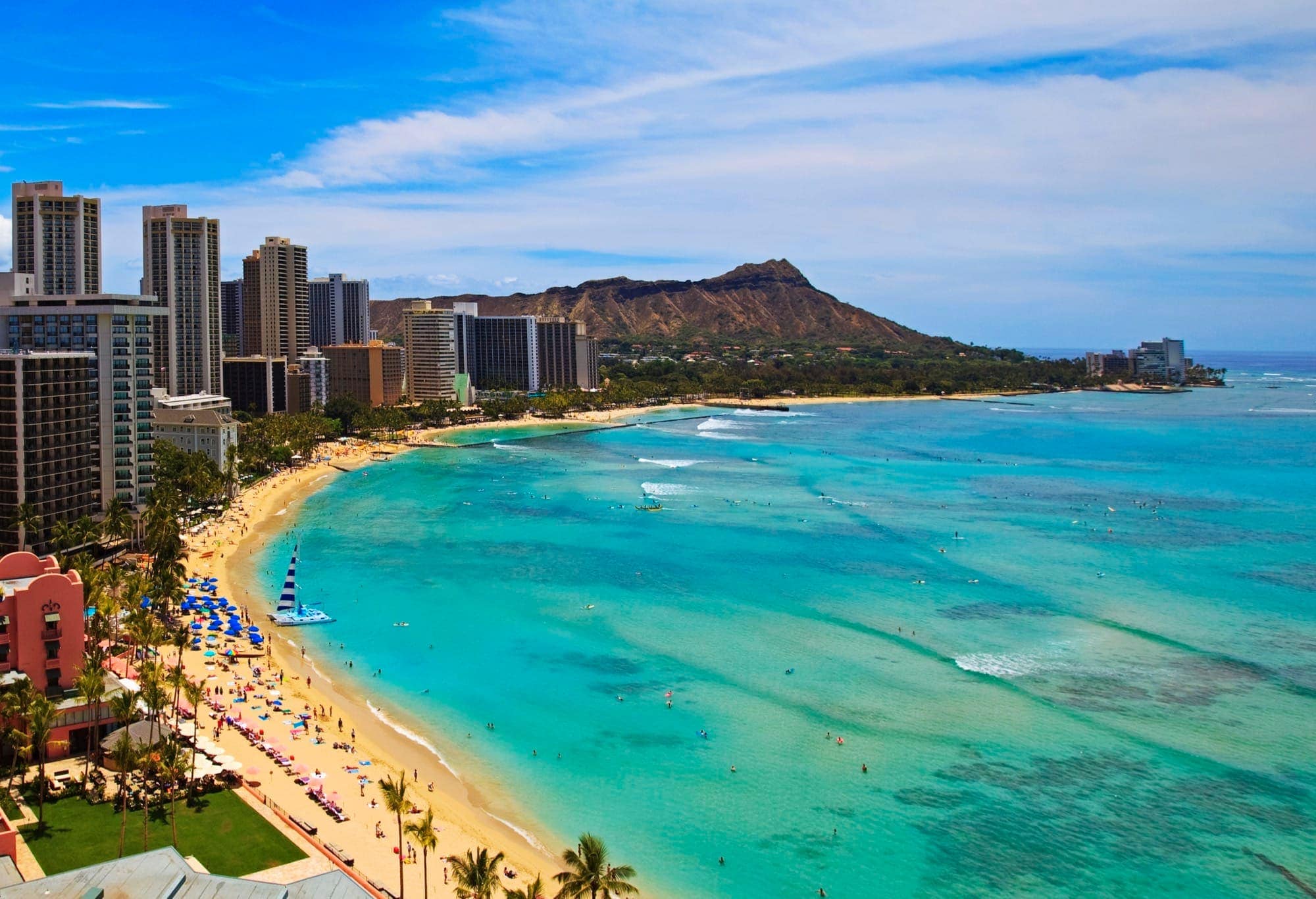
A visit to Honolulu isn’t complete without at least having a look at the Diamond Head crater from Waikiki Beach. Image credit: tomasphoto
Ko Olina Lagoons
Ko Olina is a set of four calm, man-made lagoons on the west side, fronting the resorts but open to the public. The water is flat and shallow, calm enough for small kids. Public parking is limited: each lagoon has only a small public lot, and they fill early on weekends, so arrive before mid-morning or plan to wait.
Snorkeling
Snorkeling tours are great for many reasons, but they aren’t necessary to enjoy the underwater world in Hawaiʻi. If you’re comfortable in the water and have a buddy to go with, bring or buy a snorkel set (about $40 or so for mask, snorkel, and fins) so you can snorkel multiple times and in multiple spots during your trip. There are many sites around Oʻahu that are accessible without a boat, such as Shark’s Cove, Sans Souci, and Hanauma Bay.
Check out our list of snorkeling spots on Oʻahu for more ideas and descriptions of the sites.
Hanauma Bay
Hanauma Bay is the exception to the free-snorkeling rule, and it’s worth the fee. The bay is a protected marine preserve inside a volcanic cone, with easy, shallow reef right off the sand. Non-residents pay $25 (ages 13 and up), plus $3 to park, and you reserve a time slot online two days ahead. It’s closed Mondays and Tuesdays, and slots go fast, so book the earliest one you can.
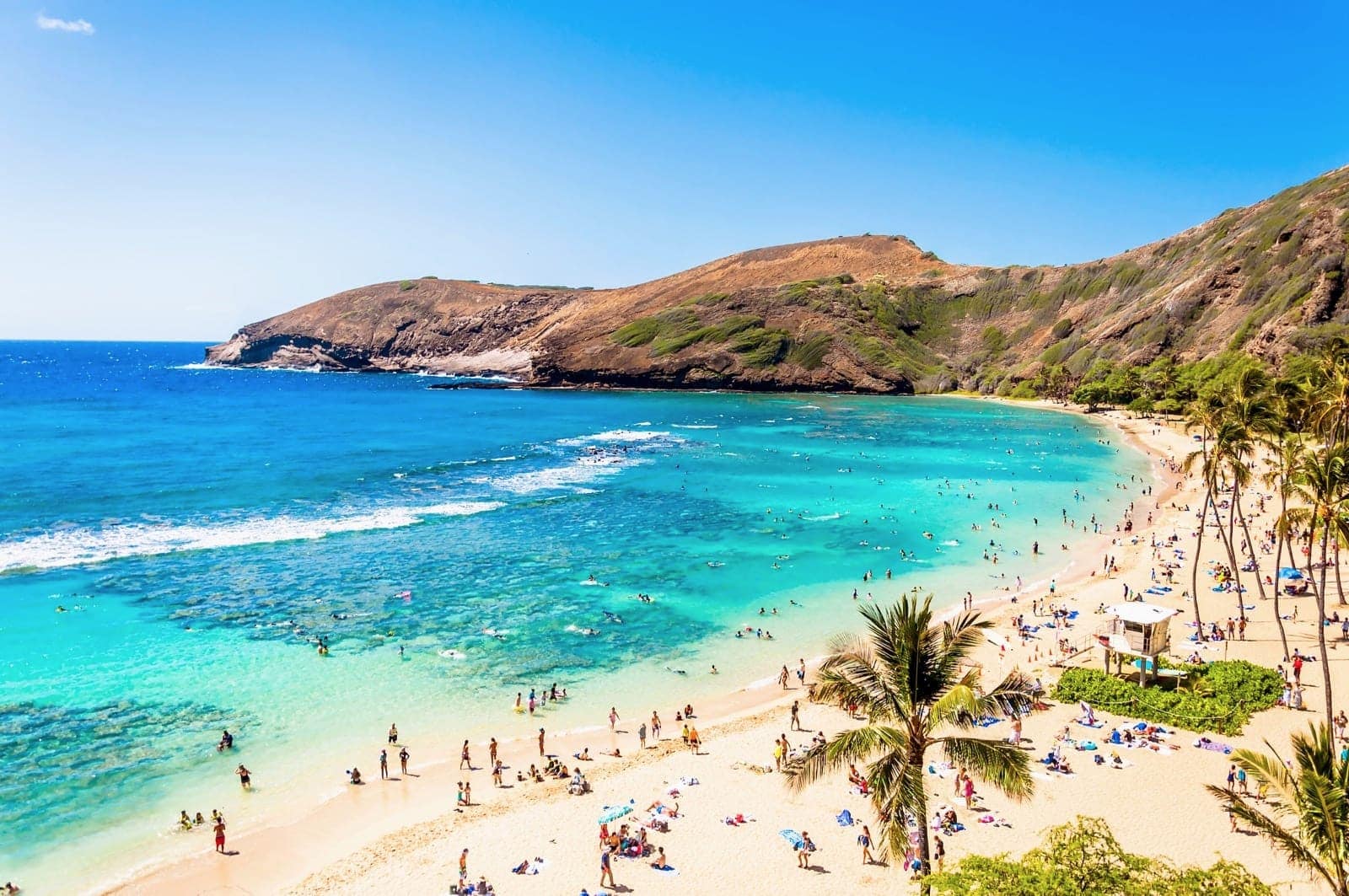
Hanauma Bay on Oʻahu is a paradise for snorkelers.
Sharks Cove and Three Tables
Sharks Cove and Three Tables sit side by side at Pūpūkea on the North Shore, and both are free. In summer the water goes flat and clear over a reef full of fish, and it’s the closest thing to Hanauma Bay without the fee or the reservation. In winter the North Shore surf makes those same spots dangerous, so this is a summer swim only. Park in the lot across Kamehameha Highway. Our Oʻahu snorkeling guide ranks it against the island’s other snorkel spots.
Surfing
Surf lessons are pricey, but renting a board is not, especially in Waikīkī, where they can be had for as low as $10 for 2 hours. Most of the breaks close to shore in Waikīkī are very beginner friendly if you know the basics already.
Find out more about surf spots, surf rentals, and surf classes, in our guide to surfing on Oʻahu.
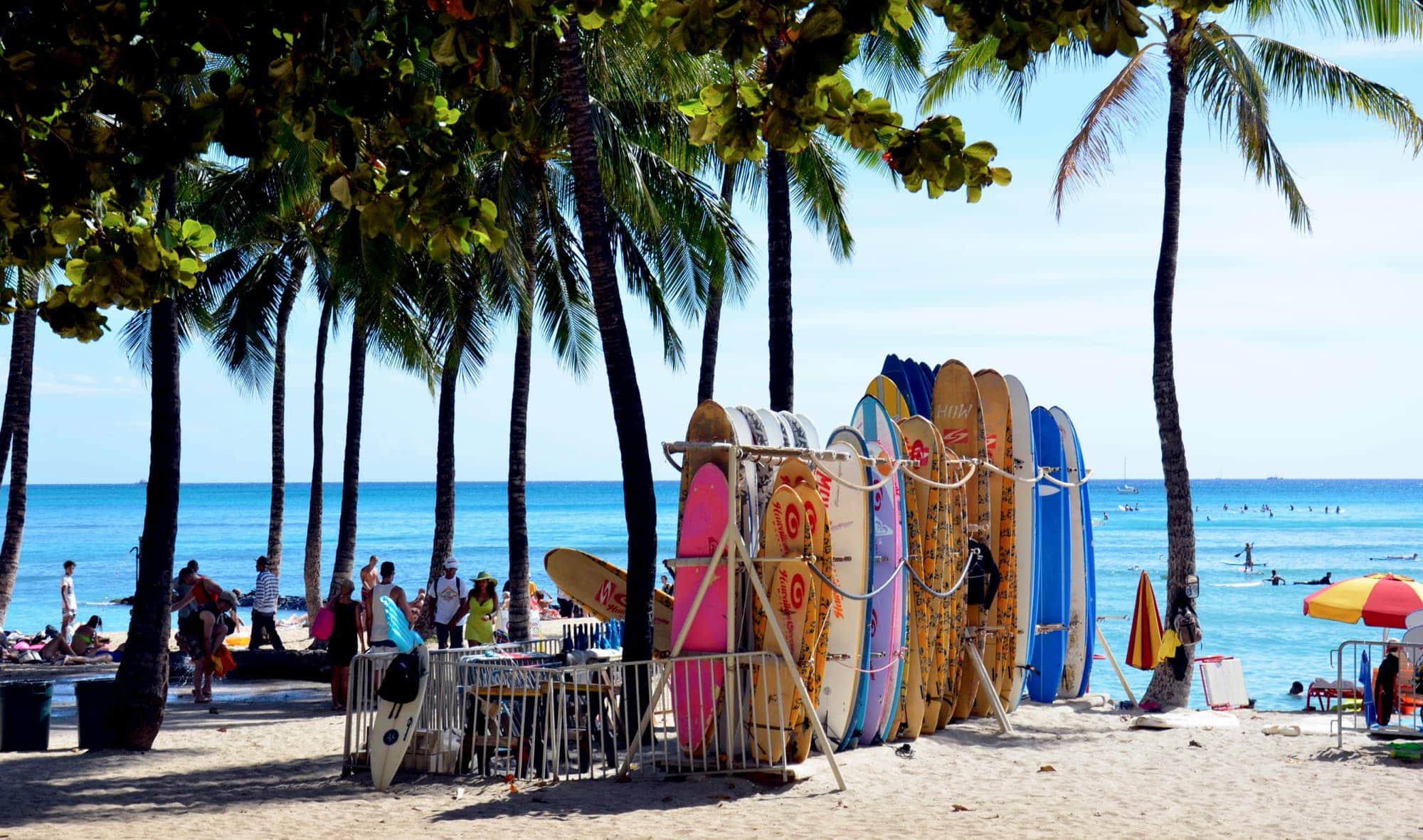
There are many places to rent surfboards in Waikīkī directly on the beach. Image credit: Armin Rodler, source.
Sunset Picnic
While many folks will be enjoying the sunset from a bar or restaurant, you can save a lot of money by planning your own sunset beach picnics. You can pick up a cheap cooler bag at the grocery store and fill it with poke, snacks, and drinks for a fraction of the cost of a restaurant. The ambiance of the beach is the icing on the cake.
Also known as the “west side,” the Waiʻanae Coast is filled with beautiful beaches that all offer a front-row seat to the sunset on Oʻahu. You can find more great suggestions in our overview of good places to see the Sunset on Hawaiʻi.
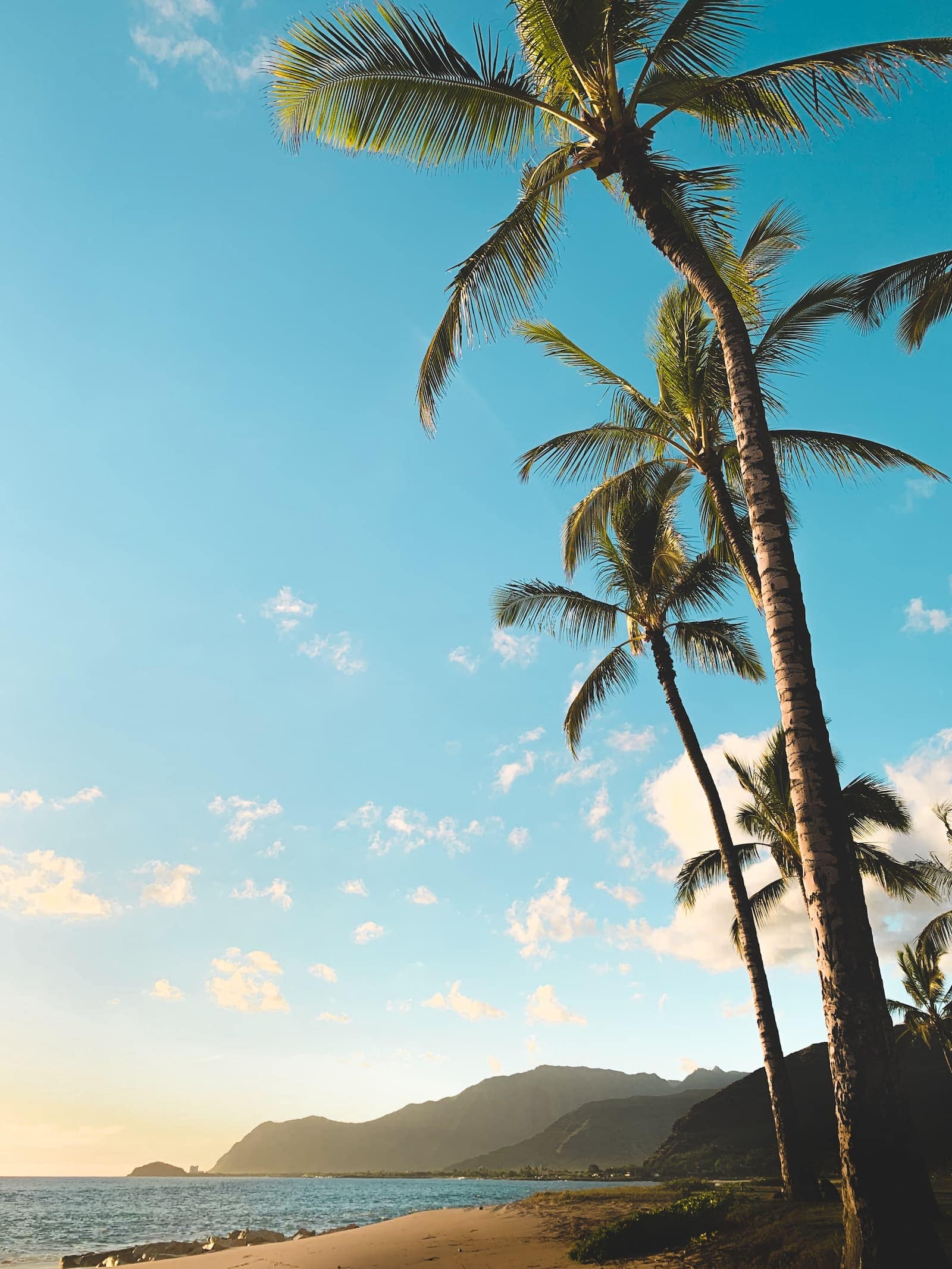
Golden hour, just before the sun sets off Māʻili Beach Park on the west Oʻahu coast. Photo by Pono Lopez on Unsplash
Scenic Drives
Gas is expensive in Hawaiʻi, but one tank will allow you to explore most (if not all) of Oʻahu. Take in the scenic beauty as you cruise (windows down) around the island, stopping at whatever town, beach, or point of interest you see fit. Definitely drive the south shore between Hawaiʻi Kai and Waimānalo, cruise up the east side to the north shore, or explore the west coast road up to Yokohama Beach.
Free wildlife watching
Some of the island’s best wildlife watching costs nothing and needs no boat, just a spot on the sand and a little patience.
Laniākea Beach (sea turtles)
Green sea turtles (honu) haul out on the sand at Laniākea Beach on the North Shore, where volunteers rope off the resting animals and keep visitors back. It is free to watch, and the roadside lot across the highway is small. Keep at least 10 feet back and never touch them.
Hawaiian monk seals sometimes haul out on Oʻahu beaches to rest. When one does, volunteers rope it off, and the same keep-your-distance rule applies.
Shore whale-watching
From November to April, humpback whales pass the island, and you can watch for spouts from the Makapuʻu Lighthouse Trail on the southeast point.
History & Culture
There are many inexpensive ways to learn about Hawaiʻi’s history and culture.
Museums
Most museums charge entry fees, but they are typically nominal in the grand scheme of a Hawaiian vacation. And Oʻahu is loaded with options, specifically in Honolulu, including the Bishop Museum (Hawaiian history), the ʻIolani Palace (former home of the Hawaiian monarchy), and the Honolulu Museum of Art.
Bishop Museum
The largest collection of Hawaiian and Pacific artifacts in the state is at the Bishop Museum in Honolulu, with halls on Hawaiian history and natural science. For Hawaiian history it goes deeper than anywhere else on the island. Admission runs higher than most museums here, so check the current rate and hours on the museum’s site before you go, and give yourself a couple of hours inside.
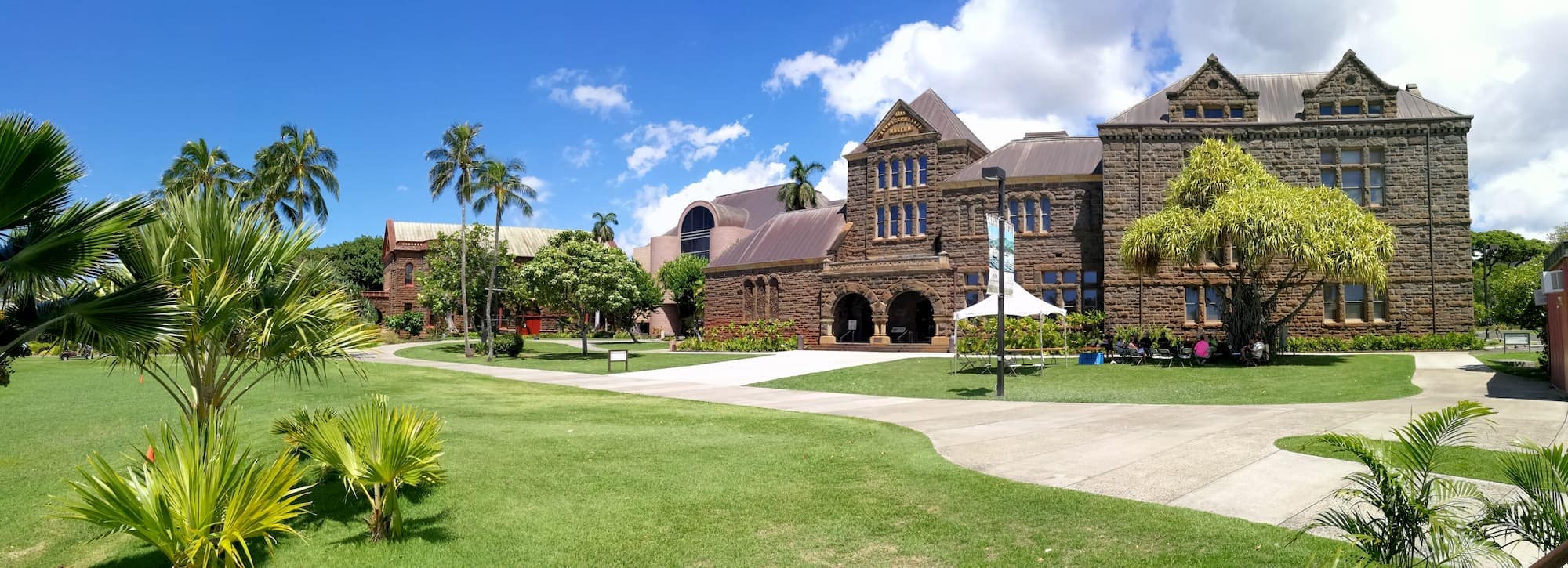
The Bishop Museum is dedicated to studying and preserving the history of Hawai‘i and the Pacific and holds the largest collection of Hawaiian artifacts in the state. Image credit: PaulT (Gunther Tschuch), published under a CC BY-SA 4.0 license, source.
ʻIolani Palace
ʻIolani Palace in downtown Honolulu is the only official royal residence in the United States, home to Hawaiʻi’s last two monarchs before the kingdom was overthrown in 1893. You can tour the restored state rooms and the basement gallery on a guided or self-led ticket. Tours book up, the guided ones first, so reserve ahead on the palace’s site and check which days it’s open.
For more options, check out our complete guide to History and Culture on Oʻahu.
Capitol Modern (Hawaiʻi State Art Museum)
Capitol Modern, the Hawaiʻi State Art Museum, is free and sits in a historic building downtown across from ʻIolani Palace. It shows work by Hawaiʻi artists, with a sculpture garden outside. It makes a good rainy-hour stop in the government district. Check the current hours before you visit.
Pearl Harbor
Visiting Pearl Harbor is free, as are the two on-site museums (Road to War Museum and Attack Museum) which tell the story of that fateful day. Tickets for the movie and boat tour out to the USS Arizona cost a mere dollar. It’s hard to find more bang for buck on Oʻahu than paying your respects with a visit to this historic site.
Deciding on the mix of free and pay-for activities that include museums, ship tours, and historical sites, is not straightforward and planning ahead can add a lot of value to your visit. See our Pearl Harbor visitor guide to sort out your trip details.
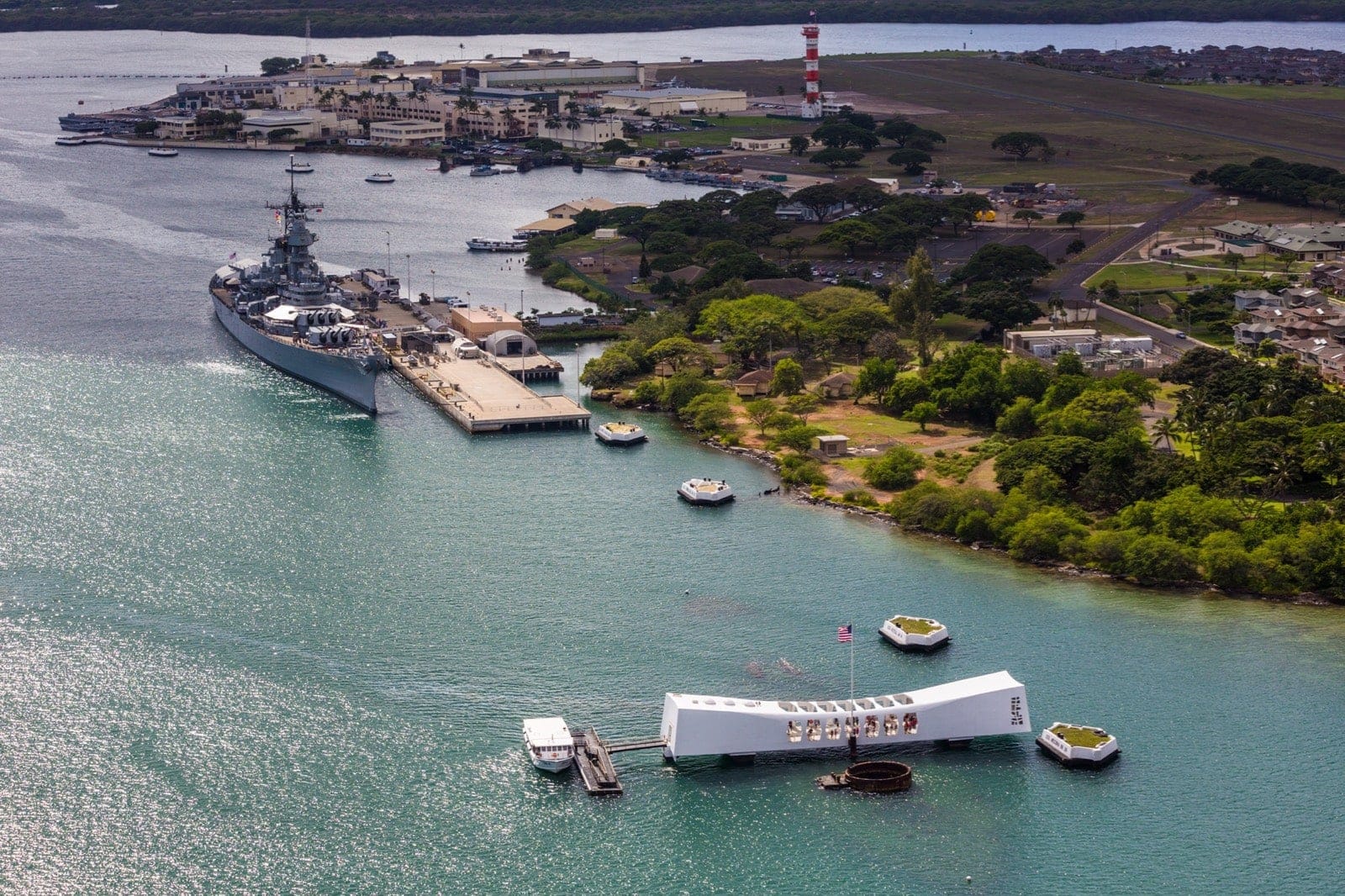
Battleship Missouri and USS Arizona memorials in Pearl Harbor. Credit: Hawaii Tourism Authority (HTA) / Tor Johnson
Free hula shows
A Waikīkī luau runs from about $84 for a show-only seat to $280 at the Royal Hawaiian. For free hula instead, the Kūhiō Beach Hula Mound has a show on Saturday evenings, 6:30 to 7:30pm, on the ocean side of Kalākaua Avenue by the Duke Kahanamoku statue. It opens with a conch-shell call, and seating is on the grass, so bring a mat. The Royal Hawaiian Center runs free hula and lei-making sessions during the week too.
The beach show gets canceled in bad weather now and then, so check the schedule before you go. Our Oʻahu luau guide compares the paid shows if you want dinner and a full production.
Agritourism
Agritourism in Hawaiʻi is growing like a weed each and every year.
Botanical Gardens
Oʻahu is loaded with botanical gardens, and most entry fees are a reasonable $20 or less. They are a great way to spend a few hours, opening yourself to the beauty and variety of Hawaiʻi’s ecosystems. One of the botanical garden, Waimea Valley (see picture below), even has an easy to reach waterfall on-property in which you are allowed to swim!
Koko Crater Botanical Garden
Koko Crater Botanical Garden sits inside the Koko Crater on the southeast corner of the island, and it’s free to enter. A flat loop trail runs through a dry-land garden of cactus and plumeria groves. The Koko Head stairs nearby are a separate, much steeper climb; this garden floor is flat, easy walking. There’s almost no shade, so go early and bring water.
Waimea Valley
Waimea Valley on the North Shore is a paved botanical walk that ends at a waterfall you can swim under. Entry is $25 for adults, less for children, and there’s no reservation. The walk in is easy, mostly flat and stroller-friendly, past gardens and restored Hawaiian sites. Bring a towel and water shoes if you plan to get in, and check whether the swim area is open before you go.
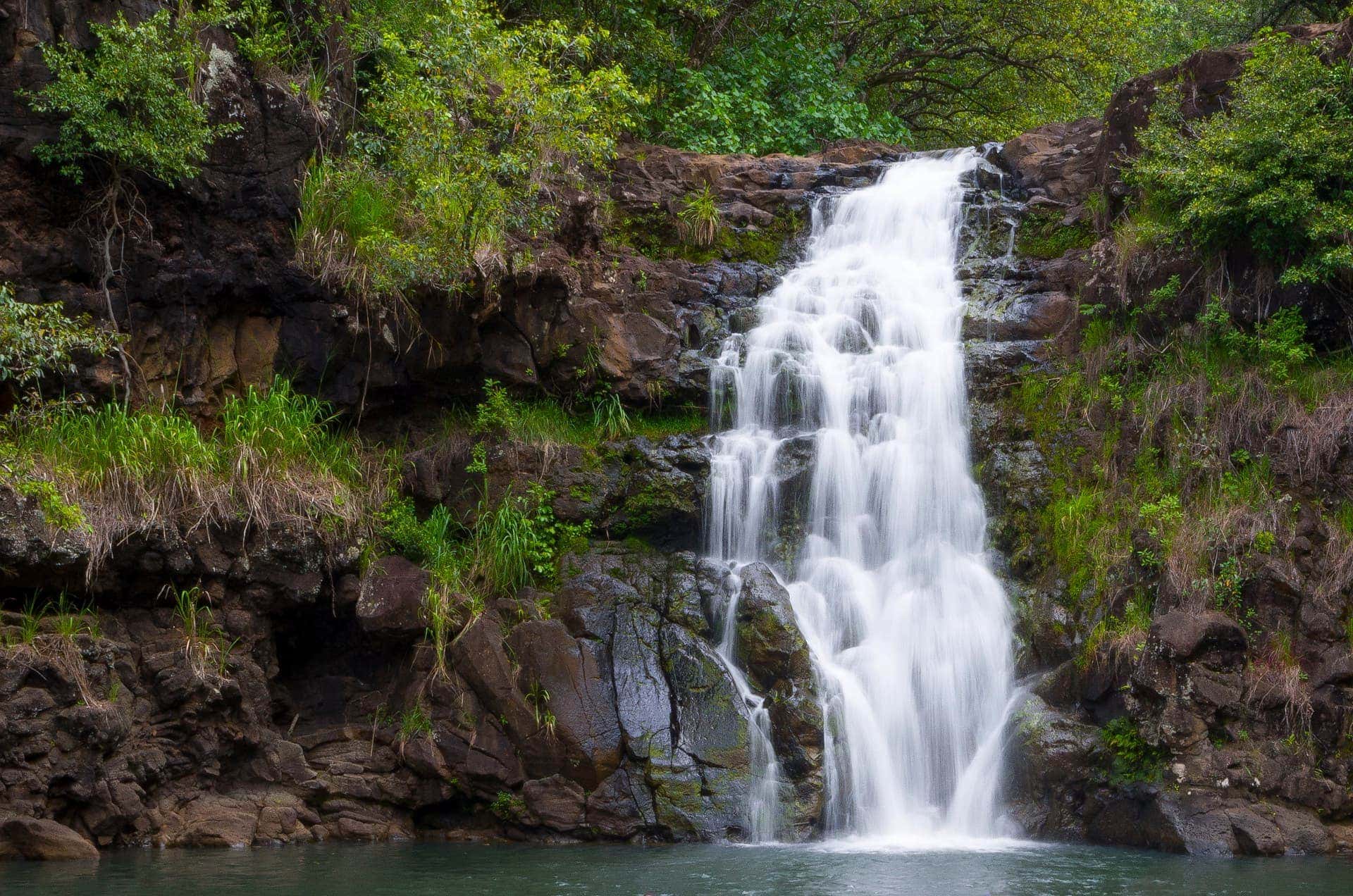
The Waimea Falls. Image credit: Thomas Shahan, source.
Check out our complete list and descriptions of botanical gardens on Oʻahu for more.
Foster Botanical Garden
Foster Botanical Garden is a downtown Honolulu block of old-growth trees, some of them more than a century old and labeled so you know what you’re looking at. Admission is $5 for adults, $3 for Hawaiʻi residents, and $1 for kids 6 to 12, open daily 9am to 4pm. It’s a shaded, quiet stop a short walk from Chinatown. Our Oʻahu botanical gardens guide maps every garden on the island with fees and hours.
Hoʻomaluhia Botanical Garden
Hoʻomaluhia Botanical Garden sits under the Koʻolau cliffs in Kāneʻohe, and admission is free, open daily 9am to 4pm. A loop road and trails run through planted groves from around the world, with the green wall of the mountains behind them. The entrance is off Luluku Road.
Farm Tours and Voluntourism
Oʻahu’s farm tours run from free to full-price, and a couple of the free ones are worth the drive out to the North Shore or the windward side.
Green World Coffee Farm
Free tastings at the counter and a free self-guided walk through the coffee trees make Green World Coffee Farm, near Wahiawā, an easy stop on the drive to or from the North Shore. They pour a range of coffees at the tasting bar, with no pressure to buy. Pick up beans at the little shop on your way out if you find one you like.
Kahuku Farms
A one-hour guided tour of a working family farm on the North Shore runs $50 at Kahuku Farms, ending with a tasting of what they grow. There’s a cafe on site if you want lunch afterward. Book ahead, since tours run on a set schedule and fill up on busy weekends.
Kākoʻo ʻŌiwi
On the Heʻeia wetlands in Kāneʻohe, Kākoʻo ʻŌiwi farms loʻi, the flooded patches where taro grows. It runs free volunteer workdays where you get into the mud and help restore the patches, and it also has paid tours. Both need arranging ahead through its site, so plan it before you drive out to the windward side.
Heʻeia Fishpond
In Kāneʻohe, Paepae o Heʻeia cares for a centuries-old Hawaiian fishpond, Heʻeia Fishpond, still under active restoration. Volunteer workdays are free and hands-on, and guided tours run on a schedule. Sign up ahead either way, since this is a working cultural site, not a drop-in attraction.
Our full list of culinary tours and activities on Oʻahu has more, with a map.
City Exploration
As most travelers already know, a great, inexpensive way to experience a city is to simply walk. Pick a destination (or not) and wander the city streets, popping into stores or whatever peaks your interest. By doing this, you will save money on a car/taxi, get free exercise, and discover things you would overlook otherwise. Neighborhoods to consider exploring in Honolulu include Kakaʻako (the left part of Ala Manoa) and Chinatown (north of Kakaʻako).
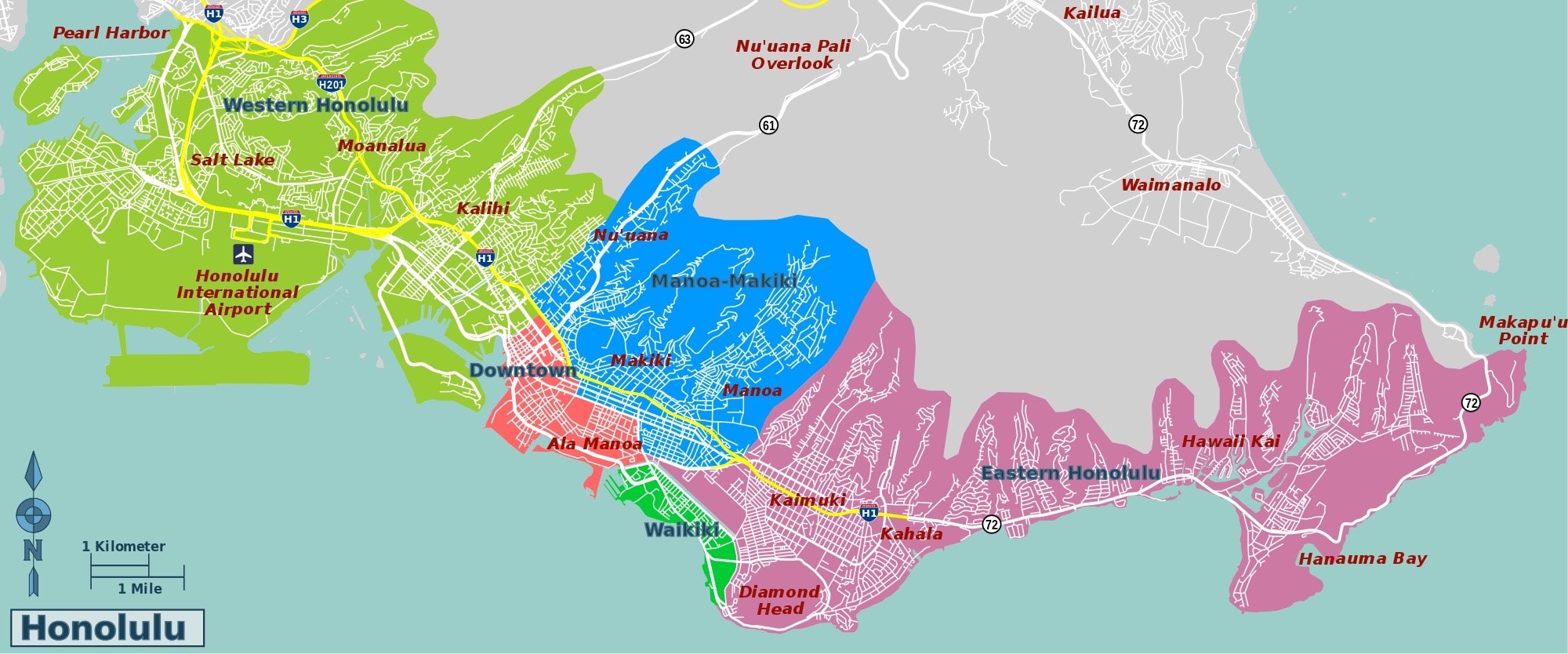
Map of all districts of Honolulu. Most things mentioned in our guide are located in the green and red districts center-let on the map. Image credit: PerryPlanet / CC BY-SA
Get around on TheBus
Oʻahu is the one island where you can skip the rental car. TheBus runs across the whole island, and a single fare is a few dollars with a daily cap on a HOLO card. It reaches Waikīkī, Diamond Head, Pearl Harbor, and the North Shore beaches. It’s slower than driving, so plan the route and leave margin. Download DaBus2 for live arrival times.
Food, Drink, and Shopping
Eating and drinking is one of the most expensive things you can do in Hawaiʻi. Here are some ideas to help save money:
Waiāhole Poi Factory and Highway Inn
Two spots do cheap, traditional Hawaiian plates that beat the price of a luau. The Waiāhole Poi Factory on the windward side serves plates of kalua pig and lomi salmon, plus homemade poi and kūlolo, out of a small roadside building. Highway Inn, with locations in Kakaʻako and Waipahu, does the same plate-lunch classics sit-down. Either one fills you up for a fraction of a luau ticket.
Stock up at Costco
A Costco run is the standard local move for a cheap trip. The Iwilei warehouse is a short drive from Waikīkī, an easy stop to fill a condo kitchen: produce, poke, prepared meals, and the cheapest gas in town. You need a membership to shop. Cooking even half your meals cuts your biggest expense on an Oʻahu trip, since a sit-down dinner for four runs well past $100 here.
Have a Poke Picnic
Restaurant prices are high in Hawaiʻi, especially when it comes to drinks and island favorites, like poke. To avoid these high prices, locals prefer to eat picnic-style, either on the beach or in a scenic area.
While expensive at a restaurant, poke is relatively cheap when purchased elsewhere. A pound of poke from the grocery store deli (we recommend Foodland) or a specialty poke store (Tamura’s), for example, will cost you between $10 and $15. Poke bowls (poke over rice) is an even better deal, often sold for less than $10.
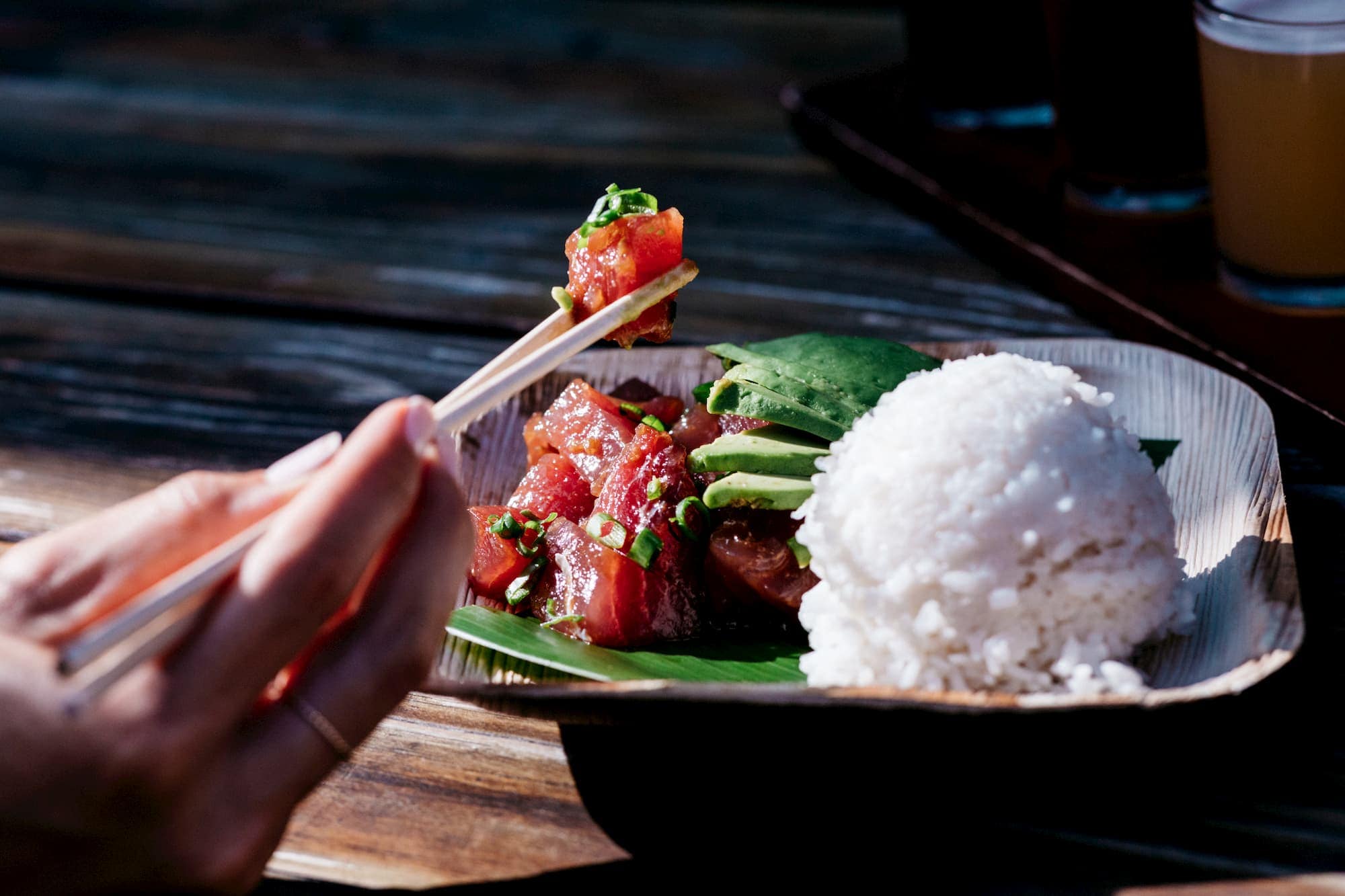
Poke is raw fish marinated typically with soy sauce, onions and lemon (but many other combinations also exist). Pictured here is a bowl with Ahi (tuna) poke with green onions and avocado. Image credit: Hawai‘i Tourism Authority (HTA) / Ben Ono
Book Accommodations with a Kitchen
While not unique to Hawaiʻi, buying food from a local grocery store will save you a lot of money over the course of your stay. You may be able to save hundreds of dollars if you book an accommodation with a kitchen, allowing you to avoid eating out for every single meal.
ABC Stores
The joke is that if you walk two blocks and don’t see an ABC Store, then you’ve somehow left Waikīkī. We don’t love the fact that ABC Stores have achieved such dominance, and we encourage you to shop at locally-owned, independent stores whenever possible. That disclaimer aside, ABC Stores can help you save cash when it comes to grab-and-go drinks, snacks, or souvenirs. T-shirts cost $10 or less, along with many other trinkets. If you’re in need of affordable souvenirs for folks back home, the ABC Store may come in handy.
More free and affordable activities guides
If you have made it this far down the page chances are that you will also enjoy our other island guides with free and affordable activities:
- Our list with cheap and free Maui activities lets you enjoy Maui without breaking the bank!
- Our recommended free and affordable Big Island Activities.
- And, of course, our Kauaʻi on a Budget list.