
Late October is the best time to visit Oʻahu. September and October post the lowest hotel rates of the year, roughly $263 to $265 a night against a $283 full-year average, and the early-fall heat breaks by mid-October. Winter’s rain doesn’t arrive until the wet season begins in November.
If your dates aren’t locked in yet, match the season to the trip you want. Winter is the North Shore’s big-wave season, and Waimea Bay closes out then, surf breaking across the full width of the bay; the same bay is flat and swimmable all summer. September, October, and November are the quietest months by HTA’s average daily visitor census, so a fall trip skips the crowds too.
Table of contents
- Why visit?
- What is the best time to visit Oʻahu?
- What is the best time to visit Oʻahu to see the North Shore
- What is the best time to visit Oʻahu to be a beach bum
- What is the best time to visit for snorkeling and other ocean activities
- What is the best time to visit Oʻahu “on the cheap?”
- When to visit Oʻahu if you want to skip the crowds?
- When to visit Oʻahu to visit waterfalls?
- When to visit Oʻahu for surfing?
- Seasonal weather trends: a seasonal breakdown for Oʻahu
Details below last verified July 2026.
| Name | Best time to visit | Why |
|---|---|---|
| 1North Shore surf (Details ↓) | Winter | Big swells arrive, though swimming gets harder to find |
| 2Beach days (Details ↓) | Summer | Warm, calm water and long sunny days |
| 3Snorkeling (Details ↓) | Spring, summer, or fall | Calmer water and less current than winter |
| 4The cheapest rates (Details ↓) | September and October (May, secondarily) | Fall posts the lowest average daily rates; April runs closer to mid-pack |
| 5Fewer crowds (Details ↓) | September, October, or November | The quietest months by HTA's average daily visitor census |
| 6Waterfalls at their peak (Details ↓) | February through April | Rivers still swollen from winter rain |
| 7Surfing at any level (Details ↓) | Summer (south shore) or winter (north shore) | Depends which coast you paddle out on |
Why visit Oʻahu?
About a million people live on Oʻahu, more than every other Hawaiian island combined, with the international city of Honolulu anchoring its south shore. Honolulu has top-flight restaurants and nightlife.
Oʻahu is the busiest Hawaiian island. The surf scene is notorious on the North Shore of Oʻahu, and both the windward and leeward coasts have some of Hawaiʻi’s best beaches.
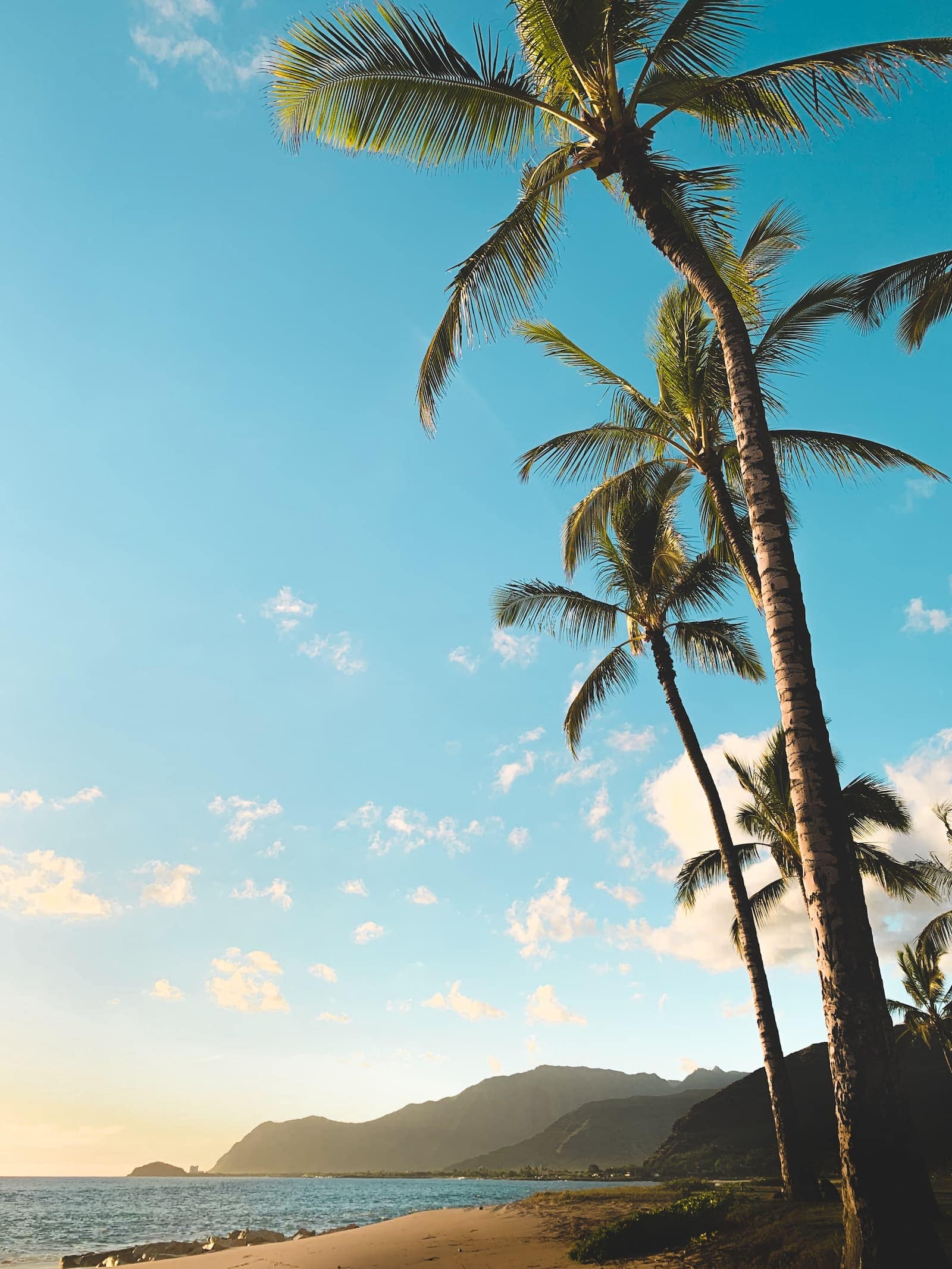
Golden hour, just before the sun sets off Māʻili Beach Park on the west Oʻahu coast. Photo by Pono Lopez on Unsplash
What is the best time to visit Oʻahu?
Temperature barely swings across the year on Oʻahu, from the mid-70s in winter to the mid-80s in summer, so pick your dates by surf, rain, and room rates instead: winter surf closes most of the North Shore to swimming, and fall has the cheapest rooms.
Some activities, like hiking and beach-going, are not overly impacted by the seasons.
But other experiences, such as watching big wave surfers take on the North Shore, are only available certain times of year. The cost of your trip, especially the room rates, will also vary with the time of year.
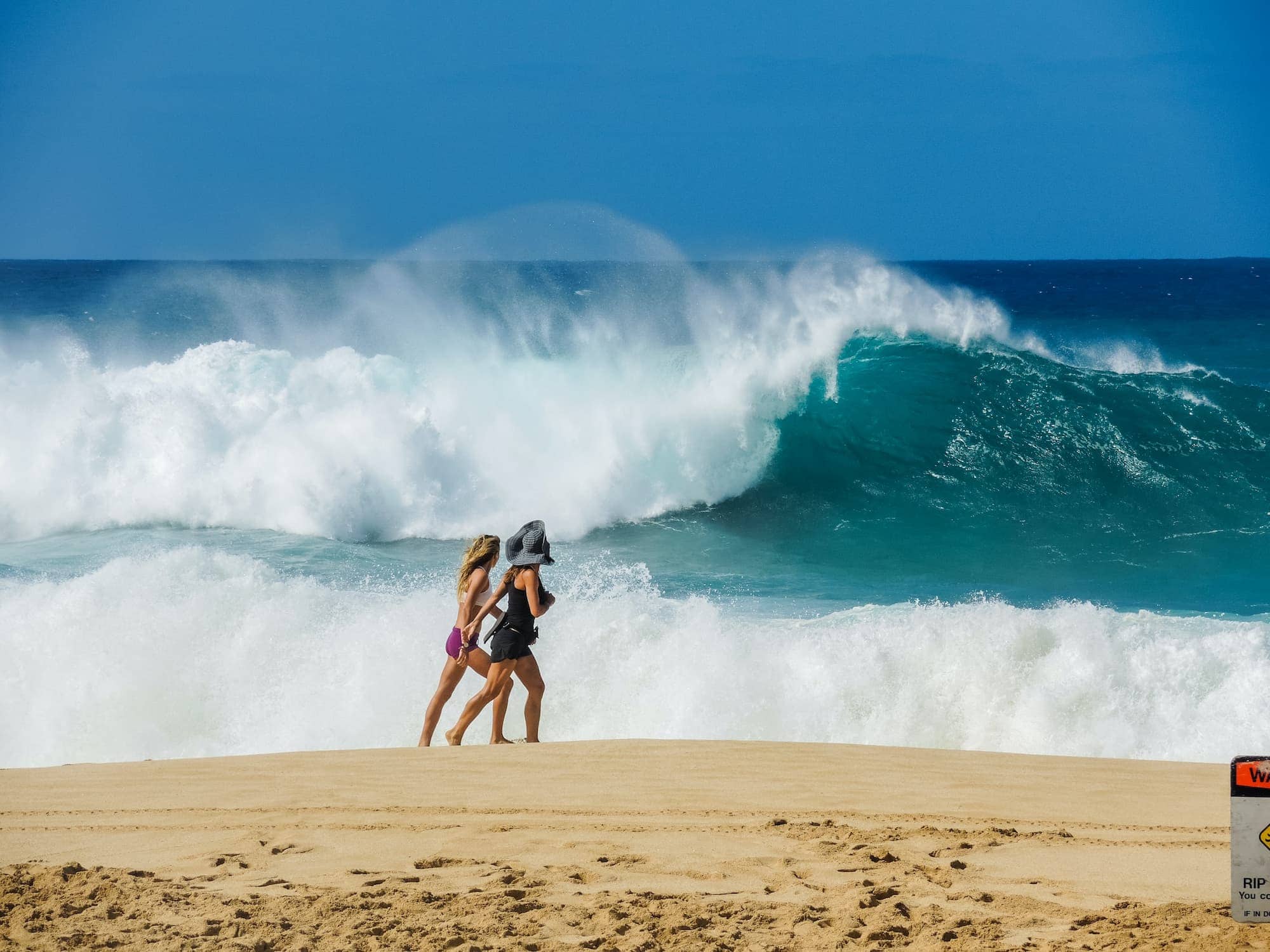
Watching big wave surfers take on the North Shore is only possible during winter. Photo by Simon English on Unsplash.
The scenarios below match the season to what you want to do:
The best time to visit Oʻahu to see the North Shore
The North Shore is a different place by season: flat and swimmable in summer, big surf in winter.
In summer, most parts of the North Shore are calm, with long beach days, swimming at Waimea Bay, and safe, family-friendly snorkeling in Shark’s Cove.
In winter, massive swells hit the North Shore and swimming is unsafe at most beaches. Though swimming is possible at some locations when the conditions cooperate, the swells and currents are bigger and stronger in winter.
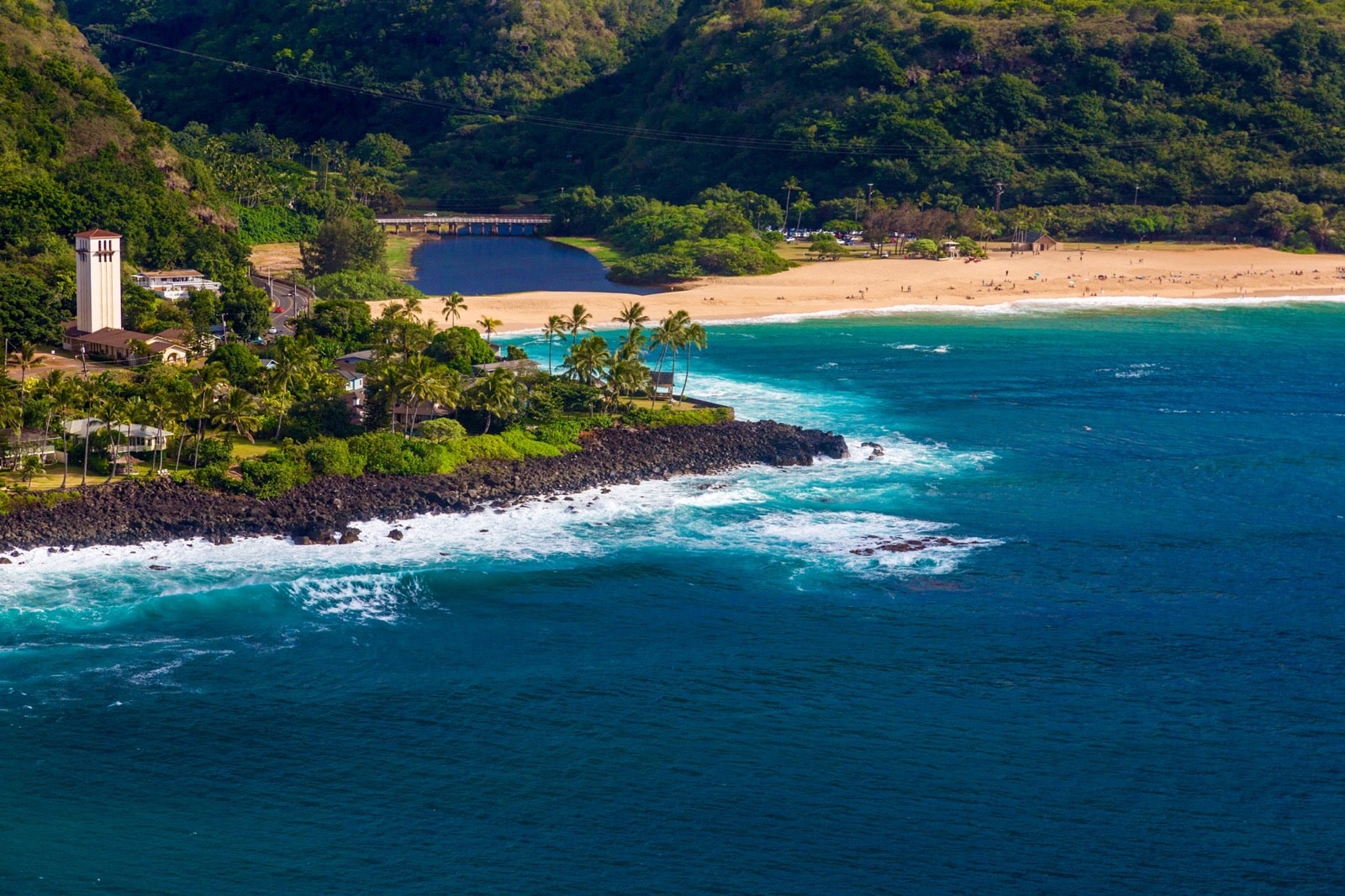
Waimea Bay: in winter the surf breaks across the full width of the bay; in summer the same bay is flat. Image credit: Hawaii Tourism Authority (HTA) / Tor Johnson
- Visit during wintertime to see the big swells and the best surfers. (Good swimming continues on other parts of the island all winter.)
- Summer is the season for swimming.
- Spring and fall have smaller surf on the North Shore than winter and are usually good for swimming.
Always swim at lifeguarded beaches and check with them before entering the water, no matter when you visit.
The best time to visit Oʻahu to be a beach bum
Summer.
Beach days are readily available in Hawaiʻi during the summer months, with generally calm water and long sunny days, and much less rain than winter.
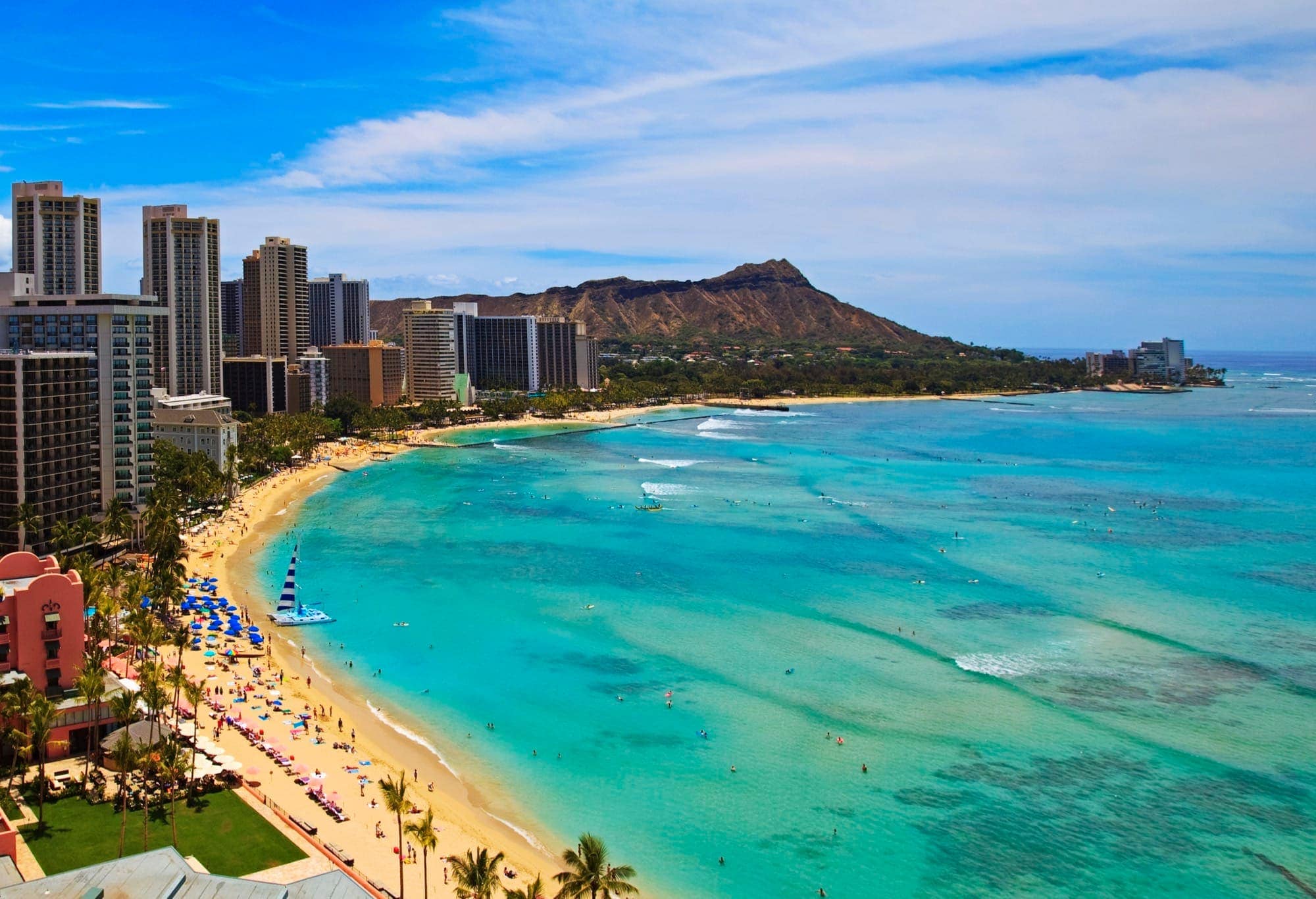
Waikīkī Beach, with the Diamond Head crater behind it. Image credit: tomasphoto
Those sunny summer days run hot, with temperatures near the 90s in some areas. If you want beach days at cooler temperatures, spring or the back half of fall (mid-October on) is the better window: still sunny, not so hot. Pick the beach from our guide to Oʻahu’s beaches.
The best time to visit Oʻahu for snorkeling and other ocean activities
Winter across the islands brings stronger currents and bigger waves, with water running slightly colder too. If you’re looking to snorkel around the islands, spring, summer, and fall are best. You can still snorkel in winter, with fewer spots to choose from where surf reaches the reef.
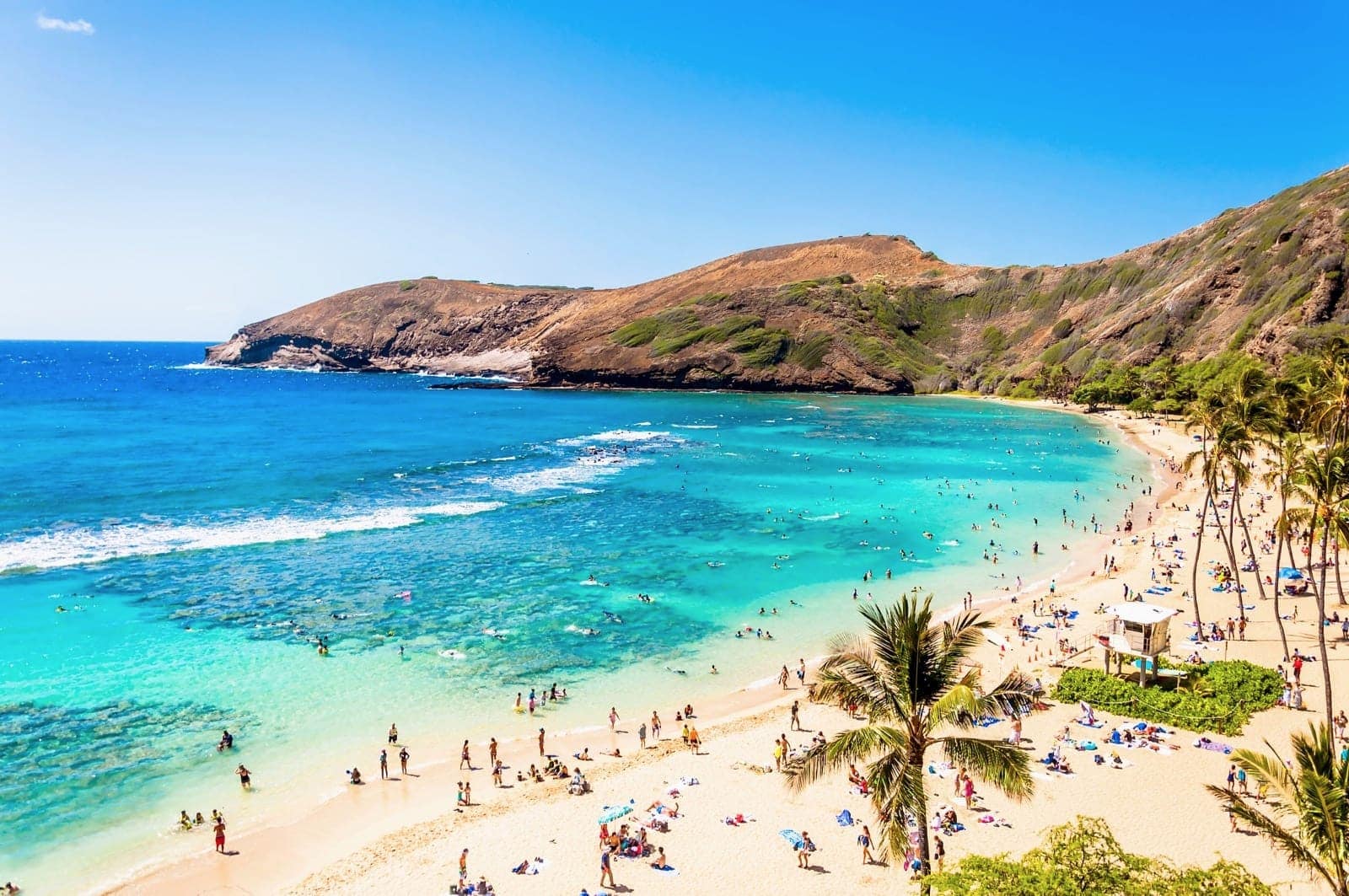
Hanauma Bay’s calm, reef-sheltered water makes it one of the busiest snorkel spots on the island.
Hanauma Bay, the island’s best-known snorkel spot, is closed Mondays and Tuesdays, non-residents 13 and up pay $25 plus $3 parking, and reservations open two days ahead at 7am HST through the city’s system.
Related: Have a look at our favorite Oʻahu snorkeling spots and at our overview of boat tours on Oʻahu.
The best time to visit Oʻahu “on the cheap”
For the best deals on room rates on Oʻahu, prioritize fall: September and October post the lowest average daily rates of the year, about $263 to $265 a night for hotels against a $283 full-year average (2023 to 2025 data), with May a secondary discount and April closer to mid-pack.
Summer is peak season, as are the holidays, and early winter attracts snowbirds. Prices decline through late winter into early spring, before they start increasing as summer approaches. Prices decline again after Labor Day until they begin to rise around Thanksgiving.
Summer and the holiday season draw the highest average daily rates; fall offers the deepest discount, with a smaller dip in May. The first half of fall is the hottest, most humid stretch of the year and sits inside hurricane season, so the deepest discounts and comfortable weather only overlap from mid-October.
The two charts below track three years of Oʻahu vacation rental and hotel nightly rates from Hawaiʻi Tourism Authority reporting. They update automatically when new data is published, and the captions carry the current averages and the year-over-year change.


Related: check out our guide to where to stay on Oʻahu if you are not sure yet if you should stick to a hotel in Honolulu or venture out to more far-away places.
More money saving tips: “6 Ways to Save Money when Planning a Trip to Hawaiʻi“.
Cheap & Free Things to do on Oʻahu
Our list of cheap and free things to do on Oʻahu.
The best time to visit Oʻahu if you want to skip the crowds
To avoid the crowds, visit Hawaiʻi when school is in session. The island gets most crowded during the summer and holiday seasons when kids are on break and families are free to travel. This goes for both visitors and locals: during summer, local families are out on the beaches too.
Crowds dip right after Labor Day: September, October, and November are the lightest months by HTA’s average daily census, while January and February hover right around the yearly average.
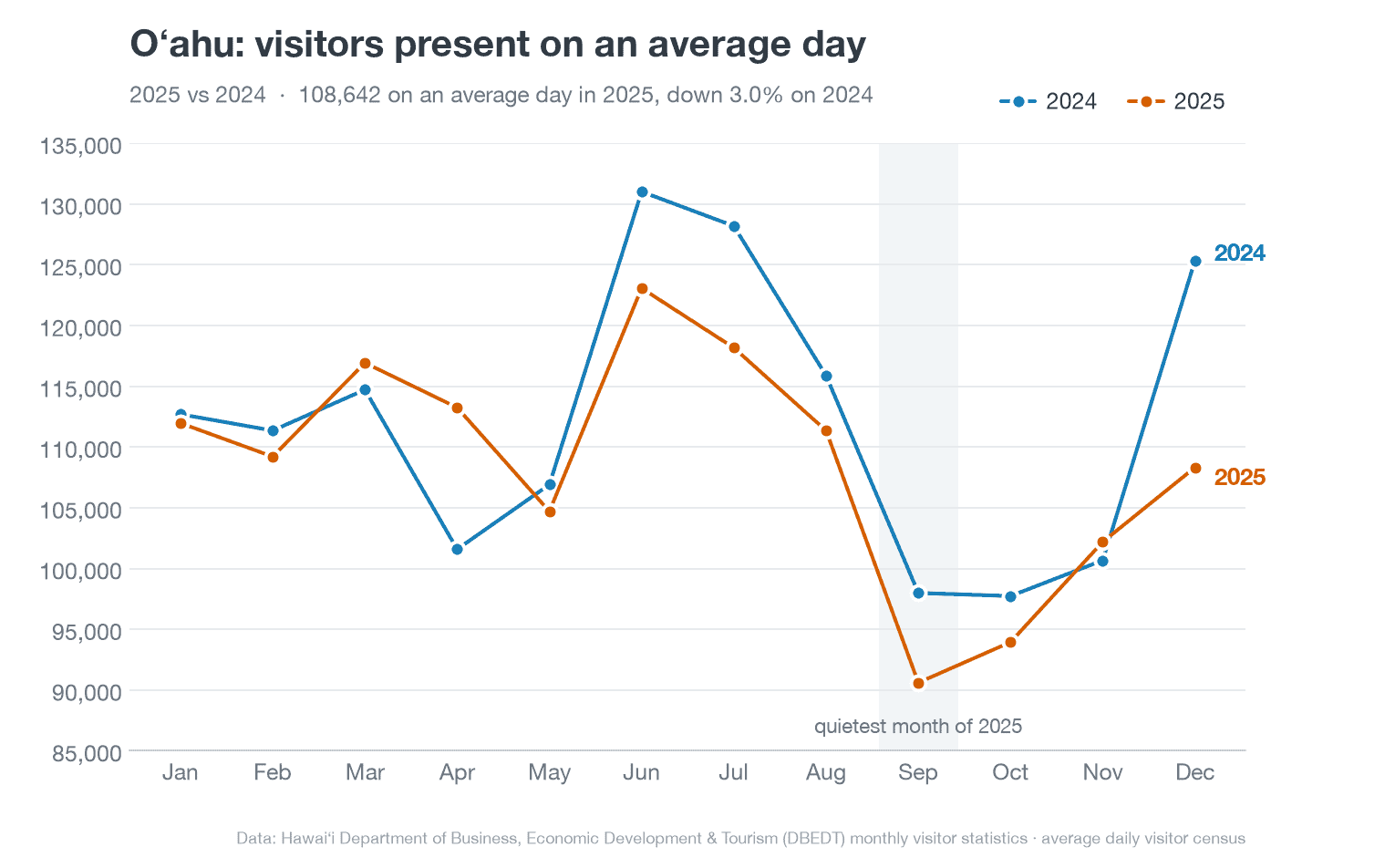
Visitors on Oʻahu on an average day, by month, 2024 and 2025. September, October, and November are the quietest months. June and July are the fullest, and January and February sit right on the yearly average.
More tips & tricks on how to skip the crowds
Our tips for skipping the crowds in Hawaiʻi.
The best time to visit Oʻahu for waterfalls
Oʻahu’s waterfalls run fullest in February, March, and April, after the early-winter rain has swelled the rivers. Conditions on hiking trails during this time can be wet and muddy (bring a change of clothes), but the falls are running at full volume.
Related: The Maunawili Falls trail is on both our Oʻahu lists for favorite hiking trails and favorite waterfalls to visit. The hiking video below is by Sean Kaleponi of HawaiianTraveler; give him a follow on Instagram for more Oʻahu food and hiking content.
![10 Amazing Hiking Trails throughout the Island of Oahu, Hawaii [a complete hiking guide]](https://www.lovebigisland.com/wp-content/plugins/wp-youtube-lyte/lyteCache.php?origThumbUrl=https%3A%2F%2Fi.ytimg.com%2Fvi%2FFOzKJBU7EAc%2F0.jpg)
The best time to visit Oʻahu for surfing
You can surf year-round on Oʻahu, but where you paddle out changes with the season.
- In summer, the south shore is at its best, receiving consistent waves that range from beginner to expert along Waikīkī and the Honolulu shorelines.
- In winter, the North Shore receives the bulk of the swell, with a few beginner breaks but mostly intermediate or expert waves.
- Shoulder seasons have less predictable surf on both shores. Beginner surfers should not worry too much about the time of year, as “learning waves” are available all year round. Intermediate and expert surfers will want to be more picky and investigate the specific breaks they want to surf.
There is surf somewhere on Oʻahu in every month.
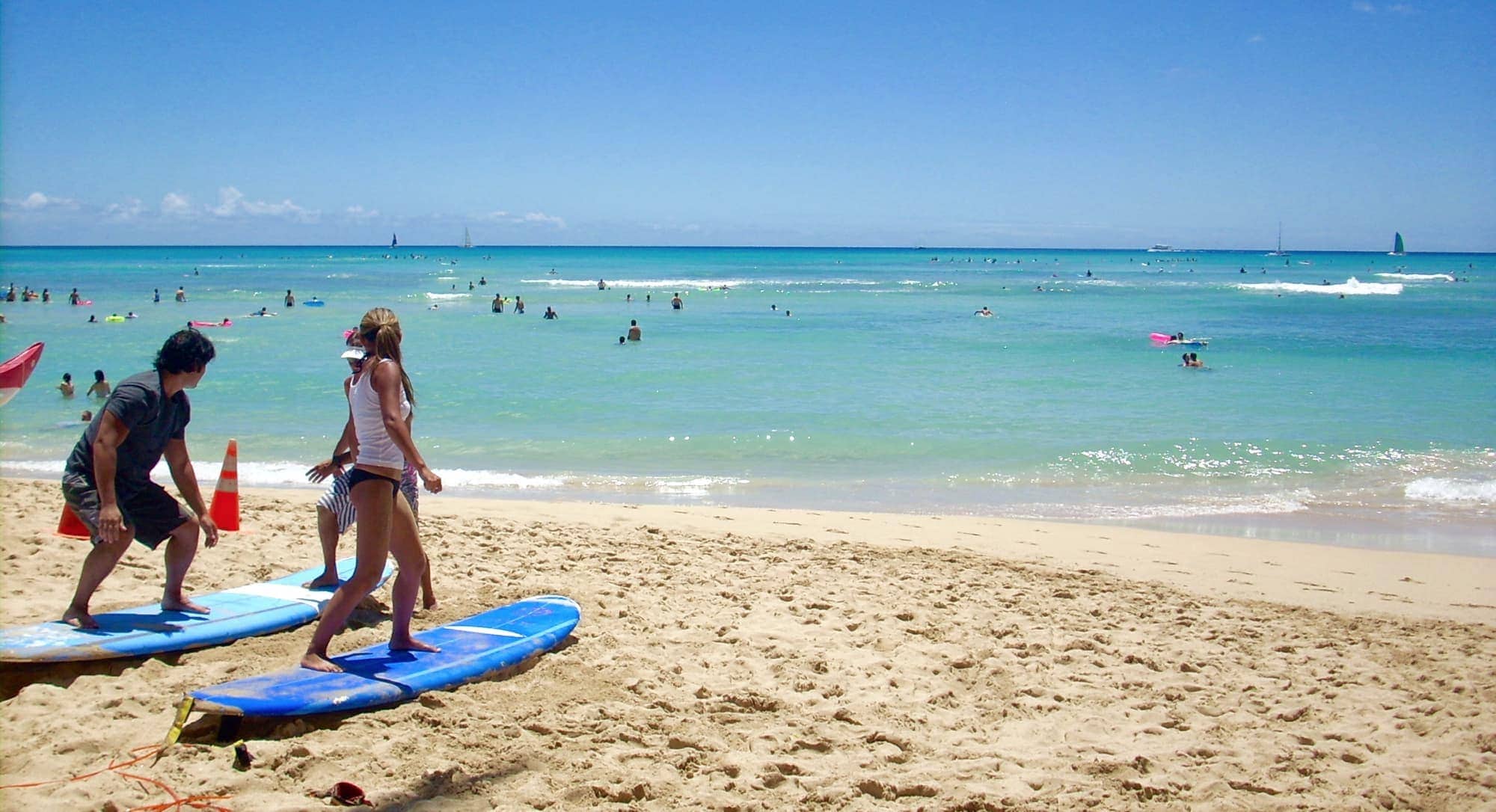
Waikīkī Beach has beginner waves and surf lessons. Image Credit Adam Theo on Flickr (account no longer online).
Oʻahu Weather by Season
Our Oʻahu weather guide has the month-by-month rainfall and surf detail.
Spring: Late March through May
Expect some leftover rain or showers from the winter, but spring is mostly pleasant, with average temperatures in the high 70s. Ocean conditions along northern and east-facing shores can still be rough at times, but the surf drops through the season. Waterfalls run full in early spring after the winter rain.
Summer: June through Early September
Summer brings clear skies and warm temperatures, with averages in the mid 80s. Tropical showers will come and go, often as a welcome cool-down, but it’s less likely one will experience prolonged rain. Ocean conditions are mellow this time of year, with beaches being pleasant and swimmable most days.
Fall: Late September through Early November
The weeks through early October are the hottest, most humid stretch of the year, and they overlap the tail of hurricane season (June through November, peak August and September; direct hits are rare, but a passing storm can close shops and parks for a day or two).
The heat breaks by mid-October, and humpback whales start showing up in island waters in November, staying through April (see our Oʻahu whale watching guide). Expect predictable weather through the back half of the season, average temperatures near the high 70s or low 80s, and a rising chance of rain once the wet season begins in November.
Winter: Late November through Early March
Winter is the rainy season in Hawaiʻi, with all islands receiving a majority of their precipitation this time of year. Temperatures are usually in the mid to low 70s, with locals “getting chilly” at night due to the cool air coming off the ocean. Sunny days are still common, but unstable weather is more likely and rainfall will be more intense during these months. Outdoor activities, while still possible, will be more impacted by the weather, with slippery/muddy hiking trails and bumpy ocean swells.
Where These Price and Crowd Numbers Come From
Hotel and vacation rental rates come from Hawaiʻi Tourism Authority monthly hotel and vacation rental performance reports, tracked in our own rate database; the two rate charts above draw from it automatically.
The crowd figures in the text and the chart both use HTA’s average daily visitor census for 2024 and 2025: how many visitors are on the island on a typical day, which accounts for trip length. We revisit both as new data comes in, most recently in August 2026.