When it comes to beaches, Hawaiʻi is no one-trick pony. There are the familiar white sand options, of course, but there are also black, red, and even green sand beaches to discover throughout the islands.
While red and green are rare and harder to reach, black sand beaches are plentiful and easy to visit on Maui and the Big Island. Below, we break down some of our favorites.
Table of contents
- Punaluu black sand beach [Big Island]
- Waianapanapa Black Sand Beach [Maui]
- Oneuli Black Sand Beach [Maui]
- Kaimu Black Sand Beach [Maui]
- Richardson’s Beach [Big Island]
- Kehena Beach [Big Island]
- Waipio Beach [Big Island]
- Why are black sand beaches black?
- Why are there no black sand beaches on Oahu and Kauai?
Table of Contents
- Punaluu black sand beach [Big Island]
- Waianapanapa Black Sand Beach [Maui]
- Oneuli Black Sand Beach [Maui]
- Kaimu Black Sand Beach [Maui]
- Richardson’s Beach [Big Island]
- Kehena Beach [Big Island]
- Waipio Beach [Big Island]
- Why are black sand beaches black?
- Why are there no black sand beaches on Oahu and Kauai?
Money-saving and trip-enhancing trip planning tips
With life getting so expensive it makes sense to save as much money on your trip as you can. These resources help you to save money (#1), to book the best tours and activities (#2), and greatly simplify trip planning (#3 + #4):
- The Discount Hawaii Car Rentals website is our first stop for a quote when we need a rental car. We like them (a) because they offer the BEST rates, (b) require no prepayment and charge no cancellation fees, and (c) because they offer additional benefits such as free extra drivers and reduced young driver rates.
- We put a LOT of effort in figuring out which tours actually are the best. Have a look at our curated tour section to see tours that get consitently good reviews *and* offer great value.
- Did you know we are giving away free itineraries for all Hawaiian islands? These are a great place to start planing your own trip.
- Our Trip Planning 101 Guide is a another GREAT place to start planning for 1st time visitors.
1: Punaluʻu Black Sand Beach [Big Island]
Punaluʻu takes the top spot on this list for its combination of location, sand quality, wildlife, and conveniences, including lifeguards, restrooms, vendors, water fountains, and ample parking.
Just a short ride from Hawaiʻi Volcanoes National Park, Punaluʻu offers some of the highest quality black sand in the islands. Its rocky shoreline is complemented by rows of tall palm trees, with plenty of space to spread out a towel. Sea turtle sightings are a near guarantee at Punaluʻu, with areas roped off for them to climb up on shore and rest.
You can expect flows of people coming and going throughout the day, most taking a quick walk and some photos of the turtles. If you want to settle in for longer, we recommend setting up shop on the northern end, away from the main parking lot, where there is less foot traffic.
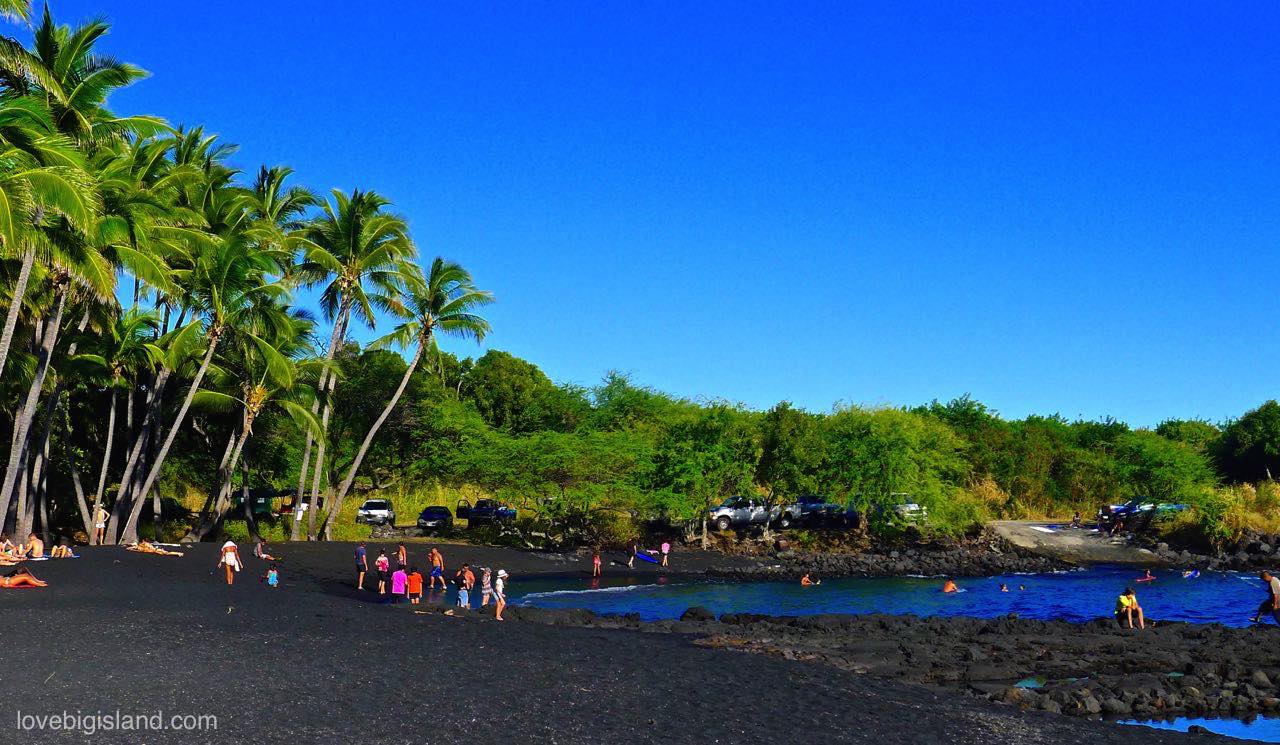
The best place for swimming it at the protected cove at the north-eastern side of the beach
Read more: in our popular Punaluʻu Beach visitor guide.
Good to know: Lifeguarded with restrooms and picnic tables, Punaluʻu is a great place for a picnic. Pick up provisions at the nearby Punaluʻu Bake Shop.
Video: You can get a good impression of Punaluʻu from the following video made by the good people of droneandslr.com:
2: Wai’anapanapa Black Sand Beach [Maui]
Whether you’re driving the Road to Hāna or simply looking to beach hop, don’t miss Waiʻanapanapa on Maui’s northeast coast. The state park offers dark black sand to go along with its craggy, black volcanic landscape, with large rocks and sea arches backdropped by the lush green jungle. Sea birds, blow holes, and heiaus also call the Park home, while small walking paths allow you to explore the coastline.
Part pandemic hangover and part an effort to fight overcrowding, Waiʻanapanapa still requires reservations in order to visit, even for the day. Learn more and reserve your spot here. While the reservation system can be tedious (and can kill spontaneity), it also ensures your enjoyment of the natural space by limiting the number of people who visit. Don’t let it deter you from visiting this unspoiled natural area.
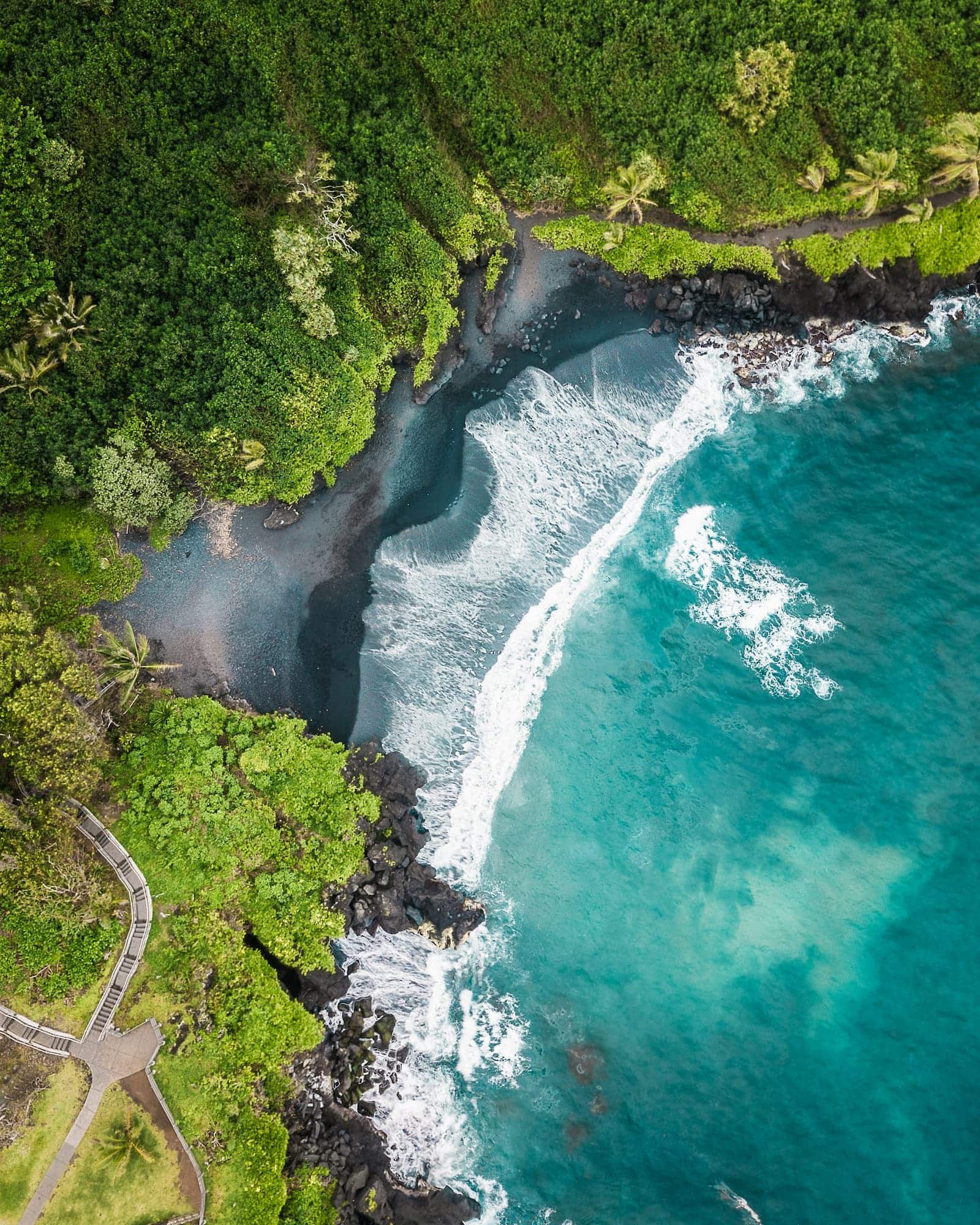
Waiʻānapanapa State Park on Maui features a black sand beach, tide pools, seabird colonies, lava tubes, blowholes, freshwater caves, and a natural stone arch. Photo by Rich Hay on Unsplash
Read more: in our guide to Maui beaches.
Good to know: Tent camping and cabin rentals are available at Waiʻanapanapa (permit required), and lovers of the outdoors should consider spending the night in this unique location to enjoy the beach once all the day-trippers have left. There’s beach camping, and then there’s black sand beach camping!
3: One’uli Black Sand Beach [Maui]
If you want a black sand beach that offers top-notch snorkeling on Maui, Oneʻuli is an excellent choice.
Quietly tucked away on Maui’s southwest shore, Oneʻuli is home to mostly-calm conditions and a large, healthy reef. The beach is small, but the vibe is chill, with part of the beach backed by reddish sea cliffs. Bring your own snorkel gear, or rent some in Kīhei. There are no vendors at the beach.
Read more: about Oneʻuli beach here.
Good to know: Just south of Oneʻuli is the more well-known Makena Beach State Park. Featuring soft-white sand, it is the perfect complement to Oneʻuli. We recommend visiting both while you are in that area of the island.
Video: Get a first impression and learn how to get to Oneʻuli beach in the following video:
4: Kaimū Black Sand Beach [Big Island]
Though swimming and snorkeling are not recommended at Kaimū, it is a must visit for those interested in volcanic history and the formation of black sand beaches.
Located in Kalapana, Kaimū Bay was filled with lava in a 1990 eruption, destroying property and repaving the coastline. Today, the beach is accessed by a short hike across the lava fields, adding even more intrigue.
Tip: visit this beach as part of one of our favorite scenic drives on the Big Island!
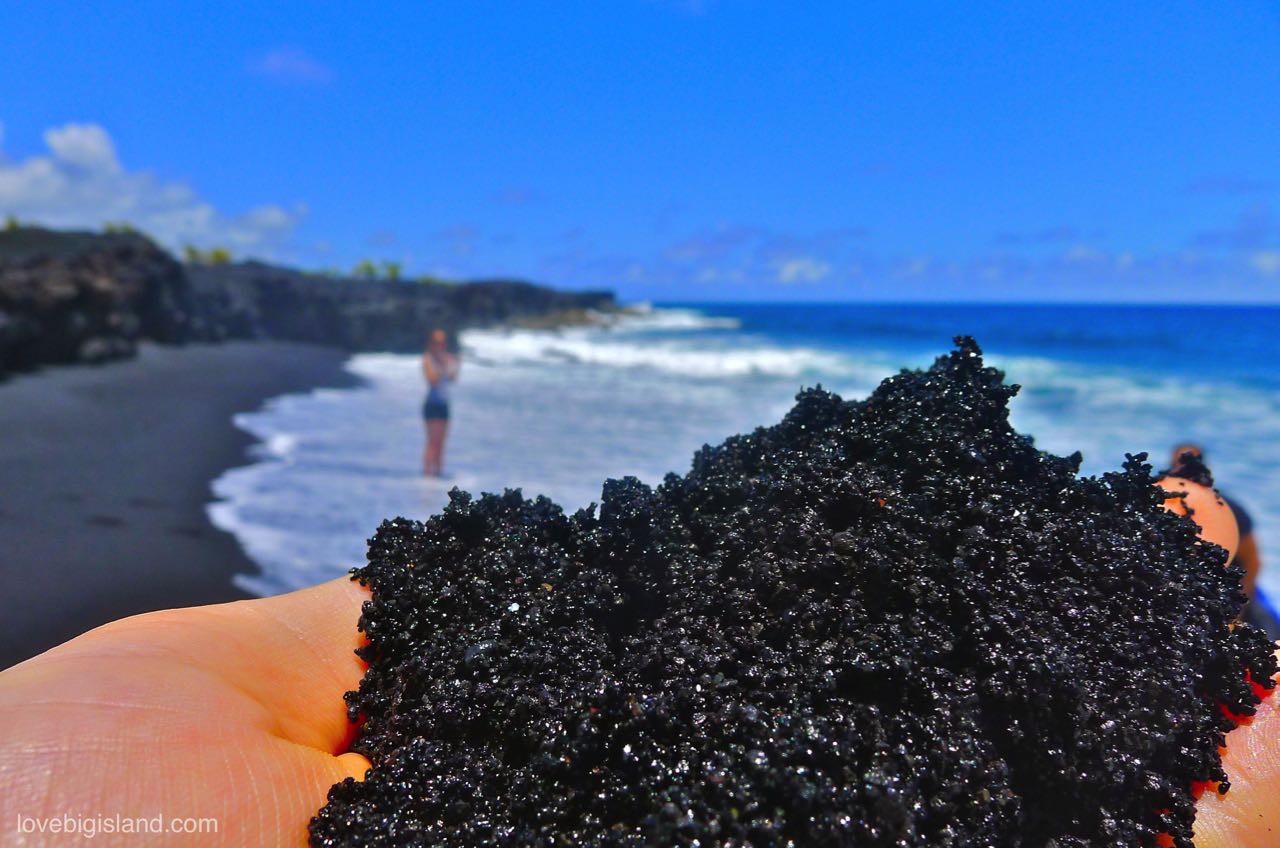
If you look closely you can see that the black sand at the beach consists of many small parts of crushed lava rock.
Read more: Take a look at our complete guide to Kaimū Beach for more information on its history and how to explore it. Wear close toed shoes so you can walk/hike along the coast and explore this “freshly paved” area.
Good to know: How old are you? This beach was formed in 1990, making it younger than many people who visit.
5: Richardson’s Beach [Big Island]
If you’re looking for an easy-to-reach, kid-friendly black sand beach, Richardson’s Beach in Hilo is a good choice.
The bay is protected by large rocks and is a marine conservation area, making it a great place for beginner snorkeling. Lifeguarded and home to many tidepools, there’s enough intrigue and exploration for families to spend a half day (or more) here.
When there, pick up a handful of sand and look closely. You’ll see it is mostly made up of black sand, but also green sand as well (olivine crystals).
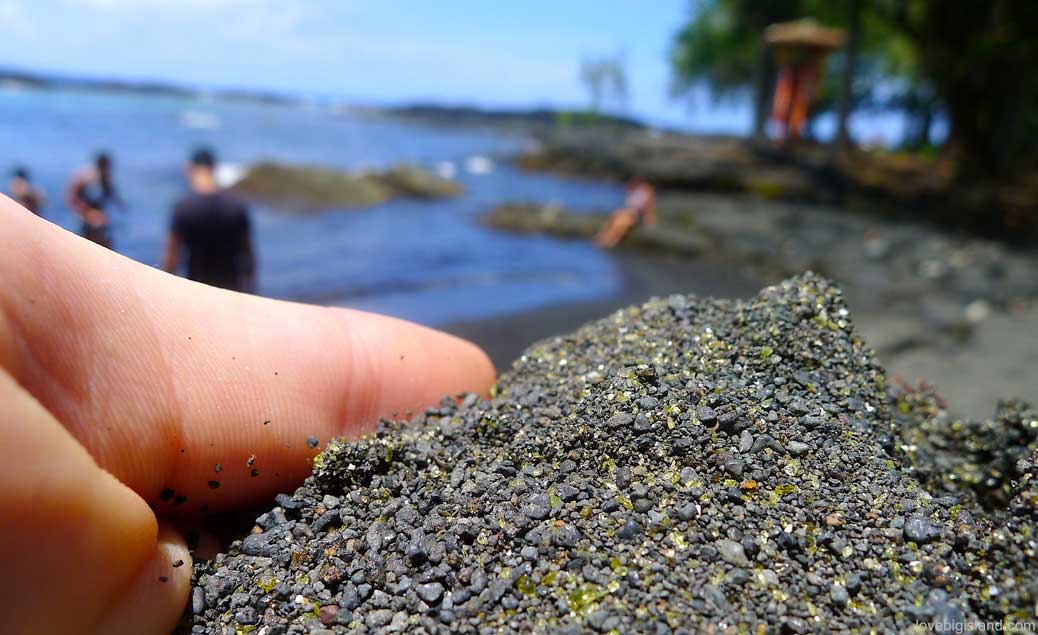
The black sand at Richardsons is mixed with olivines, making it an “almost green sand beach”. If you do make it out to Richardsons take a close look at the sand to see all the green crystals in the sand
Read more: For more information, read our guide to Richardson’s Beach.
Good to know: There are several other beach parks in the vicinity, including Lehia Beach Park and Leleiwi Beach Park. Explore them while you’re in the area. For a lunch picnic, pick up some poke to-go from Suisan Fish Market in Hilo.
6: Kehena Beach [Big Island]
To visit Kehena, you’ll have to travel deep into the Puna District along the Big Island’s southeast coast. If you’re looking for a place that’s well off the main tourist trail, Kehena is a good choice, given its remote location.
Sunken and butted up against jagged sea cliffs, Kehena Beach is a small cove, with bright green foliage and trees that provide shade. It tends to be quite the scene, especially on weekends, due to its cozy nature and the fact that it’s a locally-beloved, clothing-optional beach. If a little newfound freedom is on your wishlist, Kehena is a good place to find it.
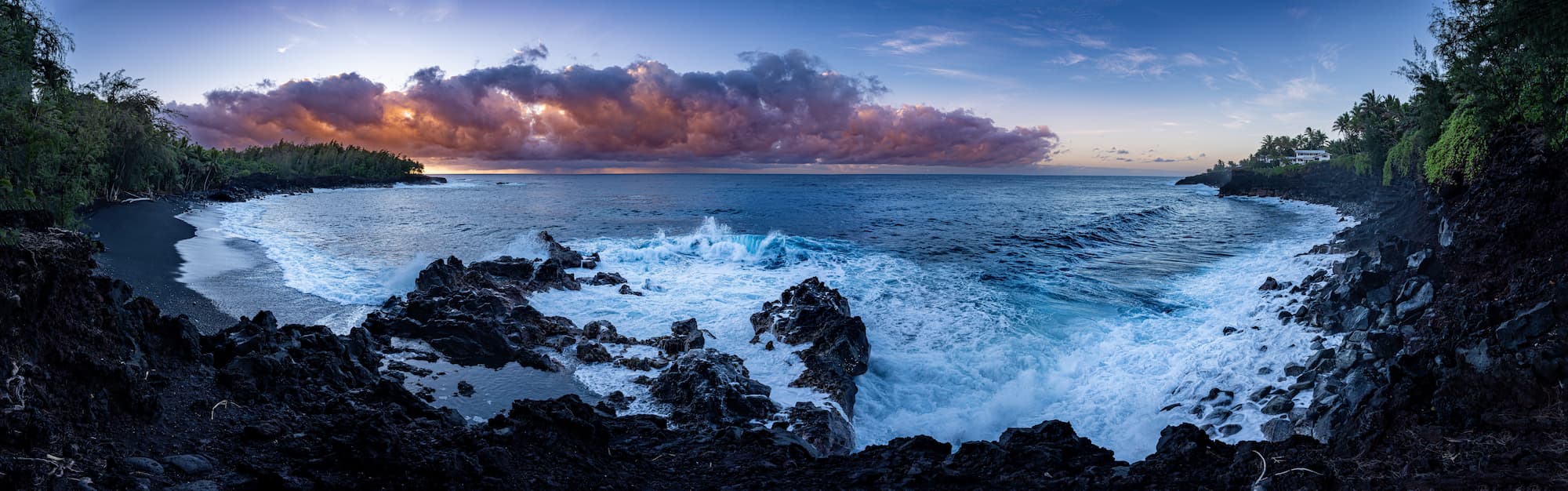
Kehena Beach is a narrow black sand beach located on the east shore of the island of Hawaii, in the Puna district. Image by Oleg Chursin on Unsplash.
Good to know: Swimming is typically possible at Kehena, but there is no lifeguard. When in doubt, do not swim.
7: Waipi’o Beach [Big Island]
Some may argue that Waipiʻo Beach’s sand is more grey than black, and we agree; it is certainly not as dark-colored as some of the others on this list. That understood, its surrounding scenery – which include tall cliffs, giant waterfalls, and a lush green valley – make it worthy of the last spot on this list.
Stop at the Waipiʻo Valley lookout for a photo of the coastline, then drive (4-wheel drive only) or walk down into the valley to explore the beach. Be sure to stay on the public roads and access trails, as much of the valley is public property.
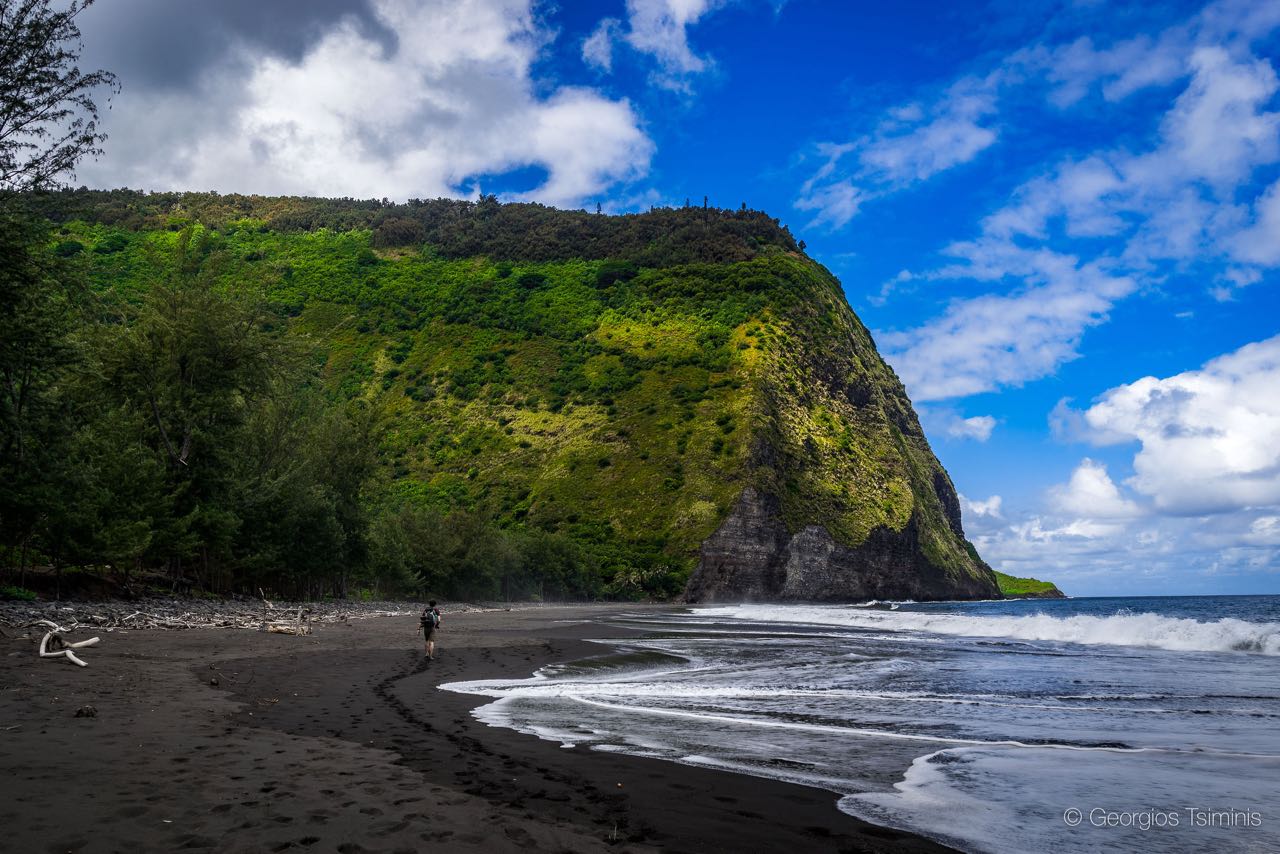
Turn right once you reach the valley floor to get to this beautiful black sand beach. Image credit: Georgios Tsiminis
Read more: in our guide to Waipiʻo Valley.
Good to know: The steep road that descends down into Waipiʻo Valley and provides access to the beach is fragile and is often closed to non-residents. Be sure to check the road’s status before visiting.
Waipio Valley road is closed to non-residents
Waipiʻo Valley Road is currently closed to non-residents. Visitor access to the valley floor and the subsequent valleys is only possible as part of a tour. The Waipiʻo Lookout is still accessible for everyone. Read more details here.
What makes black sand beaches, black?
Black sand beaches are formed when eruptions enter the sea and the rapid cooling of the lava causes it to explode into tiny grains of volcanic glass.
All black sand beaches have the obvious in common, but no two are created equal. They differ in size, shape, and the activities they offer. We rank them in an order here; however, your specific interests will determine which is the best choice for you. Also, this list is not exhaustive, so keep your eye out for other (mostly smaller) black sand beach coves as you explore the islands.
And where do white sand and green sand come from?
Green and black sand have a common origin: volcanoes. In contrast to most white sand beaches around the world, the white sand beaches on Hawaiʻi is mostly made of shells from marine organisms and coral fragments that is broken down by mechanical erosion (waves) and biological erosion (by fishes that feed on coral). Curious? Learn more about the origin of black, white, and green sand here.
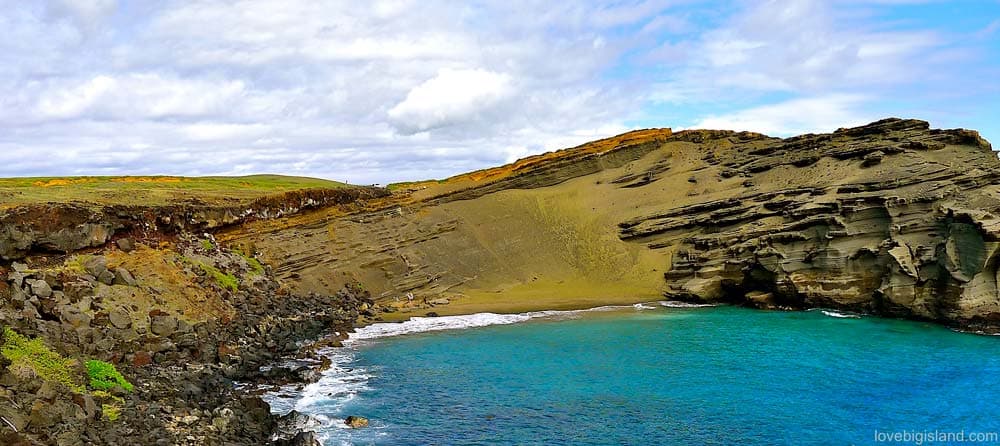
Green Sand Beach is one of the two green sand beaches in the United States. You can find it close to South Point on the Big Island
Why are there no black sand beaches on Oʻahu and Kauaʻi?
Since black sand beaches are the remnants of eruptions, it makes sense that the quantity of black volcanic glass will dissipate over time. Which means the older the island, the less likely you are to find high concentrations of black sand. This is why you find the most black sand beaches on the youngest island, the Big Island.
Both islands do have some “grey” sand beaches (Hauʻula on Oʻahu, Waimea Beach in south Kauaʻi, for example). However, when you compare them to any of the beaches on the list above, you’ll see a stark contrast in both the composition and color. For that reason, we can’t exactly classify them as “black sand beaches.”
Both islands do, however, have spectacular beaches. You can read more about them on our website:
- 28 wonderful beaches to visit on Oʻahu
- Our favorite Kauaʻi beaches (including map)