
Three sand colors on one island: black at Punaluʻu, green at Papakōlea, white at Hāpuna. Those are our favorite Big Island beaches, each the best of its color. Green sea turtles regularly come ashore to bask on Punaluʻu’s black sand; Papakōlea’s green comes from olivine, a volcanic crystal that makes up about 90% of the sand.
This page is for first-timers deciding which coast to spend their beach days on. Hāpuna is on the Kohala Coast in the northwest, while Punaluʻu and Papakōlea are in the far south. Punaluʻu is our usual half-day trip from Volcano Village. Reaching Papakōlea means a 2.8-mile walk each way with no shade. Carry water.
Jump to a beach:
Table of contents
Our full list of Big Island beaches sorts the ones that didn’t make this top three by coast and by what each is good for. Our snorkeling guide covers where to rent gear and how to stay safe in the water, and our 3 favorite snorkeling beaches page picks three others.
Visiting between December and early April? Read our whale watching guide before you pick a beach: humpbacks show up along the Kohala Coast in those months.
Punaluʻu Black Sand Beach
Punaluʻu beach, often just called Black Sand Beach, is the largest and the easiest to reach of the black sand beaches on the Big Island, right off Hwy 11 between Volcano and Nāʻālehu. Hawaiian green sea turtles come ashore to bask on the warm sand most days. Stay at least 10 feet away from them, which is the Hawaiʻi guidance, and never touch one.
The county beach park has restrooms, picnic pavilions and barbecue pits, and there is no entry or parking fee. People come for the turtles, sunbathing, a picnic or a short coastal walk. Swimming and snorkeling are possible, with the caveats below.
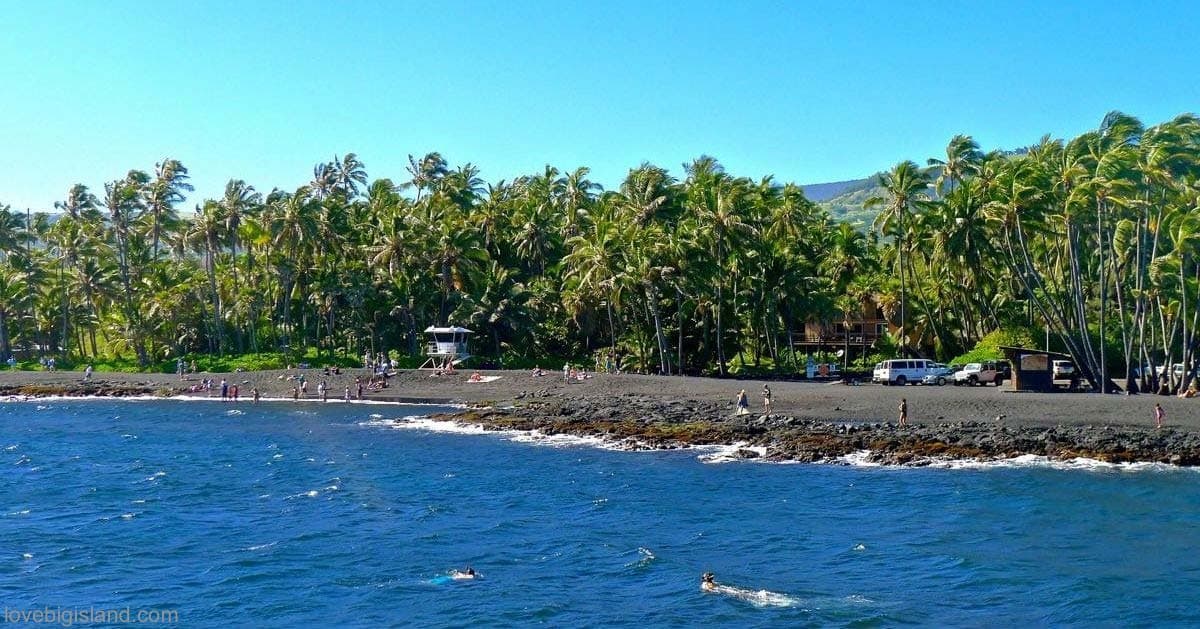
Punaluʻu Black Sand Beach from the water. The parking lot sits right behind the palms.
Swimming: the currents at Punaluʻu can be strong. The gentlest place to get in is the small boat ramp on the left side of the beach as you face the water, and when the surf is up, stay on the sand.
Snorkeling: visibility at Punaluʻu is usually poor. The better spot is Ninole Cove, a sheltered bay a short walk south with sand channels that make for an easy entry. From the Punaluʻu parking lot, follow the unmarked grassy trail south (to your right as you face makai, the ocean) for about five minutes, or drive around and park below the clubhouse of the former Sea Mountain golf course.
Directions to Punaluʻu Beach:
From Volcano Village, take Hwy 11 toward Kona and turn makai onto Alanui Road between mile markers 56 and 57. If you reach Whittington Beach Park, you have gone too far.
Turtles, Swimming and Snorkeling at Punaluʻu Black Sand Beach
Green sea turtles bask on the black lava sand at Punaluʻu, the most accessible black sand beach in Hawaiʻi. What to know about swimming, snorkeling, and honu.
Why black sand is black (and why it is hot)
The sand on every black sand beach in Hawaiʻi is lava, broken into grains. Unlike green and white sand, most of it forms in an instant: when a lava flow runs into the ocean it chills so fast that it shatters into black glassy fragments, a whole beach’s worth at a time. Waves round the fragments off over the years, so a very young black sand beach can still be rough on bare feet.
Black sand also holds heat, as you will notice walking across it on a sunny afternoon, and turtles bask on it for that warmth. If you want to see turtles, pick a black sand beach.
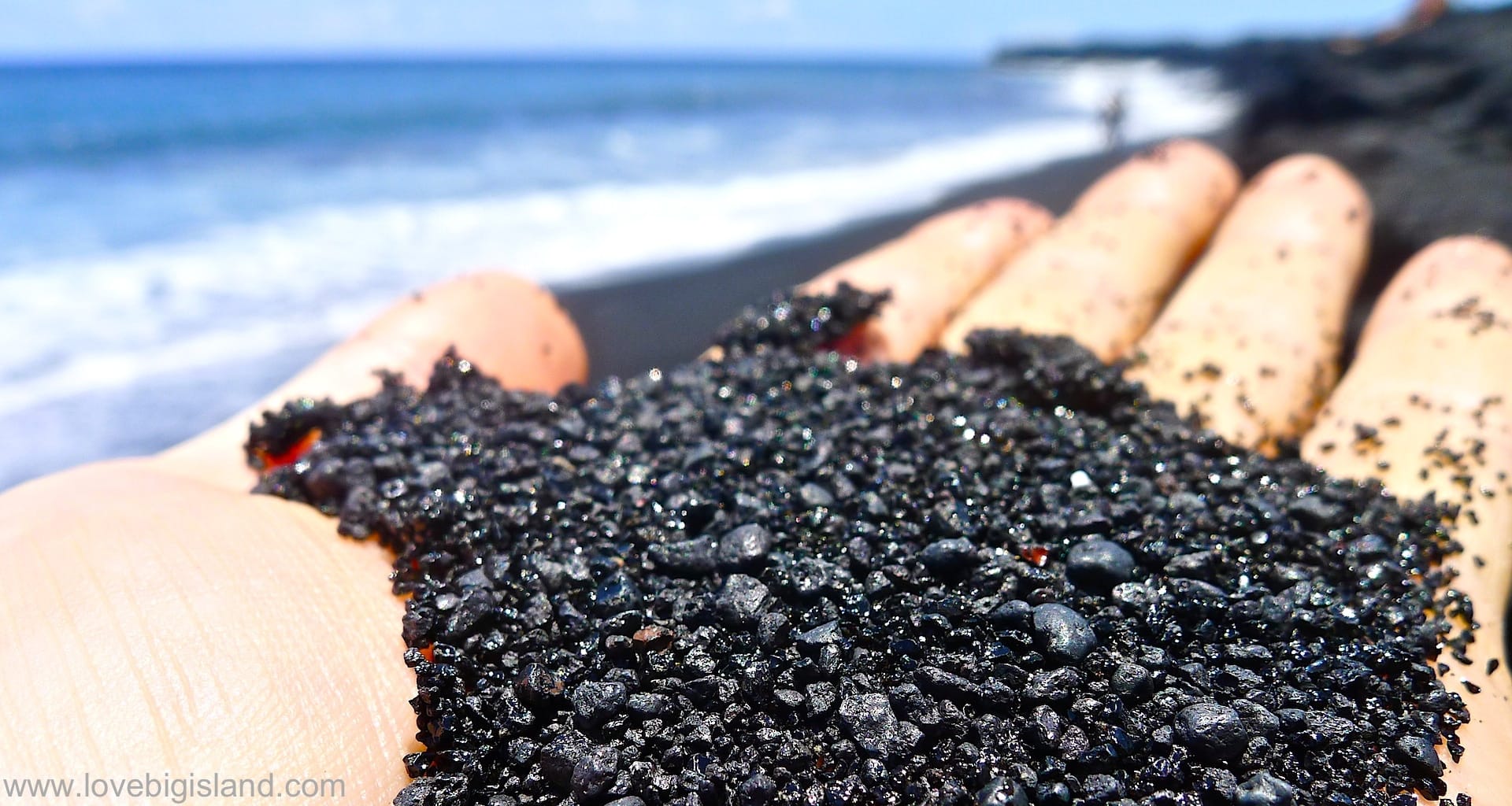
A handful of black sand at Kaimū in Puna. This beach has been forming since lava buried the old Kalapana beach in 1990.
Papakōlea Green Sand Beach
Roughly 90 percent of the sand at Papakōlea is olivine, a green crystal, and reaching it takes work: a walk of about an hour each way from the end of South Point Road. Plan on half a day and carry water for two hours of walking in full sun. On calm days the snorkeling in the bay is decent.
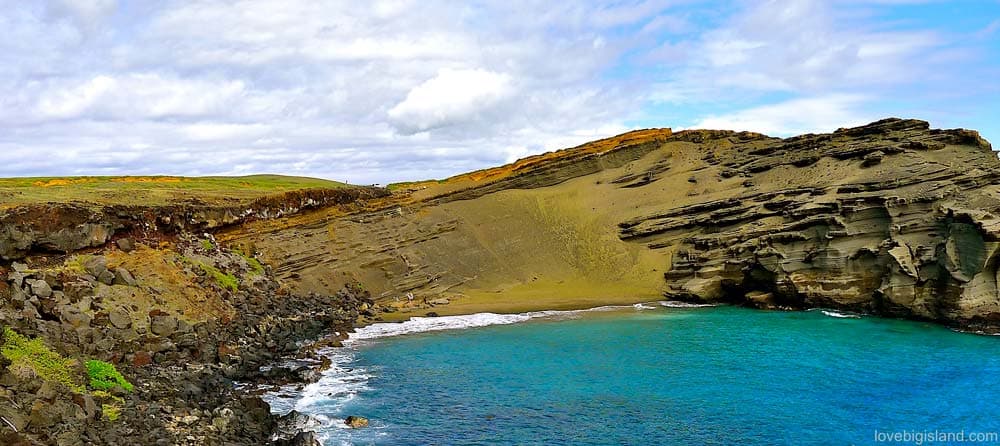
Papakōlea Green Sand Beach, near South Point. The eroding ash ring behind the sand is where the olivine comes from.
Our Papakōlea page has the step-by-step drive and hike and the best time of day to go:
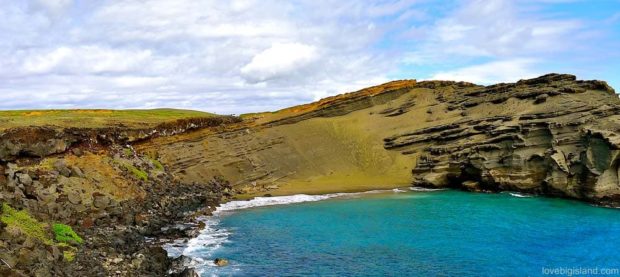
At Papakōlea roughly 90% of the sand is olivine crystal. Reaching it is a hot, shadeless 2.5-mile hike each way from South Point on the Big Island.
Directions to Papakōlea:
Turn off Hwy 11 onto South Point Road between mile markers 69 and 70 and drive it to the end, where a small harbor and a parking area sit above the water. Leave the car there.
The land beyond it belongs to the Department of Hawaiian Home Lands, which does not permit vehicles to drive out to the beach, and the pickup trucks offering rides from the parking area are running an illegal shuttle. Unrestricted driving has cut ruts up to eight feet deep into this coast, so walk.
Facing the water, take the dirt road to your left (east) and follow the coast with the ocean on your right for about 2.8 miles, until you are standing on the cliffs above the bay. The path down runs along the lava cliff on the west side of the bay. There is no shade anywhere on the route, so bring a hat and sunscreen.
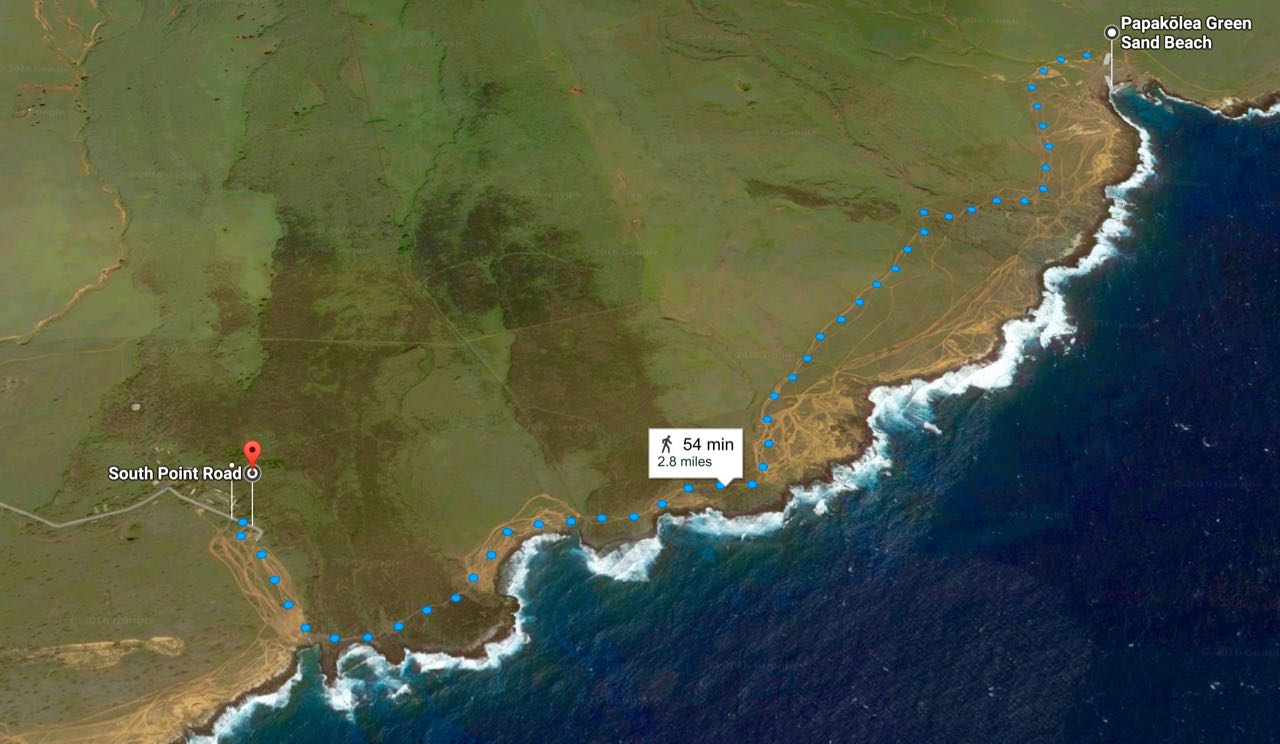
Walking route from the parking area at the end of South Point Road to Papakōlea: 2.8 miles and about an hour each way. Image credit: Google Maps
Why Papakōlea’s sand is green
The olivine at Green sand beach weathers out of an ash ring more than 49,000 years old, still visible on the east side of the bay.
Locals call olivine “Hawaiian diamond.” It is denser and tougher than the ash fragments, glass and black pyroxene that make up the rest of the rock, so the waves leave it on the beach while the lighter volcanic sand gets swept out to sea. How green the beach looks on a given day comes down to the ratio of olivine to everything else in the sand.
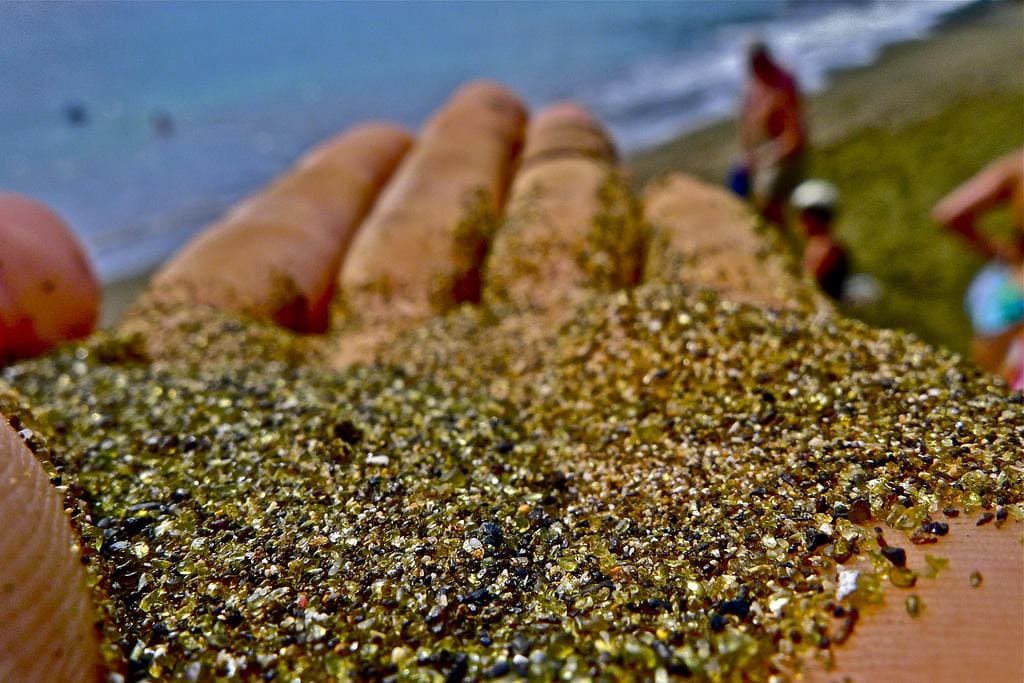
A handful of Papakōlea sand: green olivine grains with black lava fragments mixed in. “Green crystal beach” would be the more accurate name.
Olivine turns up in other places on the island too, in the walls of Kīlauea Iki crater and mixed through the sand at Richardson Ocean Park in Hilo.
Hāpuna Beach
Hāpuna beach is half a mile of white sand, the longest stretch on the island, with lifeguards on duty and a shore break that is fun to play in on small-surf days. The beach gets about 10 inches of rain a year, so a rained-out day here is rare, and a line of trees plus a shaded picnic pavilion are the only shade.
On bigger days there are rip currents and a hard shore break, and once the waves pass 3 feet the water is for experienced swimmers only (state warning).
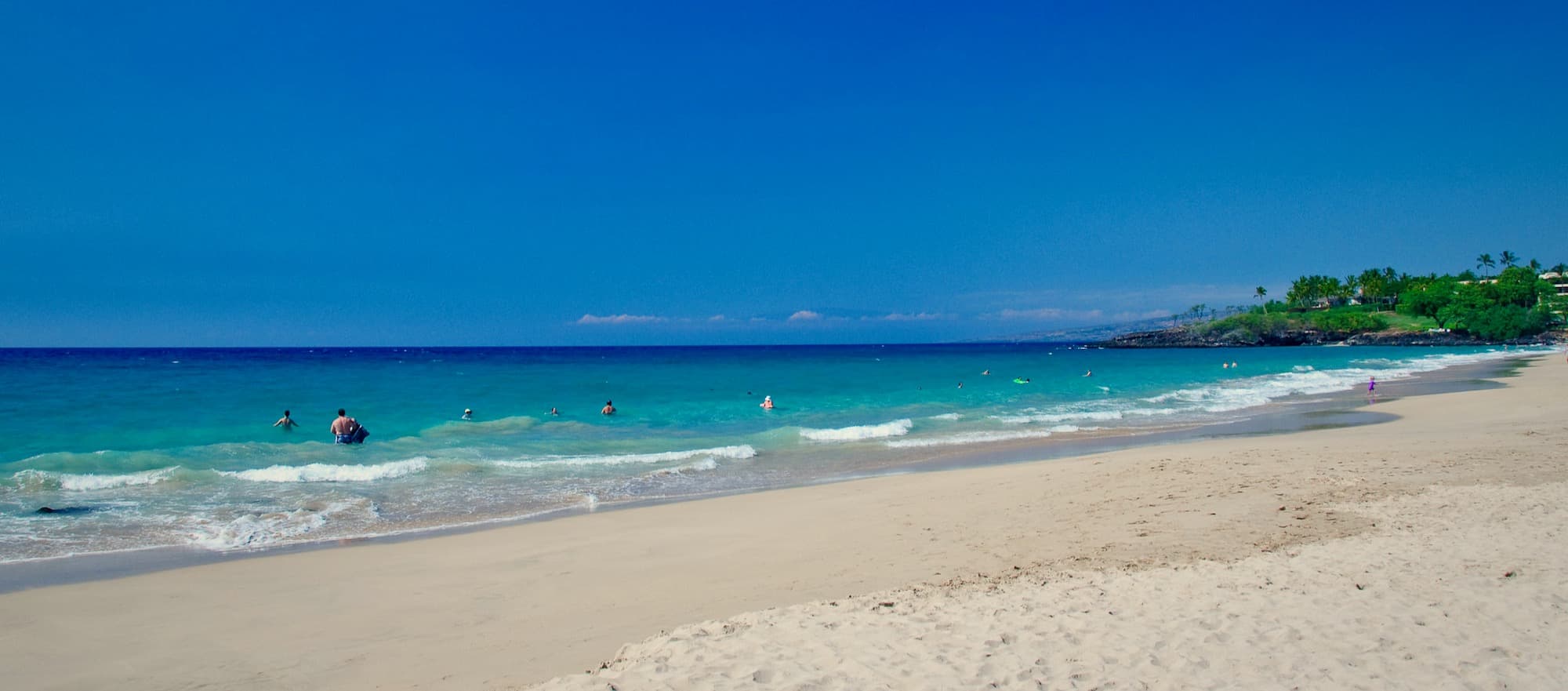
Hāpuna Beach on a small-surf day. Photograph by Phil Price on Flickr
Snorkeling is possible here too, around the small cliff at the north end of the beach (don’t go alone, the lifeguards can’t see you there) or around the rocky point at the south end.
Hāpuna gets crowded. Go early if you want a parking spot and a shady patch of sand.
Directions to Hāpuna Beach:
Hāpuna Beach State Recreation Area is north of Kailua-Kona at mile marker 70 on Hwy 19. Turn makai (toward the ocean) at the park sign and follow the road a quarter mile to the large parking lot. The park is open daily from 7 a.m. to 7:30 p.m., with the gates closing at 8 p.m. Non-residents pay $5 per person plus $10 per vehicle; Hawaiʻi residents with a state ID get in free. Do not leave valuables in your car.
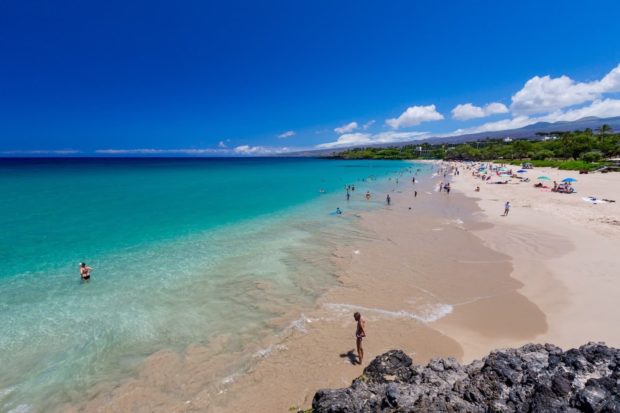
Half a mile of white sand, a year-round lifeguard, and shade from trees and a picnic pavilion. Hāpuna costs $5 per person plus $10 parking, free for HI residents.
Other white sand beaches near Hāpuna
Our favorite white sand beaches within half an hour of Hāpuna:
- Kua Bay (21 miles / 28 minutes from Hāpuna): a white sand beach with strong surf on some days.
- Kaunaʻoa Beach (3 miles / 9 minutes from Hāpuna): also called Mauna Kea Beach, with facilities at the beach and plenty of room to sunbathe.
- Waialea Beach (1 mile / 5 minutes from Hāpuna): also called Beach 69. Winter surf strips much of the sand away and summer brings it back, and the trees give plenty of shade and privacy.
- ʻAnaehoʻomalu Beach (8.5 miles / 16 minutes from Hāpuna): an easy-access beach and a good sunset spot.
Why Hawaiʻi’s white sand is mostly shell and coral
Most white sand beaches elsewhere are made of inorganic sand, tiny pieces of quartz and other minerals. The white sand on Hawaiʻi’s beaches is mostly broken shell and coral.
Waves grind the reef down (mechanical erosion) and marine animals do the rest (biological erosion). Parrotfish do a lot of it: they bite off chunks of coral, chew them up and spit them out as sand. This kind of sand doesn’t stack: the grains are rounded, so a sand castle built here slumps.
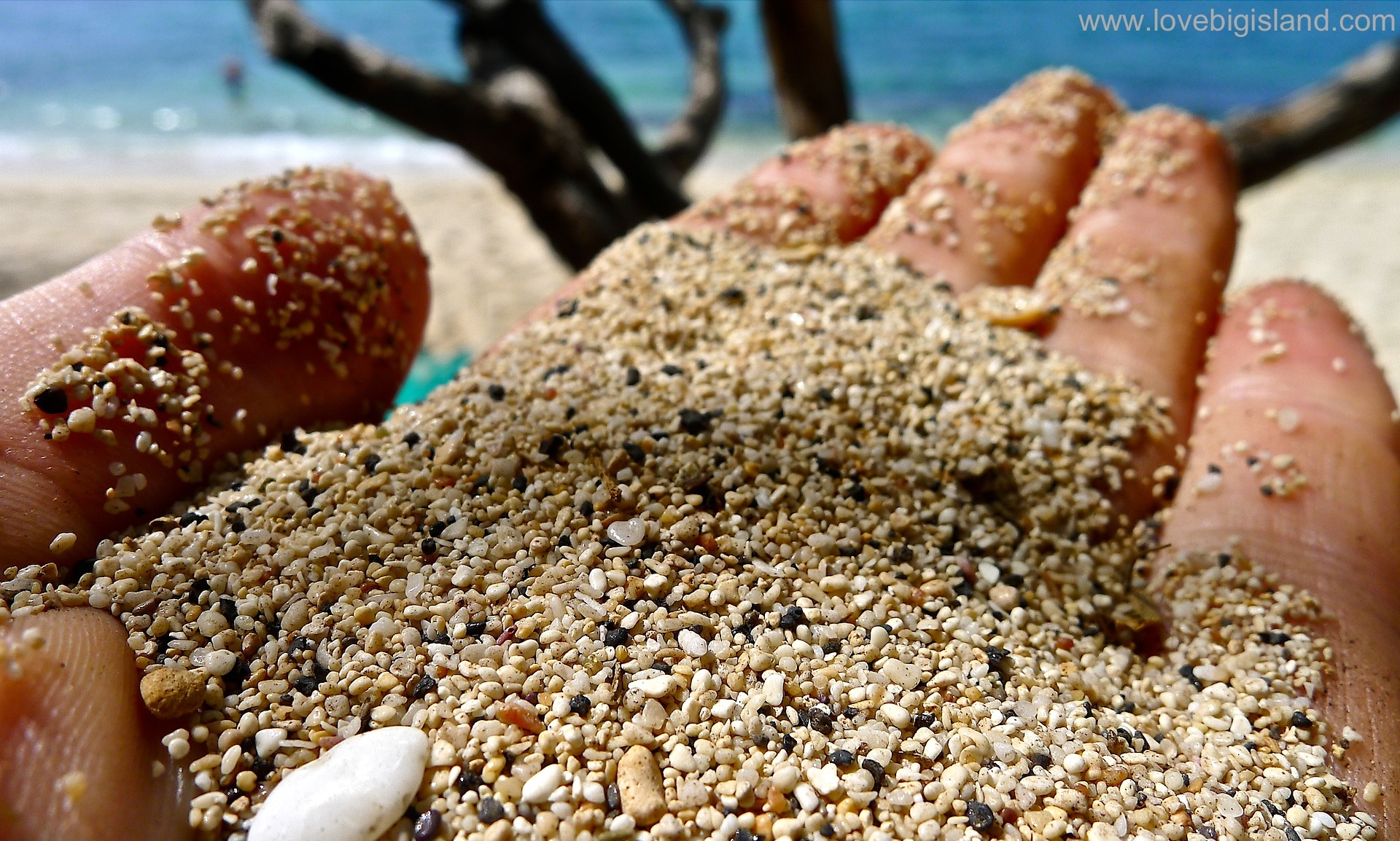
White sand from Beach 69 (Waialea) up close. You can still make out the pieces of shell and coral that are turning into sand.
Pick up a pinch of sand and look closely: most of the grains are still recognizable bits of shell or multicolored coral. The macro mode on a phone camera shows this well.