
The 2018 lower Puna eruption buried the Big Island’s two best-known warm ponds, ʻAhalanui and the Kapoho tide pools, under fresh lava. So can you still find a hot spring on the Big Island? Yes, but only one is left. It’s Pohoiki, at Isaac Hale Beach Park in the Puna district, where the 2018 lava flow left a new black-sand berm that trapped geothermally heated spring water behind it.
Pohoiki is a cluster of warm pools, not just one. A January 2020 USGS survey mapped five, and the water is warm rather than hot, commonly around 100°F. The pools are not disinfected and get no routine water-quality testing, so skip them if you have any open cuts.
Table of contents
- Pohoiki: the only hot spring left on the Big Island
- How to visit Pohoiki: parking, drive times, and what to bring
- Is the water clean? Safety and hygiene
- What happened to ʻAhalanui and Kapoho
- What makes the springs warm?
Pohoiki: the only hot spring left on the Big Island
The Pohoiki warm ponds sit inside Isaac Hale Beach Park on the Puna coast, and since 2018 they’re the one volcanically heated pool still open to the public. The water is warm rather than hot: field readings in 2020 held above 100°F, as high as 106°F right over the springs, up from the low 90s°F measured before the eruption. That heat is residual, left in the ground by the 2018 lava that reshaped this coast.
The same eruption created the newest black-sand beach on the Big Island at Pohoiki, ground down from the basalt the lava left behind. It sits a short walk from the pools.
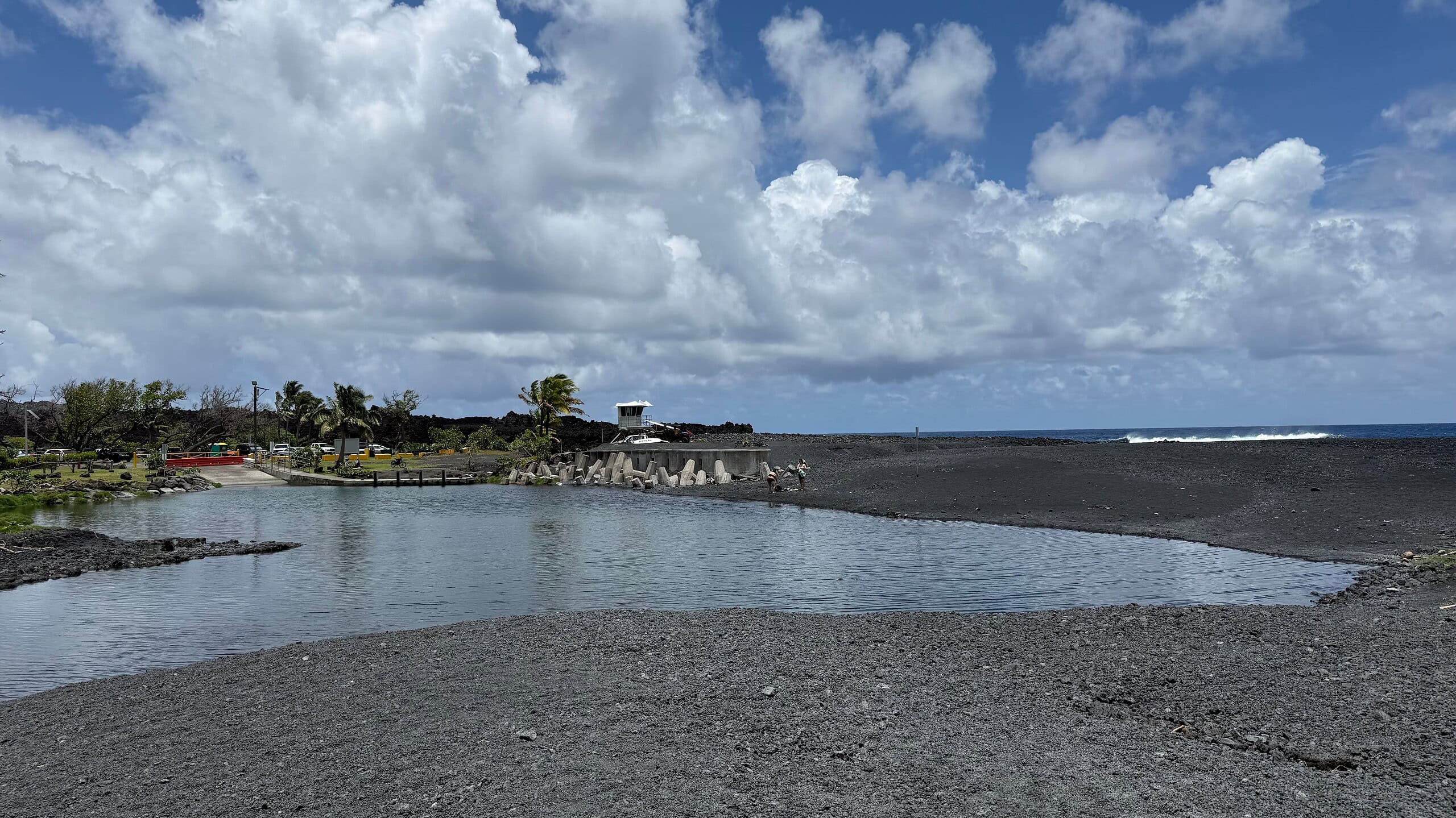
Looking back from the black sand at Isaac Hale Beach Park: the lifeguard tower, the warm ocean thermal pond near the boat ramp, and the parking area are all visible. The solidified lava along the coastline marks the edge of the 2018 Kīlauea flow that created this beach.
The ponds formed where the new black-sand berm trapped heated spring water behind it. A January 2020 USGS survey mapped five warm-to-hot pools across the park. Their temperature has held in the warm range in the years since, though it shifts with the tide. Hawaii Tracker has a detailed account of how the Pohoiki springs developed.
- A pond adjacent to the lava flow on the far eastern edge of the beach
- A pond that has formed at the location of the old boat ramp
- A pond where the new beach meets the old coastline, at the former ‘1st bay’
- A pre-existing warm pond in the forest that has heated up further
- A pond where the new beach meets the old coastline, at the former ‘2nd bay’
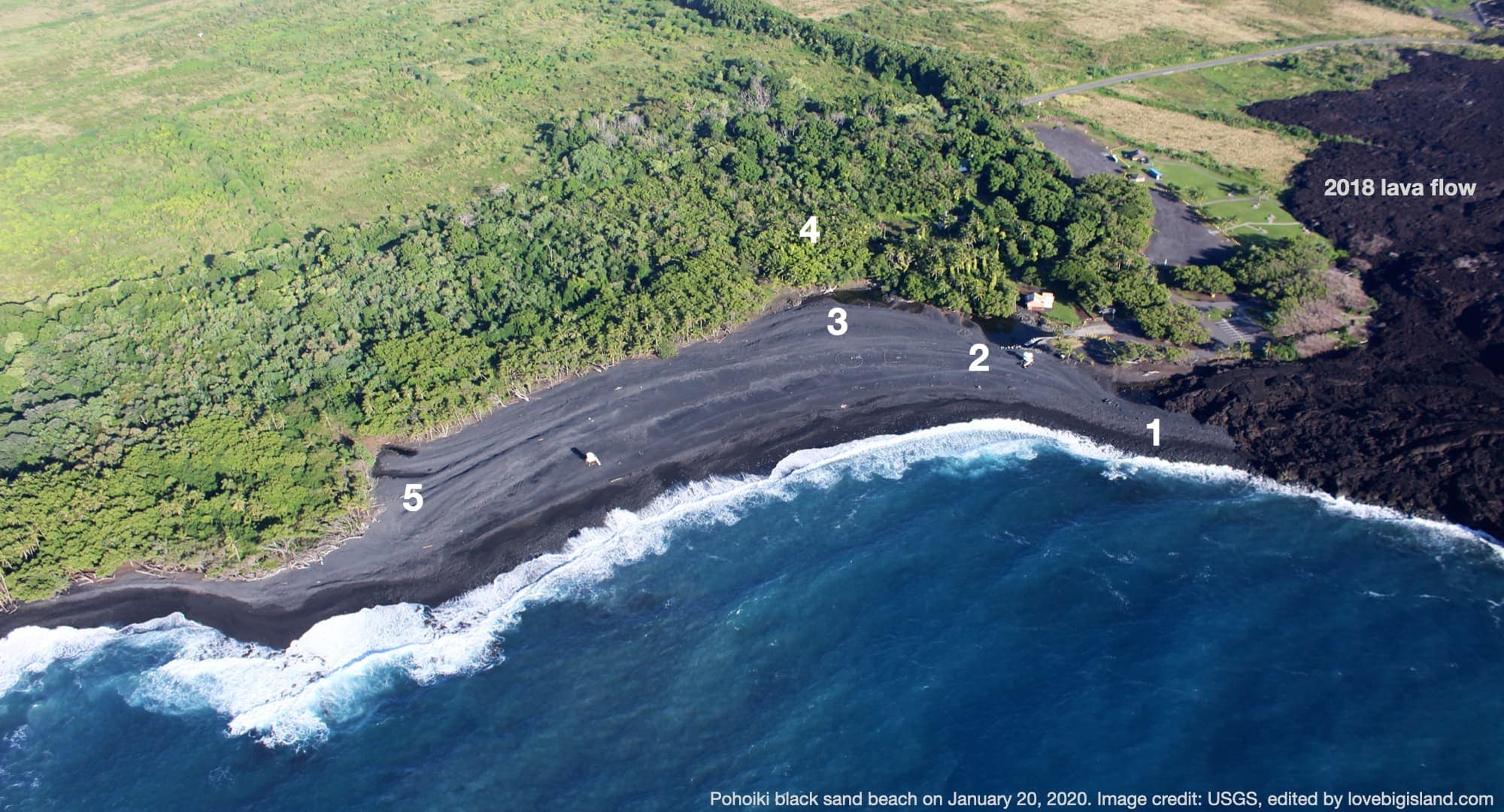
The 5 hot springs at Pohoiki. In this aerial picture of the new black sand beach at Isaac Hale Beach Park, taken on January 21, 2020, you can see that the basaltic sand from the 2018 lava delta (right) continues to accumulate, both widening and elongating the beach in Pohoiki Bay. Image credit: USGS (public domain)
How to visit Pohoiki: parking, drive times, and what to bring
Pohoiki sits at the end of Highway 137, the coastal Red Road in lower Puna, about an hour from Hilo and roughly two and a half hours from Kona. Isaac Hale is a county beach park, so there’s no entrance fee, and it has a paved lot. The park is open daily, 7 a.m. to 8 p.m. The pools are a short walk inland from the lot, behind the black-sand beach, over rough lava rock. The park reopened on December 6, 2025 after a long closure, and it now shuts on the third Thursday of each month for maintenance, reopening at 9 a.m. the next day.
Facilities are basic: there’s a lifeguard, restrooms, and a few picnic spots. Bring a towel, drinking water, water shoes for the rough lava rock, and a dry change of clothes. Skip the sunscreen and lotions right before you get in, since whatever is on your skin ends up in a small, slow-moving pond that everyone else is sharing. Go on a weekday morning to skip the weekend crowds.
Is the water clean? Safety and hygiene
No, not in the way a pool is. The Pohoiki ponds are not disinfected and get no routine water-quality testing, and bacterial counts in Puna warm ponds have historically exceeded EPA and state guidelines (source). The cause is warm, slow-moving water and heavy use.
The Department of Health warns that the ponds are not disinfected and that no one should enter with an open wound, given the risk of bacterial infection. Enter at your own risk. Keep any cut or scrape out of the water.
- Don’t enter the water if you have an open cut or infection.
- Keep your head above water and try not to swallow any.
- Avoid crowds: stay away on weekends and go early, after the overnight tide has flushed the ponds.
- Shower and rinse off once you get out.
The state publishes water-quality advisories on the Hawaiʻi Department of Health map.
What happened to ʻAhalanui and Kapoho
Two of the Big Island’s best-known warm-water spots are gone. The 2018 lower Puna eruption buried the ʻAhalanui warm pond and the Kapoho tide pools within weeks of each other. Older guidebooks still list both.
ʻAhalanui Warm Pond (destroyed in 2018)
ʻAhalanui park was the county beach park built around the warm pond, with showers and restrooms. It drew local crowds, heaviest on weekends, and the quiet window was a weekday morning before 9 a.m.
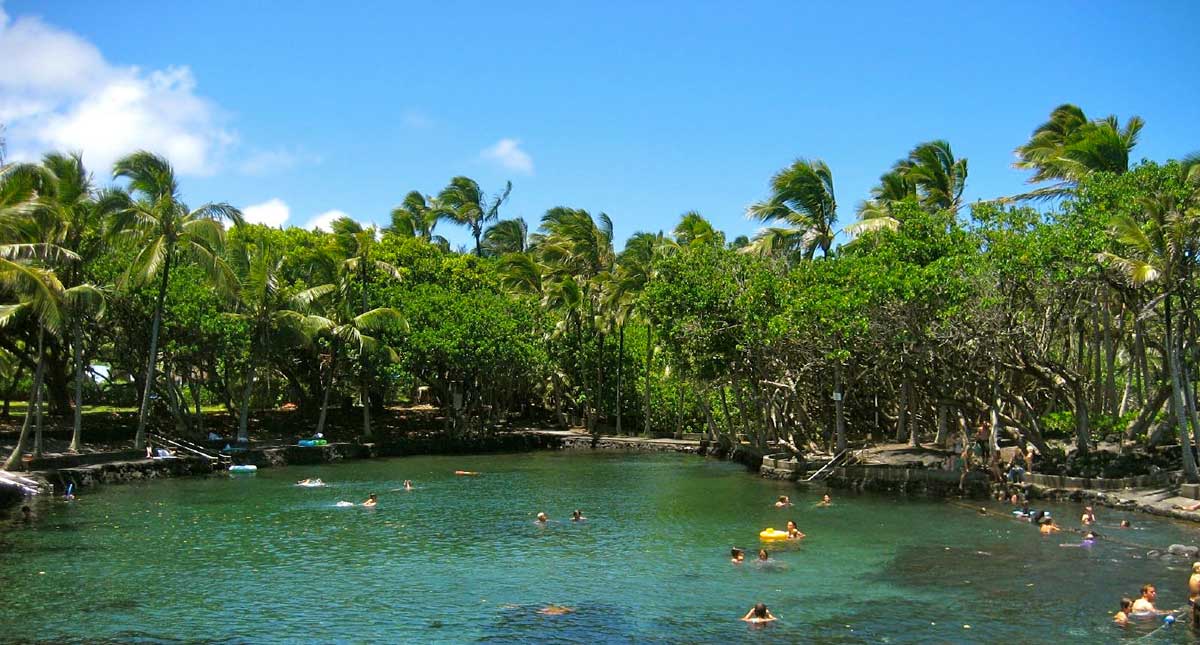
The ʻAhalanui hot pond in the Puna district on the Big Island, Hawaiʻi, before it was buried by lava in 2018. The pool was partly walled off from the ocean to create a lukewarm swimming pool.
The Kapoho tide pools (destroyed in 2018)
The Kapoho tide pools went by the official name of the Waiʻōpae Tide Pools Marine Life Conservation District, about 1.5 miles north of the ʻAhalanui warm pond. (Waiʻōpae means “shrimp water” in the Hawaiian language.)
They were a difficult-to-reach snorkeling spot in Kapoho Bay that appeared in many guidebooks. Some of the pools were heated by warm water seeping out of the lava rock, so they appeared on lists of Big Island hot springs.
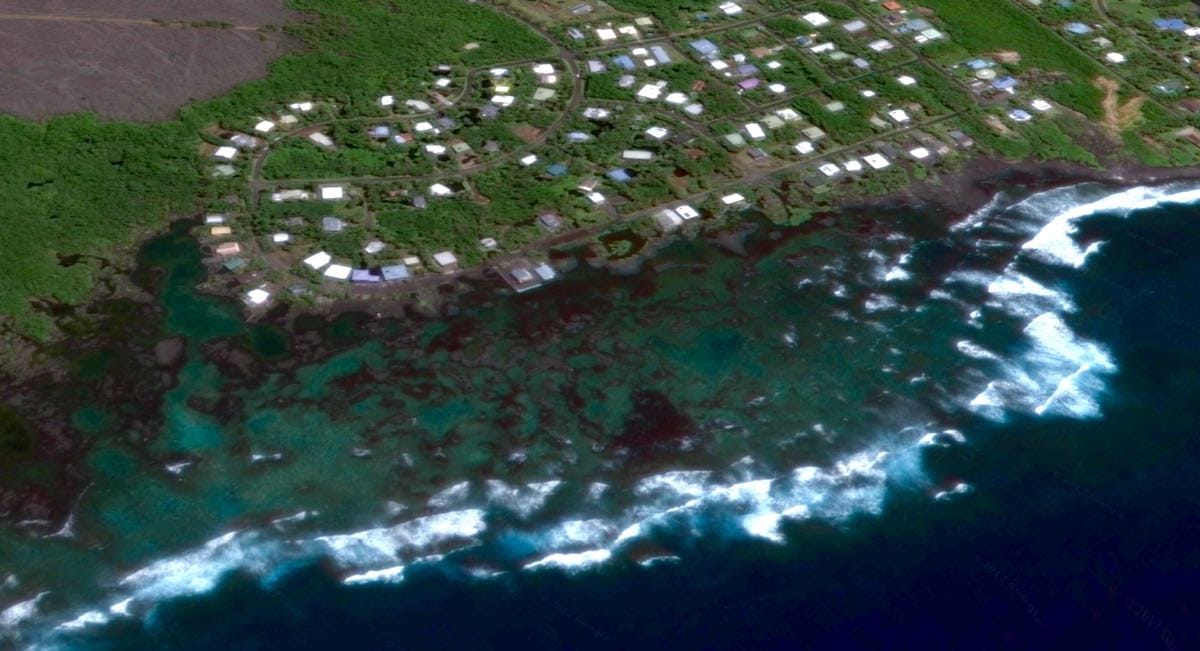
The Kapoho tide pools and the Kapoho Vacationland subdivision, before the 2018 lava flow. Image credit: Google Maps
A basalt ridge offshore sheltered the pools from the surf and let the tide flush them with fresh seawater twice a day, conditions that built one of the highest, most diverse coral covers on the east side of the island.
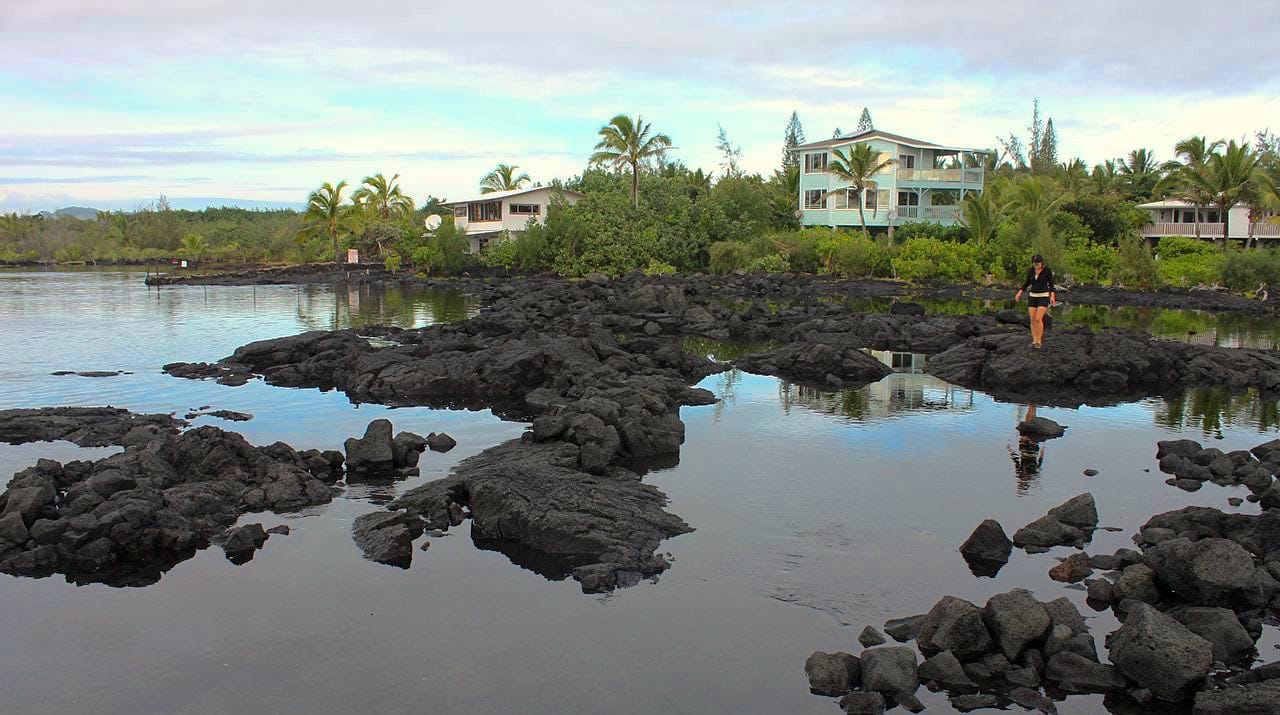
The Kapoho tide pools sat in front of the Kapoho Vacationland subdivision. USA – Hawaii / Big Island: Kapoho Tide Pools, CC BY-SA 2.0, Link
hawaii.gov has more on the Kapoho (Waiʻōpae) tidepools.
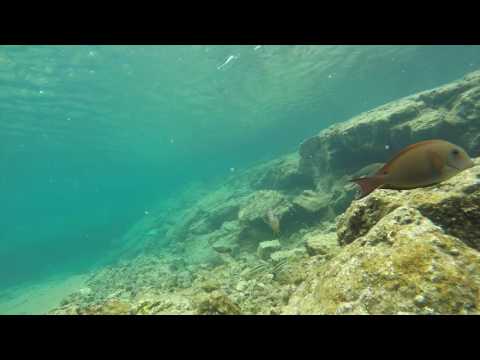
This video shows what the Kapoho tide pools were like.
What makes the springs warm?
The heat here is volcanic, not solar. The water that fills these ponds starts as rain and picks up its warmth underground, on the way to the coast.
It rains a lot on the windward (East) side of the Big Island, up to 300 inches (7.6 meters) per year. Most of that water doesn’t run straight to the ocean. It sinks into the ground until it hits a barrier. On the Big Island that barrier is salt water, which is heavier than fresh water, so the fresh water rides on top of it and works its way slowly out to the edge of the island.
In the volcanic areas of the Big Island, that water passes through rock heated by magma in the lower East Rift Zone. The water absorbs heat from that rock and carries it toward the coast. As it moves away from the magma it cools a bit, especially where cold water mixes in, but it stays warm enough for a comfortable soak by the time it surfaces near the shore. At Pohoiki, the fresh 2018 lava added its own residual heat near the surface, so those pools were hotter after the eruption than before.