
A first snorkel comes down to where you get in, and what the water is doing that day. Nerves are the smaller problem. Eight of the twelve have a lifeguard on duty, and the four that don’t are Kahekili and Olowalu on Maui, Kealakekua Bay on Big Island, and Molokini, which are boat tours with nowhere to stand and no shore to swim to.
Sharks Cove is calm enough for a first snorkel in summer and no place for one in winter, when North Shore swell breaks straight into it. Hanauma Bay shuts every Monday and Tuesday, and non-residents pay $25 while Hawaiʻi residents walk in free with no reservation. Watch the water for 15 minutes before you get in anywhere. DLNR gives that number because waves come in sets.
Table of contents
Tips for Beginner Snorkelers in Hawaiʻi
Habits that make the first few times easier:
- Stay close to shore. Beginners run out of stamina first. Hawaiʻi DLNR puts it as a rule worth memorizing: do not snorkel out farther than you could swim back without your gear.
- Never snorkel alone. Stay close enough to a buddy that you would notice if they stopped moving.
- Use a flotation device. A pool noodle or a life jacket lets you rest without standing on anything, which saves both you and the reef. Hanauma Bay’s own safety guidance asks you to rely on your swimming ability rather than on flotation.
- Pick a lifeguarded beach while you are learning. The United States Lifesaving Association puts the chance of drowning at a guarded beach at 1 in 18 million. Every spot below says whether it is guarded.
- Give yourself time. Breathing through a tube feels strange for the first few minutes and then stops feeling like anything.
Reading the water, and what to do if something goes wrong
Watch the water before you get in. DLNR’s advice for these reef sites is to stand and watch for about fifteen minutes first. Waves arrive in sets, so a bay that looks flat when you park can be breaking by the time you’re out on the reef. Bigger surf also means stronger currents.
Know what a rip current looks like. In Hawaiʻi they sit in reef channels and near the centers of bays rather than off open sand. The tells are a narrow gap of darker, calmer water between areas of breaking waves, a channel of choppy water, a difference in water color, or a line of foam and debris moving out to sea.
If you are caught in one, do not swim against it. That is the instruction both NOAA and DLNR lead with, and it is the mistake that drowns people: swimming straight back at the beach until you are exhausted. Rip currents pull you away from shore, not under it. Swim across the current, following the shoreline, and come back in at an angle. If you can’t make progress, float or tread water and save your energy, then raise an arm and shout for help.
Give the wildlife room, and know which distances are law. Approaching within 50 yards of a Hawaiian spinner dolphin is prohibited by federal rule, as is approaching within 100 yards of a humpback whale. Stay at least 10 feet from a green sea turtle and 50 feet from a monk seal, 150 feet if there is a pup (NOAA). If an animal comes to you, that is allowed. Move away from it rather than staying to watch.
Beginner snorkeling spots on the Big Island
These Big Island spots work for a first time out:
1: Kahaluʻu Beach Park
Kahaluʻu Beach Park sits just south of Kailua-Kona, reachable by the town trolley, with a surf shop across the street for rentals and a lifeguard tower on the beach. The near-shore water is usually calm and the reef starts almost immediately, so you can be looking at fish and turtles within a few strokes of the sand.
The entry is rocky, so take it slowly: reef shoes help, and so does picking your line before you step in rather than after. The sandy stretch is a good place to rest between sessions.
Read more in our guide to Kahaluʻu beach park.
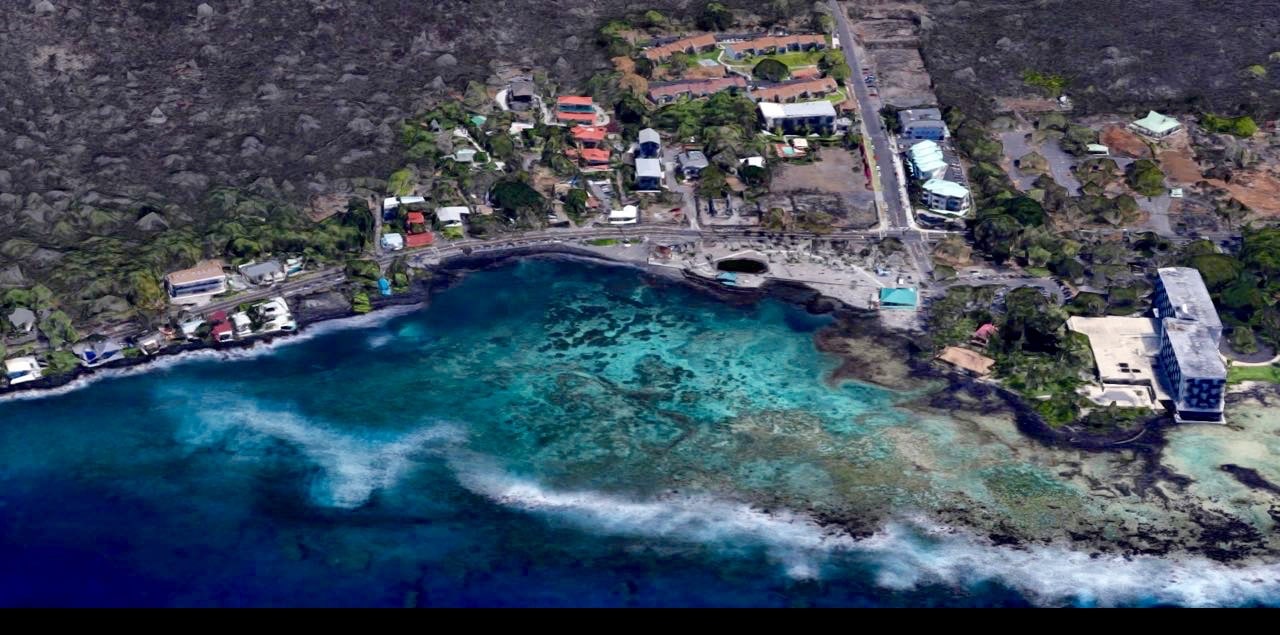
Kahaluʻu Beach Park has calm near-shore water and reef within a few strokes of the sand. Close to Kona just off Aliʻi drive. Image credit: Google Maps
2: Kealakekua Bay by Boat
Kealakekua Bay is a marine life conservation district, and the place where Captain Cook was killed. Dolphins and sea turtles both turn up here.
You can drive to the bay, but not to the snorkeling. Nāpōʻopoʻo, on the eastern shore, is reachable by car, is shallow with little coral, and has no lifeguard. The good water is across the bay at Kaʻawaloa Cove, by the Captain Cook monument, reachable only by boat, by paddle craft, or on foot down the Kaʻawaloa Trail.
State Parks requires a permit for every vessel transiting the bay, kayaks, canoes, stand-up paddleboards and inflatables included, and landing at Kaʻawaloa flat is prohibited. A boat tour is the simplest way to do it legally.
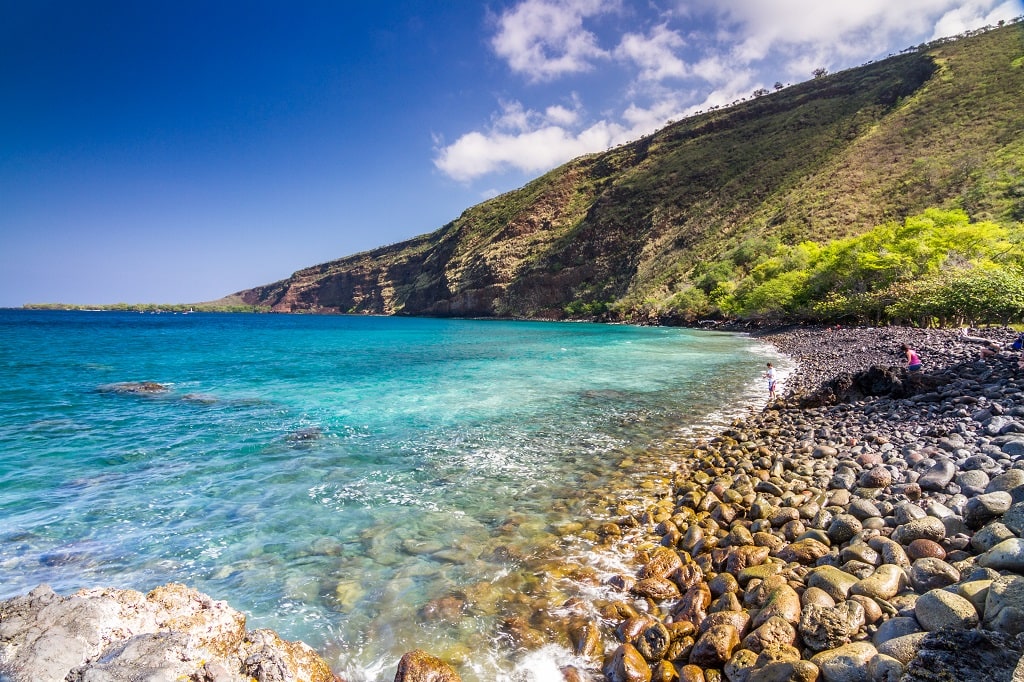
Nāpōʻopoʻo Beach is a small rocky beach in the Kealakekua Bay State Historical Park. Image credit: Nnachappa64 – Own work, CC BY-SA 4.0, Link
Snorkel boats leave from Kailua-Kona. Kaʻawaloa Cove is almost always calm, and depths there run from about 5 feet to 120 feet, so wear a flotation device and stay over the shallow end. If dolphins turn up, remember the 50-yard rule: watching from a distance is legal, swimming toward them is not.
Read more about visiting Kealakekua Bay, or take a look at this tour.
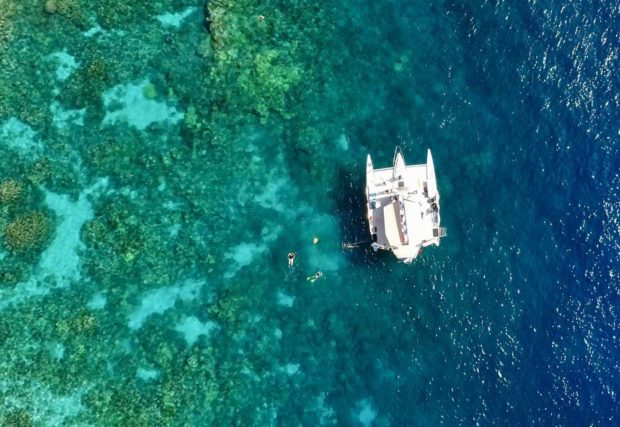
Afternoon Sail & Snorkel at Kealakekua Bay
You reach the reef below the Captain Cook Monument at Kealakekua Bay only by boat or a two-mile paddle from Nāpōʻopoʻo. Sea Paradise’s afternoon catamaran drops you there with crew who stay in the water for the whole snorkel.
from:
$125
What is a suggested tour?Our suggested tours are hand-picked tours that receive consistent good reviews, give back to the community, and work hard to minimize their impact on the environment. Read more about these tours on our website.3: Richardson Ocean Park
On the Hilo side, Richardson Ocean Park is the easiest option: sheltered from the surf, shallow, with easy entry and exit and turtles around most days. The black sand and the tide pools give you something to do between sessions. It’s lifeguarded, though Hawaiʻi County doesn’t publish tower hours.
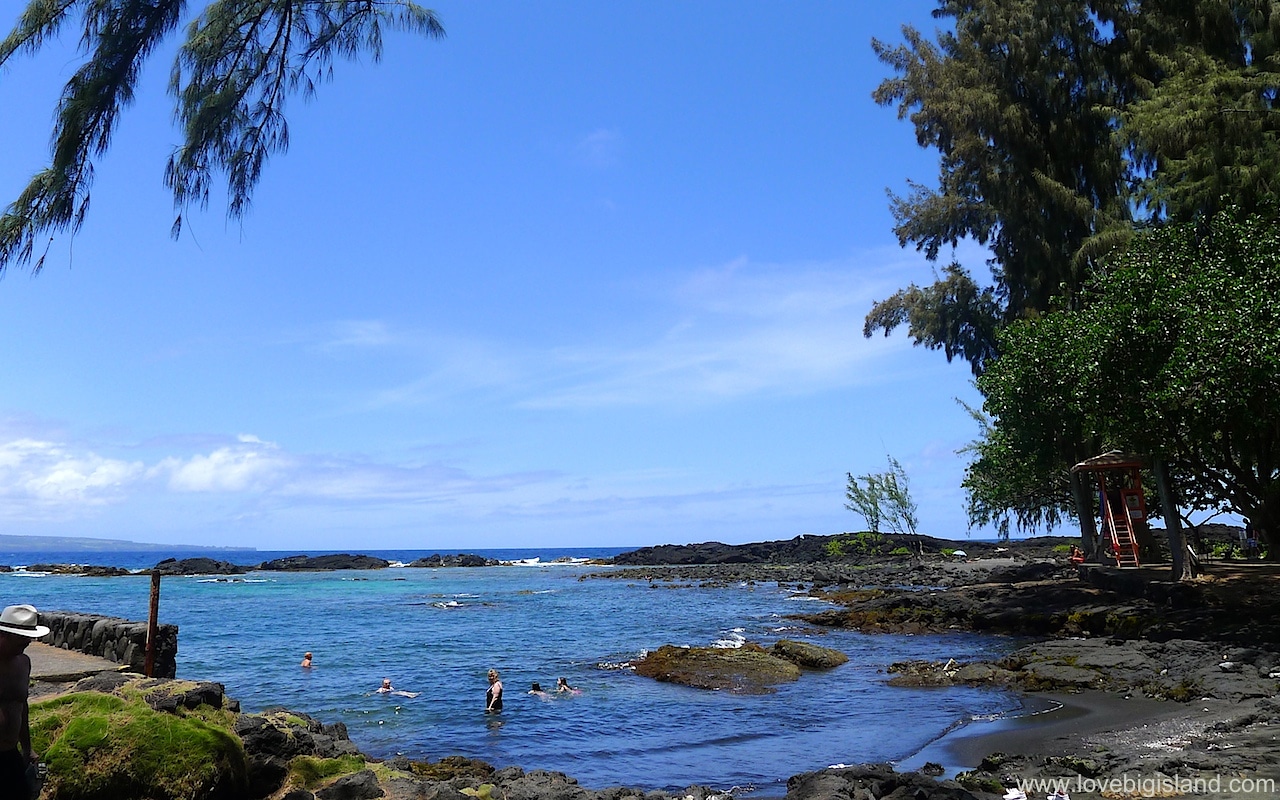
Richardson Ocean Park in Hilo is good for beginners.
Beginner snorkeling spots on Kauaʻi
Kauaʻi has many good snorkeling spots. These suit beginners, and all are lifeguarded.
1: Lydgate Beach Park
If you’re brand new, Keiki Pond at Lydgate Beach Park is a walled-off, boulder-enclosed swimming area that builds to about ten feet. There’s no coral in it, so you can stop and stand whenever you want, and the water stays flat when the coast outside doesn’t.
You’ll grow out of it quickly. It’s somewhere to find out whether you like breathing through a tube before you try it anywhere with a current. Two lifeguard towers cover the park.
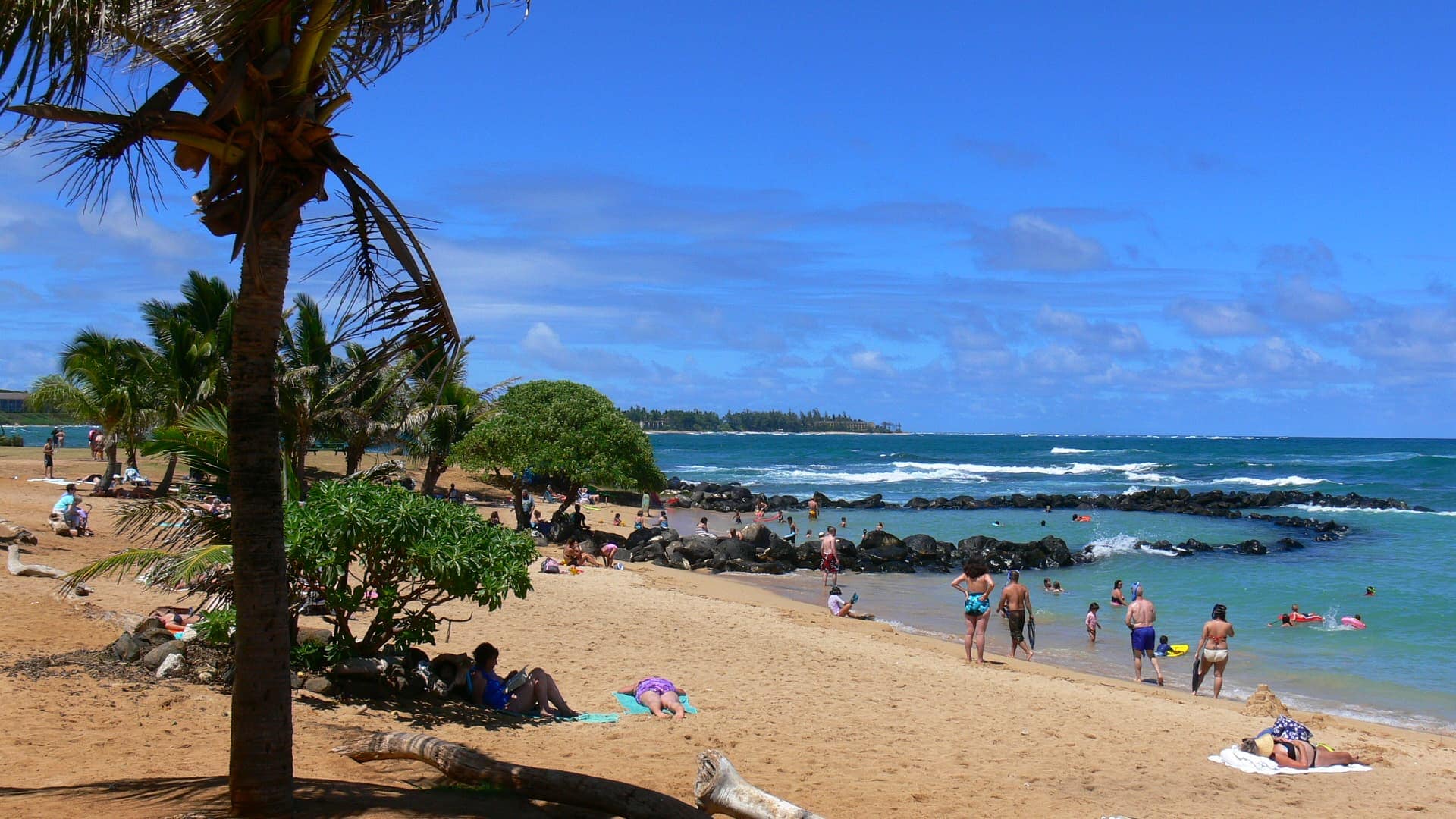
Lydgate is a family-oriented beach with a lifeguard tower overlooking boulder-enclosed pools. Image credit: Jim Mullhaupt, source.
2: Poʻipū Beach Park
If you’re staying in Poʻipū you don’t have to go far. Poʻipū Beach Park is usually calm and has a lifeguard tower, so start on the rocks close in and work out to the reef as you get comfortable.
It’s a busy beach, and that’s pleasant, but it isn’t supervision. A crowd doesn’t notice a snorkeler in trouble, because a face-down snorkeler looks exactly like a snorkeler having a nice time. Set up within sight of the tower.
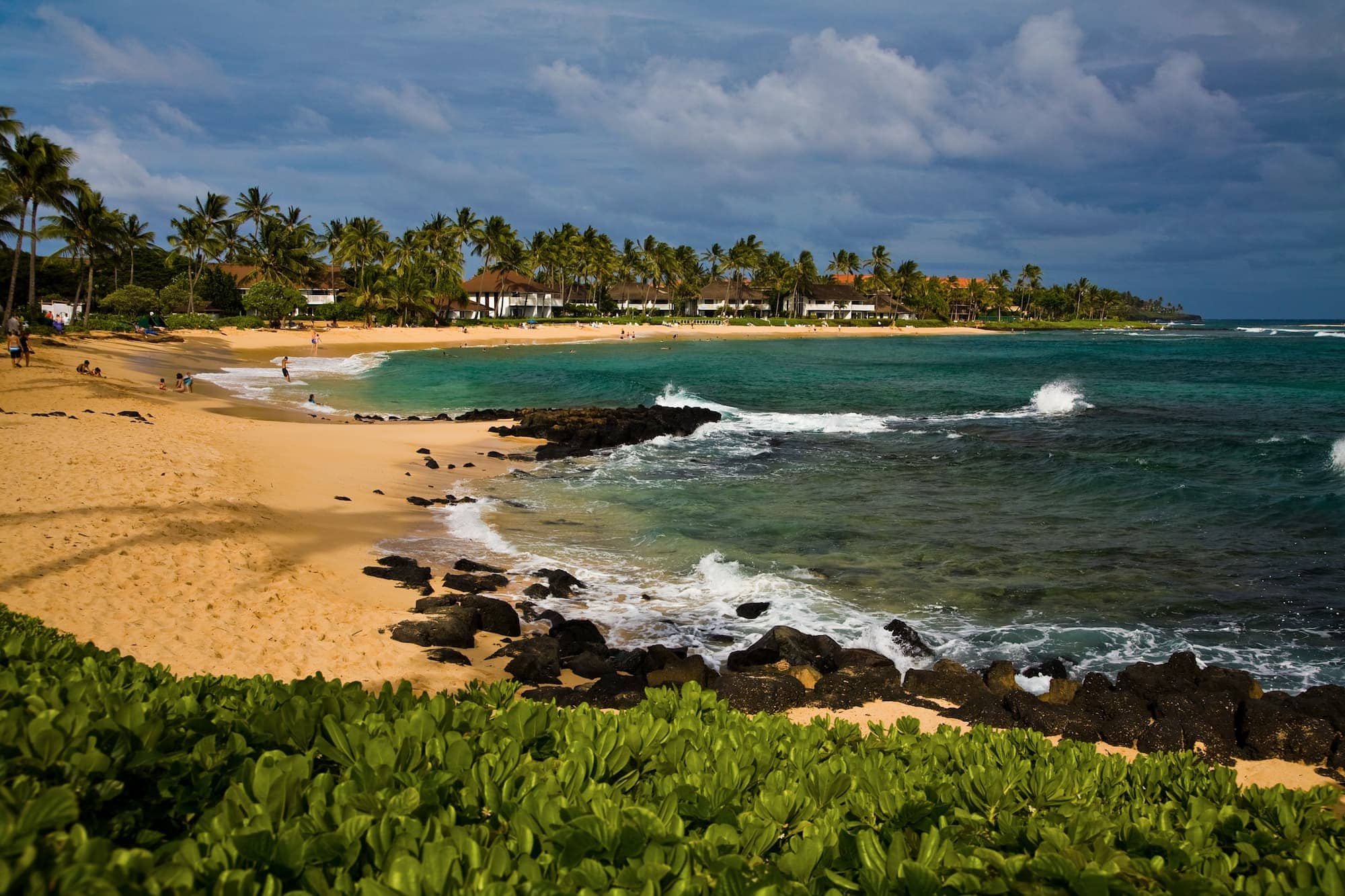
Poʻipū is a popular beach with a shallow, protected swimming area, snorkel & surfboard rentals & a playground. Image: Hawaii Tourism Authority (HTA) / Tor Johnson
3: Salt Pond Beach Park
Salt Pond has three separate snorkel areas, so there is room to move on as you improve. The one in front of the airport on the east side has small tide pools and calm, clear water. There is a lifeguard tower here too.
Between sessions, look at the salt ponds the park is named for, where sea salt is still made the traditional way.
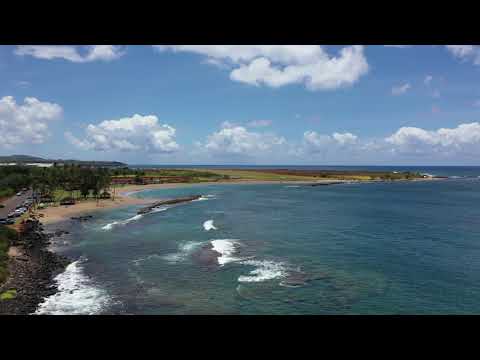
Beginner snorkeling spots on Maui
These Maui snorkeling spots suit beginners. Kahekili and Olowalu have no lifeguard, and Molokini is boat access only. Bring a buddy to all three.
1: Kahekili Beach Park (Airport Beach)
Kahekili has no lifeguard. Maui County staffs eight towers and this is not one of them, so bring a buddy, stay where you can see the beach, and get out earlier than you think you need to.
It has ample parking, grassy areas, white sand and facilities, and the reef starts close enough that you don’t have to swim far offshore. Kahekili is a good place to see fish and Hawaiian green sea turtles.
2: Molokini Snorkel Boat Tour
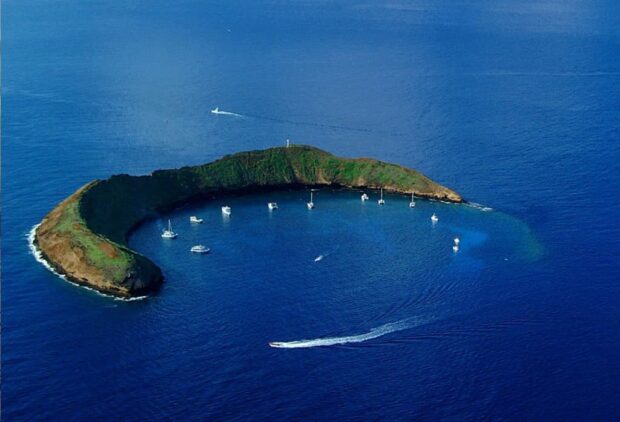
Molokini is a crescent-shaped volcanic crater about three miles off Maui’s southwestern coast, and it’s reachable by boat only. There’s no beach on it and going ashore is prohibited, because the islet is a state seabird sanctuary.
Molokini Snorkeling Tour & Catamaran Sail
Sail a catamaran to Molokini, a crescent-shaped crater and marine preserve off Maui. Breakfast and lunch are included.
from:
$185
What is a suggested tour?Our suggested tours are hand-picked tours that receive consistent good reviews, give back to the community, and work hard to minimize their impact on the environment. Read more about these tours on our website.There is nowhere to stand at Molokini and no shore to swim to. Inside the cove the bottom slopes from the shoreline to about 100 feet, and the shallowest water is under thirty feet at the northwestern point. The back side drops past 200 feet. DLNR notes that currents are always a consideration outside the cove and can strengthen inside it through the afternoon as the wind picks up, so book a morning trip.
It still works as a first snorkel, as long as you do it from a boat, wearing flotation, in the morning. Operators supply gear and instruction, and the good ones keep eyes on the water. There is no lifeguard at Molokini, only the crew, so ask what supervision an operator provides before you book.
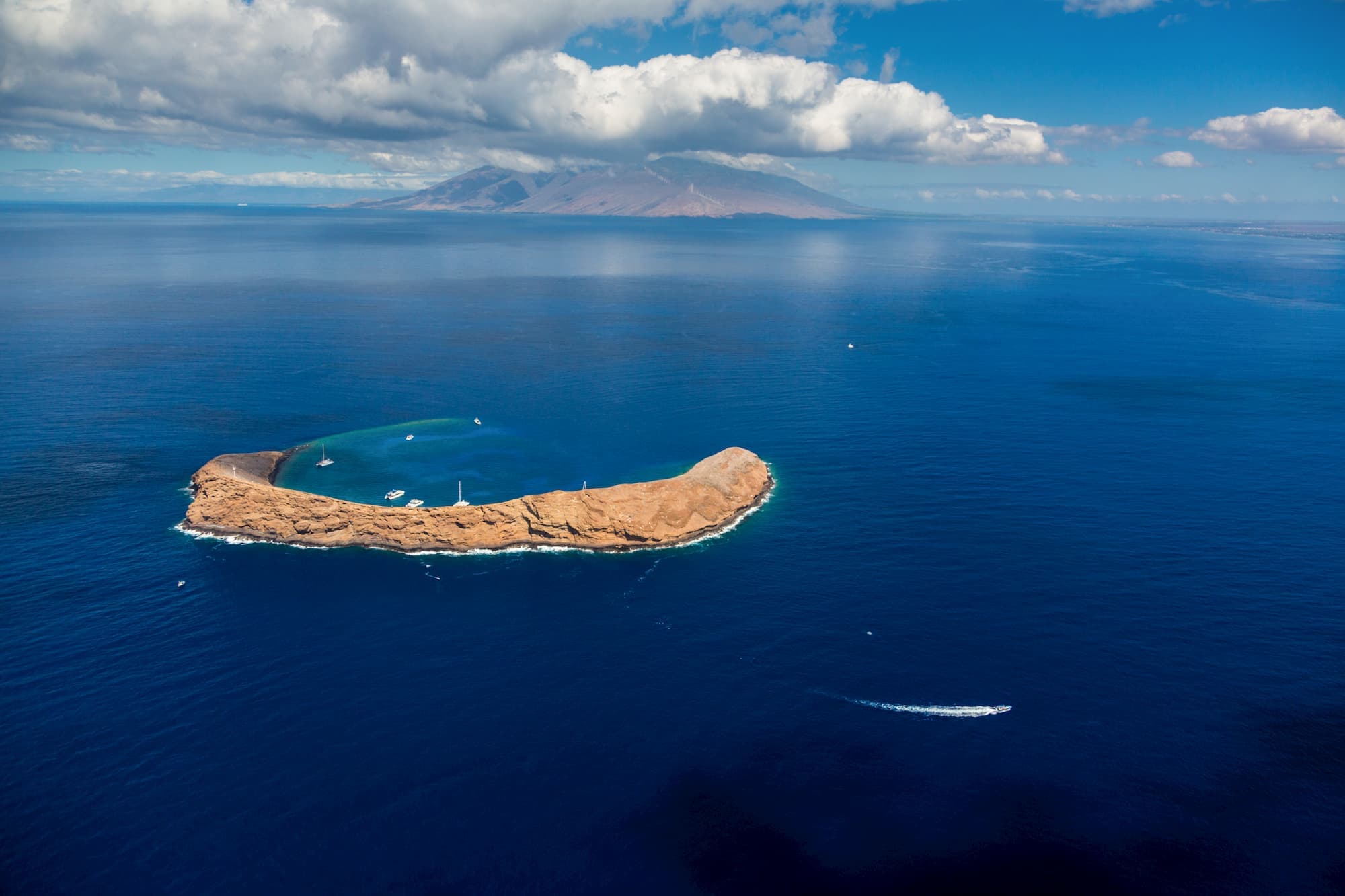
Molokini (with Kahoʻolawe in the background) is one of the best places for snorkeling and scuba diving on Maui. Credit: Hawaii Tourism Authority (HTA) / Tor Johnson
3: Olowalu
Olowalu has a sandy entrance and usually calm, shallow water, with big coral heads not far out and reef continuing into deeper water, so it suits a beginner and someone experienced on the same afternoon.
Olowalu has no lifeguard, and it is the only place in Hawaiʻi where DLNR has posted permanent shark warning signs. The state’s incident log records three events here since 1995, two of them snorkelers.
Three logged events since 1995 is a small number. Follow DLNR’s advice anyway: stay out of murky water, especially after heavy rain, and get out if fish or turtles start behaving strangely.

Beginner snorkeling spots on Oʻahu
These Oʻahu spots suit beginners, and all are lifeguarded.
1: Hanauma Bay
For a beginner on Oʻahu, Hanauma Bay is the best choice: a protected nature preserve with shallow water over large reefs, lifeguard towers on the sand, and usually calm conditions. The bay does have sharp coral close to shore, so watch your footing in the shallows.
Plan the entry. The preserve is closed every Monday and Tuesday, and open Wednesday to Sunday with entry between 6:45am and 1:30pm. Everyone is out by 4pm. Every visitor watches an orientation video, every visit, with no way to skip it once you have seen it.
Reservations are recommended, not required. Hawaiʻi residents with a valid state ID enter free and need no reservation at all. Non-residents pay $25 plus a 2.35% online service fee. Roughly a quarter of daily access is held back for walk-in and drive-in visitors, who can pay on site in cash.
Everyone in your party has to be present to collect a walk-in ticket. Online slots open at 7am Hawaiʻi time two days ahead, so Monday morning for a Wednesday visit, and they go quickly.
Parking is separate and a reservation does not include it. It is $3 for non-residents, $1 for residents, collected on site in cash, and the lot fills. City bus service into the bay has been discontinued.
If the two-day booking window is the problem, Roberts Hawaii sells a Hanauma Bay package that bundles your admission with round-trip transport from Waikīkī, currently $71.96. It books up to 60 days ahead instead of two, and you skip the parking lot entirely. Snorkel gear is not included; there is a rental vendor at the bay.
Read more in our complete visitor guide to Hanauma Bay.
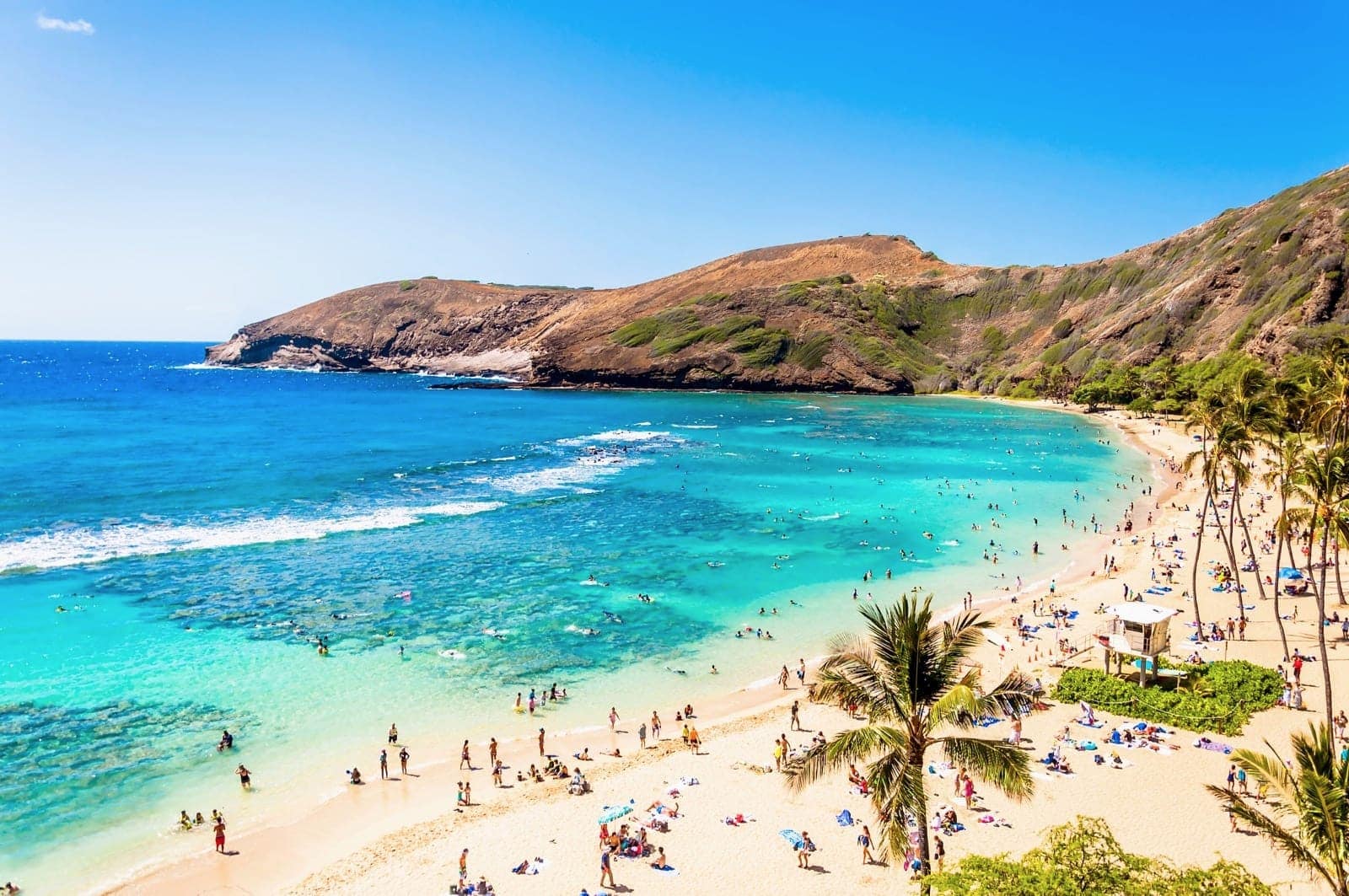
Hanauma Bay on Oʻahu, a protected preserve with shallow reef close to the sand.
2: Shark’s Cove
Shark’s Cove on the North Shore is a naturally protected pool that suits beginners in summer: rock walls block the surf, the water is shallow enough to stand in, and there’s a food truck park across the road. Honolulu Ocean Safety staffs Tower 28 here, 8am to 6:30pm daily.
In winter it’s a different place entirely and not a beginner spot at all. North shore swells break straight into it. If there is surf running, do not get in.
Learn more about snorkeling at Shark’s Cove.
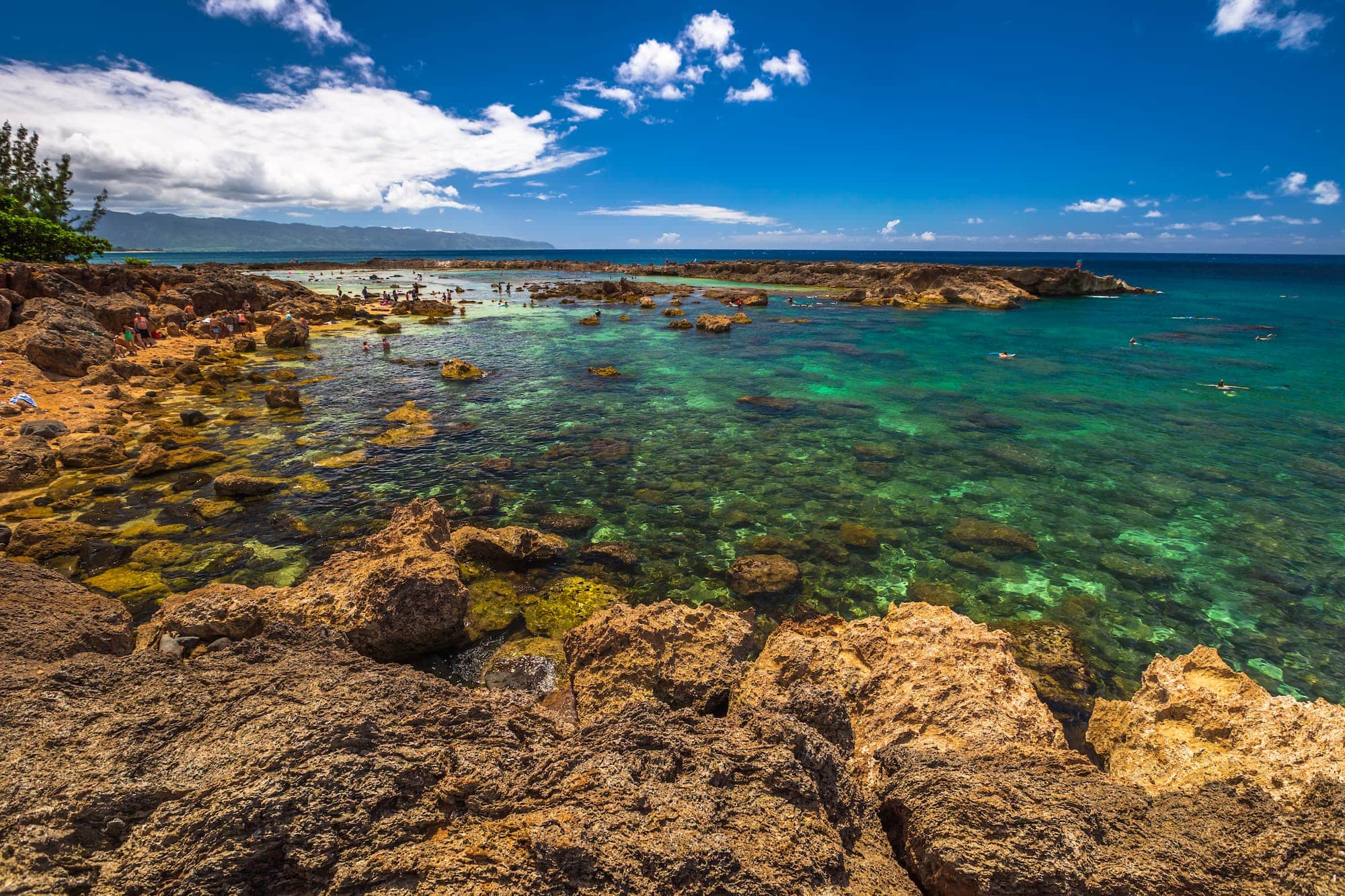
Shark’s Cove in Pupukea on the Oʻahu North Shore.
3: Sans Souci Beach (Waikīkī)
Staying in Waikīkī? Sans Souci is the best snorkeling in walking distance of the hotels, and it sits inside the Waikīkī Marine Life Conservation District, 76 acres protected since 1988. Entry is easy off the sand, the reef flat is generally less than three or four feet deep, and Honolulu Ocean Safety staffs Tower 2H at Kaimana, 8am to 6:30pm daily.
Visibility depends on wave action, because the bottom is sediment and it stirs up. And summer swells bring high surf to this shoreline, with the outer edge of the reef the dangerous part, where sections are exposed. Stay inside the reef flat and off the outer edge.
Check out our guide to Sans Souci Beach.
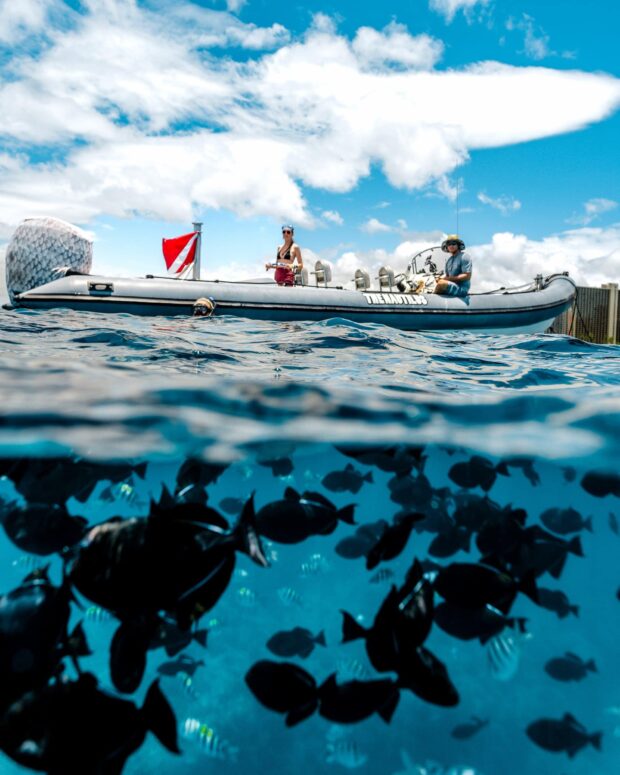
Turtle Canyon, offshore of Waikīkī, is the other easy option and one of the most dependable places on the south shore to see turtles: dense coral heads where small fish clean the turtles’ shells. It is boat access only, by catamaran or sailing tour.
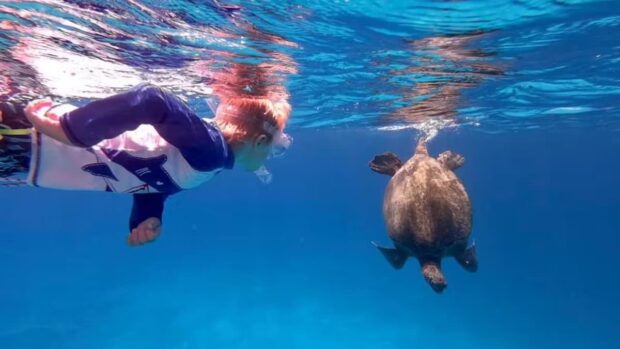
Turtle Canyon Snorkel Excursion (large group, super affordable)
Enjoy a large group (super affordable!) snorkeling trip along the Waikiki Coast to the Turtle Canyons snorkel site.
from:
$99
What is a suggested tour?Our suggested tours are hand-picked tours that receive consistent good reviews, give back to the community, and work hard to minimize their impact on the environment. Read more about these tours on our website.The trip out is much the same whoever you go with. The real difference is boat and group size, which sets the price. These two run vessels with a 40-person and a 6-person maximum:
Turtle Canyon Snorkel (Small-Group Tour with 100% Turtle Guarantee)
Small group snorkeling tours, six people max, away from the crowds. Turtle Guarantee or ride again free.
from:
$99
What is a suggested tour?Our suggested tours are hand-picked tours that receive consistent good reviews, give back to the community, and work hard to minimize their impact on the environment. Read more about these tours on our website.How to get started and comfortable with snorkeling
Snorkeling is a simple activity once the equipment stops feeling strange, which doesn’t take long.
Q: What equipment do you need to snorkel?
You need a mask (goggles), a breathing tube and fins. All three are cheap to rent or buy, in Hawaiʻi and on the mainland.
Q: What can you do before your trip to prepare for snorkeling?
The part that takes getting used to is swimming face down and breathing through the tube. If possible, it helps to practice in a calm body of water, such as a swimming pool, to get a feel for how it works. Pick up a snorkel set and get familiar with it.
Another thing that will help you be a better snorkeler is to become a better swimmer. Practice swimming with your head in the water, then stop and tread water for a while, and then start swimming again. Use a flotation device for extra support until you get comfortable without one.
Q: Are snorkel boat tours good for beginners?
Yes. The staff are used to first-timers, gear and a briefing come with the trip, and flotation devices are available. Crew keep watch over the water while you’re in it.
There is no federal or Hawaiʻi requirement that a snorkel boat carry a lifeguard. Coast Guard rules cover the vessel’s safety equipment and crew, not lifeguarding. A crew watching the water is a good operator’s practice rather than a legal guarantee, so ask what supervision a specific tour provides rather than assuming it.
Q: How should you behave around coral reefs and marine wildlife?
Just look, and do not touch or disturb anything.
Coral is a living organism and sensitive to human touch. Never stand on it. If you have to stand to rest, find a patch of open sand, though it is better to use a flotation device and rest without touching the bottom at all.
For animals, some of the distances are law rather than courtesy: 50 yards from spinner dolphins and 100 yards from humpback whales are federal requirements. Stay 10 feet from a green sea turtle and 50 feet from a monk seal, or 150 feet from a mother and pup (NOAA). If an animal approaches you, that is fine, but move away rather than staying put to watch.
Q: Which sunscreen is reef safe, and which chemicals are banned in Hawaiʻi?
Hawaiʻi law bans the sale of sunscreen containing oxybenzone or octinoxate without a prescription, and has done since January 2021. Those are the two chemicals to look for on the ingredient list, and plenty of products still market themselves as reef safe while containing them.
Use a zinc-based sunscreen. Better still, wear a rash guard: it covers your back while you are face down, and it cuts how much sunscreen you need in the first place. Do not forget your calves, which burn while you swim.