
The H-2 freeway runs straight through Central Oʻahu between Honolulu and the North Shore. It is the farm country between the North Shore and the South Shore: no resort hub, no famous restaurant, just fields, a pineapple plantation, a coffee farm, a rum distillery, and a royal birth site outside Wahiawā. Almost every stop sits within a few minutes of the freeway, so one or two barely adds time to the drive.
This is a half-day, not an overnight. You will not sleep here, and you will not fill a full day, but the stops string together easily on the way to or from the shore. Plan on three to four hours, and try to reach Dole before the tour buses do rather than at midday.
Table of contents
- About Central Oahu
- Things to Do
- Restaurants and places to eat/drink
- sample itinerary
What is Central Oʻahu like?
Central Oʻahu is the island’s agricultural plateau, the high ground around Wahiawā and Mililani. The fields are pineapple, coffee, and other crops, framed by the Waiʻanae Range to the west. There are no resorts and no nightlife here. The land along the drive is working farmland where the rest of Oʻahu has hotels.
Things to do & Places to See
Besides Dole, six other stops in Central Oʻahu are worth pulling off the H-2 for:
- Visit the Dole Pineapple Plantation
- See the Kūkaniloko Birth Stones
- Tour the Green World Coffee Farm
- Taste local rum at Kō Hana Distillers
- Play a game of Golf
- Learn more about the recent military history
- Visit the Wahiawā Botanical Gardens
Dole Pineapple Plantation
Dole Plantation is the busiest stop in Central Oʻahu. It is a major tour-bus stop on the route between the north and south shores, so the parking lot and gift shop fill up by mid-morning.
At first glance the Dole Pineapple Plantation is an oversized pineapple gift shop: clothing, candy, art, and jewelry, plus a café serving the pineapple soft-serve called Dole Whip, a giant garden maze for kids, and live demos like how to cut a pineapple properly. It is open daily, roughly 9:30 a.m. to 5:30 p.m.
The Historic Train Tour (about 20 minutes, $15 for adults) runs through the fields and walks you through the island’s pineapple industry and its roots. Those same tracks once carried pineapples from Central Oʻahu down to the processing plants in Honolulu.
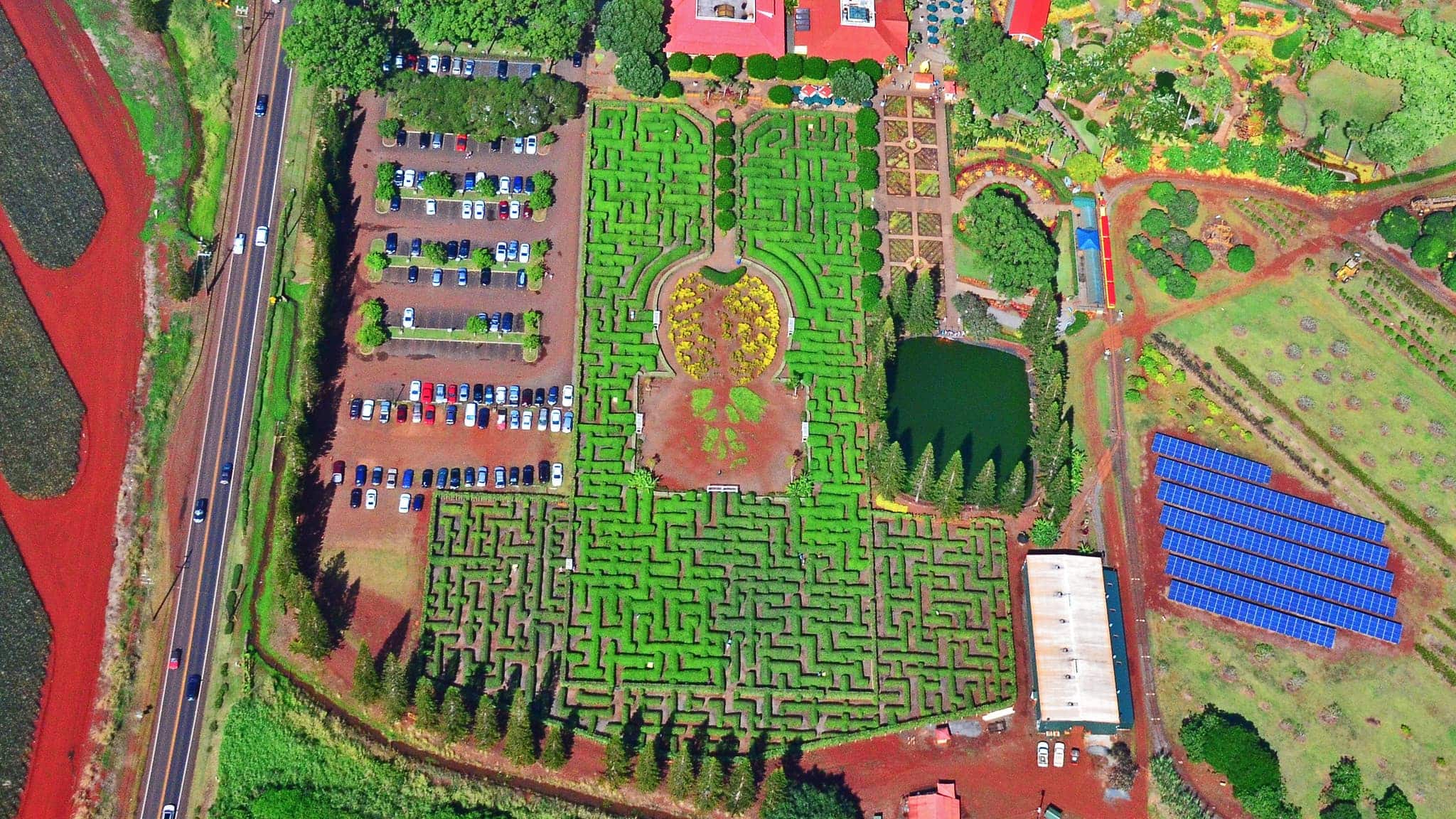
The Dole Plantation Pineapple Maze. Image credit: Edmund Garman, source.
Learn more about pineapples: Pineapples originate from Brazil and came to Hawaiʻi largely because they prevented scurvy on long ocean voyages. Read 13 more pineapple facts and the history of the Hawaiian pineapple in our definitive guide to pineapples.
Kūkaniloko Birth Stones
Kūkaniloko is one of the most sacred sites on Oʻahu, a five-acre state monument just north of Wahiawā where Hawaiian royalty were born for centuries. In old Hawaiʻi, stones, pōhaku, were believed to hold mana, or power, and wahine (women) of the ruling line gave birth here, both for that power and because the sloped stones gave a place to lean back and push.
Our Oʻahu history and culture guide covers the site’s background. Read it before you go, because there is no signage on site and nothing to explain what you are looking at.
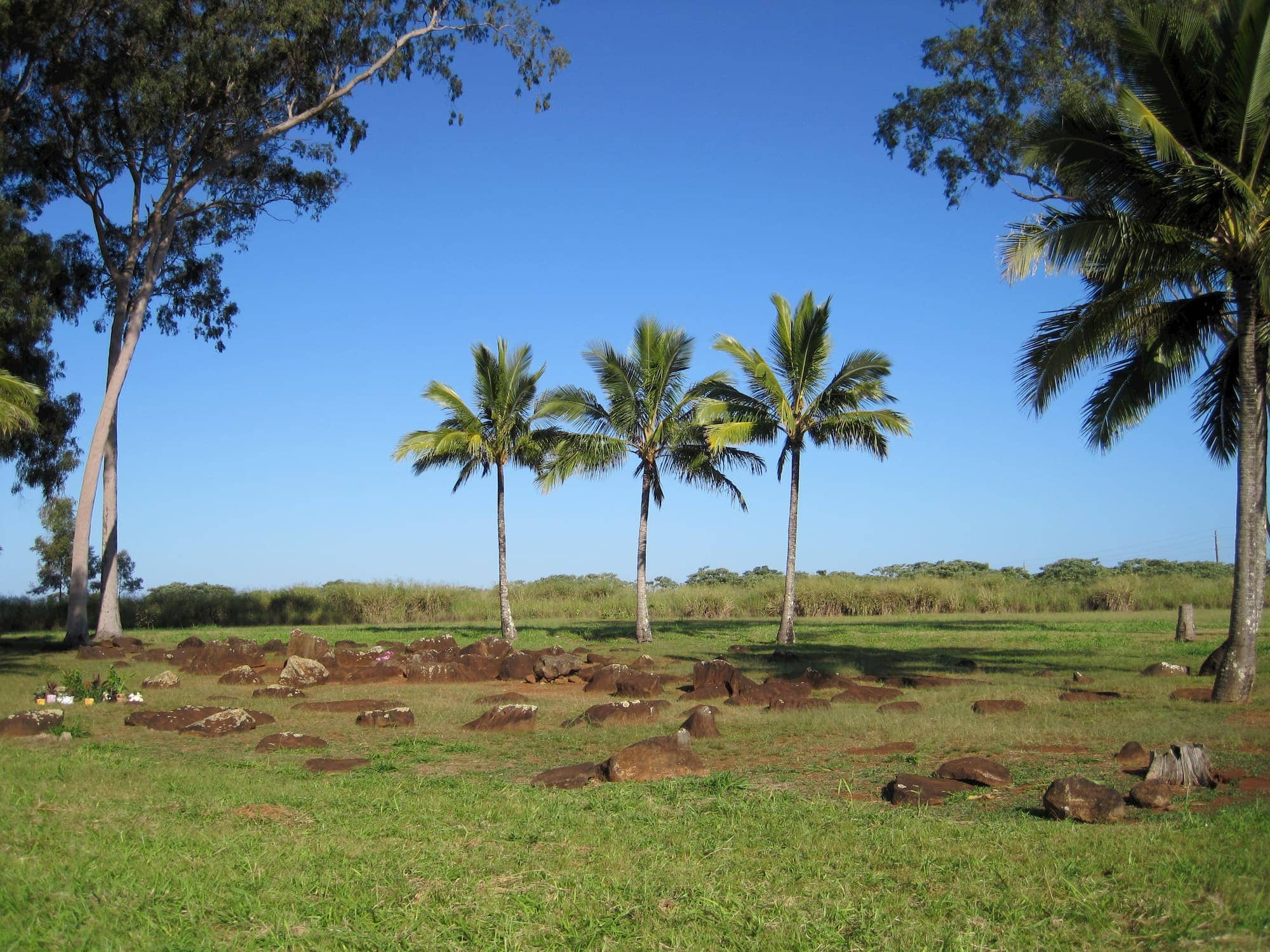
The 5-acre Kūkaniloko Birthstones State Monument was used as a royal birthplace for seven centuries. Birthstones like those found here still form a connection between life before birth and people alive today in Hawaiʻi to those in the afterlife. Image credit: Joel Bradshaw / Public domain (source).
Green World Coffee Farm
The Kona District on the Big Island is the best-known Hawaiian coffee, but every island in Hawaiʻi grows good coffee. On Oʻahu, most of it grows here in the middle of the island, and as you drive toward the North Shore you will pass field after field of it.
A stop at Green World Coffee, on Kamehameha Highway, is the easy way to see Oʻahu’s coffee fields up close. The self-guided farm tour is free with no reservation, they pour free samples, and the place opens daily at 7 a.m. The ABC Stores in Waikīkī stock generic Hawaiian coffee. Here you can taste local beans and pick the one you want to bring home.
Kō Hana Distillers
Kō Hana Distillers, at the base of the Waiʻanae Range, makes Hawaiian agricole rum from fresh-pressed sugar cane. You will get the full story on a tour and tasting, which run daily with walk-in flights every half hour,
The first is a bit of a history lesson. When the sugar cane industry took off in Hawaiʻi in the 1850s, commercial operators weeded out the native varietals of sugar cane and replaced them with hybrids that produced greater yields. The native varietals never disappeared entirely.
A few years ago, owner Robert Dawson began collecting the ones he found around the island, in backyards and botanical gardens, and growing them in his fields in Kunia. He figured, why not put them to use and make some rum?
The second part is how he processes those varietals. Agricole rum is made very differently from most commercial rums, which add molasses to the fermentation. Kō Hana simply presses the cane juice and ferments it, the way you might grapes for wine, so each style of sugar cane carries its own flavor into the rum.
Golf
There are three public golf courses in greater Central Oʻahu: the Mililani Golf Course, the Hawaiʻi Country Club, and the Royal Kunia Country Club.
All three take visitors, with views of the Waiʻanae Range, framed by palm trees and Norfolk pines, and they stay less crowded than the courses on the south and east shores.
Military History
As you drive through Central Oʻahu you pass Schofield Barracks and Wheeler Army Airfield, both hit during the December 1941 attack on Pearl Harbor. Schofield has the Tropic Lightning Museum, which covers the history of both posts and is free to enter. Schofield is an active Army base, so civilian visitors need a valid ID and should call ahead (808-655-0438) to confirm gate access before driving out.
Wahiawā Botanical Gardens
This 27-acre botanical garden is free and dates to the 1930s, when it started as an experimental arboretum for sugar plantation owners. A paved path runs through it, and the heavy tree canopy keeps it shaded and cool even at midday. It is open daily from 9 a.m. to 4 p.m.
Places to Eat/Drink
When you are passing through Central Oʻahu, here is where we send people for a bite to eat.
Dole Pineapple Plantation
Dole has a café on site called the Plantation Grille. The menu runs to local plate lunches, teriyaki chicken, kalua pork, and loco moco, along with burgers and the Dole soft-serve. For a family or a bigger group, the plate lunches, burgers and soft-serve cover the picky eaters, and the line moves quickly.
Shige’s Saimin Stand
This family-run noodle institution has been open in Wahiawā for over 30 years. It serves homemade saimin, the local noodle soup. If you want a local meal on the way through, stop at Shige’s.
Kiani’s Original Guava Chicken
For a plate lunch, Kiani’s, in downtown Wahiawā, does glazed guava chicken: breast, thighs, or legs with rice and mac salad, plus a chicken burger and a few fish options. Watch the hours, though. It mostly runs a weekday lunch window, so call ahead before you build a day around it.
The Uber Factory
The Uber Factory in Wahiawā makes tart-like pastries. The menu changes constantly, the hours are short, and they sell out, so check its Facebook page before you drive over.
Sample itinerary for Central Oʻahu
You could visit Central Oʻahu for any one of the stops above, depending on your interest. Play a round of golf and then hit a restaurant or a rum tasting, or pick off one or two attractions as you travel between the north and south shores. But if you want the full Central Oʻahu day, here is what we recommend:
- Arrive at Green World Coffee mid-morning for the tour and a tasting. Learn about the local agriculture, and pick up some coffee to bring home.
- Now that you are caffeinated, visit the Kūkaniloko Birth Stones. Take in the views and snap a few photos. Depending on your interests, add a walk in the botanical garden, a stop at the Tropic Lightning Museum, or the train tour at Dole.
- Head into Wahiawā for lunch at Kiani’s or Shige’s, then get dessert at the Uber Factory (get an extra order to take back to the hotel).
- Make your last stop Kō Hana Distillers. Take the sugar-cane tour and learn about its local agricole rum. Grab a bottle for the room and one for the suitcase, then head back to wherever you are staying for sunset.
More 1-day itineraries for Oʻahu:
See our customizable 7 day itinerary and 5 more “1 day in …” itineraries for Oʻahu:
- 1 day on the North Shore
- 1 day in Kailua
- 1 day on the leeward coast
- 1 day on the windward coast
- 1 day in Honolulu