About a million people live on Oʻahu, two thirds of everyone in Hawaiʻi. That one number drives most of the decisions on this page: Oʻahu is the only island with a real city on it, which is why it has the best food scene in the state and the worst traffic. Where you stay decides how much of each day you lose to that traffic.
Three days is the minimum for a first visit and seven days covers the island properly. If Oʻahu is one stop on a multi-island trip, start here: arriving in Honolulu after a week on Kauaʻi or the Big Island is a shock, and going the other way lets you finish the trip somewhere quiet.
Table of contents
- Oʻahu essentials: Things to know before choosing Oʻahu
- Getting there, getting around, and island hopping
- Where to stay
- How many days is enough?
- The most popular activities and attractions
- Visitor tips to guide your visit
This page is part of our “beginner series”: what you need to know about an island before you go. So far it covers Oʻahu and the Big Island.
See also our beginner’s guide to the Big Island here.
Things to Know Before Choosing Oʻahu
Oʻahu is a very different island from Maui, Kauaʻi or the Big Island, and the differences matter on a first trip. Our island comparison guides put them side by side; what follows is what to expect from Oʻahu itself.
- It is the most populated island… by far. Approximately 1.5 million people live in the Hawaiian Islands, and about a million of them are on Oʻahu. Along with the people comes the state’s best restaurant and event calendar, but also a density the neighbor islands simply don’t have.
- It is the only Hawaiian island with a major city. The other islands have towns, but Oʻahu has an international city on its shoreline. Honolulu is the capital of Hawaiʻi, and with it comes everything a major city carries: its own neighborhoods, restaurants, bars, concerts, and museums.
- It is the only island with reliable nightlife. The neighbor islands offer some post-dinner options (think live music that ends at 10 or 11 p.m.), but nothing as diverse as Oʻahu. The nighttime happenings in Waikīkī and other neighborhoods of Honolulu are as extensive as it gets in Hawaiʻi. If you’re looking to mix it up at night, Oʻahu is the island to visit.
- Honolulu dominates the south shore; the rest of the island is small towns and open coast. The North Shore, the windward east side, and the leeward west side are where “small-town” Oʻahu lives.
Oʻahu in a Nutshell
Oʻahu is the hub of modern-day culture in Hawaiʻi. It is the most populous island, with about 1 million residents and a large international city, Honolulu, on its south shore.
Honolulu is the capital of Hawaiʻi, and there are several large military bases on the island as well, making it by far the most diverse Hawaiian island.
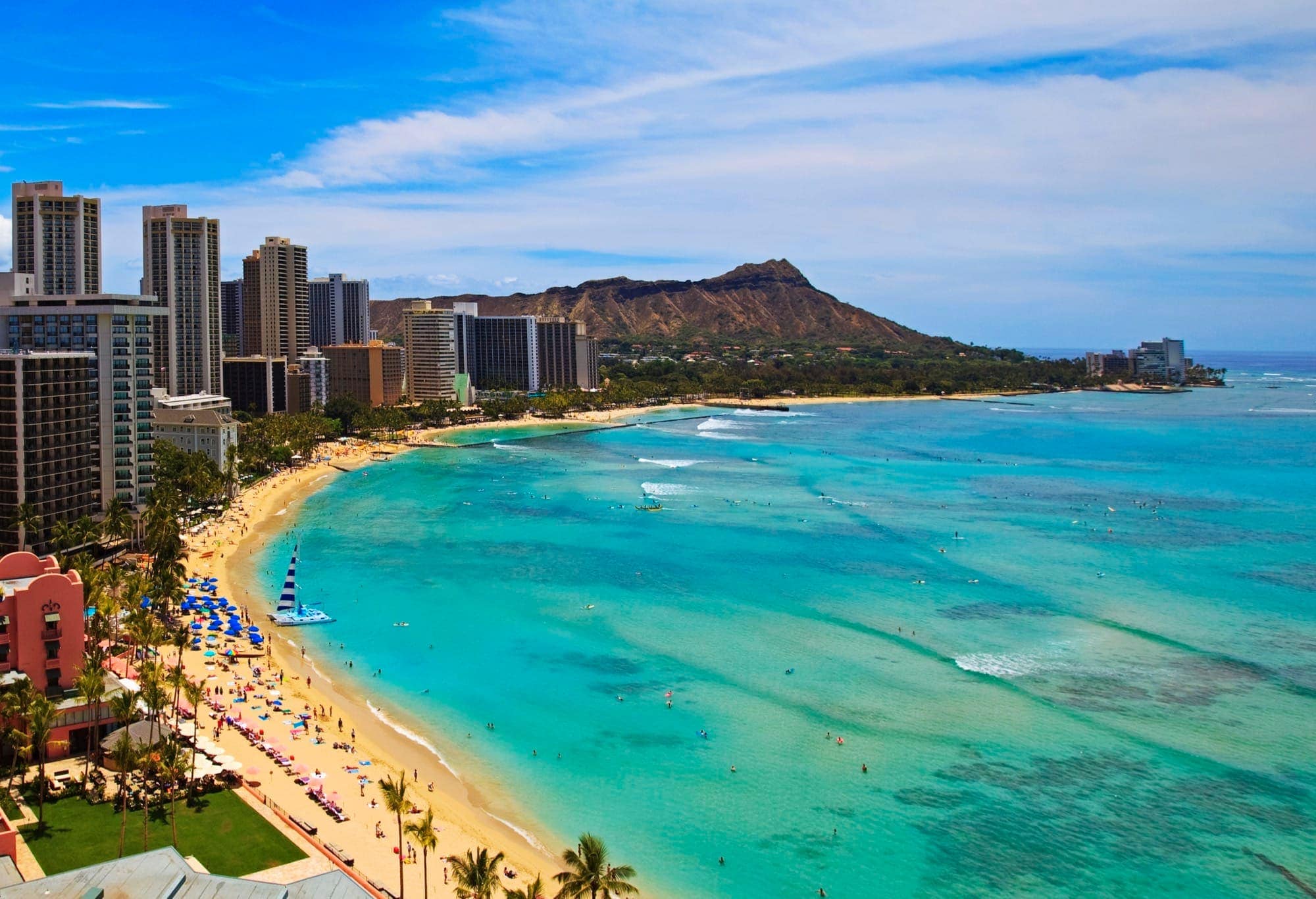
The Diamond Head crater from Waikīkī Beach. Image credit: tomasphoto
Waikīkī, Oʻahu’s main tourist area, is where modern surfing grew up, and the North Shore hosts the sport’s most famous winter contests. The windward side of Oʻahu is green and laidback, with long white-sand beaches and offshore islets. The leeward, or west side, of the island pairs dry, sunny beaches with residential communities that see far fewer visitors.
See our overview of Oʻahu for the full picture.
Oʻahu’s Natural Landscape
The island of Oʻahu is made up of two volcanoes, the Waiʻanae Volcano out west and the Koʻolau Volcano in the east.
Kauaʻi is older, Maui and the Big Island are younger, and the age gap shows on the ground. Erosion has cut the Koʻolau range into the wall of jagged cliffs that runs down the east coast, and the south shore carries several extinct craters, among them Diamond Head, Punchbowl and Koko Head. Mt. Kaʻala on the west side is the island’s high point, just over 4,000 feet.
Oʻahu is not as ecologically varied as the Big Island or Maui, which both have far more elevation to work with. It still packs five of the world’s 13 climate zones into about 600 square miles, from rainforest on the windward Koʻolau slopes to the dry, sunny leeward coast.
The south shore is urban; the west, east, and north shores are mostly open coast and mountains.
Getting to Oʻahu
Oʻahu is the easiest island to reach thanks to its large international airport in Honolulu (airport code HNL). Though you can fly direct to other islands, Oʻahu offers the most routes from the mainland and Asia. Most major mainland and Asian airline carriers offer service to Honolulu, and many connections to the neighbor islands will go through Oʻahu as well.
Because of the number of flights, Oʻahu is usually also the cheapest island to fly into from the mainland, although “cheap” is a relative term in Hawaiʻi.
Related: our guide to flights to Hawaiʻi covers when to book and what to pay.
Getting Around Oʻahu
Because of its big-city infrastructure, Oʻahu has the most extensive transportation network in Hawaiʻi: the largest road network in the islands, an island-wide bus system, the partially built Skyline rail, and rideshare almost everywhere in town. Our guide to getting around on Oʻahu compares the options side by side.
Rideshare
In Waikīkī and Honolulu, Uber and Lyft run 24/7 and cover short trips around town reliably. That’s enough for the days you stay in the city.
Rental Cars
For everything outside the south shore, a rental car is the practical choice, especially for trailheads and less-visited beaches. A middle path is renting one for just the days you plan to leave town.
Public Bus
The bus on Oʻahu, affectionately referred to as “Da Bus,” is a useful option if you
- want the cheapest ride in town, and
- have infinite time.
Short trips through the city are fine on the bus: a single ride is $3.25 (exact change) with a $7.50 daily cap on the rechargeable HOLO card. Longer trips are slow and often behind schedule. You can download the bus’s app, HEA-TheBus (Google or iPhone), to help navigate the system.
Skyline (the Rail)
Skyline, Honolulu’s new rail line, now runs 13 stations from East Kapolei through Pearl Harbor to the airport and Kalihi, with trains every 10 to 15 minutes from 4 a.m. to 10:30 p.m. It does not yet reach downtown or Waikīkī, so for most visitors its one practical use today is the airport leg. Fares match TheBus and use the same HOLO card.
Trolley
A hop-on, hop-off trolley loops through Waikīkī. Any concierge or activities desk has the schedule, or buy tickets online.
Traffic
Though all the Hawaiian Islands have traffic, Oʻahu is notorious for its congestion. Rush hour slows the bus and rideshares as much as it slows a rental car, so plan the day around it either way.
Island Hopping From Oʻahu
Honolulu Airport offers non-stop flights to all neighbor islands via Hawaiian, Southwest, or Mokulele Airlines. Fares run $50 to $100 one-way, and some routes depart every 1 to 2 hours. Flying is the only way to get from Oʻahu to a neighbor island, so if you decide to island hop, book an interisland flight once your dates are fixed.
Booking ahead locks in a seat and usually a better price; if flexibility matters more, Hawaiian Airlines runs enough flights between the major islands that you can usually find a seat even last-minute. Morning and evening flights fill first; mid-day departures stay open longest.
Definitive guide to island hopping in Hawaiʻi
We walk you through your island-hopping options, the reasons for and against, and how to plan the trip, including money-saving tips and which islands to pair.
Advice for Island Hopping: Visit Oʻahu First
If you visit Oʻahu as part of a multi-island trip, put it first on the route. Many neighbor-island connections go through Honolulu anyway, so starting here often adds no extra flying.
Oʻahu is the busiest island. Start with the city, then wind down somewhere slower.
Where to Stay on Oʻahu
Three areas cover most first trips. Our full guide to where to stay on Oʻahu goes deeper; here is the short version.
Waikīkī
The main lodging area on Oʻahu is Waikīkī, a neighborhood of Honolulu with the largest collection of rooms in all of Hawaiʻi: dozens of hotels supplemented by vacation rentals. Wherever you stay in Waikīkī, you can walk to the beach and to restaurants, bars, and shops.
Sheer room count keeps nightly rates here lower than anywhere else in the state. Compare totals with taxes and hotel fees included rather than headline nightly rates before booking. Waikīkī suits people who want walkability and nightlife in a city-beach setting.
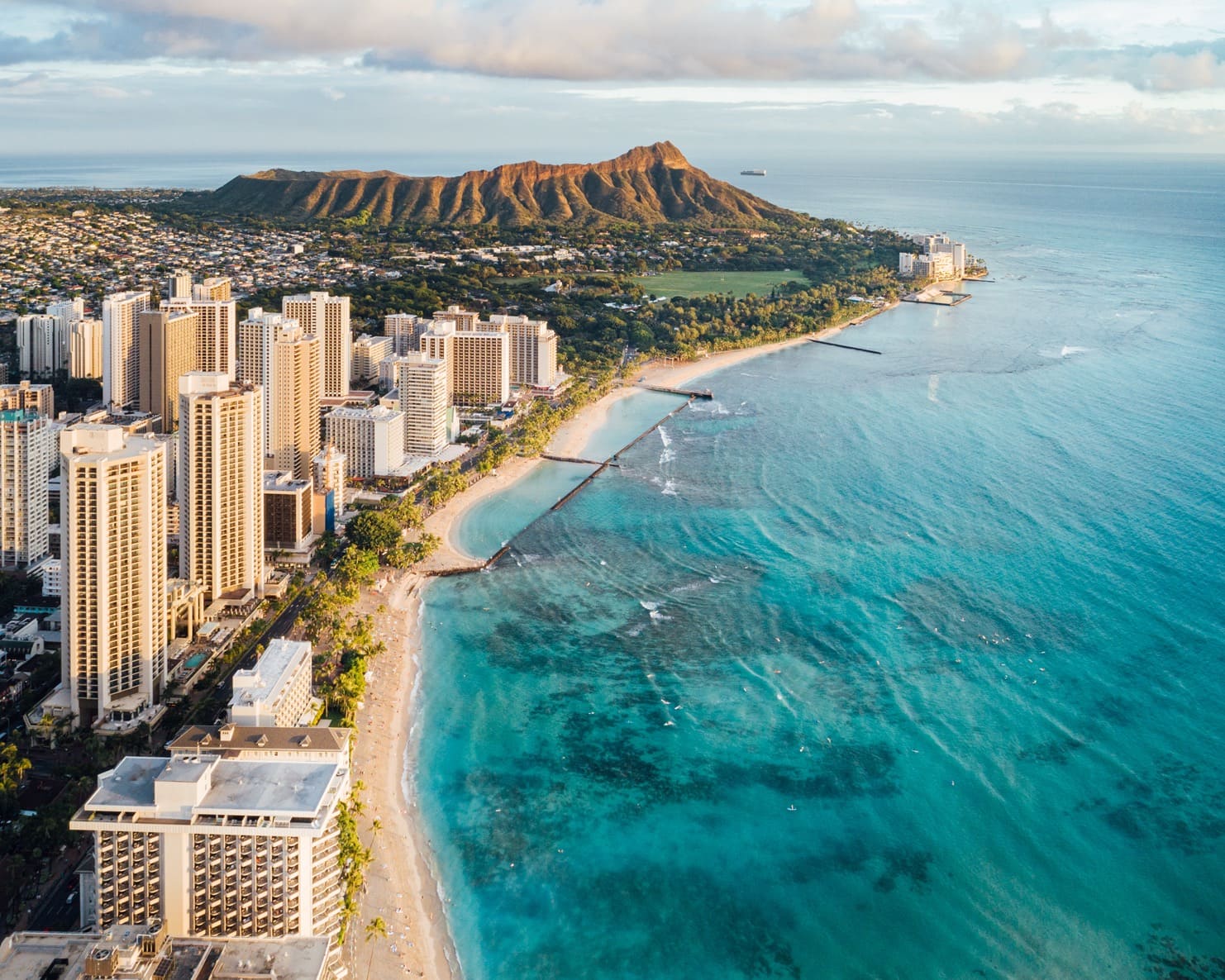
Waikīkī Beach with Lēʻahi (Diamond Head) in the background. Credit: Hawaii Tourism Authority (HTA) / Vincent Lim
North Shore: Turtle Bay
North Shore accommodations sit in the small resort area of Turtle Bay, where the longtime Turtle Bay Resort now operates as The Ritz-Carlton Oʻahu, Turtle Bay, alongside vacation rentals.
The draw is the small-community feel and a coastline that belongs to surfers in winter (roughly November through February) and to swimmers in summer. The North Shore sits far from Honolulu’s nightlife, so expect quiet evenings with the beach as the main event. Kuilima Cove, pictured below, is the sheltered swimming spot beside the resort.
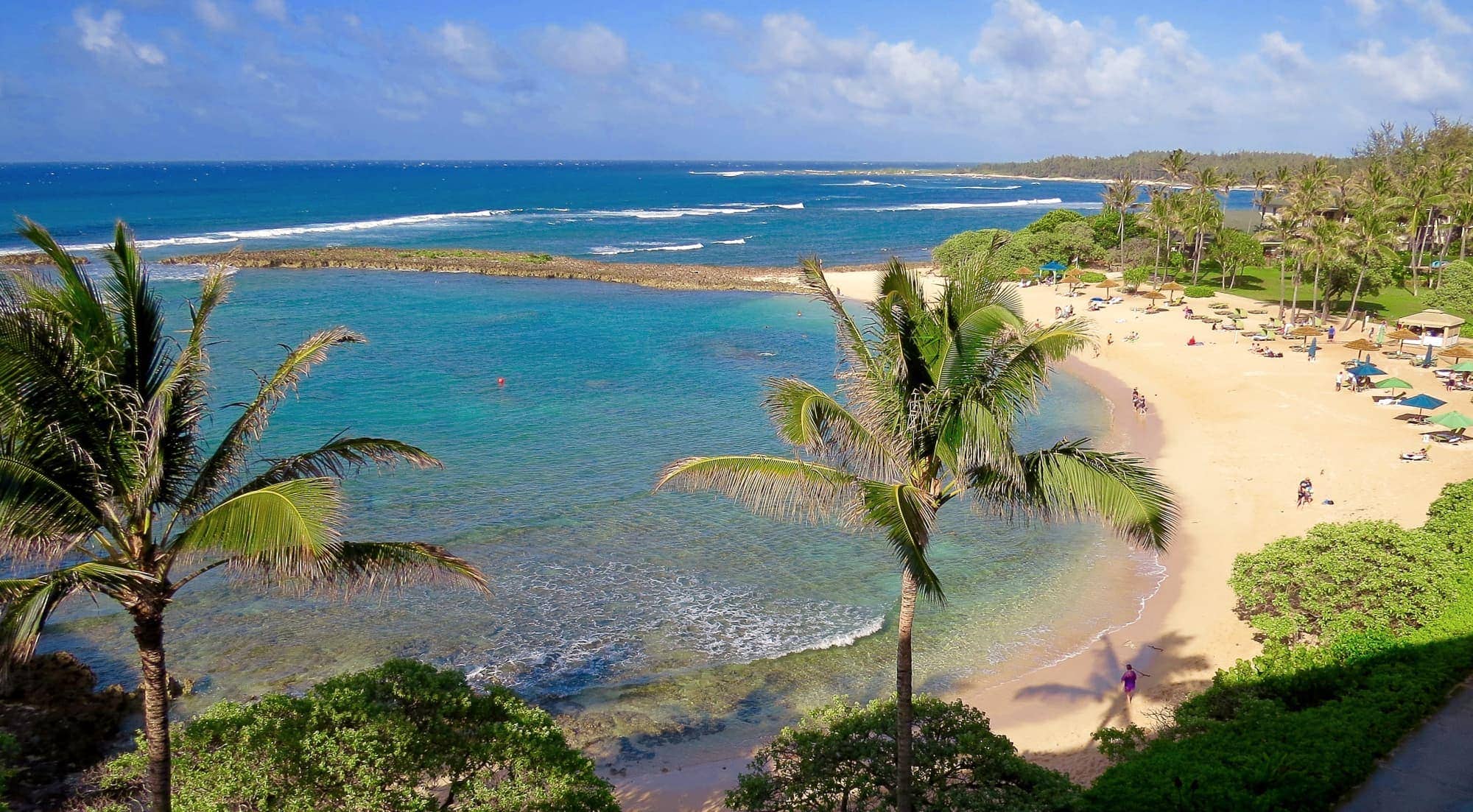
Kuilima Cove as seen from the resort at Turtle Bay. Image credit: Larry Myhre, source.
Note: winter surf on the North Shore is dangerous for swimmers. If your trip is mostly about being in the water, stay on the south or east side in those months, and swim only where lifeguards are posted.
Kailua
Backdropped by the Koʻolau cliffs, the small town of Kailua runs at a fraction of Waikīkī’s pace. Some of the best beaches on the island sit in and around town, and the local restaurant scene is real, though nothing stays open late.
Kailua fits people who want a quieter base and don’t mind driving to the beach and to dinner. Oʻahu allows rentals under 30 days only in resort-zoned areas, which Kailua is not, so legal vacation-rental stock here is thin. If a listing looks unusually easy to book, check that it is registered with the city before paying.
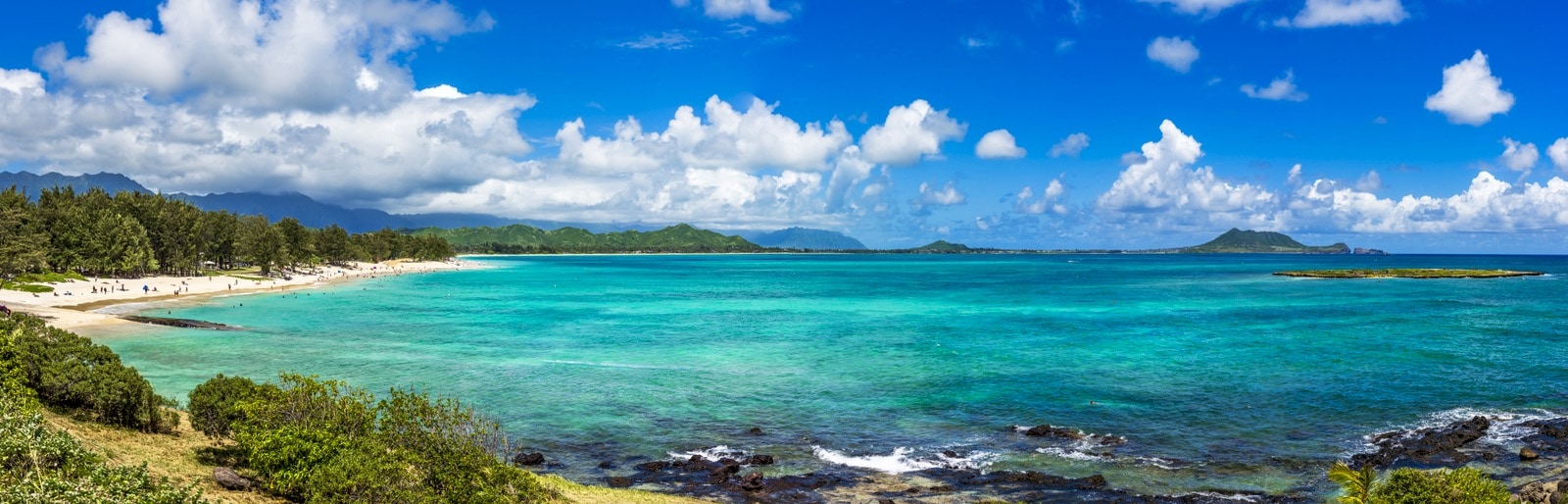
The white-sand curve of Kailua Beach on Oʻahu’s windward side. Image credit: PBPhotos
Related: how to spend a full day in Kailua.
How Many Days Do You Need on Oʻahu?
Seven days covers Oʻahu properly. On a multi-island trip you’ll likely have less, and that still works if you plan tightly.
Three days is the minimum: enough for Pearl Harbor, Honolulu and Waikīkī, plus a day out to Kailua or the North Shore, provided you stay off the roads at rush hour.
For more ideas about how to structure your trip, see our suggested itinerary for Oʻahu:
- Day 1: Waikīkī
- Day 2: Honolulu and the South Shore
- Day 3: The West Side
- Day 4: Kailua
- Day 5: Windward Side Road Trip to North Shore
- Day 6: The North Shore
- Day 7: North Shore/Central Oʻahu
Oʻahu’s Most Popular Attractions
No other island mixes city attractions with the outdoors the way Oʻahu does. Below we list the most popular activities and areas, in no particular order. For more, see our 14 bite-sized things to do on Oʻahu.
- Pearl Harbor
- Beaches
- Hanauma Bay
- Diamond Head
- Historic sites and museums
- Honolulu Neighborhoods
- Polynesian Cultural Center
- North Shore
- Kualoa Ranch
Pearl Harbor
Site of the December 1941 attack, Pearl Harbor National Memorial is one of the most visited places in all of Hawaiʻi. We recommend a visit to understand what happened on that day and how it changed life for the local Hawaiian community.
See our complete visitors guide to Pearl Harbor. The memorial’s museums and grounds are free, but the boat ride to the USS Arizona Memorial needs a recreation.gov reservation ($1 per ticket): slots open 8 weeks ahead at 3 p.m. HST, with a second batch released one day ahead. Same-day free tickets at the visitor center are no longer offered. Bags and purses are not allowed inside; a paid storage stand sits at the entrance.
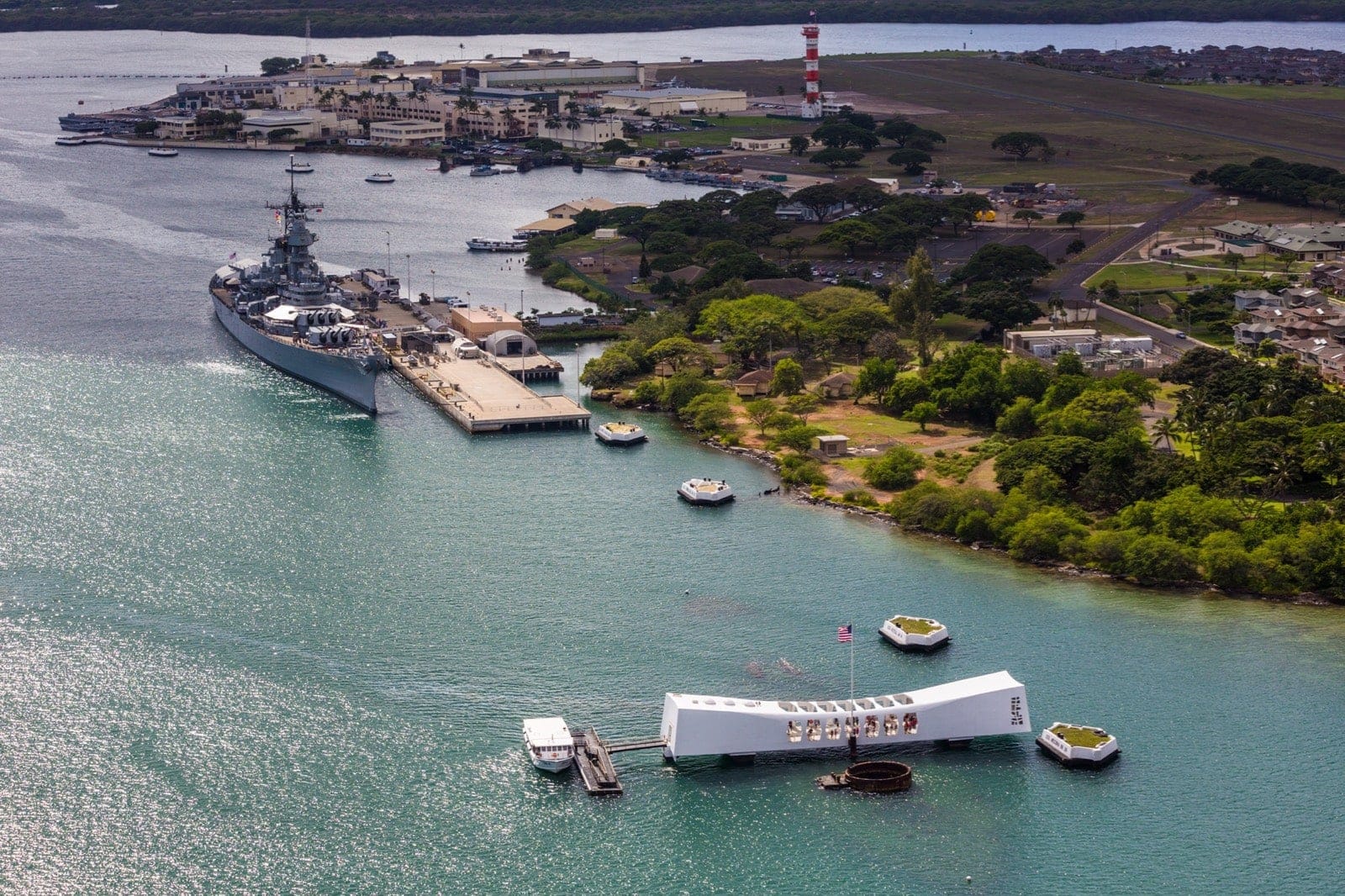
Battleship Missouri and USS Arizona memorials in Pearl Harbor. Credit: Hawaii Tourism Authority (HTA) / Tor Johnson
Beaches
Alongside Maui, Oʻahu has some of the best beaches in Hawaiʻi, with many long, white-sand options to choose from. Waikīkī is where the crowds are; Kailua Beach and Lanikai Beach on the east side give you the same white sand with far more room.
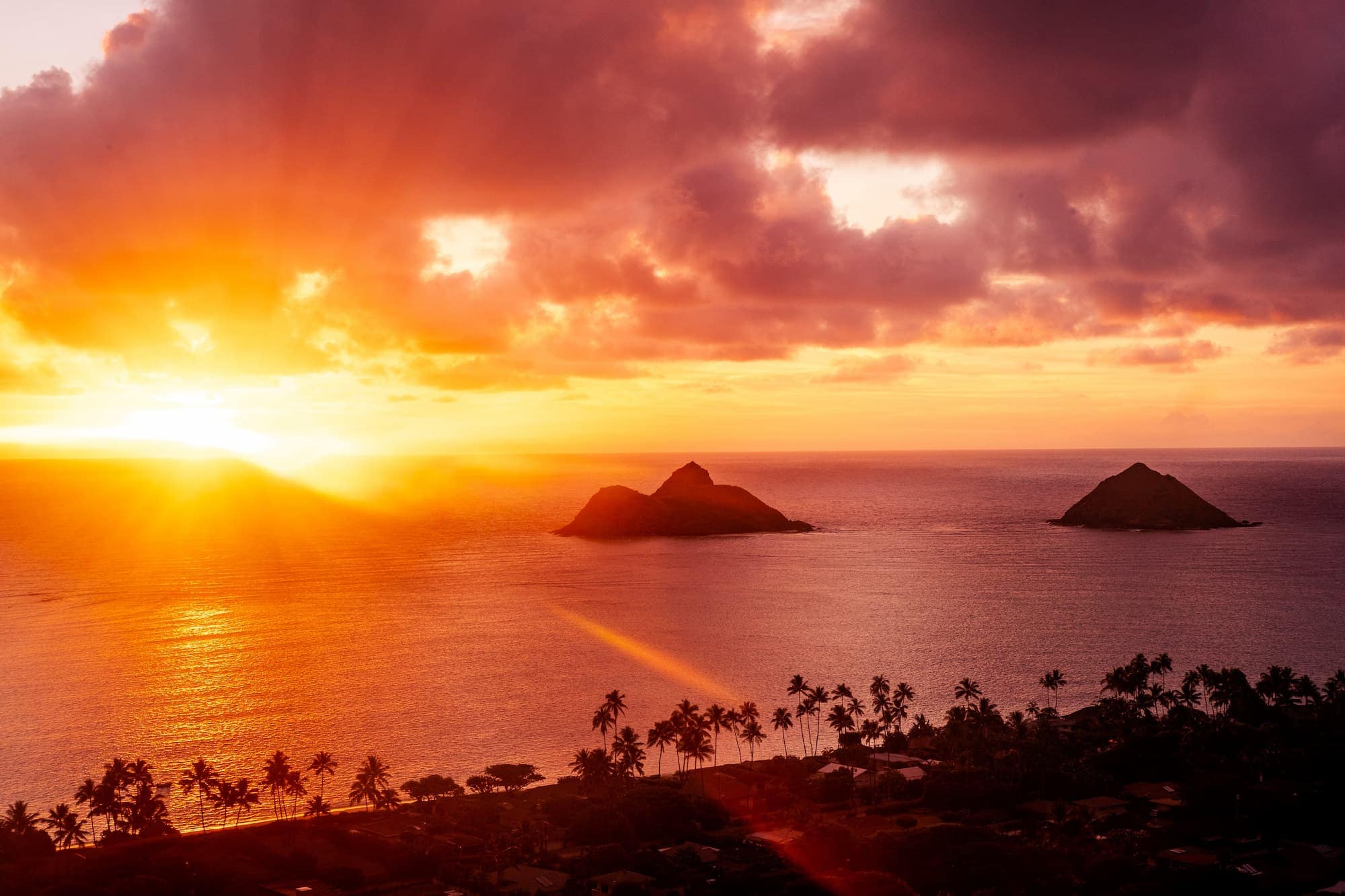
Sunrise over the Mokulua islets from the Lanikai Pillbox trail. Photo by Amanda Phung on Unsplash
Hanauma Bay
A protected marine sanctuary, Hanauma Bay is the best snorkeling spot on the island for beginners: calm surf most days, a sandy entrance, a shallow reef, and lifeguards on duty.
You can’t just show up. The bay is closed every Monday and Tuesday, non-residents 13 and older pay $25 per person plus $3 per vehicle to park, and reservations open online two days ahead at 7 a.m. HST and go quickly. A limited batch of walk-in tickets is released at the gate at opening, and entry runs 6:45 a.m. to 1:30 p.m.
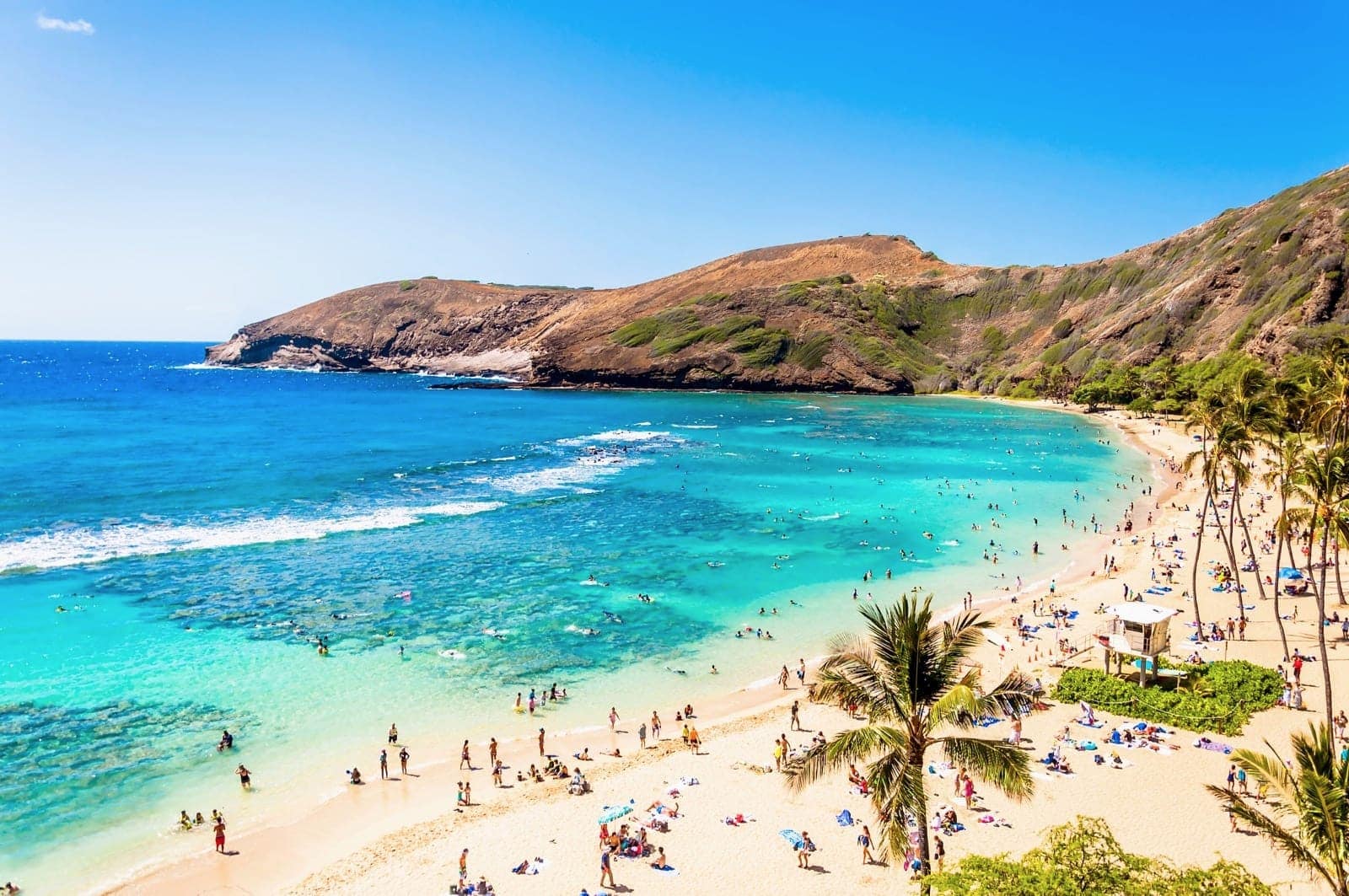
Hanauma Bay from the crater rim. The shallow inner reef, dotted with snorkelers here, is the beginner zone.
Diamond Head
Diamond Head is the most recognizable terrain feature in Hawaiʻi, the pointed peak behind Waikīkī Beach on the postcards. The remnants of an old crater, it has a short, steep summit trail to the rim.
Visitors without a Hawaiʻi ID need an advance online reservation at gostateparks.hawaii.gov: $5 per person plus $10 per vehicle, timed entry slots from 6 a.m., last entry 4:30 p.m., and everyone out by 6 p.m. Hawaiʻi residents enter free with no reservation.
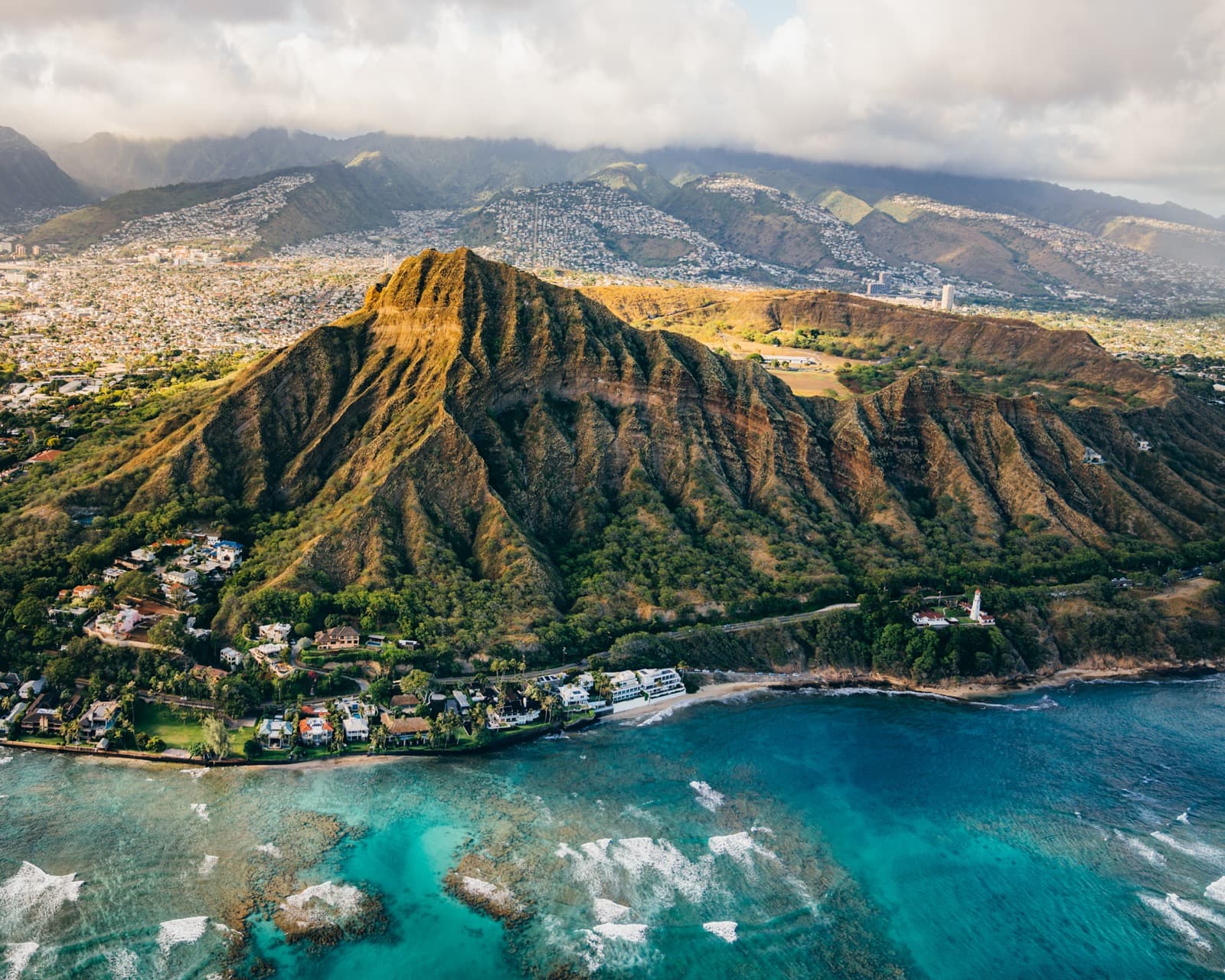
Afternoon shadows on Lēʻahi (aka Diamond Head) with Honolulu spreading out in the background. Credit: Hawaii Tourism Authority (HTA) / Vincent Lim
Historic Sites and Museums
Honolulu has the best museums in Hawaiʻi, led by the Bishop Museum (Hawaiian history, South Pacific migration) and the Honolulu Museum of Art.
It is also home to many historic buildings, leftovers from Hawaiʻi’s days as a monarchy. The ʻIolani Palace is the former royal palace, built in 1882, and other sites, such as the Queen Emma Summer Palace, open up more of the island’s royal history.
Our guide to history and culture on Oʻahu collects the sites worth planning around.
Neighborhoods of Honolulu
Besides Waikīkī, there are many neighborhoods within Honolulu to explore. Kakaʻako, a former industrial area, is now filled with apartment towers, restaurants, breweries, and shops. Downtown Honolulu is home to the main business district and the historic area, while Chinatown has markets and late-night bars.
Polynesian Cultural Center
In the island’s northeast corner, the Polynesian Cultural Center walks you through Polynesia island by island. Owned and run by the Church of Jesus Christ of Latter-Day Saints, the park takes a page out of Epcot’s design and features individual villages representing the various island nations of Polynesia, among them Hawaiʻi, Tahiti, Samoa, and Fiji. Each village stages shows and hands-on games from its own island.
The Polynesian Cultural Center is best for families with younger children and takes at least a half day: it opens at noon and runs to 9 p.m., is closed on Sundays, and admission starts at $49.95, with dinner and show packages above that.
North Shore
The drive along the North Shore coast is worth half a day on any first trip.
In winter, watch the professional surfers at Waimea Bay, Pipeline, or Sunset Beach; in summer the same coast flattens out, with surf lessons in Haleʻiwa and snorkeling at Shark’s Cove. Kayaking or paddleboarding the Anahulu River works any time of year.
Kualoa Ranch
Nicknamed “Jurassic Valley,” Kualoa Ranch is Oʻahu’s largest hub for adventure-themed tours: movie-site tours, horseback riding, and ATV rides across its private valley. If guided tours are your thing, this is the best-run operation on the island, set against the steepest cliffs on the windward coast.
Read more about the top regions in our Overview of Oʻahu.
Visitor Tips
Three tips for a first trip to Oʻahu:
- Get out of Waikīkī. The east side beaches and the North Shore are easy day trips, and they are a different island from the hotel blocks.
- Avoid rush hour driving. Take the morning slow and leave your hotel after 9 a.m. If you leave for the day, come back before 4 p.m. or after 7 p.m. to avoid the worst of the traffic in the Honolulu area.
- Research your restaurants ahead of time. On the neighbor islands you can wing it; Honolulu has too many good options and the popular ones fill up. Check a local site like Frolic Hawaiʻi and reserve the ones you care about.