
Hanalei is the last town before Kauaʻi‘s north-shore road ends at the Nāpali Coast. A crescent bay curves in front of it, ringed by tall mountains streaked with waterfalls after rain. The best of it is on the water. You can surf the sheltered bay, snorkel the north-shore reefs, and kayak the Hanalei River. The hikes start near town too, from the short ʻŌkolehao Trail to the longer Kalalau Trail toward Hanakāpīʻai Falls.
The town itself has few places to stay, mostly vacation rentals, so plan to base elsewhere on the north shore or day-trip in from Princeville. Give it an afternoon for the bay and the food trucks, or a few days to add a kayak trip and a taro farm tour.
Table of contents
Hanalei FAQ
Q: What is Hanalei known for?
Hanalei has a crescent beach and bay, and it’s the last town before the road ends at the Nāpali Coast.
Q: How long does it take to get to Hanalei from Poʻipū?
Without traffic, about 1 hour and 15 minutes. The trip is about 40 miles.
Q: What are the top attractions to visit in Hanalei?
Hanalei Beach, Hanalei town, Limahuli Garden and Preserve, the Hanalei National Wildlife Refuge, the nearby north-shore beaches, and the Nāpali Coast.
Q: What are the best outdoor activities in Hanalei?
Surfing, kayaking, snorkeling, and hiking.
Eat and Drink
Hanalei has the north shore’s best cluster of places to eat: a couple of food trucks for a quick lunch and a few sit-down restaurants for dinner. A few of our favorites:
- Hanalei Taro & Juice (food truck)
- Fresh Bite Kauaʻi (food truck)
- Postcards
- And the Hanalei classics Kalypso Island Bar & Grill and Tahiti Nui.
Farm Tour
The valleys behind Hanalei are working taro farms, set against the mountains. On a tour you see how taro is grown and pounded, the crop at the center of Hawaiian cooking. The family that runs Hanalei Taro & Juice farms taro here and books farm and historic rice-mill tours; their food truck is a good stop afterward.
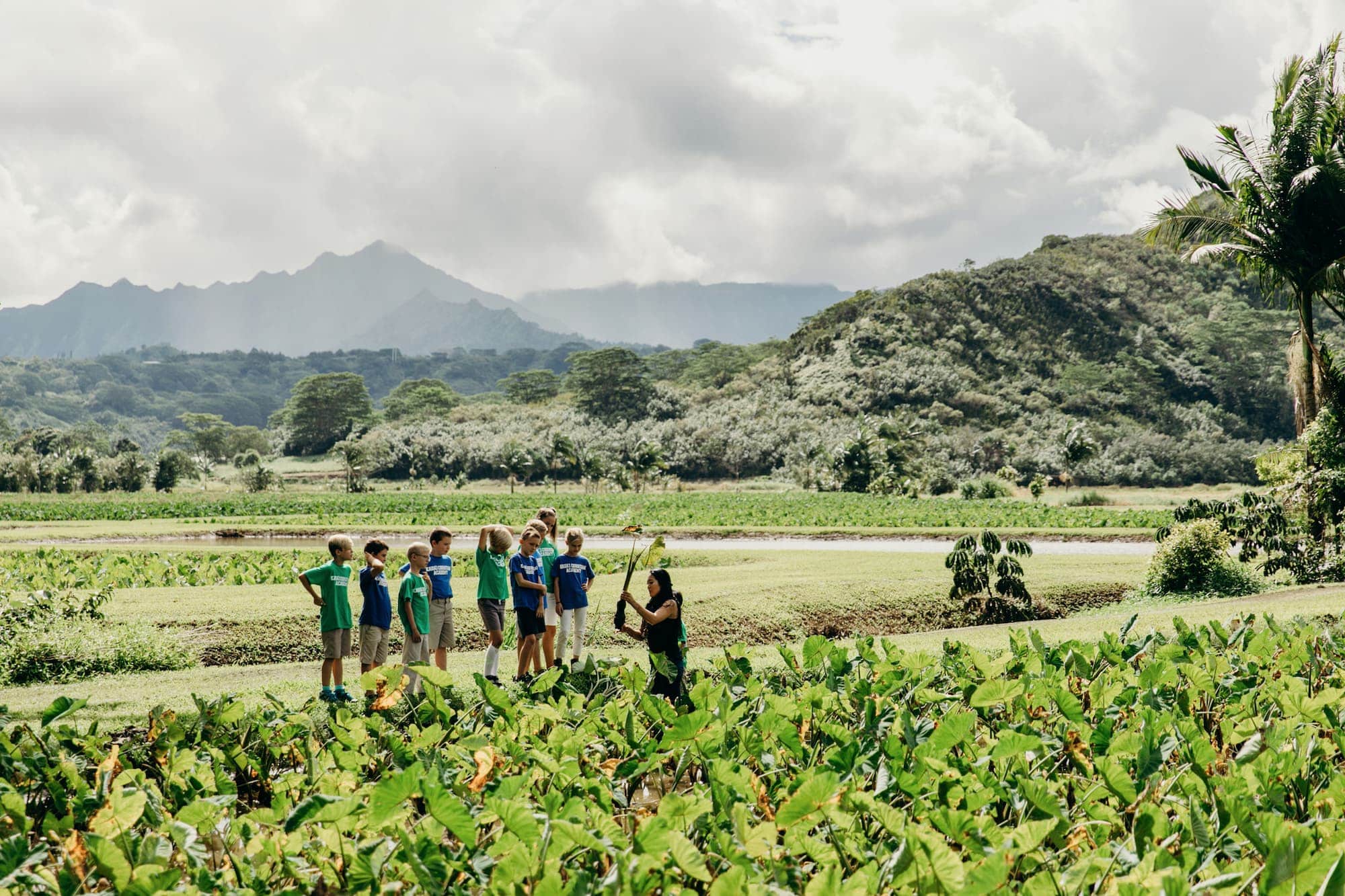
Touring a taro farm close to Hanalei. Credit: Hawaii Tourism Authority (HTA) / Heather Goodman @hbgoodie
See more food-focused outings in our guide to culinary tours and activities on Kauaʻi.
Golf
In the resort area of Princeville, the seaside course at Princeville Makai Golf Club runs along the ocean bluffs (makai means “toward the sea”). It has been ranked on lists like Golf Digest’s Top 100 Greatest Public Golf Courses in America and GolfWeek’s Best Courses You Can Play in Hawaii.
Not up for a full round? The club also runs a Sunset Golf Cart Tour in the evenings by reservation, $130 per cart for two, a cheaper way to see the setting without playing eighteen holes.
Hanalei Beach
A long crescent of white sand wraps around the bay, backed by jagged green mountains streaked with waterfalls after rain. In summer the water is calm enough for an easy swim, and the bay is sheltered, so it’s one of the easier spots on Kauaʻi for a first surf lesson.
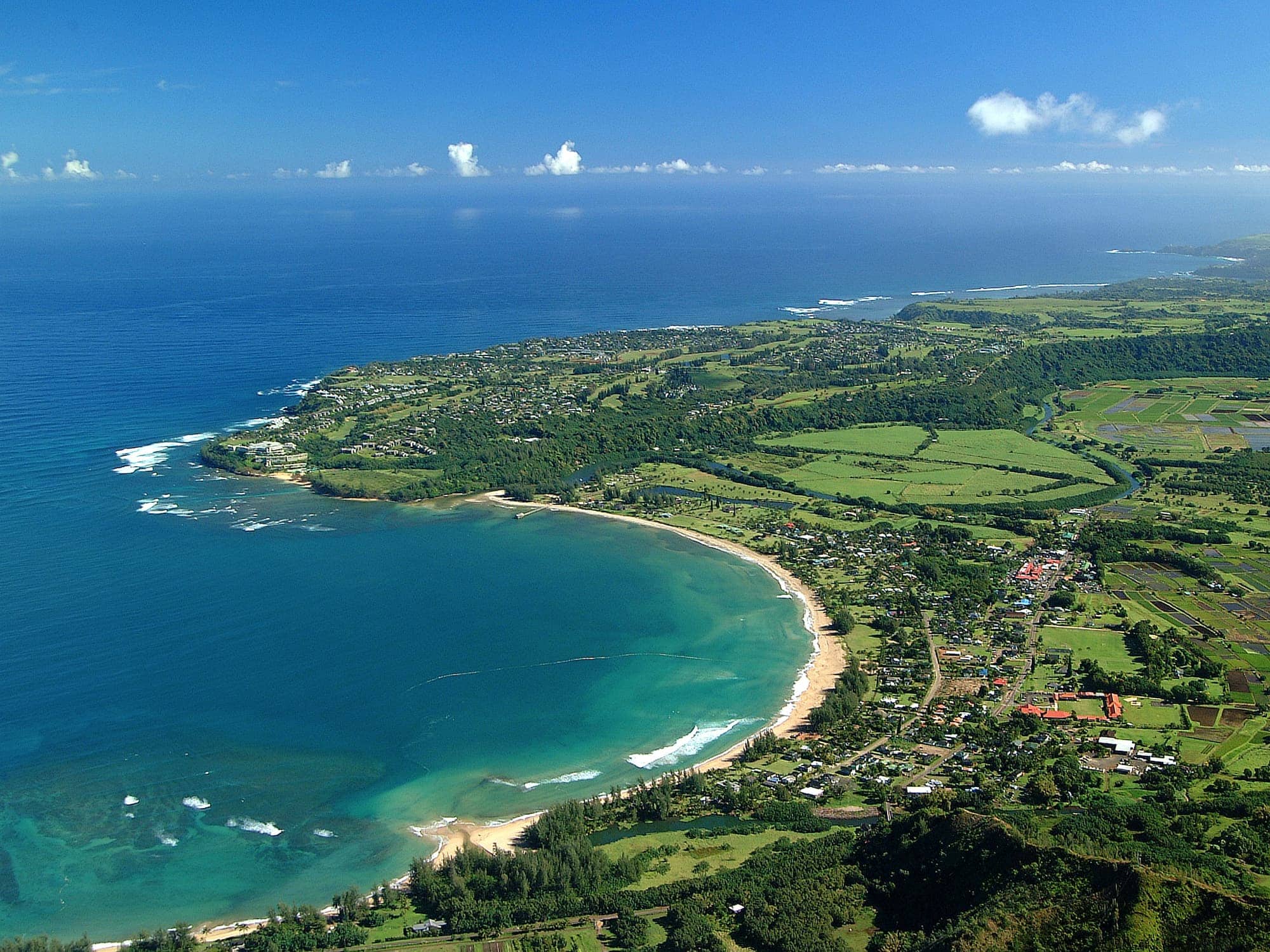
Hanalei Bay is a crescent bay ringed by a wide sandy beach. Credit: Hawaii Tourism Authority (HTA) / Ron Garnett
See more of our favorite Kauaʻi beaches.
Hanalei National Wildlife Refuge
The Hanalei National Wildlife Refuge covers 917 acres of wetland and taro fields just inland of town, managed as habitat for endangered native waterbirds. Most of it stays closed to the public for restoration. You can still see it on foot from the ʻŌkolehao Trail (below) or by kayak on the Hanalei River, and there’s a roadside overlook on Kūhiō Highway in Princeville.
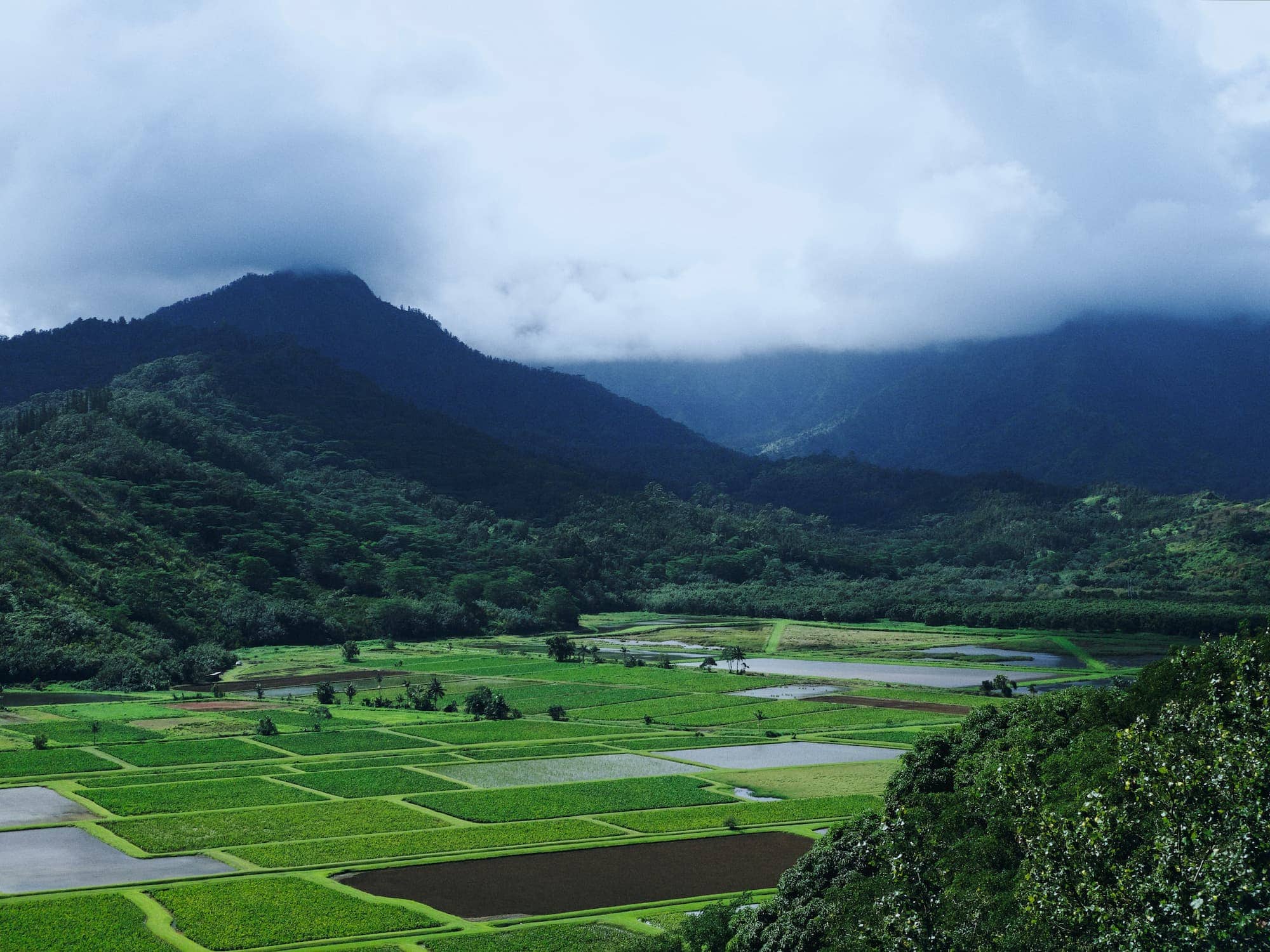
Waterfall-draped mountains ring the Hanalei Valley on the north shore of Kauaʻi, where the Hanalei National Wildlife Refuge sits. Image by Jason Weingardt on Unsplash
Hiking
A few good hikes start close to Hanalei. The ʻŌkolehao Trail climbs the ridge behind the refuge for sweeping views over Hanalei, Princeville, the Kīlauea Lighthouse, and the patchwork of taro fields below. It’s short but often muddy, so wear shoes you don’t mind trashing.
Hannah, Richard, and Paul from Wild and Growing filmed the trail end to end:

The bigger hike from this side is Hanakāpīʻai Falls, at the start of the Kalalau Trail west of Hanalei. It runs about 8 miles round trip: two miles along the coast to Hanakāpīʻai Beach, then two more up the valley to the falls. DLNR leaves the valley stretch unmaintained and rates it for experienced hikers only. Walk it only in good weather; the stream floods fast. Hanakāpīʻai Beach itself has strong currents and no safe swimming.
Hiking the full Kalalau Trail (11 miles) and camping overnight needs a DLNR permit, released 90 days out. The trailhead sits inside Hāʻena State Park, which caps daily entry, so you’ll need an advance parking or shuttle reservation to reach it.
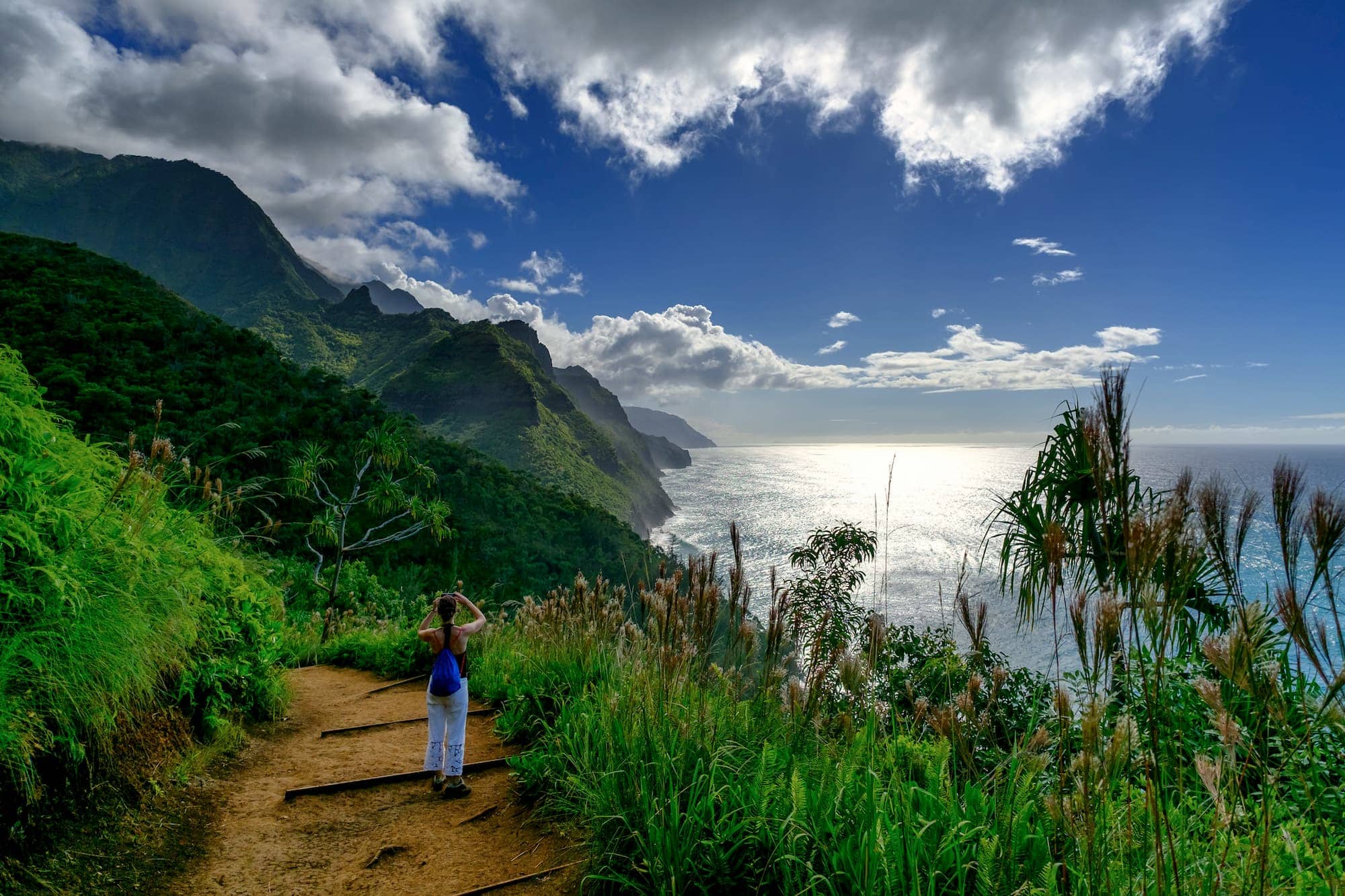
Our guide to hiking on Kauaʻi ranks these and more by difficulty, from easy coast walks to the full Kalalau.
Kayaking
Hanalei Bay and the Hanalei River are both easy paddles, and the river runs right through the wildlife refuge. Beginners can book this tour from Kayak Hanalei and start inland, drifting downstream on the river into the bay.
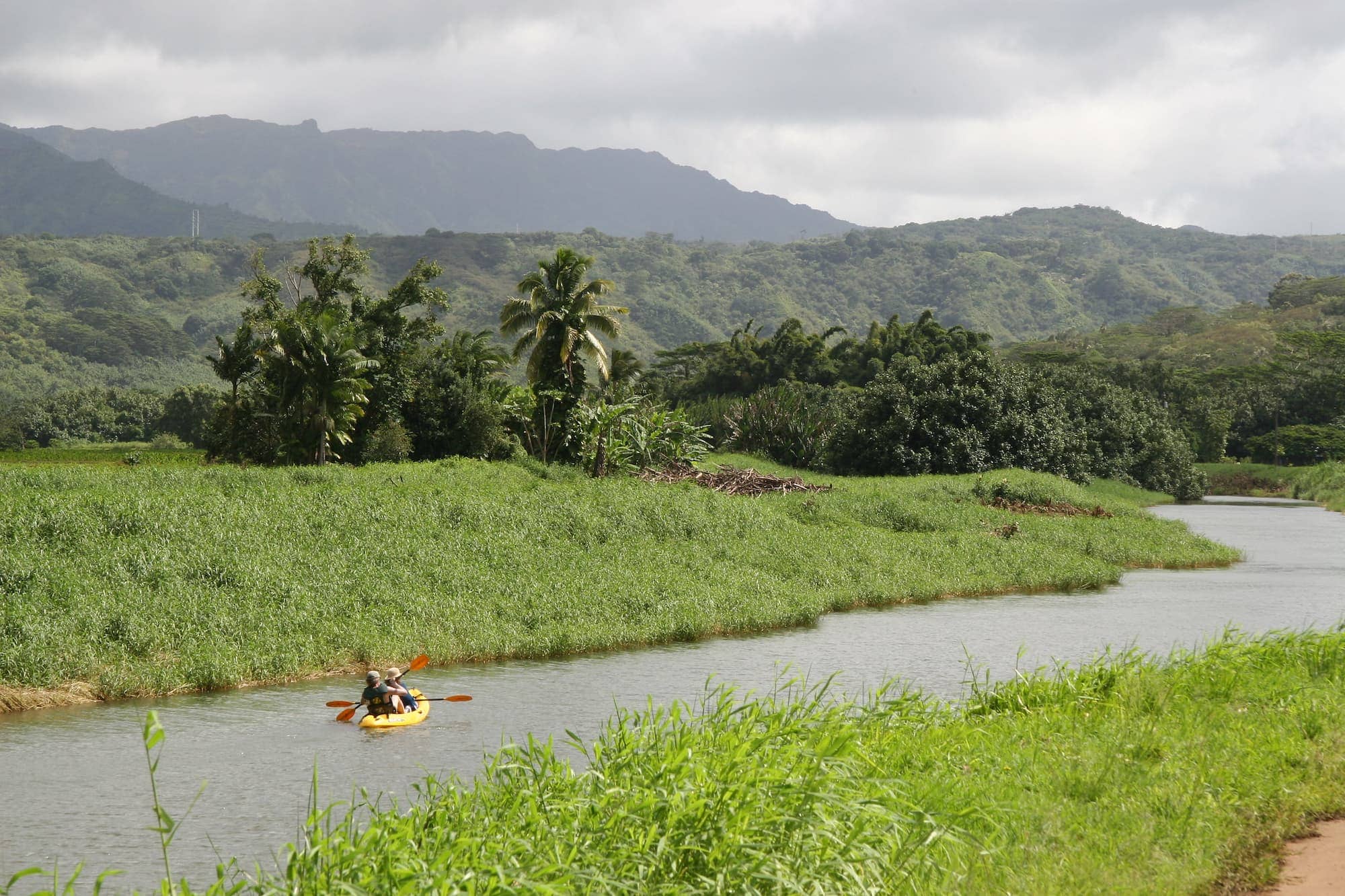
A couple kayaking the Hanalei River. Image credit: Jeff Muceus on Flickr.
Stronger paddlers head out of the bay and along the base of the Nāpali cliffs. Those long-distance runs from Kayak Kauaʻi and Nāpali Kayak run from spring through fall, and Nāpali Kayak adds an overnight camping trip, which needs a separate DLNR camping permit.
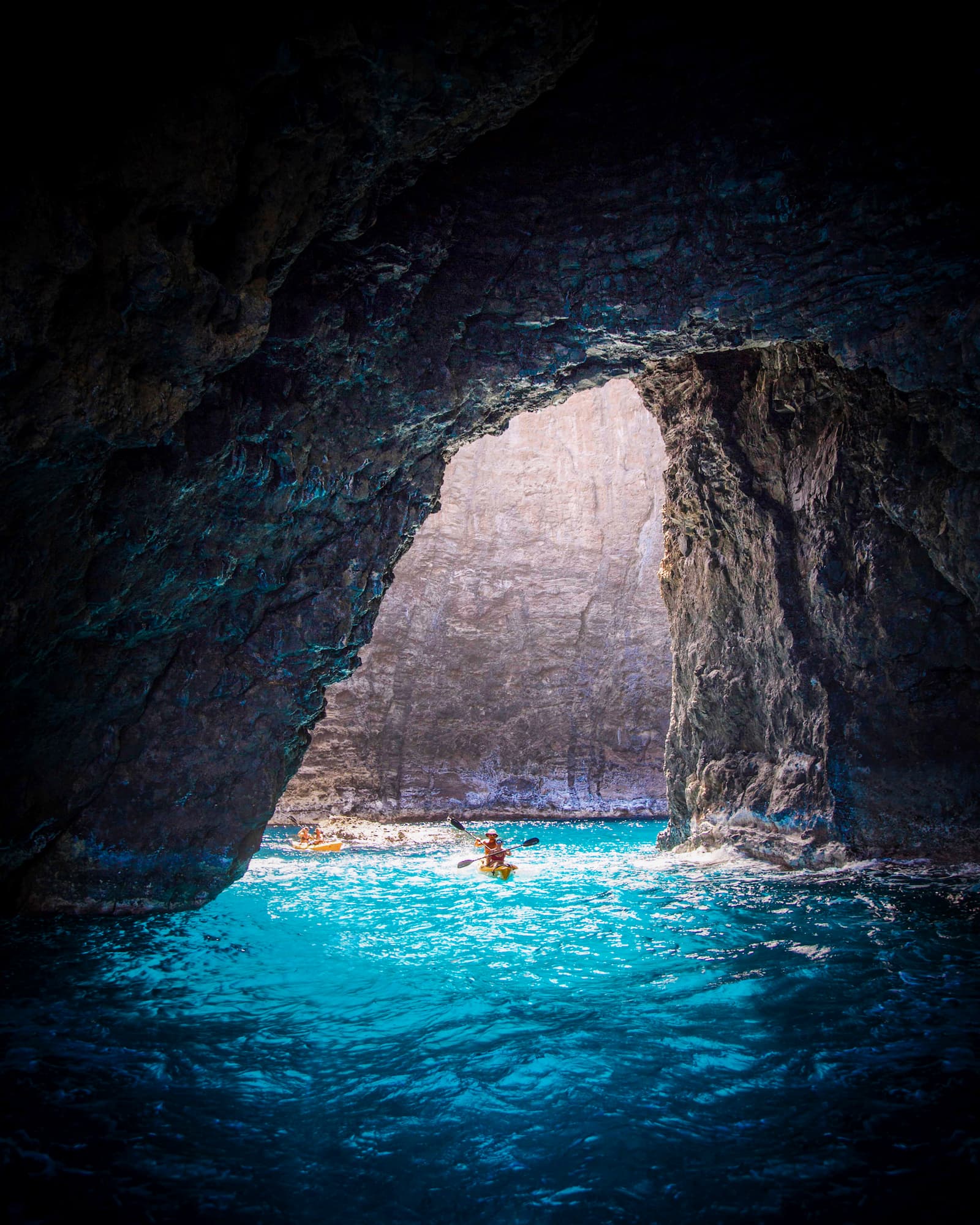
There are many sea caves along the Nāpali coast on Kauaʻi. Of those caves, Pukalani (the Open Ceiling Cave) is the most popular one. Credit: Hawaii Tourism Authority (HTA) / Tommy Lundberg
To just poke around the bay, rent a kayak in town and take it out on your own.
Limahuli Garden and Preserve
Limahuli is a botanical garden and nature preserve in a steep valley just west of Hanalei, run by the National Tropical Botanical Garden. A self-guided loop trail winds past native plants and old Hawaiian agricultural terraces, with the valley walls and ocean behind them. It’s open Tuesday through Friday and closed on weekends; reserve online to hold a parking spot, and book ahead if you want a guided tour rather than the self-guided walk.
Nāpali Coast/North Shore
West of Hanalei the road runs out at the Nāpali Coast. Along the way it passes the north shore’s best beaches, Tunnels, Hāʻena, and Keʻe, and the start of the Kalalau Trail.
The Nāpali cliffs are some of the oldest, most eroded land in the chain, their ridges carved tall and sharp by millions of years of weathering. The road ends inside Hāʻena State Park, which caps daily entry, so you have to reserve a parking slot or the shuttle before you go. Our north shore shuttle guide has the current parking, reservation, and shuttle details.
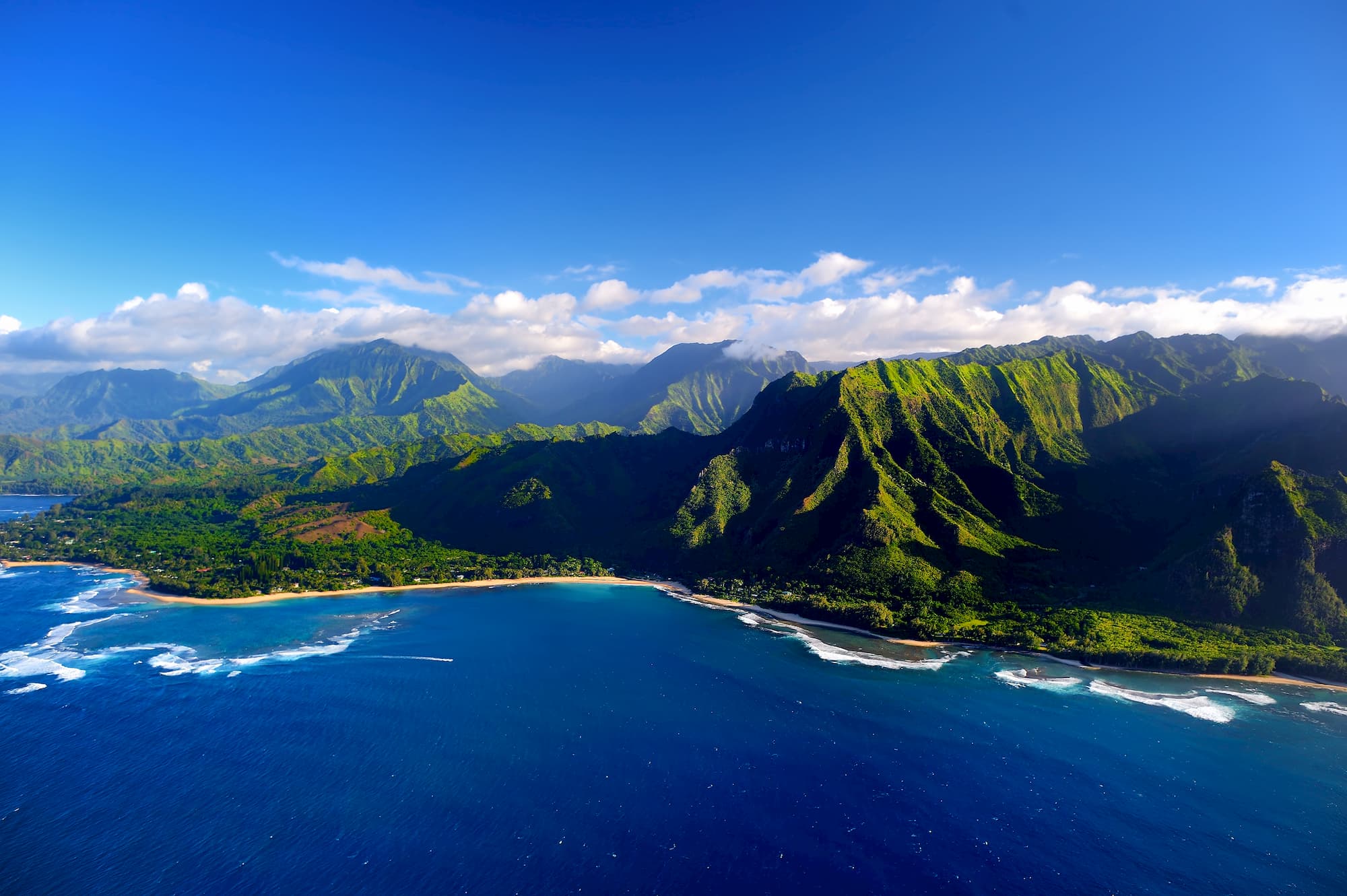
Narrow valleys full of streams and waterfalls sit behind the Nāpali Coast’s towering sea cliffs. Image credit: MNStudio
Snorkeling
Some of Kauaʻi’s best snorkeling is on the reefs around Hanalei, calmest in summer once the big winter surf settles:
- Tunnels Beach has underwater lava tubes and arches, with a few small caves.
- Anini Beach sits behind one of the longest reefs off Kauaʻi, which keeps the water calm.
- Hideaways is thick with coral and cut through with channels.
- Keʻe Beach (below) is a good bet for sea turtles and reef fish, and it sits at the end of the road inside Hāʻena State Park, so it needs the same entry reservation.
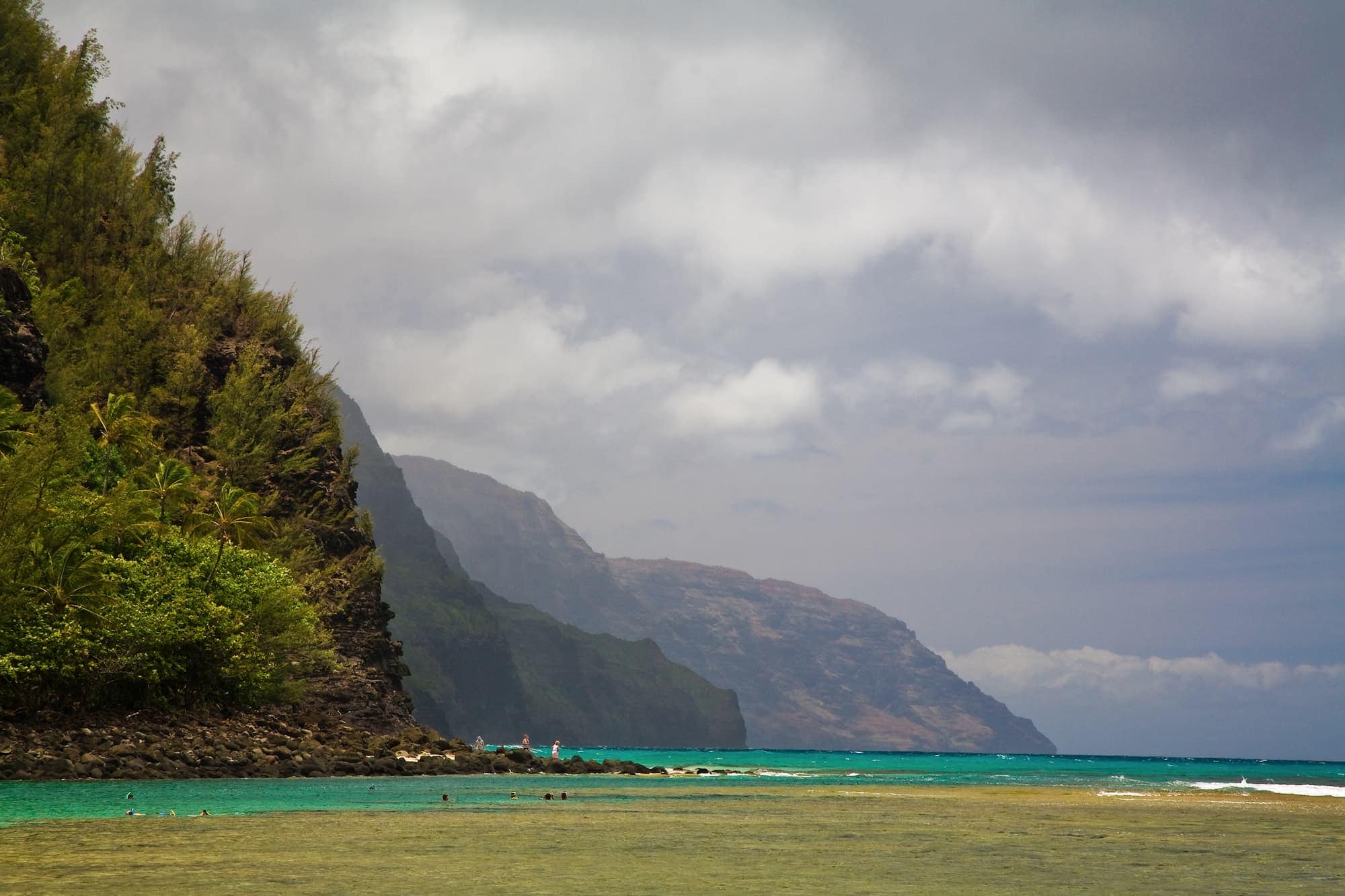
Keʻe beach in Hāʻena State Park. Credit: Hawaii Tourism Authority (HTA) / Tor Johnson
Our guide to snorkeling on Kauaʻi covers these spots and the rest of the island’s reefs.
Surfing
Hanalei Bay is one of the easier places in Hawaiʻi to learn to surf. The curve of the bay blocks a lot of the swell, so the inside breaks stay small and forgiving for beginners. Several shops in town run lessons and rent boards; we like Hawaiian Surfing Adventures. If you already surf, rent a board and paddle out.
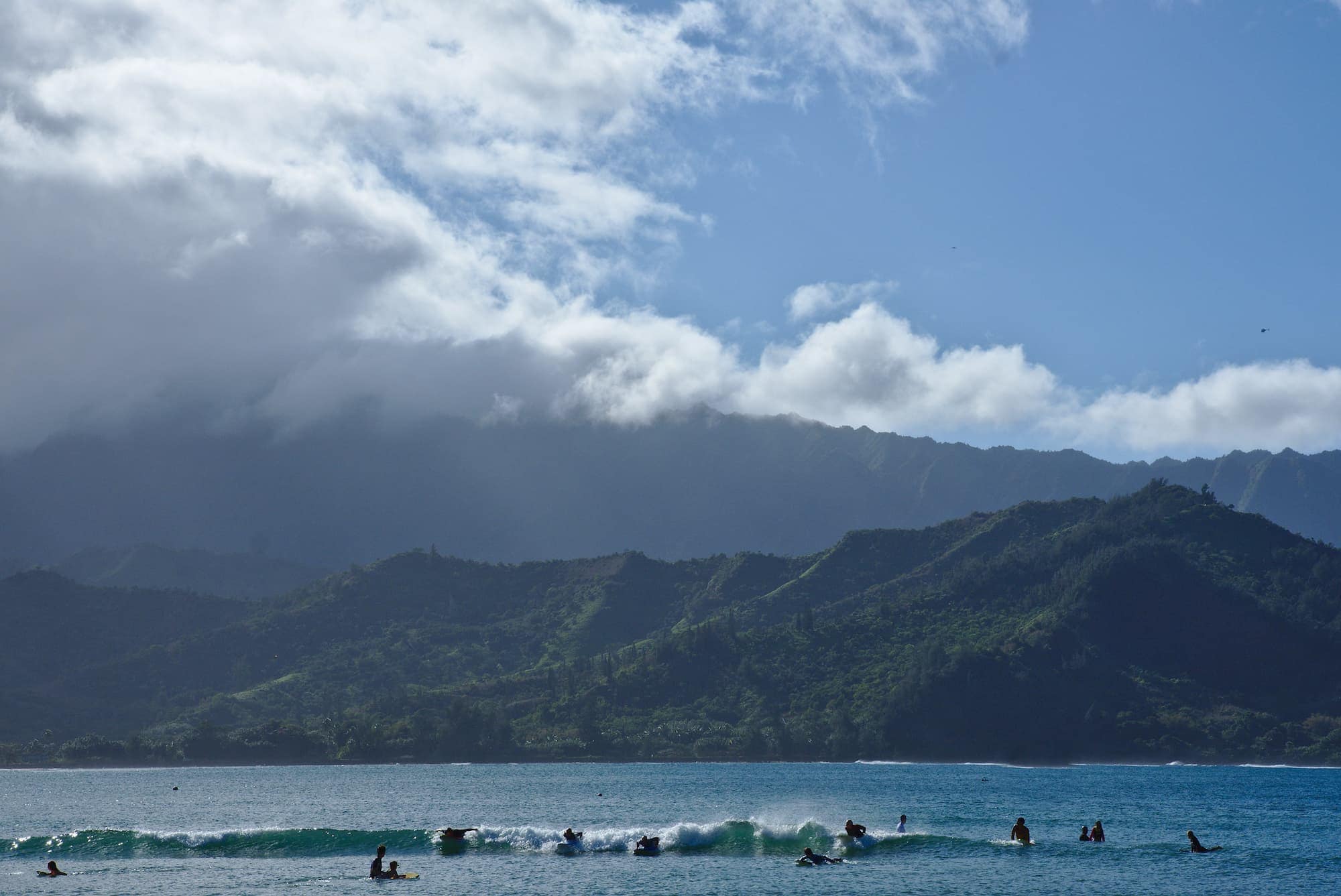
Jagged green mountains ring Hanalei Bay, an unusual backdrop for a first surf lesson. Image credit: Mary and Andrew on Flickr.