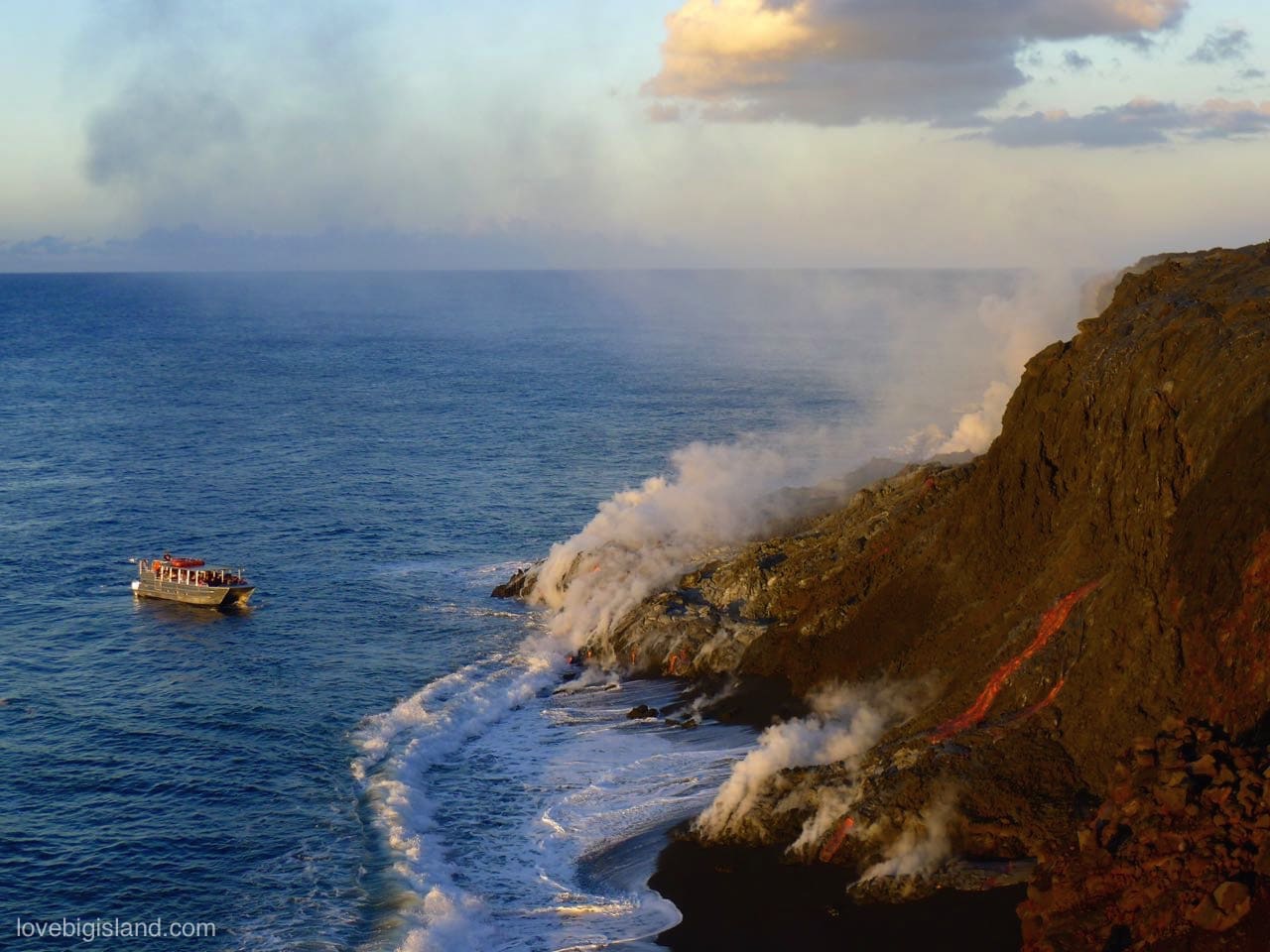
The Big Island is the only Hawaiian island where you can stand at the rim of an active volcano, watch lava enter the ocean from a boat, and be back in time for the manta ray night snorkel. Four things to do here are not available on any other Hawaiian island, and they’re covered first on this page.
The harder problem is narrowing down. The island is nearly the size of Connecticut and the activity list is long enough to fill a month. One or two things per day is the right pace: enough time to actually reach places, spend time there, and not spend the trip in transit. Most visitors have seven to ten days, which means real choices.
This page covers all 31 Big Island things to do with tour prices from $49 to $315 and several free options, links to detailed guides for each activity, and a short section on which options belong on which coast. If you’re making a first cut, start with the highlights section below.
Table of contents
Activities You Can Only Do on the Big Island
The four activities below are only possible on the Big Island. Start here when narrowing down your itinerary: they’ll either belong on your list or they won’t, and knowing that upfront makes the rest of the planning easier. See also our guide to things to do on Oʻahu.
Q: Which activities are exclusive to the Big Island?
The following four activities are exclusive to the Big Island — they are not possible on any other Hawaiian island:
- The Hawaiʻi Volcanoes National Park, with active lava fields, summit craters, and rainforest that can all change in a matter of months.
- Visiting the Mauna Kea summit, home to some of the world’s major observatories, for stargazing and sunset.
- The manta ray night dive/snorkel.
- Seeing red-hot lava. This is only possible when Kīlauea is actively erupting. Check the USGS HVO status before planning your trip around it.
Q: Which activities do you recommend for Kona?
The Kona coast is known for the sunny weather. Enjoy the many white-sand beaches, tour a coffee farm and taste Kona coffee, the Manta Ray Night Dive/Snorkel, and see the whales during winter.
See also our list of things to do in Kona.
Q: Which activities do you recommend for Hilo?
Hilo is the base for lush rainforest hikes, the Puna district, cascading waterfalls, scenic road trips, and easily accessible red-hot lava.
See also our list of things to do in Hilo.
Q: Which tours do you recommend?
We have compiled a short list of curated tours with what we think are the best tours you can find on the Big Island. We only recommend tours that are well-organized, give back to the community, and work to minimize their ecological impact. Most importantly, all tours on there receive consistent stellar reviews from their guests.
Check out our list of tours on the Big Island.
Activity Picks by Coast (Kona vs Hilo)
If you’re based on the Kona side, you have access to the island’s sunniest weather and its best water-based activities. The manta ray night snorkel, Kona coffee farm tours, and the Kohala Coast beaches are all within easy range. Snorkeling at Kealakekua Bay is a half-day from Kona by boat tour, and whale watching runs out of the multiple Kona harbors from mid December through April. Mauna Kea is a 90-minute drive and works as an evening excursion if you leave by late afternoon. For day trips to the volcano, plan a full day: it’s a long two-hour drive each way.
If you’re based on the Hilo side, the priorities shift. Hawaiʻi Volcanoes National Park is 45 minutes away, which makes it easy to do a morning session and still have the afternoon for waterfalls — Akaka Falls and Rainbow Falls are both within easy reach of town. The Hāmākua coast’s botanical gardens, chocolate farms, and ATV tours are within an hour north of Hilo. The hot ponds at Pohoiki are about a hour south. For Kona-side activities like the manta ray night snorkel, plan an overnight or book a tour that includes transport from your side of the island.
All Big Island Activities, A to Z
You can find outdoor adventures wherever you are on the island. The activities listed below in alphabetical order cover the most common things to do on land, in the water, and in the air. See also our full list of recommended tours on the Big Island.
- Go off-road with an ATV ride
- Explore the beaches: white, black, and green sand
- Rent a bicycle and explore the island at your own pace
- Walk through one of the botanical gardens on the Hilo side
- Go camping to reach places day visitors never see
- Tour a cacao farm and taste locally made chocolate
- Tour a coffee farm and taste Kona coffee at the source
- Join a farm tour to learn about the local agriculture
- Explore the Hawaiʻi Volcanoes National Park
- Play a round at one of the golf courses
- See the Big Island from above with a helicopter tour
- Put on your boots and go hiking
- Go horseback riding through ranch lands and rainforests
- Soak in one of the geothermal hot ponds in Puna
- See red-hot lava
- Put on your hard hat and explore miles of lava tubes
- Get cultural (and culinary!) with a luau show
- Join the manta ray night dive/snorkel
- Pack some food and go for a picnic
- Rappel down a waterfall on ropes
- Road trip: pick one of our favorite scenic drives
- Explore the underwater world with scuba diving
- Snorkeling is the self-guided alternative
- Go stargazing at the Maunakea summit
- Stand-up paddleboard along the Hilo or Kona coastline
- See spinner dolphins on a snorkel cruise
- Catch a wave at the birthplace of surfing
- Volunteer and give back during your stay
- Visit one of the waterfalls on the north and east side
- See humpback whales from shore or from a boat
- Soar through the treetops on a zipline course
ATV Tours
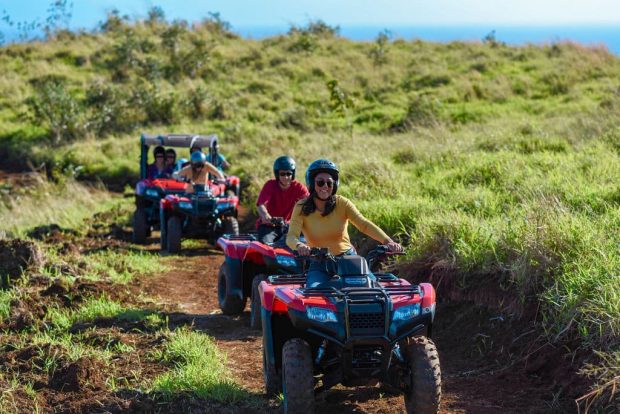
Most of the Hamakua and Kohala coastline is private land with no public trail access. ATV tours are one of the few ways to reach it: forested ridgelines, cliff edges, and waterfall pools that sit behind locked gates. Tours run 1.5 to 3 hours and cover 10 or more miles of private track; side-by-side UTVs seat up to four, so this works well for families and groups.
You can read more about all 6 STV tours on our list of ATV Tours on the Big Island.
Umauma Deluxe ATV Waterfall and Swim Experience
Five and a half miles of private ATV trail on the Hamakua coast, muddy by design, with ocean views and a waterfall swim to finish. Good for mixed groups: the Side x Side UTVs seat up to four.
from:
$229
What is a suggested tour?Our suggested tours are hand-picked tours that receive consistent good reviews, give back to the community, and work hard to minimize their impact on the environment. Read more about these tours on our website.Beaches
The Big Island has three sand colors that no other single Hawaiian island can match: white, black, and green. The green sand beach at Papakolea is one of only two in the United States, and getting there requires either a 2.5-mile hike each way or a shuttle from the trailhead. The white sand beaches cluster on the Kohala and Kona coasts; the black sand beaches are mostly on the east side near Hilo and Puna. The two coasts are different enough that your beach strategy depends heavily on which side of the island you’re based.
Read more about the Beaches on the Big Island.
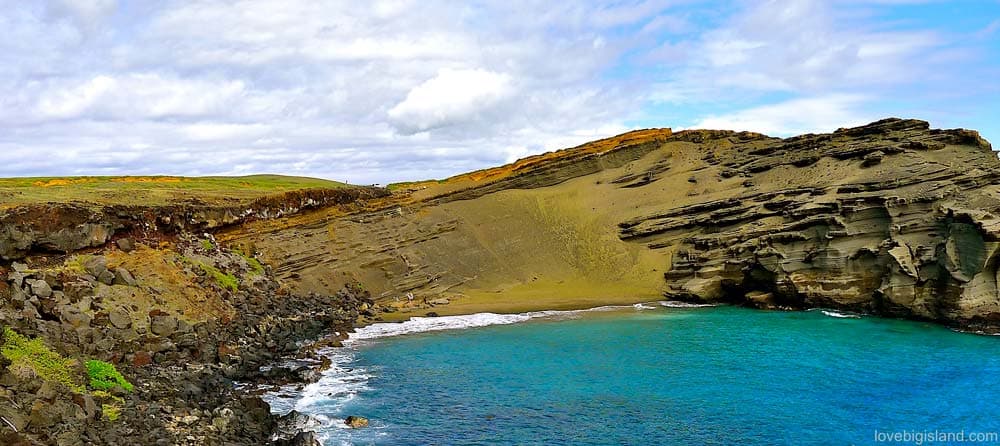
Green Sand Beach is one of only two green sand beaches in the United States.
Biking
Most visitors write off biking as something the Ironman crowd does. In practice, e-bikes have changed the picture: Hawaiʻi Volcanoes National Park is very doable on a rental e-bike, and coastal cruising near Hilo or Kailua-Kona is a low-effort way to cover ground. The island also has rainforest trails at mid-elevation for those who want something more off-road. If you’re considering it, the e-bike option is worth pricing before you write it off.
Put on your helmet and read more about Biking on the Big Island.
Botanical Gardens
The Hilo and Hamakua coasts get 130-plus inches of rain per year, and the result shows in the botanical gardens: plants growing at a scale you won’t find elsewhere in the US. The Hawaii Tropical Bioreserve and Garden near Hilo is our first recommendation. It sits in a gorge above the ocean, takes 90 minutes to two hours to walk through, and the trail has enough elevation change that you’ll want actual shoes. Most gardens on this side of the island cost under $20 and are easy to pair with a drive along the Onomea Scenic Route.
Read more about Botanical Gardens on the Big Island.
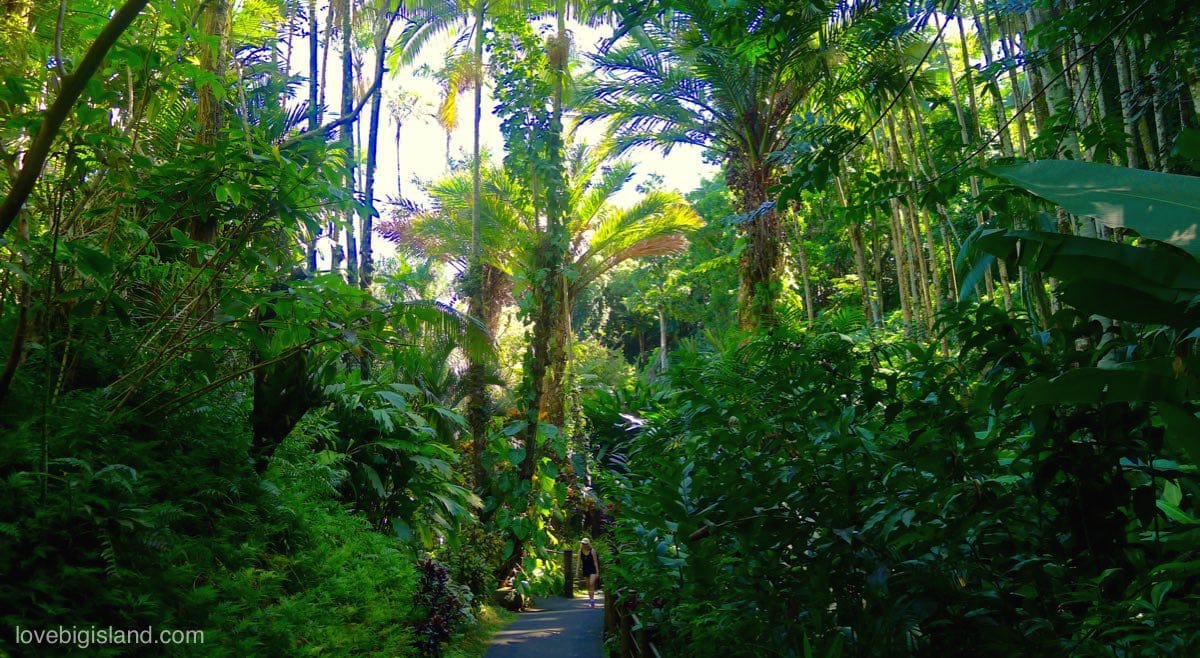
The Hawaii Tropical Bioreserve & Gardens near Hilo are our favorite botanical garden on the Big Island
Camping
Camping on the Big Island puts you in places day visitors never reach: remote beach parks, far-away corners of the Hawaii Volcanoes National Park, and forest reserves with no nearby parking lot. Most sites require advance reservations through the county or state system, and permit slots for popular spots book out weeks ahead. Build it into your itinerary before you book flights, not after. The range runs from almost free county beach parks to paid campgrounds inside the national park.
Read more in our guide about Camping on the Big Island.
Cacao Farm Tours on the Big Island
Hawaiʻi is the only US state where cacao is grown commercially, and nearly all of it grows on the Big Island. The farms are concentrated in two zones: two south of Kona and nine along the Hamakua coast and near Hilo. Most tours run two to two-and-a-half hours, walk you through the orchard and processing facility, and end with a tasting. Prices range from around $30 to $125 per person.
Read more about cacao and chocolate farm tours on the Big Island.
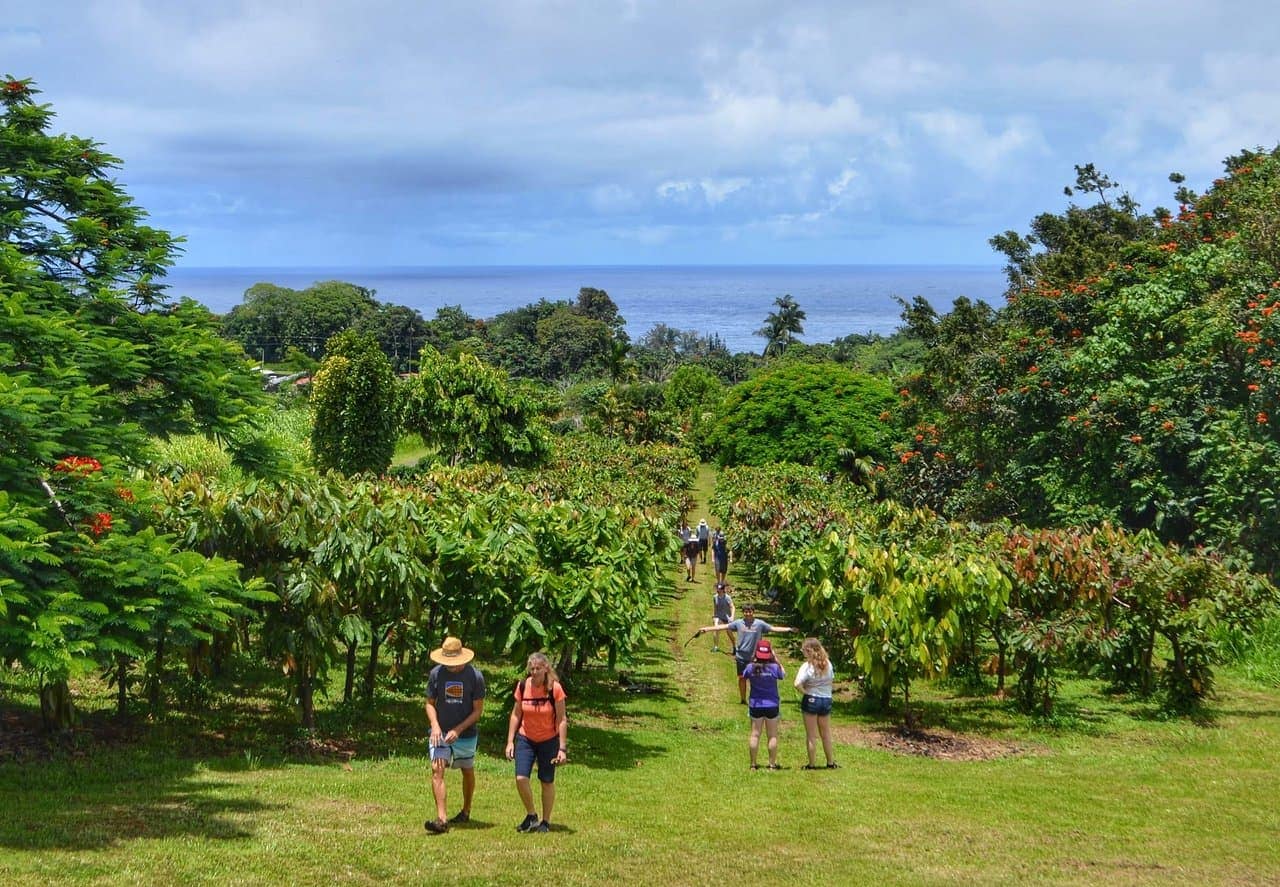
The 2.5 hour Hamakua Chocolate Farm tour takes you through their farm, gardens and cacao processing facilities. Image credit: the Hamakua Chocolate Farm.
Kona Coffee Farm Tours
Kona coffee grows on a narrow volcanic strip along Highway 11 between Holualoa and Honaunau, and most farms welcome walk-in visitors. The majority of tours are free or under $30, run 20 to 45 minutes, and are easy to stack: two or three farms in a half-morning is a reasonable pace. A few go deeper, with roasting workshops, cupping sessions, and at least one farm offering an ATV ride through the crop with the owner.
Read more about coffee farm tours on the Big Island.
Farm Tours
The Big Island has a working agricultural scene that most visitors never interact with. Farm tours change that: coffee, vanilla, macadamia nuts, cacao, honey, and at the Ocean Rider farm in Kailua-Kona, a seahorse aquaculture operation where you can hold one. Tours range from free walk-throughs at small farms to full-morning paid experiences at larger operations.
Read more about the Farm Tours on the Big Island.
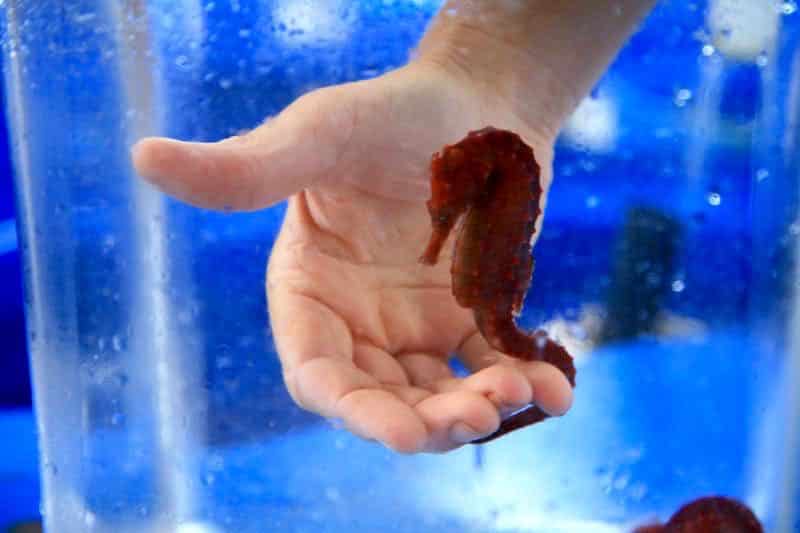
You can hold a seahorse during the tour at the Ocean Rider Seahorse Farm. Image credit: the Ocean Rider Seahorse Farm
Farmers Markets
Farmers markets on the Big Island run almost every day of the week across the island, and the quality is higher than most visitors expect. The Hilo Farmers Market on Wednesdays and Saturdays is the largest, with real produce, prepared food, and local crafts. The Kona-side markets are smaller but still worth the stop. Check the day and hours before going: schedules shift by season and a few operate only in the morning.
Read more in our complete list of Farmers Markets on the Big Island.
Hawaiʻi Volcanoes National Park
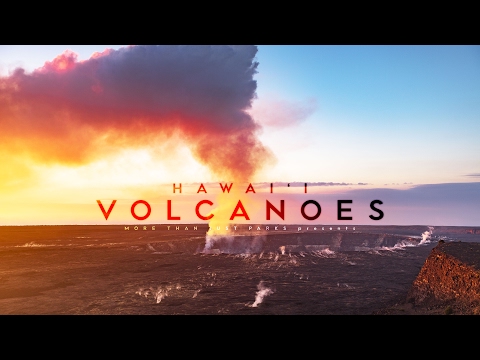
Hawaiʻi Volcanoes National Park covers 323,000 acres and ranges from sea-level lava flats on the Puna coast to the summit of Mauna Loa at 13,679 feet. Most visitors spend four to six hours on the Crater Rim Drive loop and the short walks off it, but the park fills a full day if you include Chain of Craters Road to the coast. The lava glow at Halemaʻumaʻu crater at night depends on current volcanic activity so check the USGS Hawaiian Volcano Observatory status before planning an evening visit. Admission is $35 per vehicle, valid for seven days.
Read more about the Hawaii Volcanoes National Park.
Golfing
The Kohala Coast has multiple resort-grade golf courses. Green fees at the top resort courses run $200 to $350 per round. The Volcano golf course and the municipal courses in Hilo are a fraction of that, and worth knowing about if your game doesn’t require an ocean view. Most resort courses offer twilight rates that cut the price significantly after 2 p.m.
Read more about Golfing on the Big Island in our complete guide.
Helicopter Tours
Most of the Big Island’s most dramatic terrain is unreachable on foot: the active summit caldera at Kīlauea, the sea cliffs of the Kohala coast, and waterfalls that drain into valleys with no road access. A helicopter is the only way to see them properly. Tours depart from Hilo, Kona, or Waikoloa, and run 30 to 75 minutes; the longer tours cover more of the island, including both the volcano and the Kohala coast.
Read more about taking a helicopter tour on the Big Island.
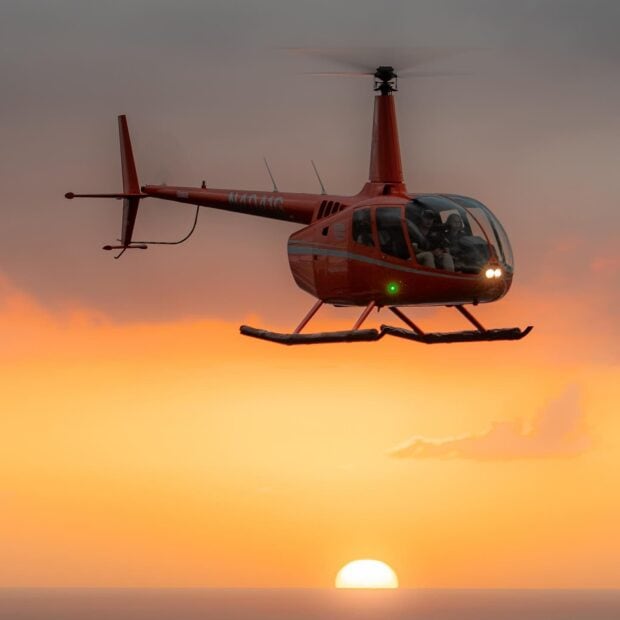
Private Kona Sunset Helicopter Tour
The Kona coast at dusk from a private helicopter: Kua Bay's white sand from the air, lava cliffs with no road access below, and doors-on or doors-off at no extra charge.
from:
$229
What is a suggested tour?Our suggested tours are hand-picked tours that receive consistent good reviews, give back to the community, and work hard to minimize their impact on the environment. Read more about these tours on our website.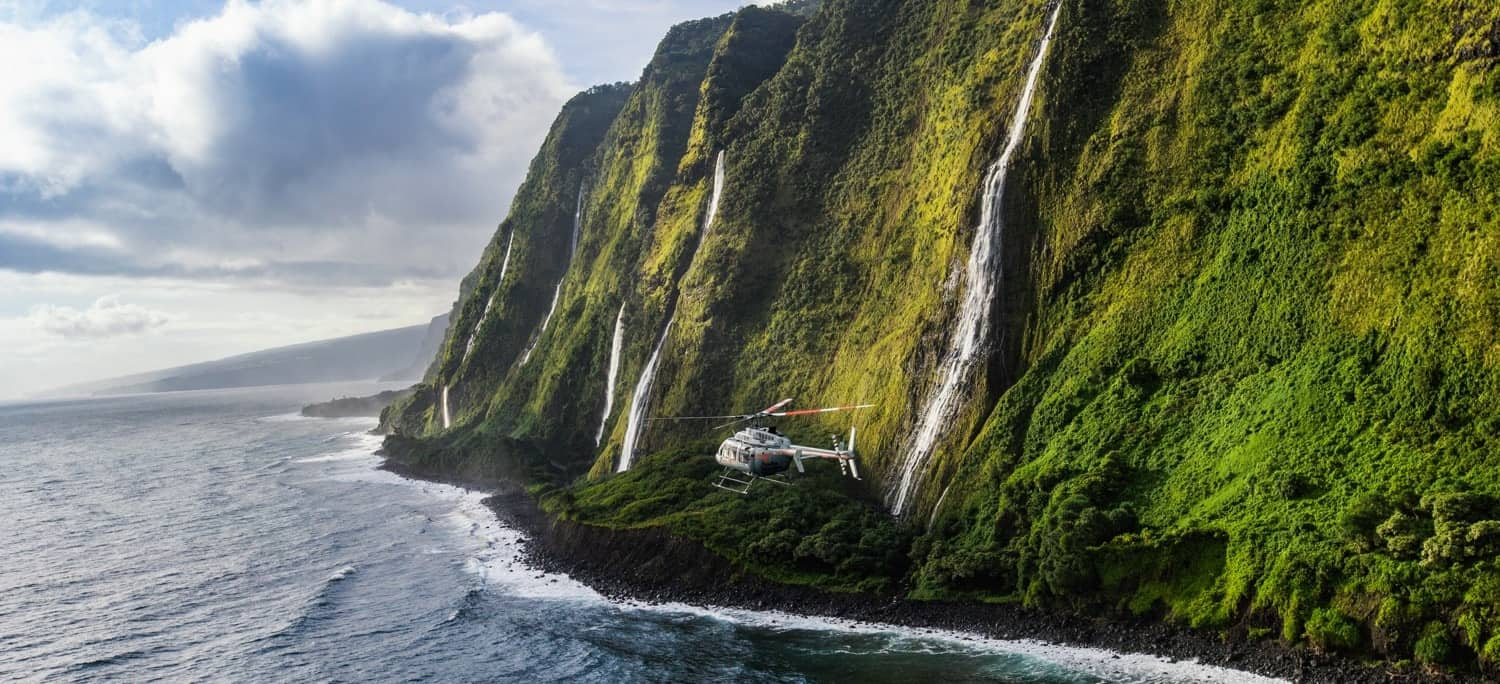
The steep cliffs of the Kohala coast from a helicopter.
Hiking
The Big Island has more trail variety than any other Hawaiian island: the Kīlauea Iki trail drops you onto a crater floor that held a lava lake in 1959, and several coastal walks take under an hour each way. Eight of the world’s thirteen climate zones exist somewhere on this island, which means terrain and vegetation change faster here than anywhere else in Hawaiʻi. Short hike options near both Hilo and Kona are available for visitors without a full day to spend.
Read more about Hiking on the Big Island or skip ahead to our 5 favorite short Big Island hikes.
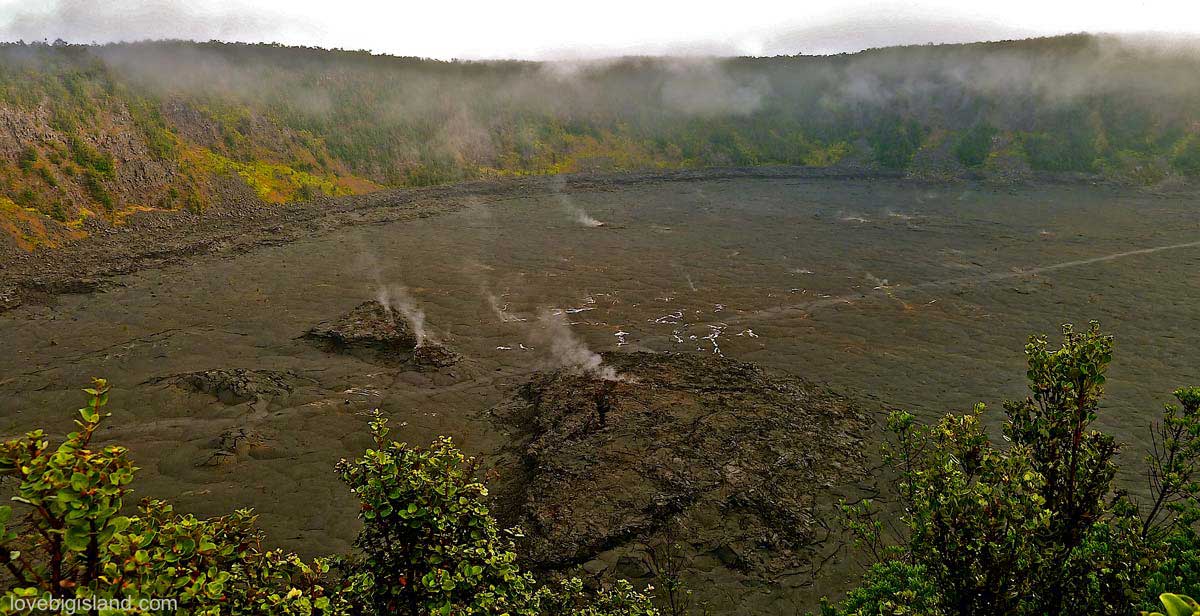
The Kilauea Iki trail is one of our favorite hikes on the island
Horseback Riding
The Big Island’s ranching history goes back to the 1800s, and several of the original land grants still operate as working cattle ranches today. Horseback tours run from the Kohala and Waimea highlands, where the views drop toward both coasts, as well as from the Hamakua coast and the Waipiʻo Valley rim. Most rides are 1.5 to 3 hours. Weight limits apply at all operators: check before booking if anyone in your group is over the stated maximum, as policies vary.
You can go on a horseback riding tour close to Waipiʻo Valley, in the Waimea + Kohala region, near Hilo and the Hamakua coast, and even South Kona (Captain Cook area). Read more about all those tours in our guide about horseback riding on the Big Island.
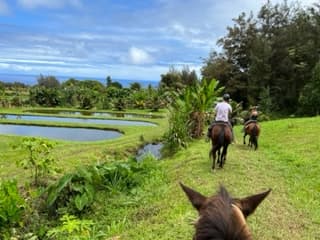
Small Group Horseback Ride on the scenic Hamakua coast
A scenic horseback riding tour that takes you from fertile gardens and a working livestock ranch to sweeping grasslands, oceanfront, and tree canopies
from:
$150
What is a suggested tour?Our suggested tours are hand-picked tours that receive consistent good reviews, give back to the community, and work hard to minimize their impact on the environment. Read more about these tours on our website.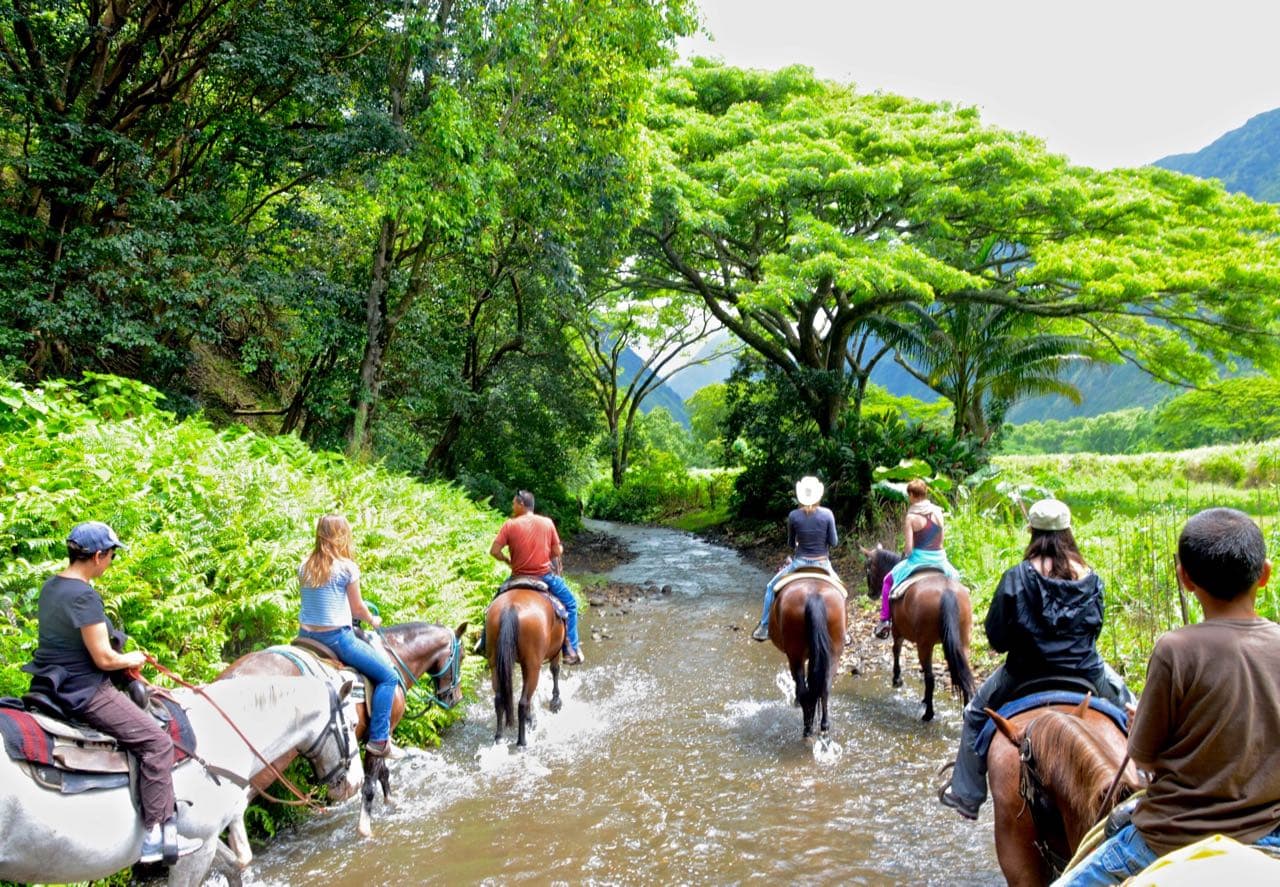
A group on a horseback riding tour in Waipiʻo valley. Photo credit: Mike Neenan
Hot Ponds
The 2018 Kīlauea eruption buried most of the Big Island’s accessible geothermal hot ponds under lava. The survivors are in the Puna district on the east side: the best-known is Pohoiki at Isaac Hale Beach Park, where the 2018 lava flow actually created new black sand and left the hot springs intact. Water temperature varies by how close you are to the vents so test before settling in. Most are publicly accessible at no charge, but check current access status before making this a centerpiece of your day.
Learn more about hot ponds on the Big Island.
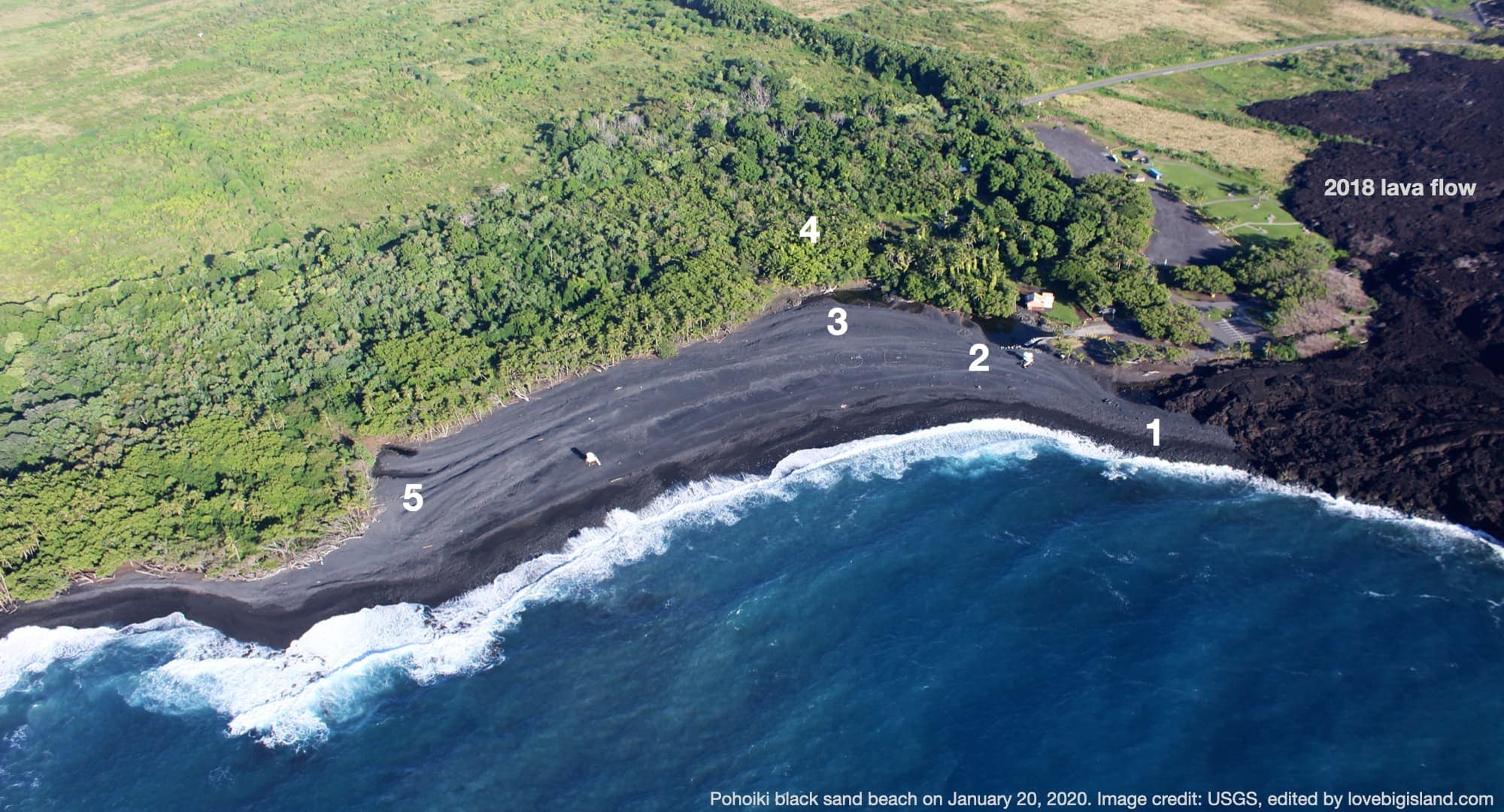
Aerial view of Pohoiki Bay at Isaac Hale Beach Park. The 2018 lava delta created the new black sand beach (right) while leaving the hot springs intact. Image credit: USGS (public domain)
Lava Viewing on the Big Island
Kīlauea is still erupting and lava viewing is active. The summit eruption is producing lava at Halemaʻumaʻu crater inside Hawaiʻi Volcanoes National Park, visible from several overlooks along Crater Rim Drive.
Volcano Village is around the corner from Hawaiʻi Volcanoes National Park, Hilo is at a 45 minute drive, and people visiting from the Kona coast need to drive for longer and often opt to spend a night in Volcano or to join a day-tour.
Use our guide to lava viewing on the Big Island to plan your own adventure.
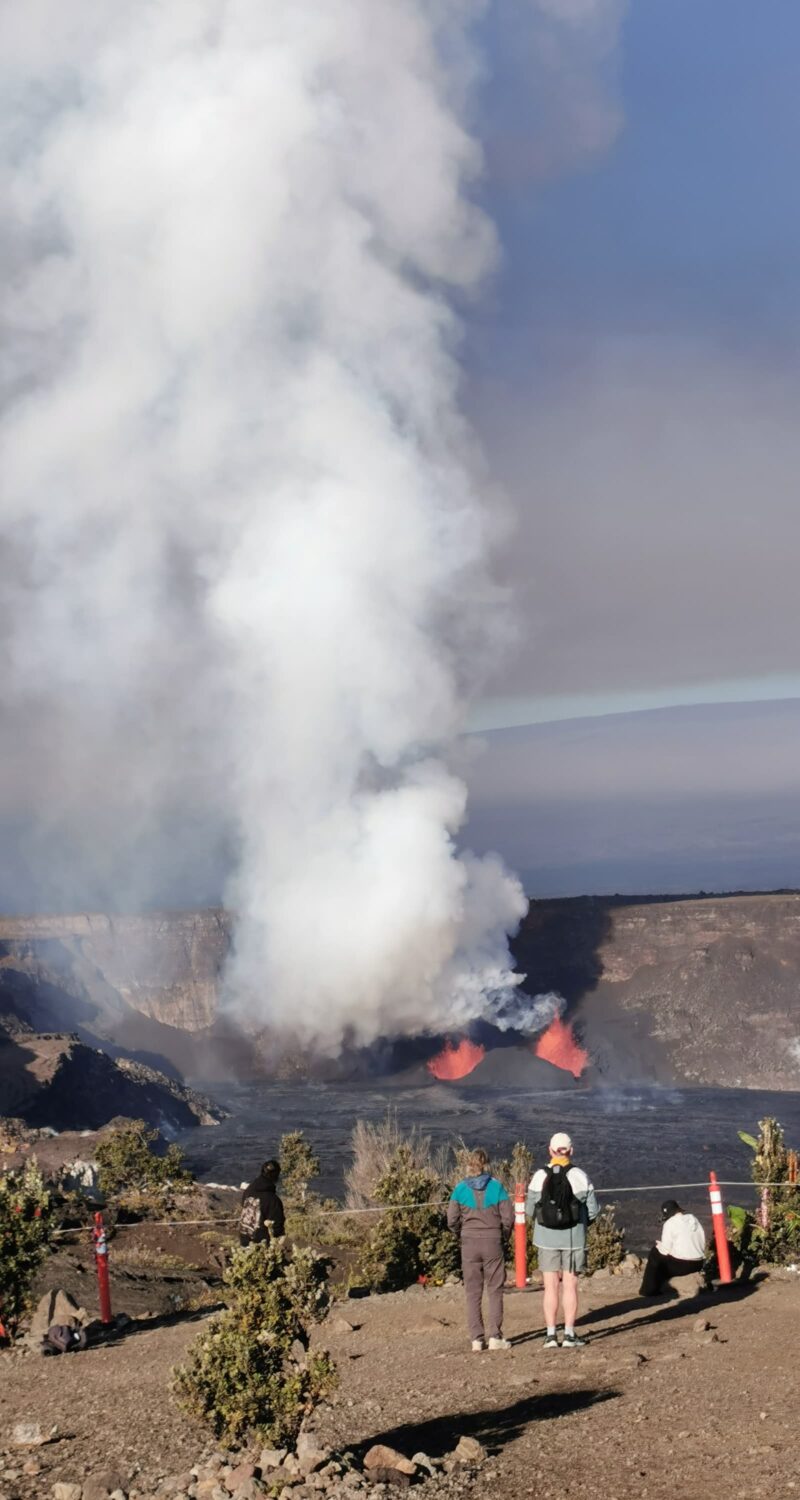
Lava activity at the Keanakekoʻi overlook in Hawaiʻi Volcanoes National Park.
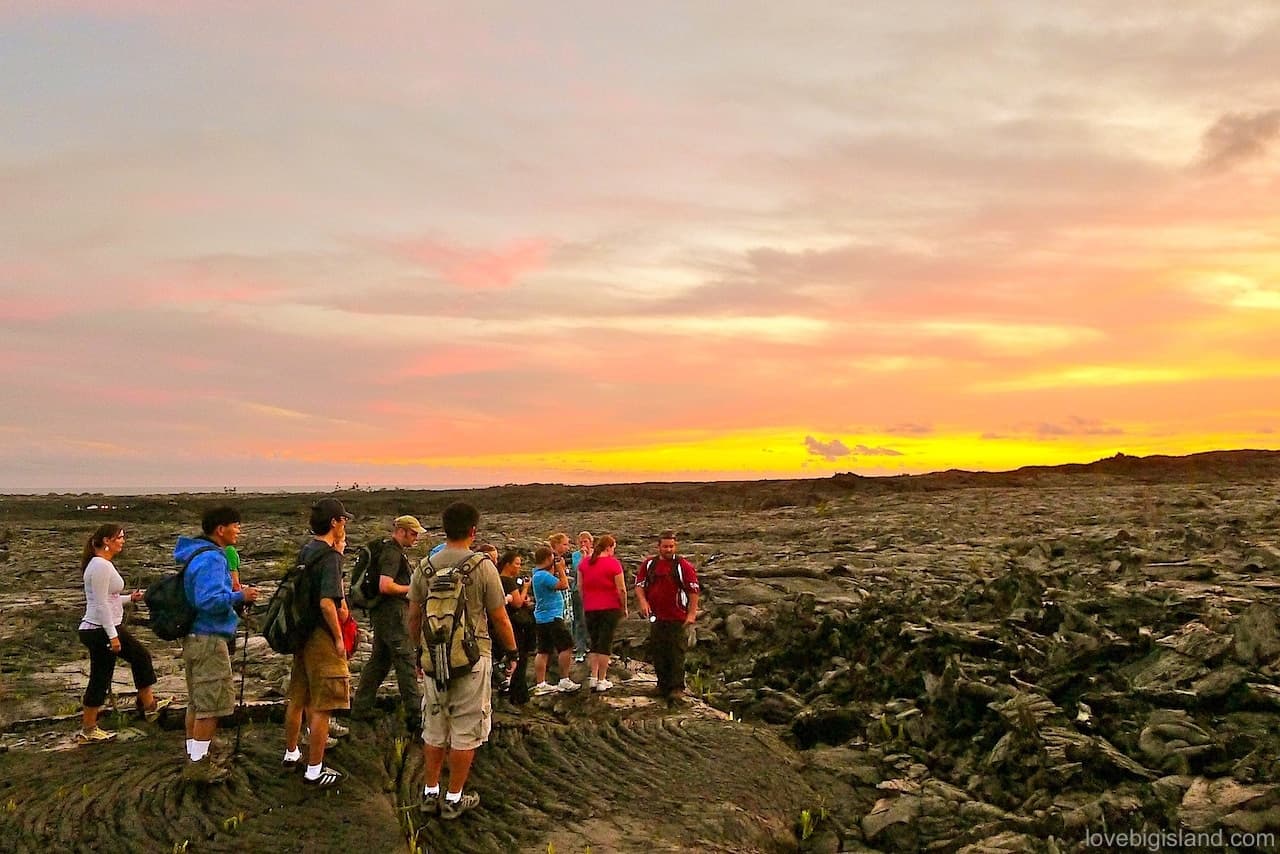
Hiking tours to the lava flow can be tiring but are worth every drop of sweat you shed.
Explore Lava Tubes
Lava tubes are tunnels left behind when the outer shell of a lava flow hardened while molten rock drained out below. The Big Island has some of the longest and most accessible ones in the world. Kaumana Caves near Hilo are free and open daily; Nāhuku (Thurston Lava Tube) inside Hawaiʻi Volcanoes National Park is paved and lit. For something more involved, guided spelunking tours go considerably deeper and run three to four hours. Most lava tubes are on the south and east sides of the island.
Read more about the ones you can visit for free or as part of a guided tour in our guide to Big Island lava tubes.
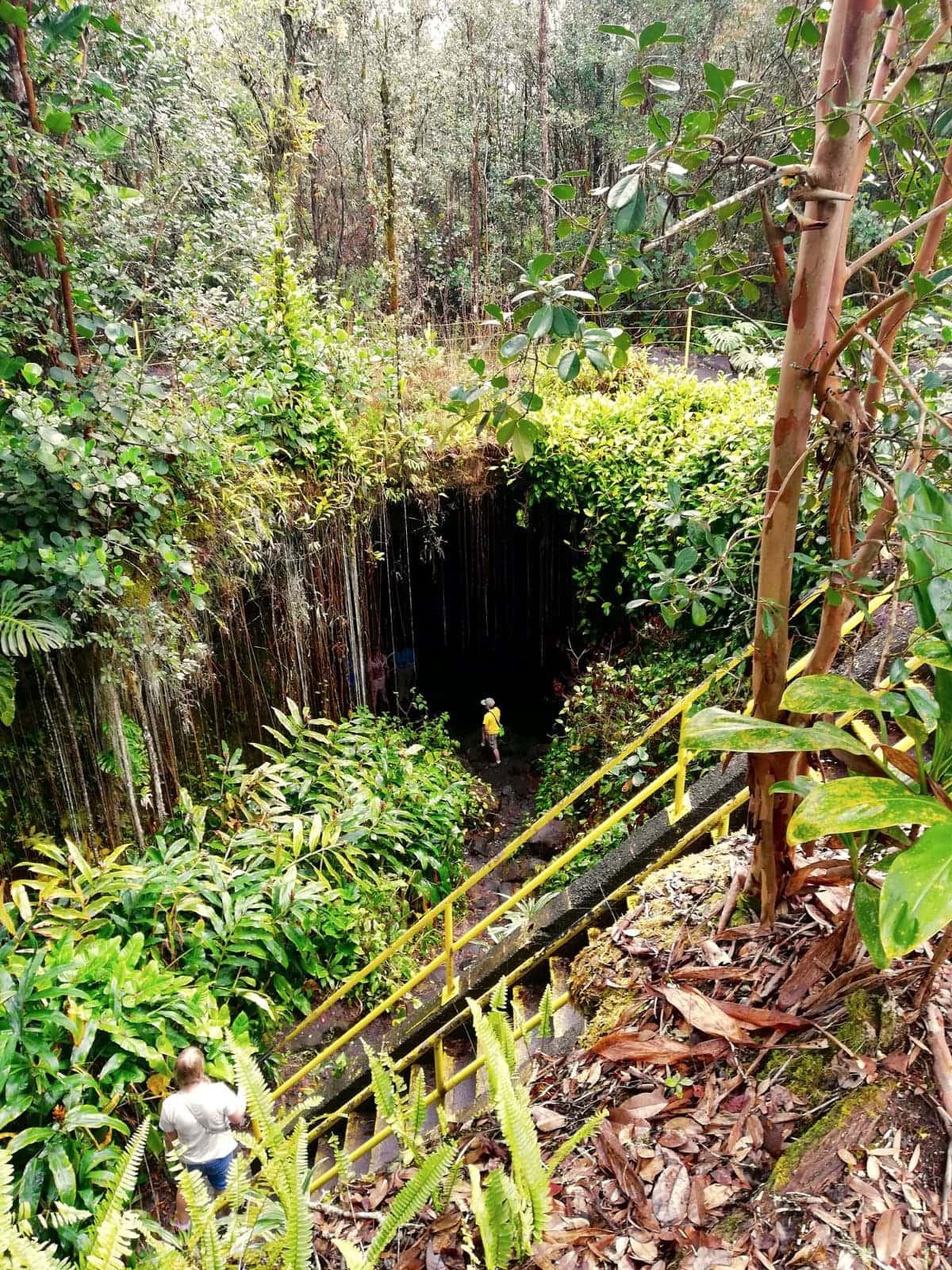
The Kaumana Caves in Hilo (free access) give access to many miles of underground lava tubes.
Luau Shows and Hula Performances
There are roughly eight luau shows running on the Big Island at any given time, and they vary more than most visitors expect. The format is consistent: a pig from an underground oven (imu ceremony), a buffet, and Polynesian cultural performances including hula and music. The differences worth paying attention to are venue size, crowd size, whether alcohol is included, and how seriously the cultural content is treated. Prices run from about $180 for basic admission to $230 or more for premium tiers.
Learn more in our comparison of Luau shows on the Big Island.
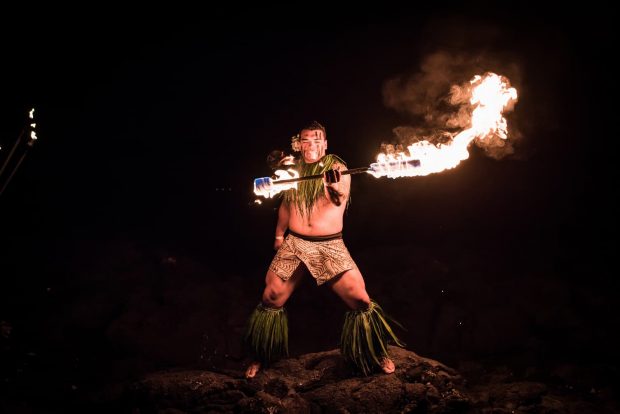
Voyagers of the Pacific Luau
An oceanfront luau on Kailua Bay where the imu ceremony is run as an audience moment and the Samoan Fire Knife Dance (Siva Afi) closes the night from center stage.
from:
$182
What is a suggested tour?Our suggested tours are hand-picked tours that receive consistent good reviews, give back to the community, and work hard to minimize their impact on the environment. Read more about these tours on our website.Manta Ray Night Snorkel + Dive
The manta ray night snorkel in Kona puts you in the water with animals that can reach an 18-foot wingspan, feeding within a few feet of your face on zooplankton drawn in by the tour’s lights. Most people on any given tour have never seen a manta before. We’ve done it more than once and would go again.
Read more about the Manta Ray night dive on our website.
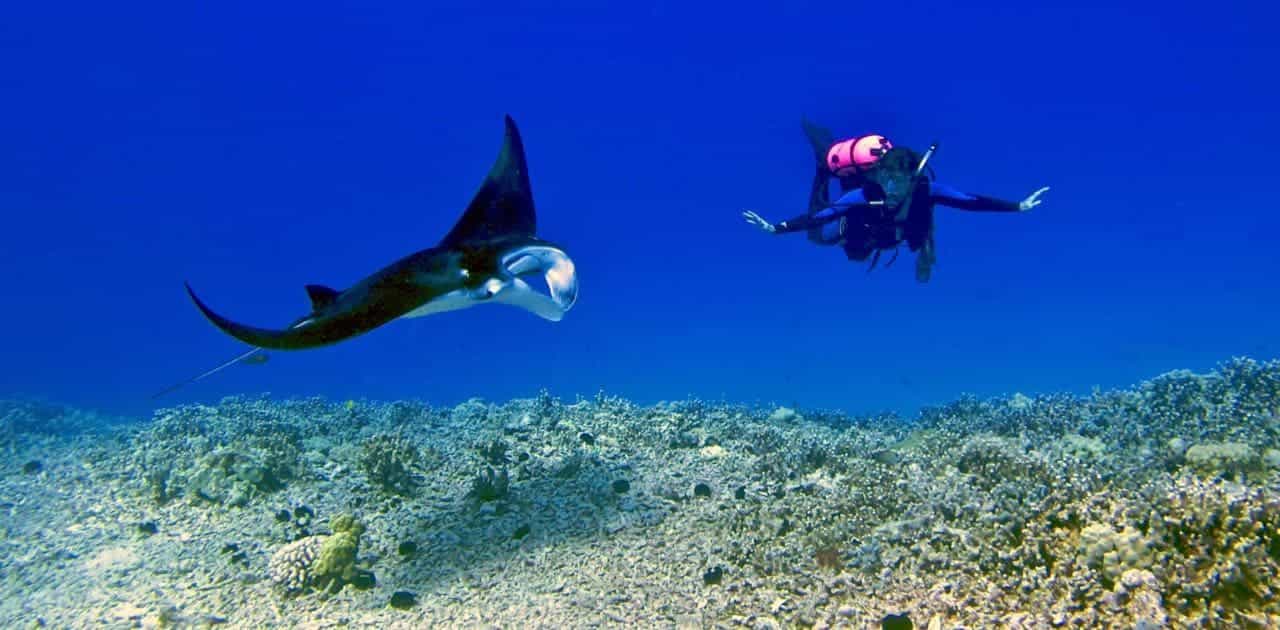
A female scuba diver swims with a young male Manta ray in the Kona district / Big Island. By Steve Dunleavy from Lake Tahoe, NV, United States – Nick and Isabelle, Kona Hawaii, CC BY 2.0, Link
Manta Ray Tours
Our guide is filled to the brim with information on how, where, and when to see the mantas, but we also recommend a few manta ray tours. The one below is our favorite because of their manta-friendly approach and good price/quality ratio (which explains why they get such stellar reviews):
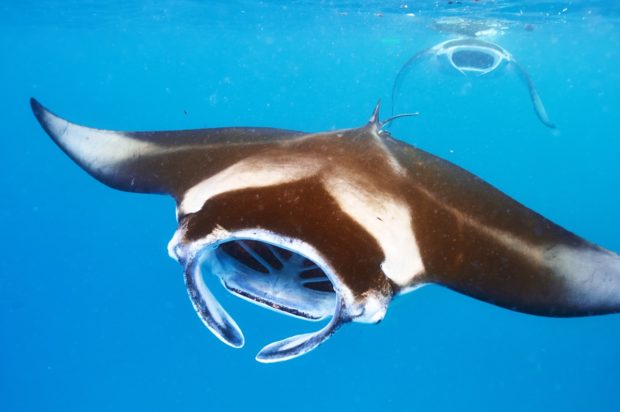
Sunset Manta Ray Night Snorkel at Keauhou Bay
Manta rays at Keauhou's Manta Village feed within inches of the lit flotation board. Sea Paradise has operated here since 1985, making them one of the longest-running operators at this location.
from:
$130
What is a suggested tour?Our suggested tours are hand-picked tours that receive consistent good reviews, give back to the community, and work hard to minimize their impact on the environment. Read more about these tours on our website.Picnic spots
The Big Island has more roadside scenery than you can eat in front of on a single trip. Building a picnic into your day saves time and the $20 to $30 cost of a sit-down lunch, and gets you to spots without a restaurant next door: beach parks, waterfall overlooks, and the Saddle Road at elevation. The Hilo Farmers Market is a practical first stop for supplies if you’re based on the east side. Pack a cooler with cold drinks if you’re spending the day on the Kohala or Kona coast, where shade and facilities can be sparse.
Read more about picnicking on the Big Island.
Waterfall Rappelling
Waterfall rappelling sits somewhere between ziplining and climbing: you descend a cliff face on ropes and a harness with an active waterfall alongside you. No experience is needed, guides cover the technique on-site before you go over the edge. There are three operators on the island, ranging from a beginner-friendly 120-foot drop to a four-hour full canyoneering day with river swimming. Prices run from $97 for a short introductory session to $399 for the full experience.
Read more about waterfall rappelling on the Big Island.
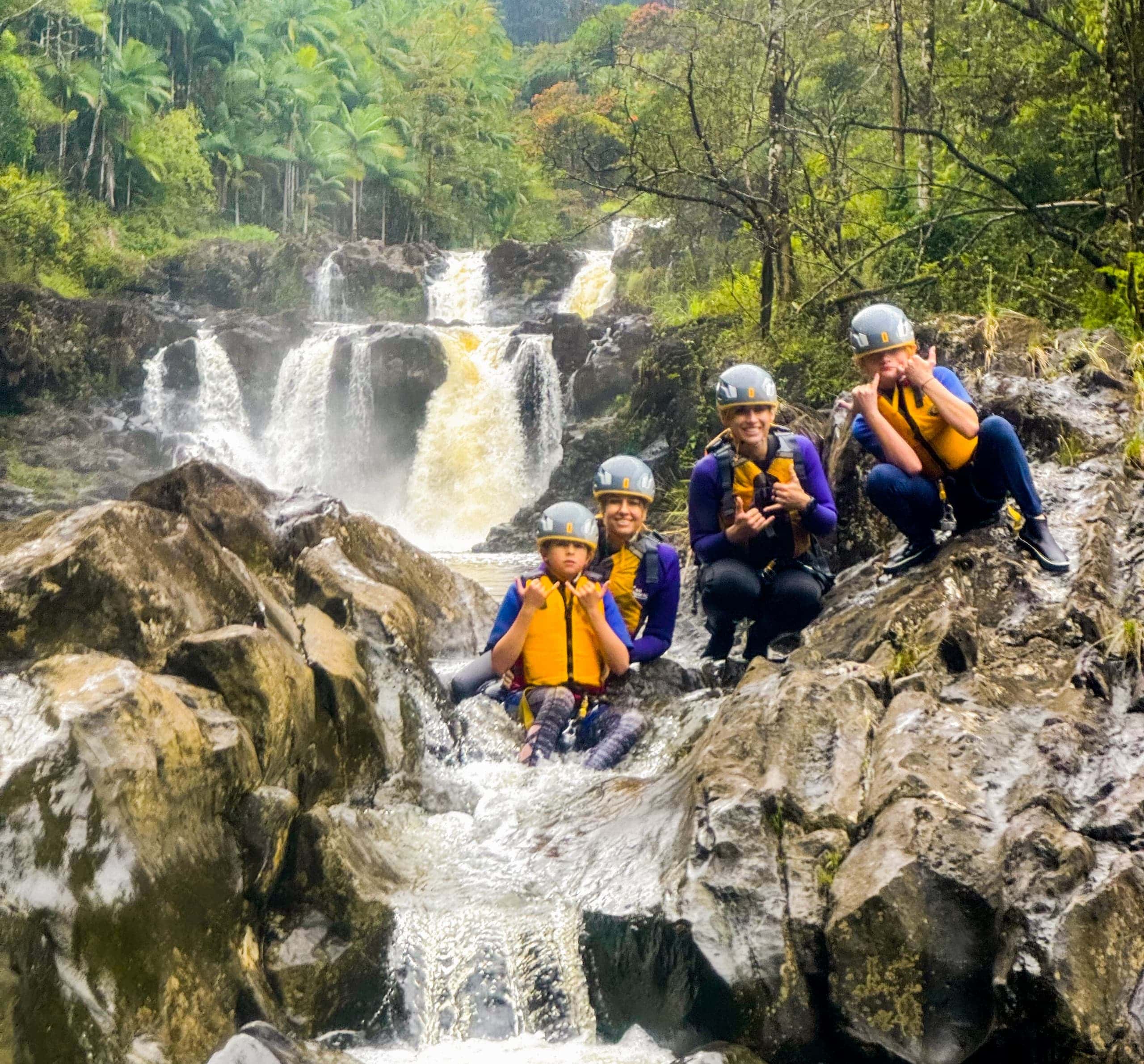
Rappel down the famous Triple-Tier waterfalls, swim, or float in river tubes. Image: Island Mountain Guides.
Scenic drives
The Big Island is about the size of Connecticut, and the drives between destinations are part of the experience. The Chain of Craters Road inside Hawaiʻi Volcanoes National Park ends at the coast where lava buried it in eruptions between 1986 and 1996. T he drive is 23 miles one way and passes multiple craters and lava formations. The Onomea Scenic Drive runs four miles through old-growth forest above Hilo Bay. None of these require a special vehicle.
Read more about Scenic drives on the Big Island.
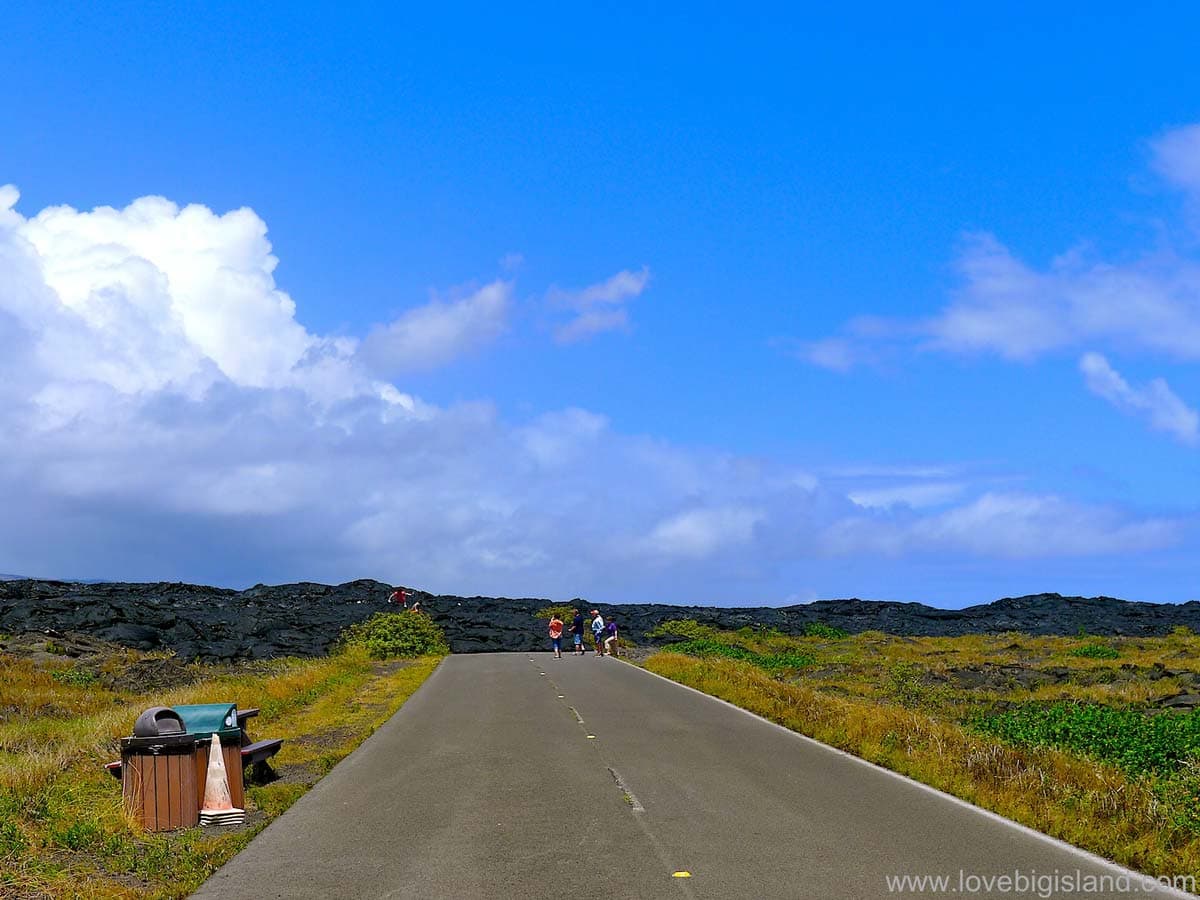
The Chain of Craters Road in Hawaiʻi Volcanoes National Park ends after 23 miles at lava flows that covered the road in several eruptions between 1986 and 1996
Scuba Diving
The Kohala Coast has some of the highest coral cover and fish biomass in the state, with fewer divers than the more-trafficked Kona sites. Sea caves, submerged lava tubes, and coral belts span the island, and the better sites require a boat to reach. Most operators run morning two-tank dives from Kona or Kawaihae; visibility on a clear day routinely runs over 100 feet.
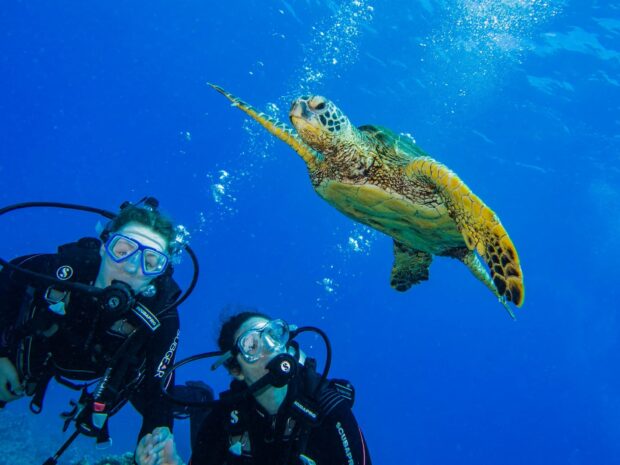
6-hour Morning Dive at 2 Stunning Kohala Coast Dive Sites
Dive at 2 Kohala Dive Sites with great underwater scenes on offer for every diver’s experience level (and snorkelers as well)
from:
$209
What is a suggested tour?Our suggested tours are hand-picked tours that receive consistent good reviews, give back to the community, and work hard to minimize their impact on the environment. Read more about these tours on our website.Read more about the dive sites and tour options in our guide to Big Island Scuba Diving.
Snorkeling
The Big Island’s top snorkel spots include a Marine Life Conservation District (Kealakekua Bay, accessible by kayak, tour boat, or a long hike in), a bay that doubles as a spinner dolphin resting area (Honaunau), and several Kohala Coast beach parks where sea turtles surface regularly. Gear is cheap to rent near most beach parks, the water is warm year-round, and visibility is usually 30 or more feet.
In our guide to Snorkeling on the Big Island you will find our favorite snorkeling spots, snorkeling tips, and snorkeling tours. We also give our two cents about how to snorkel responsibly (both for yourself and for the reef + fish).
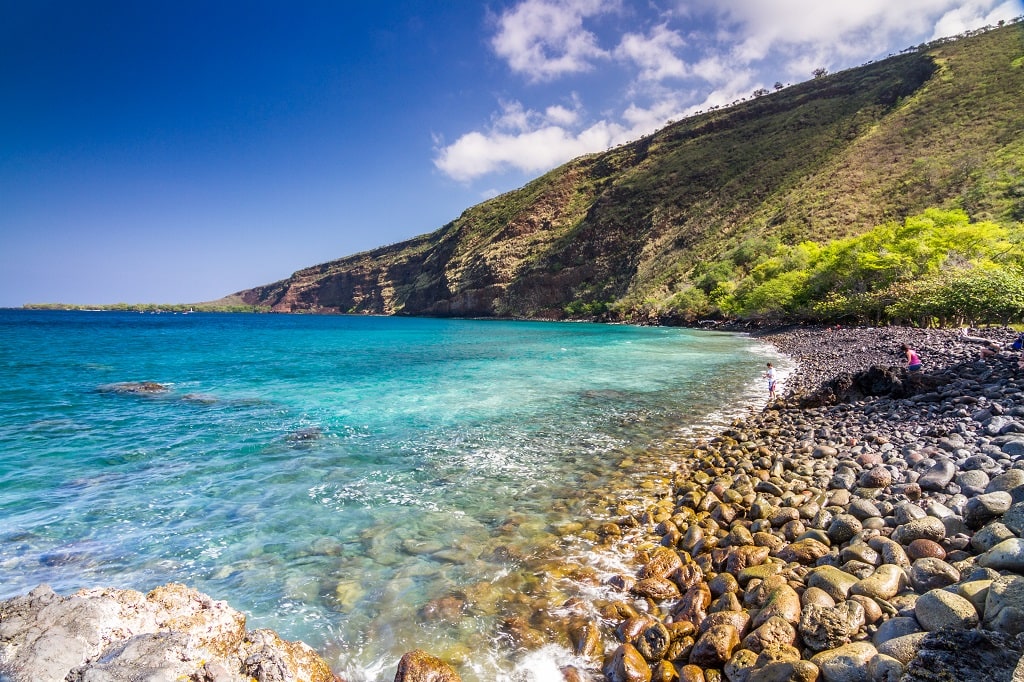
Kealakekua Bay is one of the best places for snorkeling on the Big Island
Snorkeling tours
If you are not confident you can find all the best snorkeling spots on your own, or just don’t want to invest the little time you have on the Big Island into renting gear and taking care of everything yourself, you can choose to go on an organized snorkeling tour. Snorkeling tours typically last 3 to 6 hours and use a boat to take you to some favorite snorkeling spots. Snorkeling gear, food and drinks, and entertainment are often taken care of. We are always happy with the tours offered by Body Glove (operating from Kona) and by Sea Paradise (operating from the Keauhou harbor south of Kona).

Morning Sail and Snorkel to Kealakekua Bay and Red Hill
The Hoku Nui holds anchor rights in Kealakekua Bay Marine Life Conservation District. Two snorkel stops, both meals included, and crew enters the water with every group.
from:
$165
What is a suggested tour?Our suggested tours are hand-picked tours that receive consistent good reviews, give back to the community, and work hard to minimize their impact on the environment. Read more about these tours on our website.Stargazing and the Mauna Kea summit
Maunakea’s summit sits at 13,796 feet, above 40% of the earth’s atmosphere, which is why 13 of the world’s major observatories are located there. On a clear night, the Milky Way is visible to the naked eye from the visitor center at 9,200 feet. You do not need a tour: the summit road is open to four-wheel-drive vehicles during daytime.
In our guide to Stargazing on the Big Island we explain how you can visit the Maunakea Visitor Center and see the telescopes and sunset at the summit.
Stargazing Tours to the Maunakea summit
Joining a stargazing tour is a good solution for people that do want to go to the Maunakea summit to see the sunset and then go stargazing, but don’t want to drive the summit road or go through the hassle of organizing a 4×4. If this sounds like you, have a look at the following tour, which we recommend for their knowledgeable and interpretive guides.
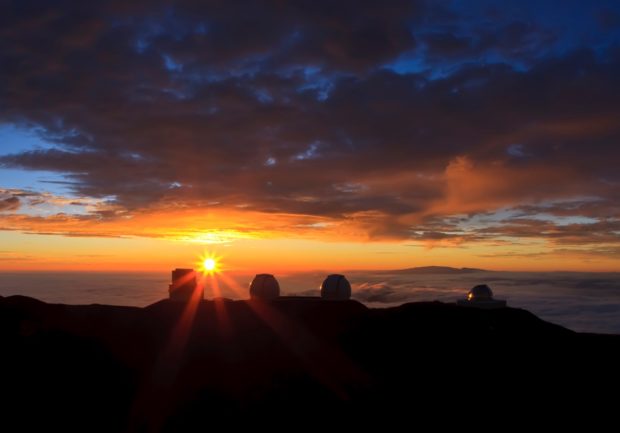
Maunakea Summit, Sunset, and Stargazing Tour
A small-group tour from Kona to the 13,796-foot summit of Maunakea: dinner at 9,200 feet, sunset above the cloud layer, and a private star show with an 11-inch telescope. Saturn, Jupiter, and the Milky Way on a clear night. 8 to 9 hours.
from:
$315
What is a suggested tour?Our suggested tours are hand-picked tours that receive consistent good reviews, give back to the community, and work hard to minimize their impact on the environment. Read more about these tours on our website.Stand-Up Paddleboarding (SUP)
Stand-up paddleboarding has Hawaiian roots going back to the surf instructors of Waikīkī in the early 1900s. The calm waters of Hilo Bay and the Kona coast make both good spots for beginners. Rental shops in Kailua-Kona and Hilo rent boards by the hour; most include a short orientation. Mornings are calmer than afternoons on both coasts. If you’d rather explore on your own, the Kona coastline has sea caves and lava formations visible from the water that you won’t see from land.
Read more about SUP on the Big Island.
Dolphins and Spinner Dolphin Tours
Federal regulations in effect since October 2021 prohibit approaching spinner dolphins within 50 yards or entering the water near them. This ended the swim-with-dolphins tour format that previously operated on the Big Island. What is still possible is joining a snorkel cruise that passes through spinner dolphin habitat: the dolphins often follow boats voluntarily and swim in the wake. Any tour advertising a “swim with dolphins” experience is operating outside the federal rule; we don’t recommend those operators.
Read more on the how and why in our guide to dolphins on the Big Island.
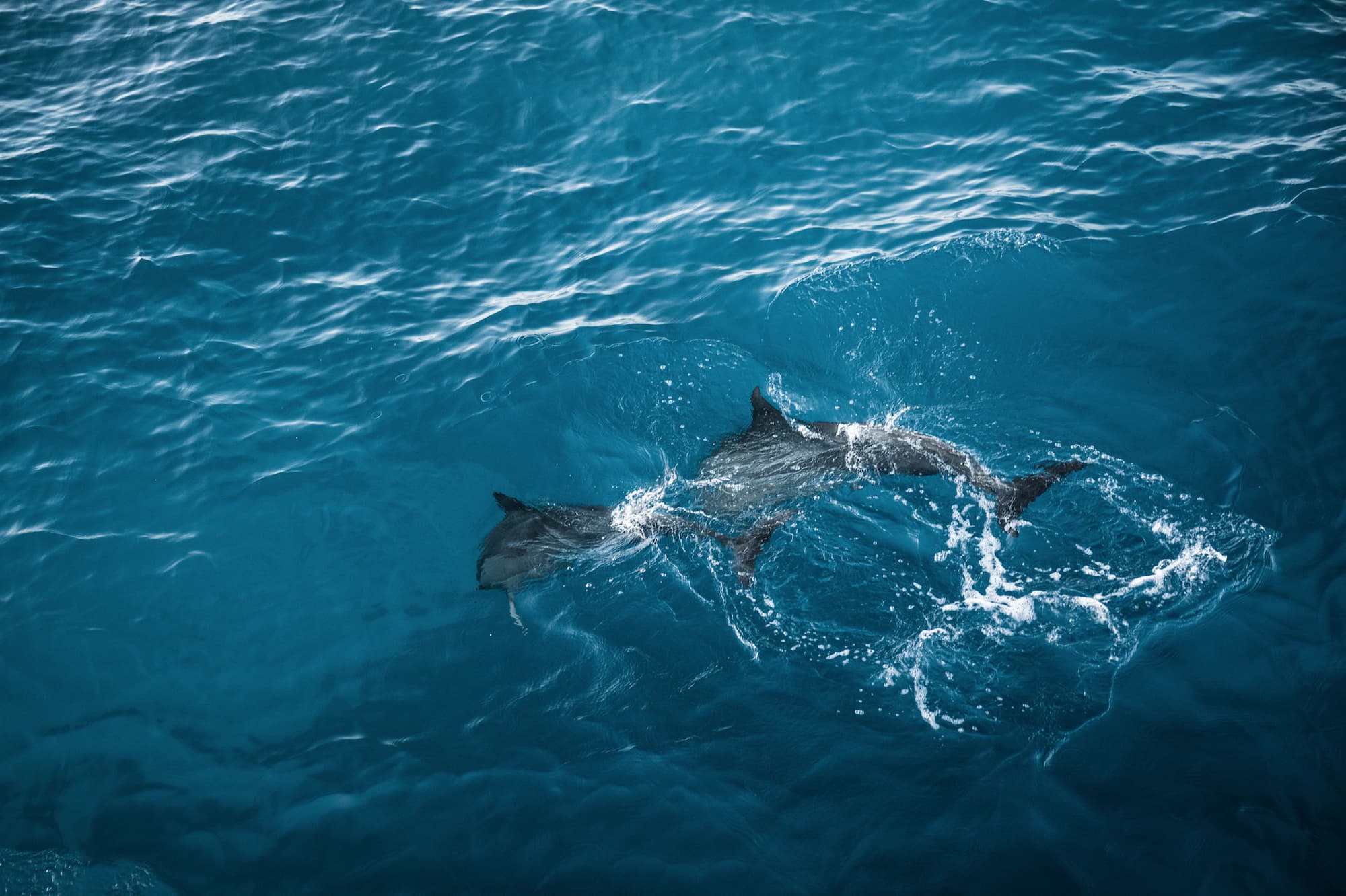
Spinner dolphins swimming off the Kona coast. Credit: Island of Hawaii Visitors Bureau (IHVB) / Julie Hotz
See dolphins on a tour the sustainable way
Since October 2021, federal regulations prohibit dropping people in the water close to dolphins or actively approaching them. One of the best ways to see dolphins now is to join a snorkeling cruise that takes you past places with healthy dolphin populations. Those dolphins will often follow the boats and play in the wake. One of these tours is the 4.5 hour morning snorkel cruise, which offers an excellent chance of dolphin and other marine mammal sightings while they cruise to the snorkel site (note: there is no dolphin guarantee).
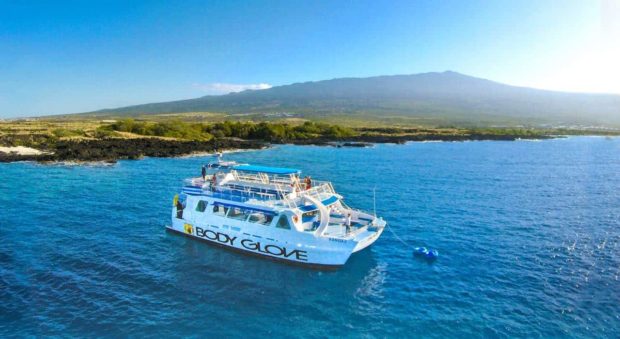
Deluxe Snorkel & Dolphin Watch
Step aboard a 65’ Catamaran for a fun-filled day of adventure! This 4.5 hour cruise offers breakfast, lunch, and all the comforts you would expect from being on a $2 million vessel.
from:
$175
What is a suggested tour?Our suggested tours are hand-picked tours that receive consistent good reviews, give back to the community, and work hard to minimize their impact on the environment. Read more about these tours on our website.Surfing
Kahaluʻu Bay in Kailua-Kona is the main beginner surf spot on the island: the break is consistent, the water is shallow over reef, and several surf schools operate there with instructors in the water alongside you. For intermediate and experienced surfers, the north shore beaches in Kohala and the east side near Hilo offer different conditions and less instructor traffic. Board rentals run about $25 to $40 per hour at most shops.
Read more about surf spots and board rentals in our guide to surfing on the Big Island.
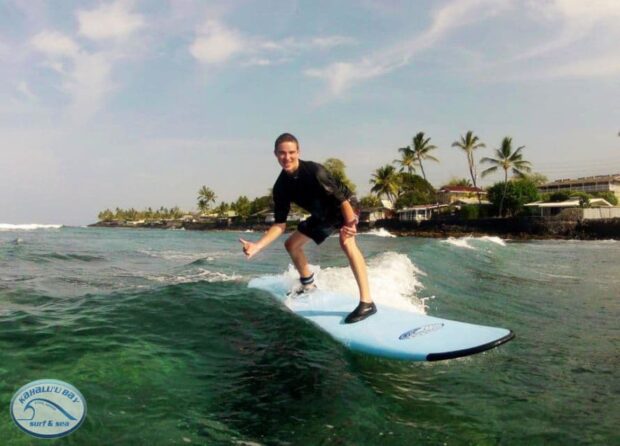
Surf Lessons in Kona at Kahaluʻu Bay
Two-hour surf lessons at Kahaluʻu Bay, one of the more forgiving breaks on the Kona coast. CPR-certified instructors work in the water alongside you, timing waves and helping you catch them
from:
$139
What is a suggested tour?Our suggested tours are hand-picked tours that receive consistent good reviews, give back to the community, and work hard to minimize their impact on the environment. Read more about these tours on our website.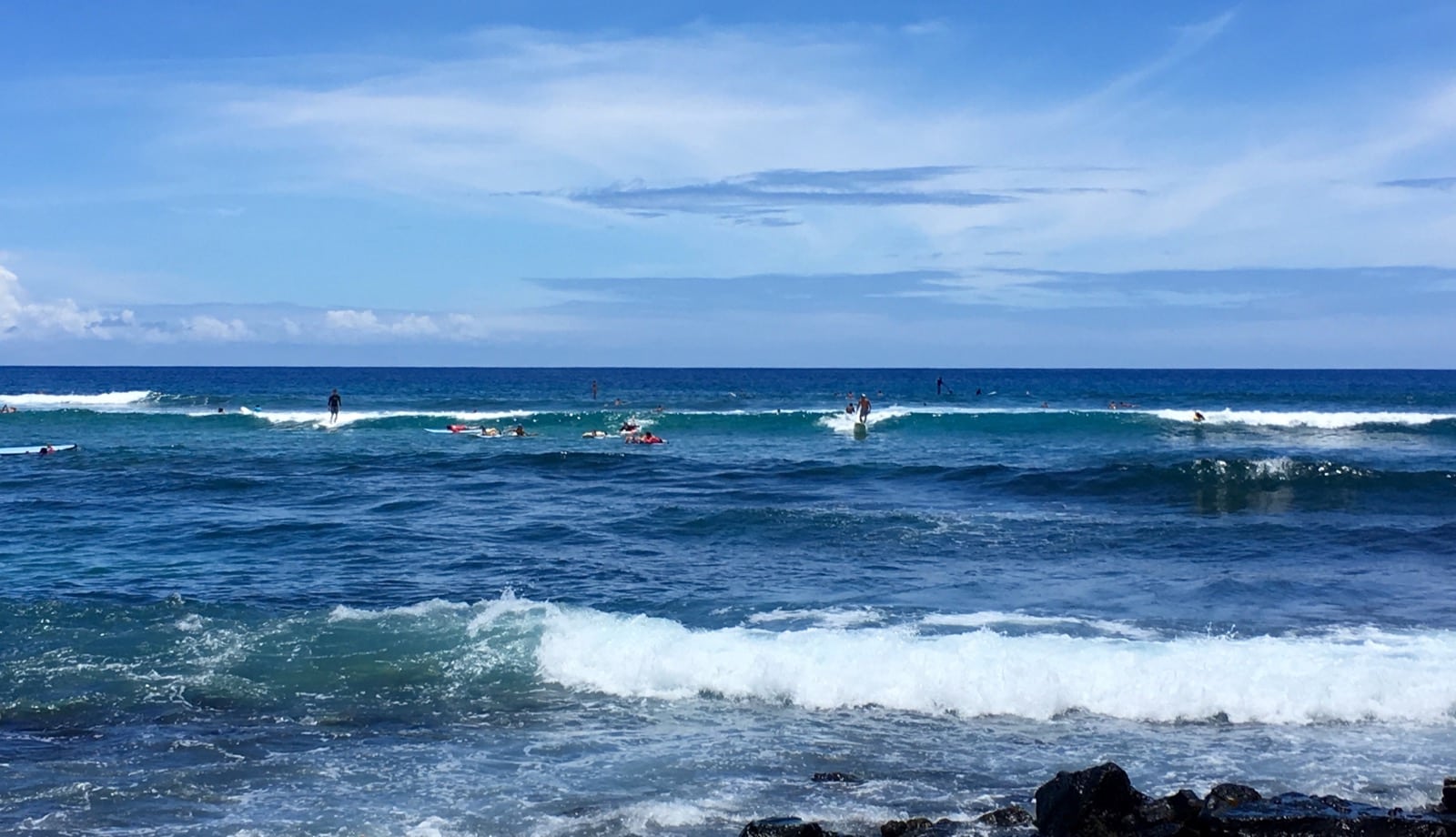
Kahaluʻu Bay is one of the more popular beginner surf spots on the Big Island.
Volunteer and give back during your visit
Volunteer programs on the Big Island cover watershed restoration, native bird habitat work, reef monitoring, and cultural site maintenance. Most programs run as single-day or half-day commitments, which fits within a standard vacation schedule. The work takes you into areas most visitors never see: fenced native forest preserves above Hilo, coastal restoration sites on the Kona coast, and off-trail terrain inside the national park. If you’re staying more than seven days, one volunteer day is a practical addition to the itinerary.
Read more about the volunteering opportunities on the Big Island.
Waterfalls
The north and east sides of the Big Island get the most rainfall, and the steep terrain between the highlands and the coast produces dozens of waterfalls within range of a day trip. Akaka Falls drops 442 feet and is accessible via a paved loop trail in under 20 minutes. Umauma Falls and Rainbow Falls are on the same side of the island and can be visited in a single morning from Hilo. The full guide lists them by height, accessibility, and whether swimming is permitted.
Read more about the most accessible ones in our guide to waterfalls on the Big Island.
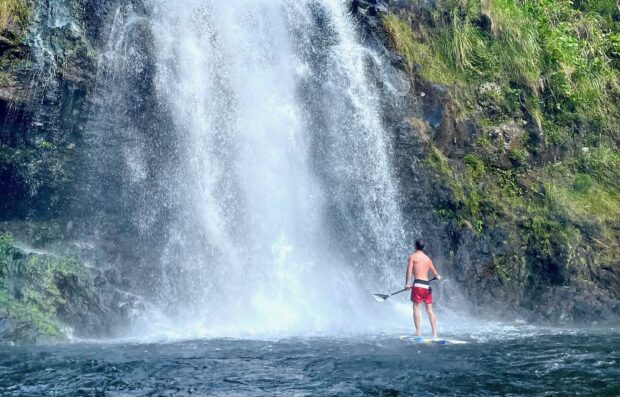
Private Kulaniapia Falls Day Pass
One of the only swimmable waterfalls near Hilo where a daily visitor cap means you won't share the pool with a crowd.
from:
$49
What is a suggested tour?Our suggested tours are hand-picked tours that receive consistent good reviews, give back to the community, and work hard to minimize their impact on the environment. Read more about these tours on our website.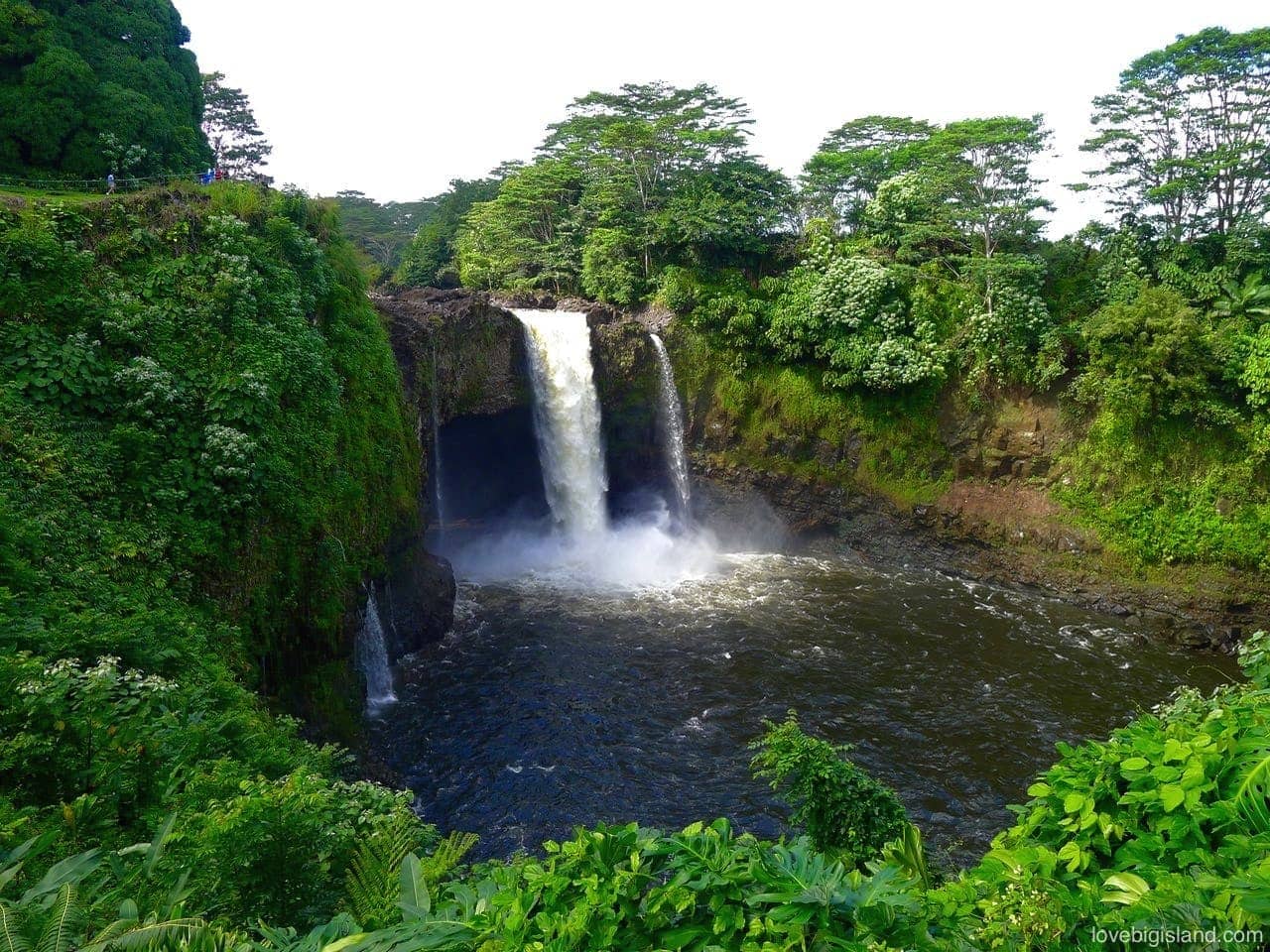
Rainbow Falls in Hilo is easy to access and produces rainbows during early morning visits.
Whale Watching
Humpback whales arrive in Hawaiian waters between November and April, and the Big Island is our favorite island to see them. During peak season (January through March) can be spotted from shore along the Kona coast with some luck. Boat tours get you within 100 yards, and the better operators carry hydrophones so you can hear them underwater.
All of this (and more) is explained in our guide to whale watching on the Big Island (or see directly which whale watching tours we think are the best).
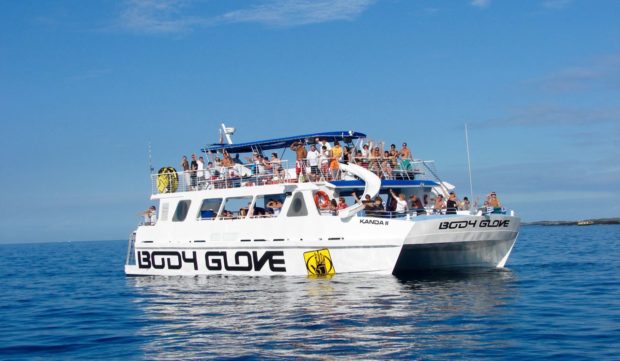
Whale Watching Cruise from Kona
2.5 hour Whale Watching Excursion with free snacks, guaranteed whale sightings (or come again!), an on-board marine life naturalist, and underwater hydrophones so you can hear the whales sing.
from:
$125
What is a suggested tour?Our suggested tours are hand-picked tours that receive consistent good reviews, give back to the community, and work hard to minimize their impact on the environment. Read more about these tours on our website.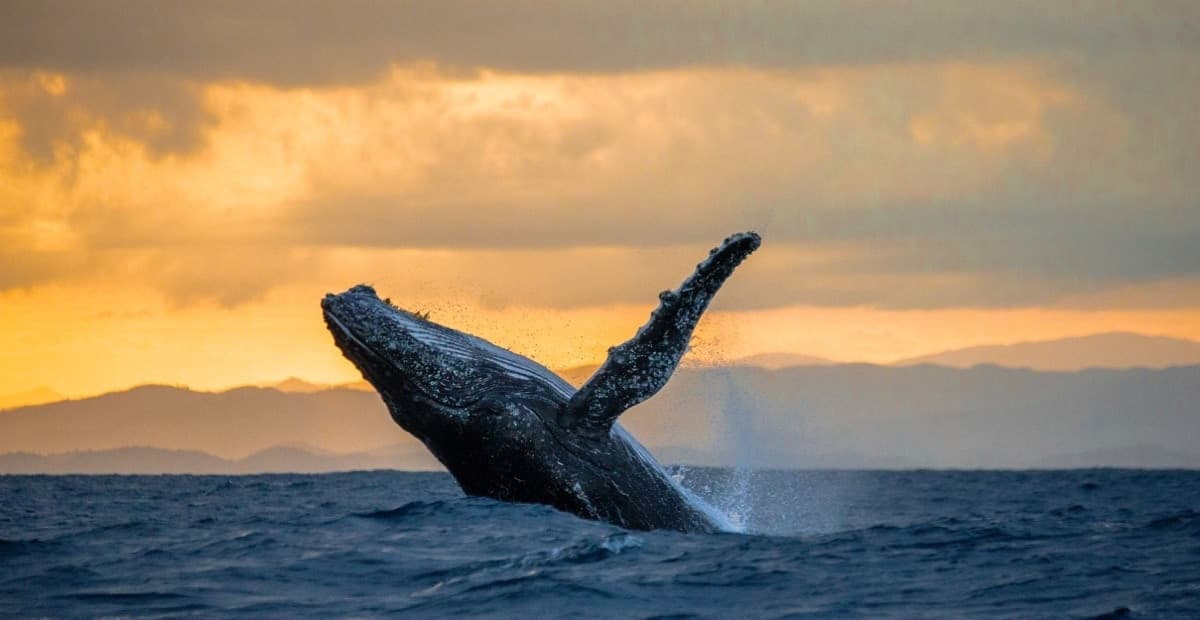
A humpback whale breaches the surface.
Ziplining
The Big Island has four zipline operations: three clustered on the Hamakua coast near Hilo, where the terrain gives forest canopy and waterfall views, and one north of Kona on the Kohala Coast. The Kohala Zipline is the largest, with eight lines, six sky bridges, and a rappel in a private nature reserve above Hawi. The Hamakua options are shorter but cheaper and work well as a half-day addition to the Hilo side of the island. Duration runs 1.5 to 3 hours depending on the course.
You can learn more about all 4 of these ziplines in our guide to Ziplining on the Big Island.
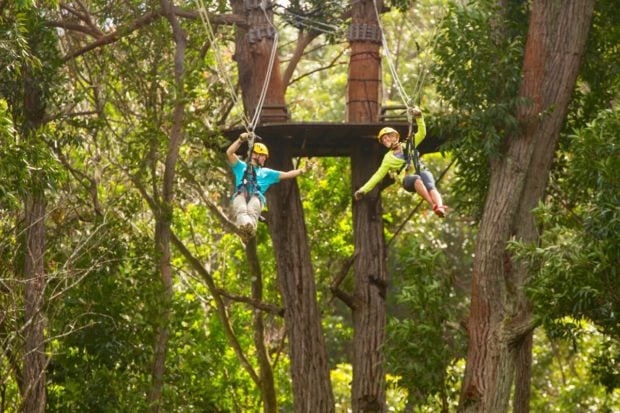
Kohala Canopy Zipline Adventure
Eight ziplines, six sky bridges, and one rappel through old-growth forest above Hawi. The only full canopy tour on the Big Island, with no stair-climbing between zips.
from:
$245
What is a suggested tour?Our suggested tours are hand-picked tours that receive consistent good reviews, give back to the community, and work hard to minimize their impact on the environment. Read more about these tours on our website.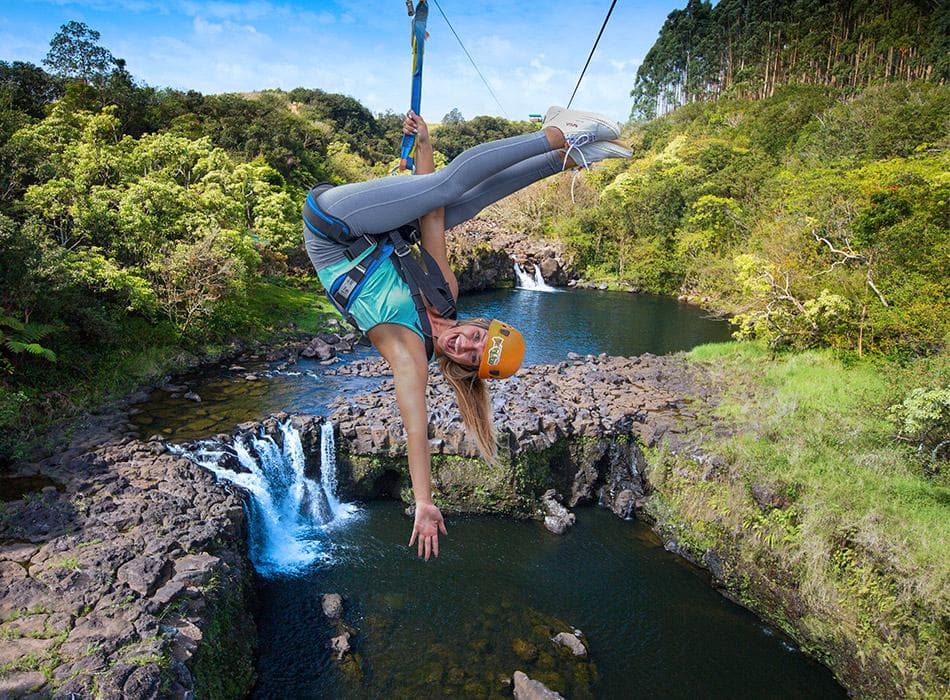
A zipline at the Umauma eXperience that lets you soar by the famous triple-tiered Umauma Falls.