
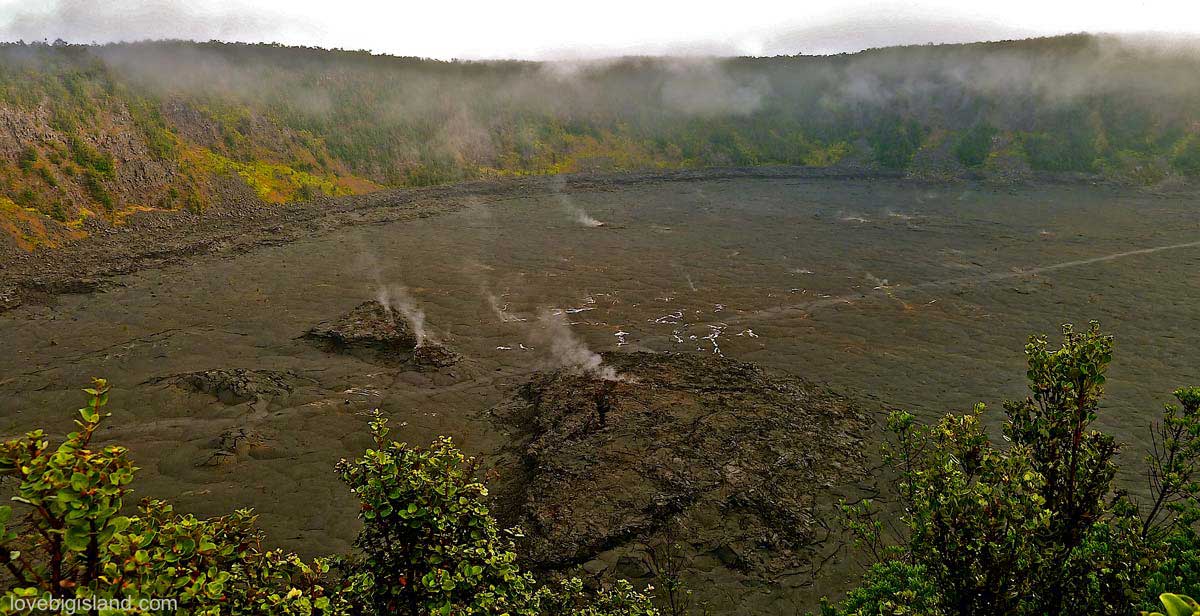
Kīlauea Iki is the best short hike on the Big Island. The 3.3-mile loop drops 400 feet into a crater that erupted in 1959, crosses a hardened lava lake still venting steam, and climbs out through tree ferns and ʻōhiʻa lehua. Two to three hours. Get there early: the National Park Service calls overlook parking extremely limited.
The other four sit around the island: a 29% grade down to black sand at Pololū, a $35 garden above Onomea Bay, open pāhoehoe to 23,000 petroglyphs, and a one-lane road to Mauna Loa Lookout, 6,662 feet. Waipiʻo is off the list. The floor has been closed to all pedestrians since February 2022, and a rented 4WD doesn’t change that. The rim lookout is open and free.
Table of contents
- Kīlauea Iki Trail hike: 3.3-mile loop, difficulty: moderate
- Pololū Valley hike: 1.2 miles round trip, difficulty: moderate
- Hawaii Tropical Botanical Garden: 1.25 miles, difficulty: easy
- Mauna Loa Lookout: 35 to 40 minutes each way, difficulty: easy
- Puʻu Loa petroglyph trail: 1.4 miles round trip, difficulty: easy
- Valley floor closed: Waipiʻo Valley Lookout
Prices, details, and map locations below last verified August 2026.
| Name | Duration | Distance | Entry fee |
|---|---|---|---|
| 1Pololū Valley (Details ↓) | 1 hour | 1.2 miles | Free |
| 2Mauna Loa Lookout (Details ↓) | 1 hour | Your choice | Free |
| 3Waipiʻo Valley Lookout (Details ↓) | 20 minutes | Lookout only, valley closed | Free |
| 4Kīlauea Iki (Details ↓) | 2-3 hours | 3.3 miles | $30/vehicle (park entrance fee) |
| 5Puʻu Loa petroglyph field (Details ↓) | 1-1.5 hours | 1.4 miles | $30/vehicle (park entrance fee) |
| 6Hawaii Tropical Botanical Garden (Details ↓) | 1.5-2 hours | 1.25 miles | $35 |
Kīlauea Iki Trail (3.3-mile loop, moderate) #
(Hawaiʻi Volcanoes National Park)
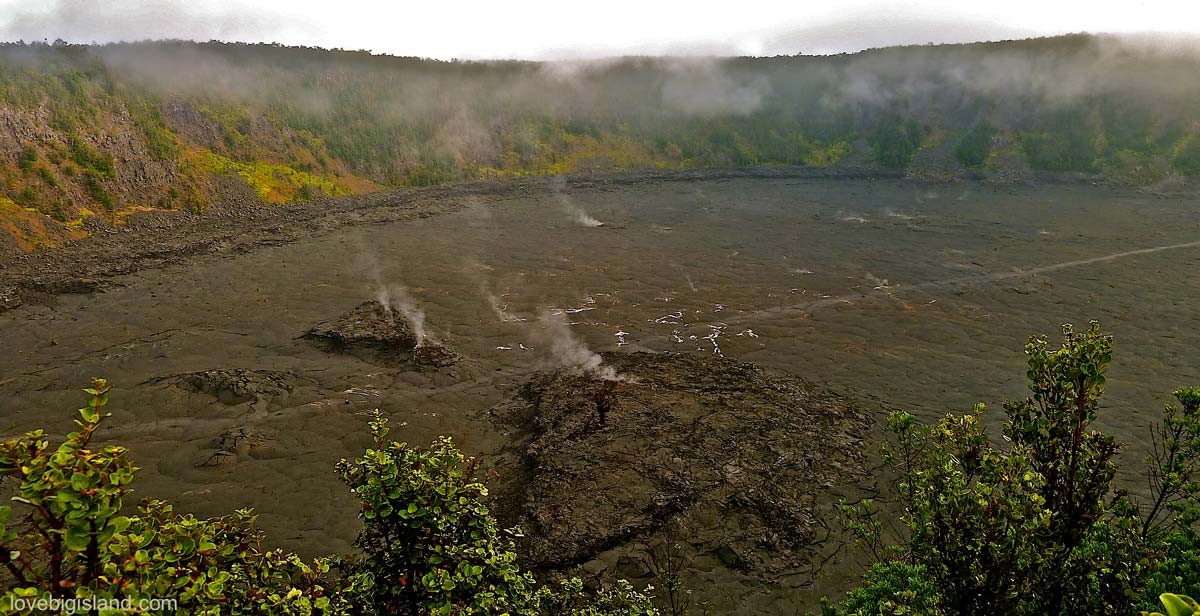
Overview of the Kīlauea Iki caldera. The flat floor is the hardened 1959 lava lake the trail crosses.
Kīlauea Iki began erupting on November 14, 1959, and at its peak the fountain reached about 1,900 feet. It ran until December 20, five weeks in all, and left the pond of lava that is now the flat crater floor the trail crosses (USGS has the full eruption record). The trail crosses that hardened surface past steam still rising from the cracks, then climbs back through ʻōhiʻa lehua forest along the rim.
NPS puts the loop from Kīlauea Iki Overlook at 3.3 miles and two to three hours, 400 feet down to the crater floor and the same back up. That climb out is the only hard part. The distance is short and the floor is flat. The overlook sits at 3,874 feet, so bring a layer if you are coming up from Kona, and water either way. Start by 8am, for the parking as much as the heat.
Parking is the constraint. NPS calls the Kīlauea Iki Overlook lot “extremely limited” and says that during peak hours there may be no parking at all. Their own advice is to start somewhere else and walk in: 5.3 miles round trip from Kīlauea Visitor Center, or 6.0 miles from Devastation Trailhead. If you get there mid-morning and the lot is full, park at the visitor center and walk in rather than circling.
Fees: Hawaiʻi Volcanoes charges $30 per private vehicle, $25 per motorcycle, or $15 per person on foot or by bike. Under-16s are free, and the Hawaiʻi Tri-Park annual pass is $55. The park does not accept cash, so bring a card. The same pass covers the Puʻu Loa trailhead on Chain of Craters Road.
The hike: from the overlook the recommended direction is counterclockwise, to your right. The trail descends through rainforest to the crater floor, where cairns mark the route across the lava. Look down as you cross: in and between the cinders you can find the small green olivine crystals that also color the sand at Papakōlea beach. On the far side it climbs back out, passing the Thurston Lava Tube, which is worth a 30-minute detour. NPS publishes a trail guide for the numbered markers along the way.
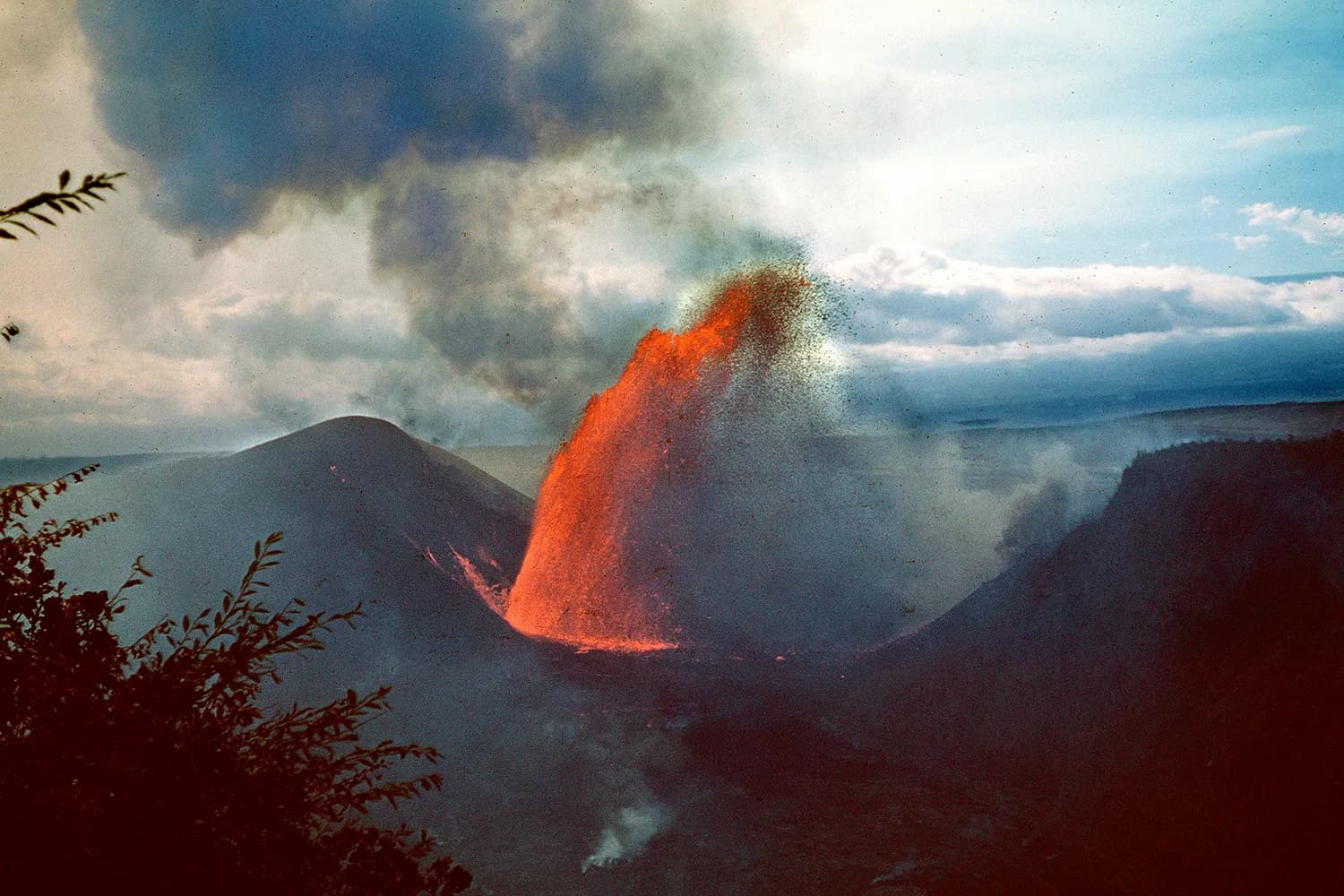
At the height of the eruption a lava fountain reached 1,900 feet (580 meters) into the sky. Credit: 1959 USGS photo.
Pololū Valley (1.2 miles, moderate) #
(Kohala)
Pololū is an out-and-back. From the lookout at the end of the road it’s 0.6 miles of steep trail down to a black sand beach, then the same trail back up. That is 1.2 miles round trip, about an hour of walking, with 420 feet of drop. Hawaiʻi DLNR rates it moderate rather than easy: a typical grade of 29% and a maximum of 54%, on a soil surface with embedded cobblestones from the old government road.
Wear shoes with grip and bring water. The surface goes slick fast after rain, and DLNR’s hazard list for this trail runs to slippery rocks, falling rocks and a dangerous cliff. On the way down the Kohala coast runs back toward Waipiʻo, and the cliff line drops straight to the water.
The beach at the bottom is not for swimming. DLNR flags dangerous shorebreak, rip currents and strong current here, and there are no lifeguards. It’s a good place to sit and eat something before the climb back out, which is the harder half. The lookout and the trail are both free.
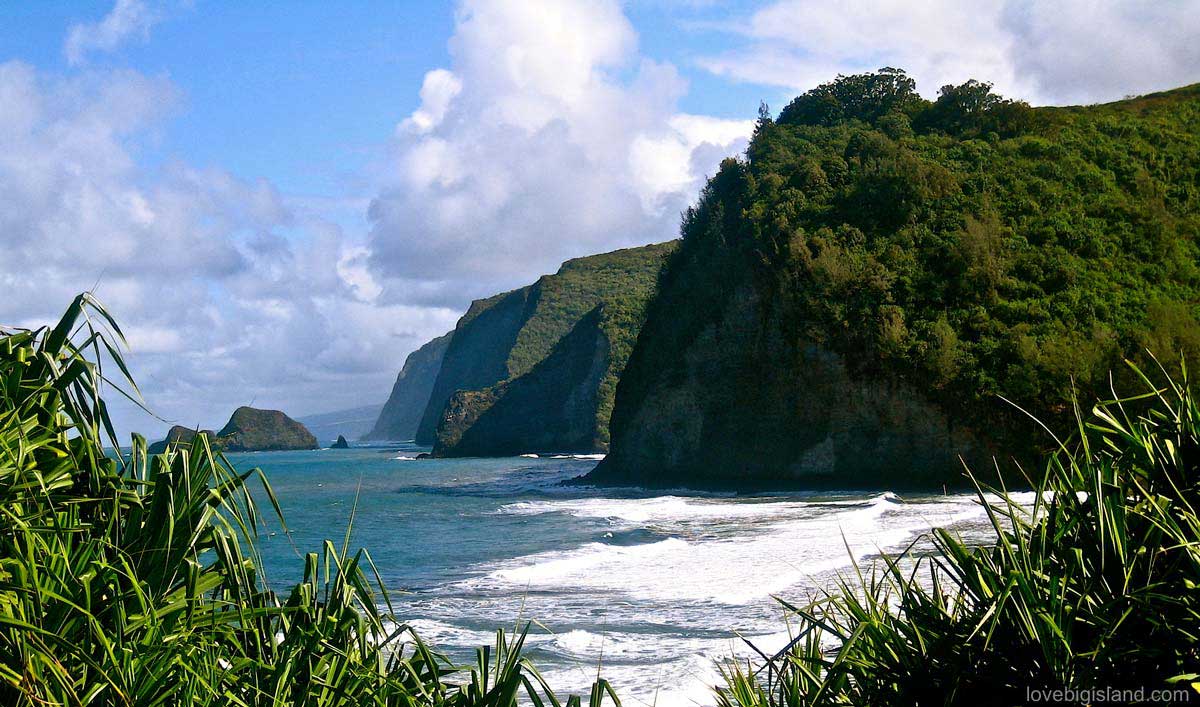
View of the Pololū black sand beach and the cliffs in the direction of Waipiʻo valley
Directions: the Pololū Valley lookout is at the end of Akoni Pule Highway (270), east of Hāwī on the northern tip of the island. Depending on how busy it is you may have to park along the road and walk a few minutes. Groups of more than ten need to notify Nā Ala Hele in advance.
Local grinds: Motek Bakery does organic sourdough and Mediterranean baking in North Kohala, Thursday through Sunday. They post hours on Instagram, so check the feed before you drive out.
Hawaii Tropical Botanical Garden (1.25 miles, Hāmākua Coast) #
The garden sits in a ravine above Onomea Bay, 7 miles north of Hilo, and holds over 2,500 plant species. The self-guided trail runs about 1.25 miles and it climbs and drops the whole way. Most guests take an hour and a half to two hours over it. The lower portion opens onto the bay.
Turn makai, toward the ocean, between mile markers 7 and 8 on Highway 19 out of Hilo. The road in is one lane and runs under dense canopy, and it is one of our favorite scenic drives on the island.
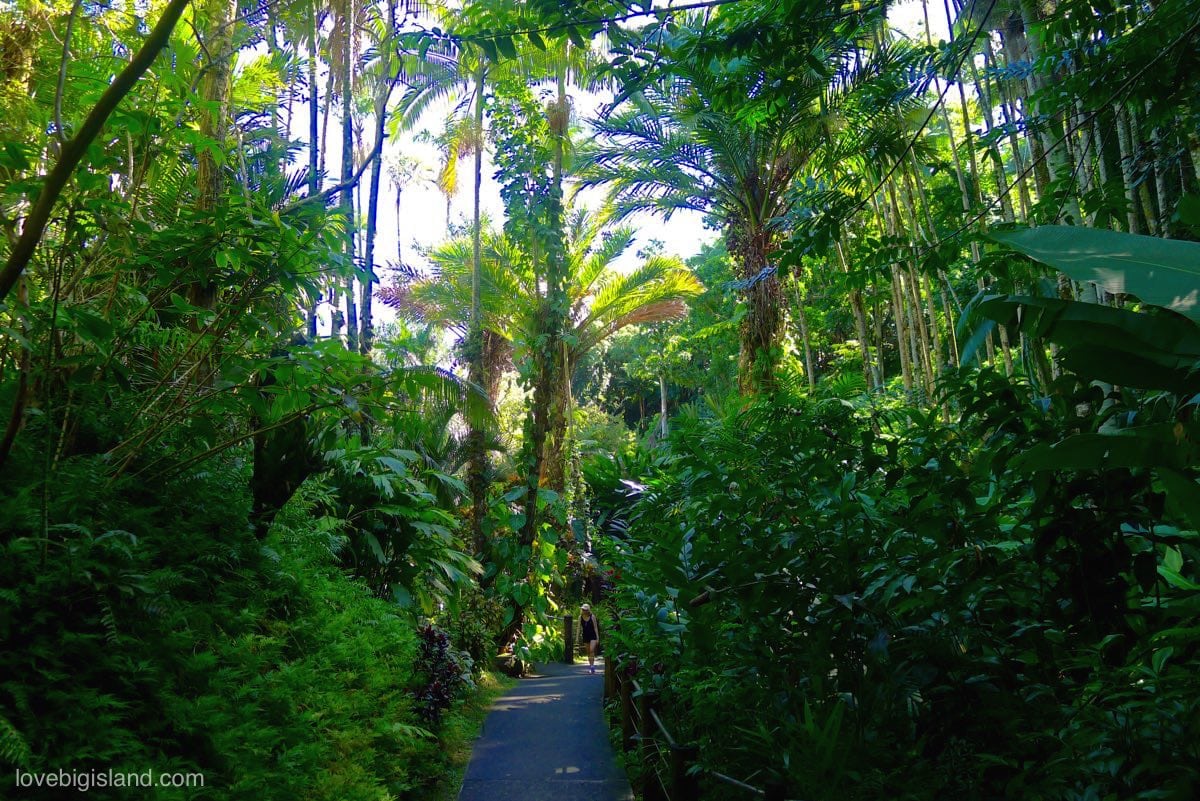
The self-guided trail runs about 1.25 miles through the garden, uphill in places and downhill in others
Admission and hours: $35 for adults, $25 for children 6 to 12, free under 6. Kamaʻaina pay $33 and active military $28. Both rates need a valid ID and have to be bought in person at the visitor center. The garden opens daily 10am to 6pm, last entry 5pm. It closes for Thanksgiving, Christmas and New Year’s Day.
Accessibility: the paths are paved past the boardwalk section, but wheelchairs, scooters and crutches are not permitted anywhere in the garden, and strollers have to be empty on the boardwalk. Check that against your group before you drive out.
You get a trail guide with your ticket. Give the lower end, where the trail opens onto the bay, more time than the rest. Take an umbrella. This is rainforest, and the garden stays open in the rain.
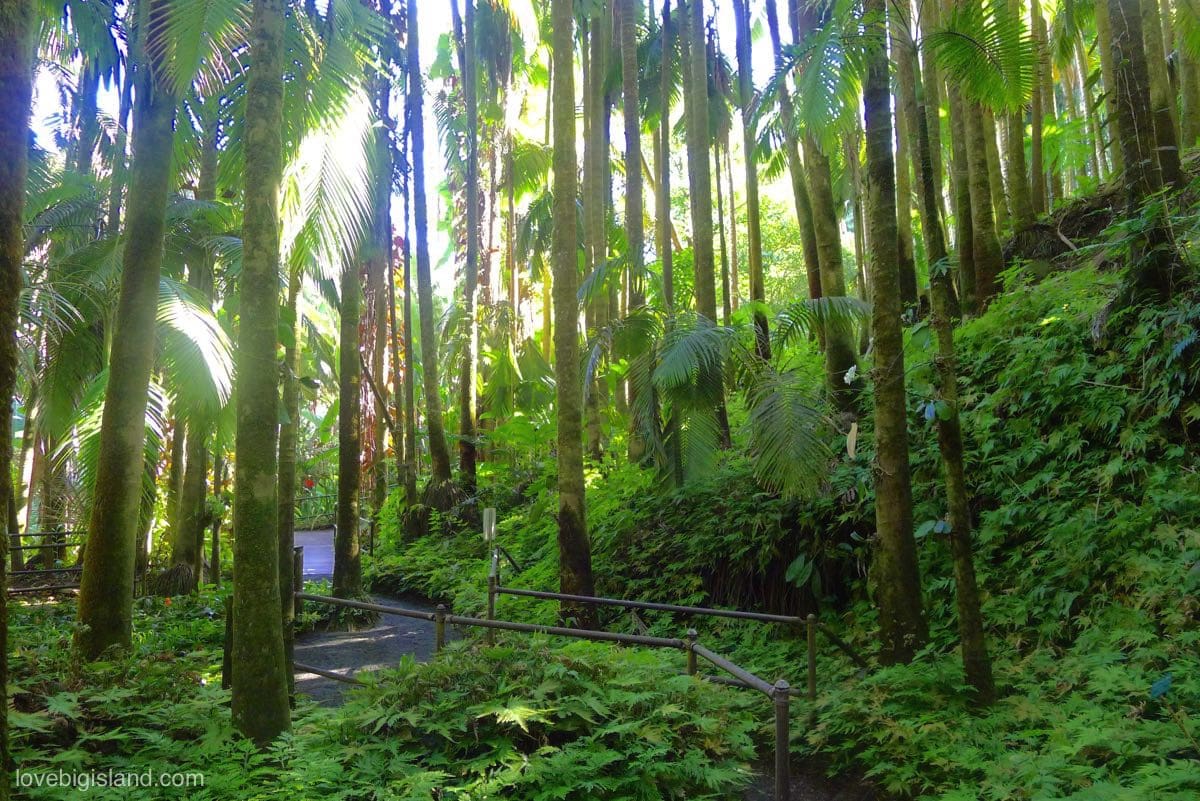
The palm forest section, on the way down toward Onomea Bay
If you want a longer walk without the admission, the donkey trail down to Onomea Bay starts just outside the garden and runs about 1.2 miles round trip. If you’d rather see more gardens than more trail, our Big Island botanical gardens guide lists the other gardens on the island with a map. And if you would rather not drive and organize it yourself, our day-long Hilo photo tour takes in the garden along with several waterfalls.
Mauna Loa Lookout Trail (as far as you like, easy) #
Mauna Loa Road is a narrow one-lane climb from Highway 11 up to the lookout at 6,662 feet. NPS puts the drive at about an hour from Kīlauea Visitor Center, most of it slow going through koa forest and old flows. It’s one of our five favorite scenic drives on the island.
At the top, the Mauna Loa Trail continues 18 miles to the summit. That is a multi-day hike. Walk the first stretch instead, over smooth pāhoehoe until it turns to rough ʻaʻā at the Keamoku flow, then turn around. Roughly 35 to 40 minutes each way. Past that point the trail thins out and is marked by cairns, so keep looking back to fix the way down.
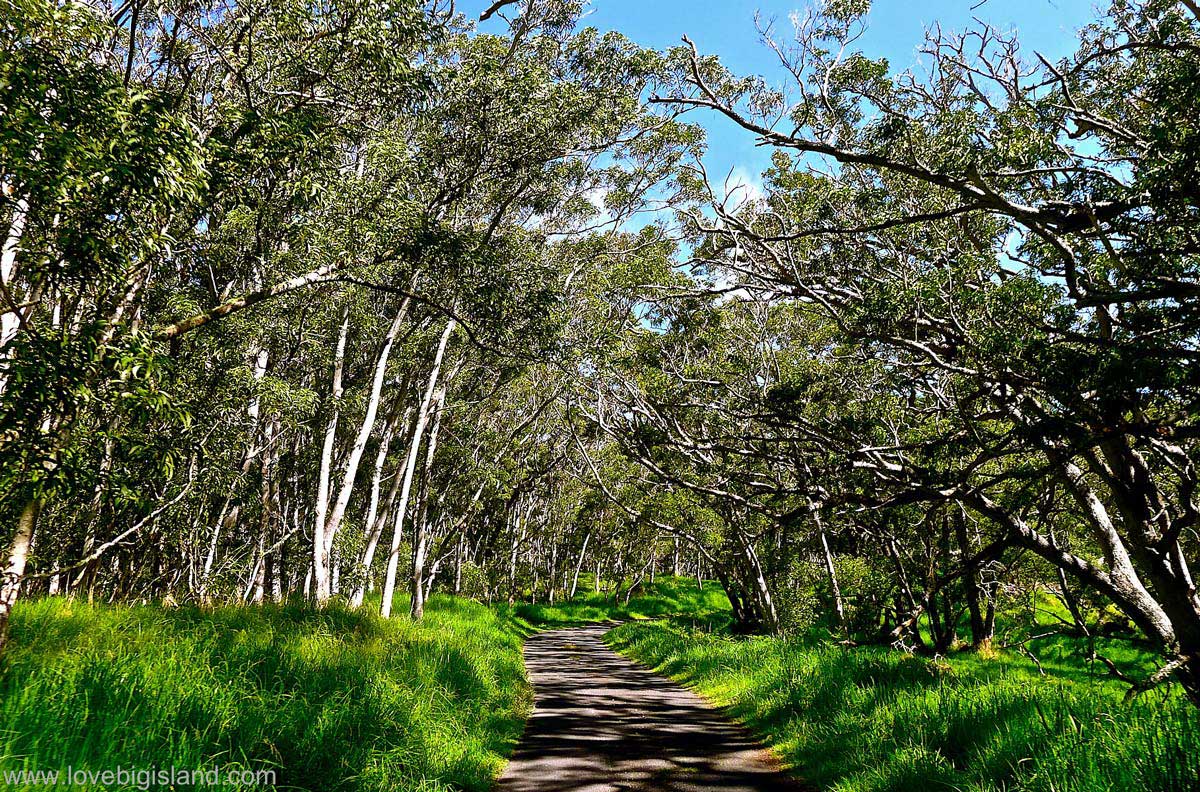
Mauna Loa Road, the one-lane climb to the lookout.
Directions: from Volcano Village take Highway 11 toward Kona and turn mauka, toward the mountain, between mile markers 31 and 32 onto Mauna Loa Road. After about a mile and a half you reach a turnaround and the trailhead for the one-mile Kīpuka Puaulu bird park loop. Past the gate the road narrows again and winds up the slope to the lookout.
Good to know: this is inside Hawaiʻi Volcanoes, so the same $30 vehicle pass applies. NPS lists no drinking water and no public telephone at the trailhead, so carry water and plan on no cell signal. Do this hike on a clear day. In cloud you drive an hour up and see nothing.
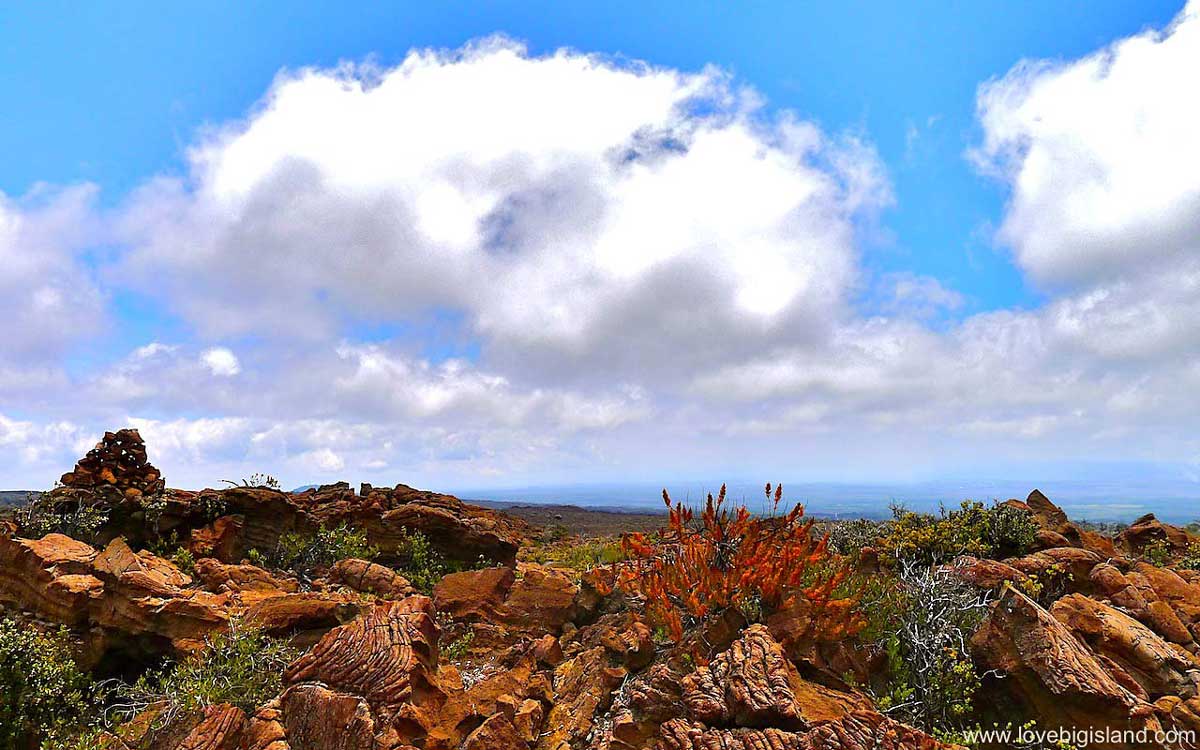
This will be your view back to the ocean after a 35-minute walk up the Mauna Loa trail.
Puʻu Loa Petroglyphs (1.4 miles, easy) #
(Hawaiʻi Volcanoes National Park, Chain of Craters Road)
Around 23,000 images are carved into the lava at Puʻu Loa, which NPS calls the largest group of petroglyphs in Hawaiʻi. For generations Hawaiian families carried their newborns’ piko, the umbilical cord, to this site and pressed them into poho, small cups cut into the rock. Cupules and holes account for 84% of the images. The practice is recorded continuously until at least the 1860s, and the earliest Western account dates to 1823.
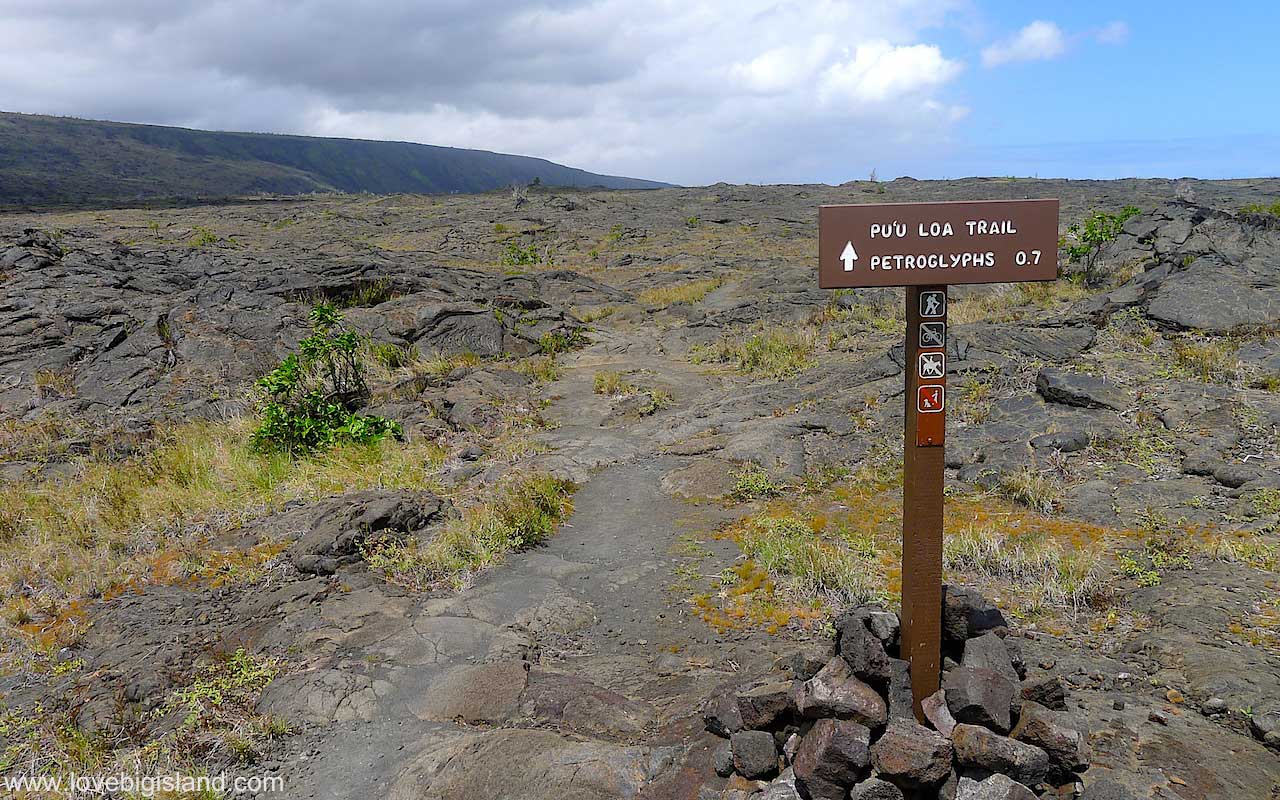
Trailhead of the Puʻu Loa Petroglyph trail, at milepost 16.5 on Chain of Craters Road
The hike: 1.4 miles round trip from the Chain of Craters Road trailhead, an hour to an hour and a half, across open pāhoehoe with no shade at any point and nowhere to sit before the boardwalk. Go early or late: slanting light picks out the shallow carvings that midday sun washes flat. Bring water and wear shoes with grip on uneven rock.
A boardwalk circles the main field so you can see the carvings without standing on them. Stay on it. The surface is fragile. NPS warns: “Walking on the lava surface will fragment the delicate petroglyphs.”
Directions: the pullout is at milepost 16.5 on Chain of Craters Road, about 20 miles from the park entrance near Volcano Village, and there is an emergency call box there. Park entry applies, and it is the same $30 vehicle pass as Kīlauea Iki.
Waipiʻo Valley Lookout (the valley floor is closed) #
(lookout only, free, Hāmākua)
The valley floor has been closed to independent visitor access since February 2022, after a geotechnical assessment found active rockfall and slope instability on the access road. The county’s standing emergency rule prohibits all pedestrians on Waipiʻo Valley Road, with no exception for hikers, and limits vehicles to county residents, permitted tour operators, and Native Hawaiians exercising traditional and customary rights. A rented 4WD doesn’t qualify, and horseback access is banned outright. Older write-ups of the hike down are out of date.
What is open is the lookout at the rim, and it is free. Follow Highway 240 to the end past Honokaʻa and it is a short walk from the parking area to a full view down onto the taro fields and the river running out across the black sand. Twenty minutes covers it.
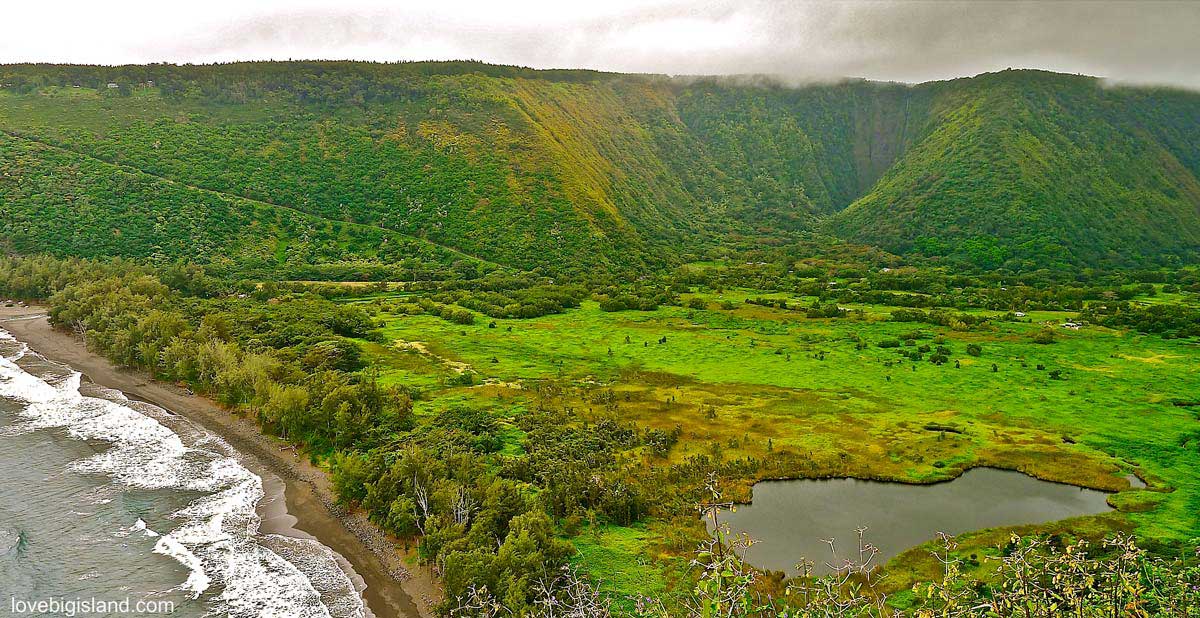
Waipiʻo Valley from the opposite rim. The access road cut into the far wall is closed to pedestrians.
A shuttle tour is the only current way down. Our Waipiʻo Valley guide has the operator and the price, and it tracks the closure status.
Local grinds: on the way to Waipiʻo, stop at Tex Drive In in Honokaʻa for malasadas. Daily 6am to 6pm per their own site, on Pakalana Street just off Highway 19.
Our Hiking Guides for other Hawaiian Islands
If you are hiking on another island on the same trip, these are the equivalents: