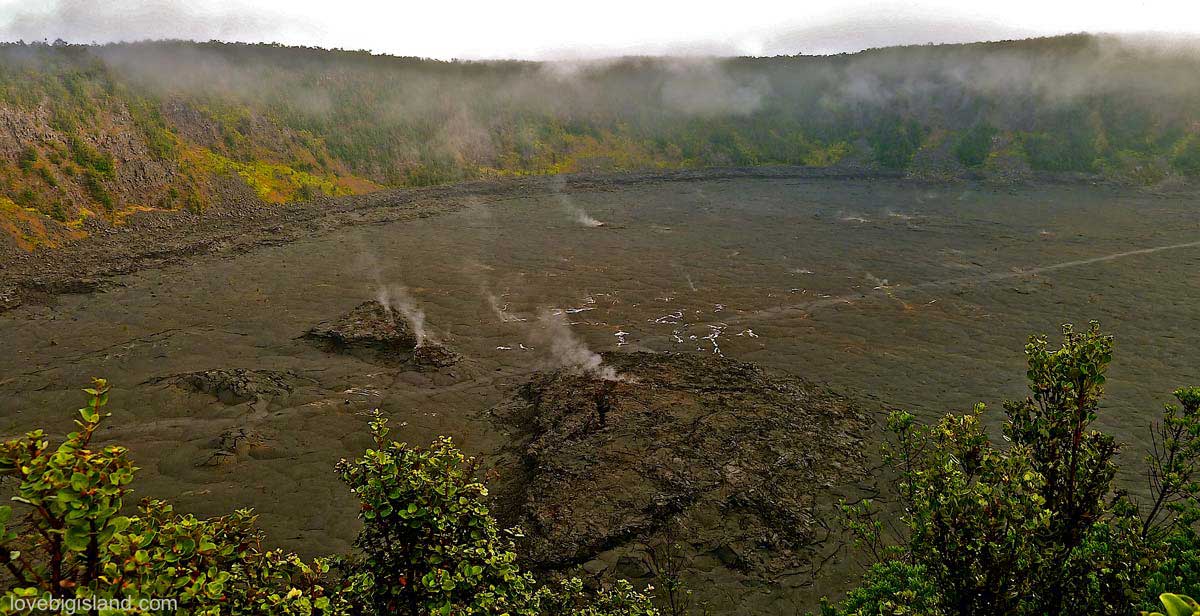
The Kīlauea volcano, the “centerpiece” of the Hawaii Volcanoes National Park, is one of the most active volcanoes in the world. Millions of people visit each year and for good reason as many people consider seeing the park one of the highlights of their visit to Hawaiʻi.
Table of contents
- A short introduction on the Kīlauea volcano
- 12 great things to do in the Hawaii Volcanoes National Park (with video)
- Where to stay: camping and the Volcano House
- Directions & opening hours
Table of Contents
- A short introduction on the Kīlauea volcano
- 12 great things to do in the Hawaii Volcanoes National Park (with video)
- Where to stay: camping and the Volcano House
- Directions & opening hours
Volcano Village is a great place to stay if you are planning to spend more than a day in the park. Located in the middle of lush rainforest, this small village is only a 5 minute drive from the park entrance and boasts some great value vacation rentals!
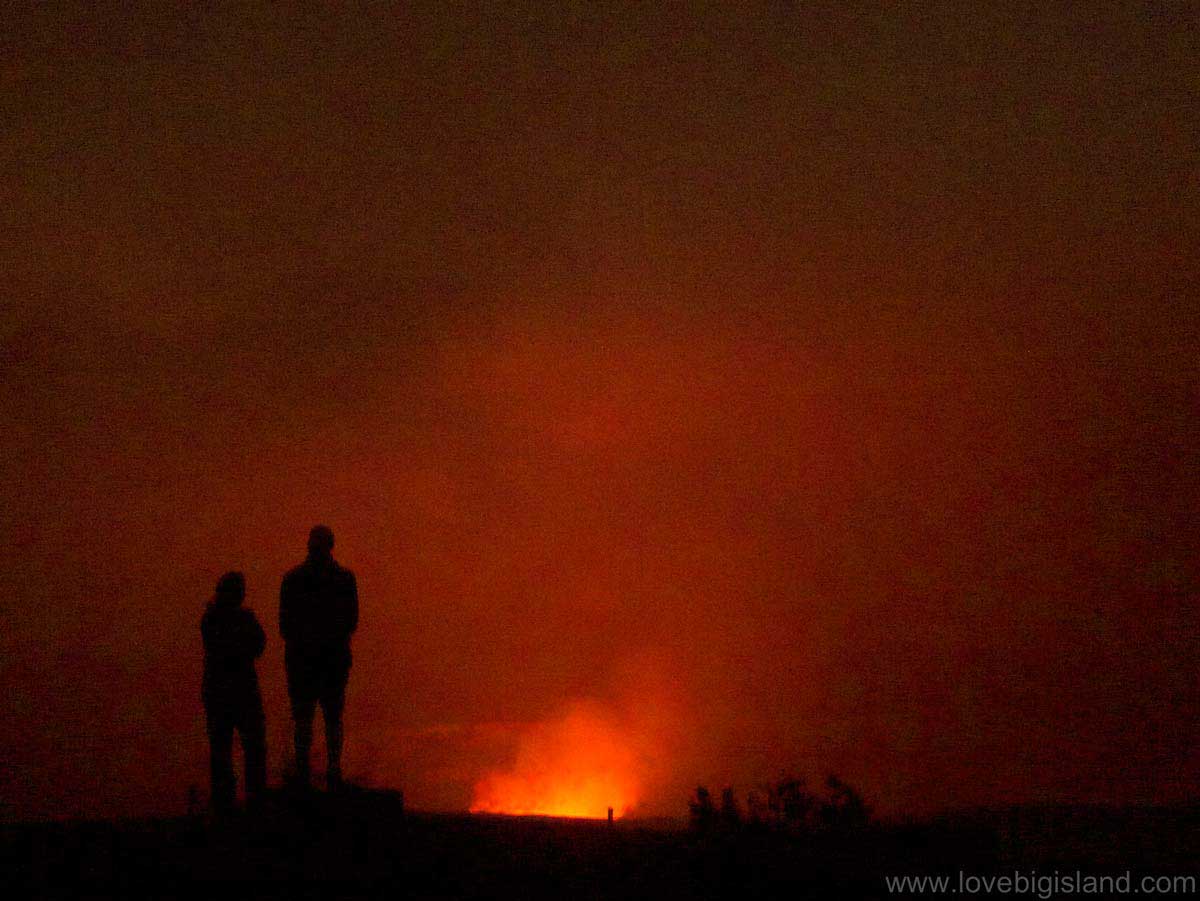
You can visit the Hawaii Volcanoes National Park at night to see the glow over the halemaʻumaʻu crater.
See our page with park pictures for more images of the Hawaii Volcanoes National Park.
The Kīlauea volcano (a short introduction)
The Big Island consists in total of five separate volcanoes: Kohala, Mauna Kea, Hualālai, Mauna Loa and Kilauea. Mauna Kea measures 13,796 feet and is the tallest mountain in the state and the tallest sea mountain in the world. Mauna Loa is the largest volcano on Earth in terms of volume and area covered. The Hawaii Volcanoes National Park encompasses two of these volcanoes: Mauna Loa and Kīlauea.
Despite all of these impressive figures Kīlauea is the most famous of the Hawaiian volcanoes, and rightly so! As the youngest and most active of the five volcanoes you can often see its lava either flowing into the ocean or glowing in the immense Halema’uma’u crater that crowns the park grounds.
You can read more in-depth information about the Kilauea volcano on the USGS website. Read more about the five volcanoes on the Big Island in our blog.
12 great things to do in the Hawaii Volcanoes National Park
It is easy to spend multiple days in the Hawaii Volcanoes National Park without getting bored. There are many short and long hikes in the park and plenty of interesting spots you can easily reach by car. The park also organizes a very interesting weekly lecture series called “After Dark in the Park“.
Park attractions include the following highlights, but please remember that there is far more in the park that deserves your attention (see e.g. this 1-day Hawaii Volcanoes National Park itinerary).
- Kilauea visitor center
- Halemaʻumaʻu crater overlook (the glow)
- Kīlauea Iki crater + hike
- Thurston lava tube
- Chain of Craters road (scenic drive)
- Day hikes
- Volcano art center
- The sulphur banks
- The Mauna Loa Road Scenic Drive
- The free junior ranger program + workbook (kids aged 12 and below)
- Keanakākoʻi Crater + Halemaʻumaʻu overlook
- Seeing lava in the park
Below the list you can watch a video shows four of our seven favorite things to do in the park and find more information about camping in the park and seeing lava.
The Kilauea Visitor Center
is open daily from 9:00 a.m. to 5:00 p.m. Ranger talks and guided tours can be scheduled here, and there plays a 25-minute film to introduce you to the park. Pick up a map, learn about the hikes in the park, and get the latest eruption updates here. Opening hours are subject to change, find the current hours at the national park website.
Your first stop in the park should always be the visitor center to receive an up-to-date report on the park events, closed-of areas and ranger-led hikes
4 Halemaʻumaʻu crater overlook points (to see the glow – when present)
When there is an active lava lake present in the crater seeing the glow of the lava lake in the Halemaʻumaʻu crater is one of the most popular things to do in the park.
One of the best places is the Kilauea overlook point. The parking lot here can fill up quickly though, so be prepared to go to a quieter overlook if the park is very busy. Other good viewpoints to see the glow are from Wahinekapu (Steaming Bluff), the Volcano House, Waldron Ledge, and the Old Crater Rim Drive near Keanakākoʻi.
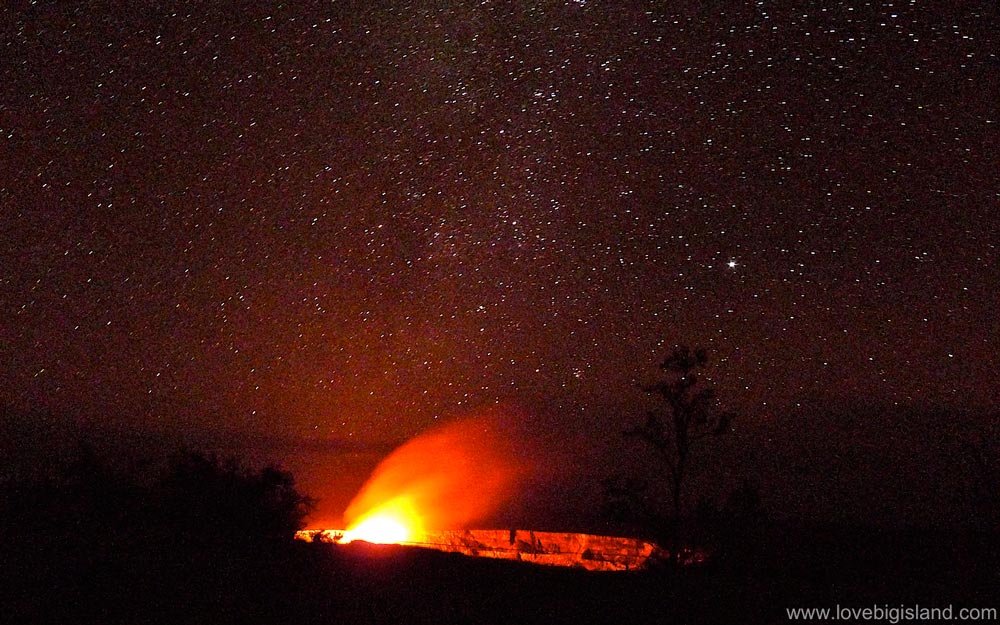
The glow from the Halemaʻumaʻu crater at night in the Volcanoes National Park, seen from the (now demolished) Jaggar Museum overlook
The Kīlauea Iki crater
Our favorite short hike on the Big Island (more about this hike) takes you down into the Kīlauea Iki crater across the crater floor, which was formed only 50 years ago, and up again to the parking lot.
Park at Kīlauea Iki Overlook and hike Crater Rim Trail towards the lava tube parking lot to pick up the trail. From there you can pick up the loop trail (the recommended route is counterclockwise— to your right) for a 4 mile round-trip trek.
Tip to avoid crowds: Park at Devastation and embark on a six-mile (9.7 km) round-trip hike into, up, and around Kīlauea Iki from Uēaloha (Byron Ledge). The scenery includes panoramic views of Kīlauea caldera, Mauna Loa (on clear days), and native forest with tall tree ferns.
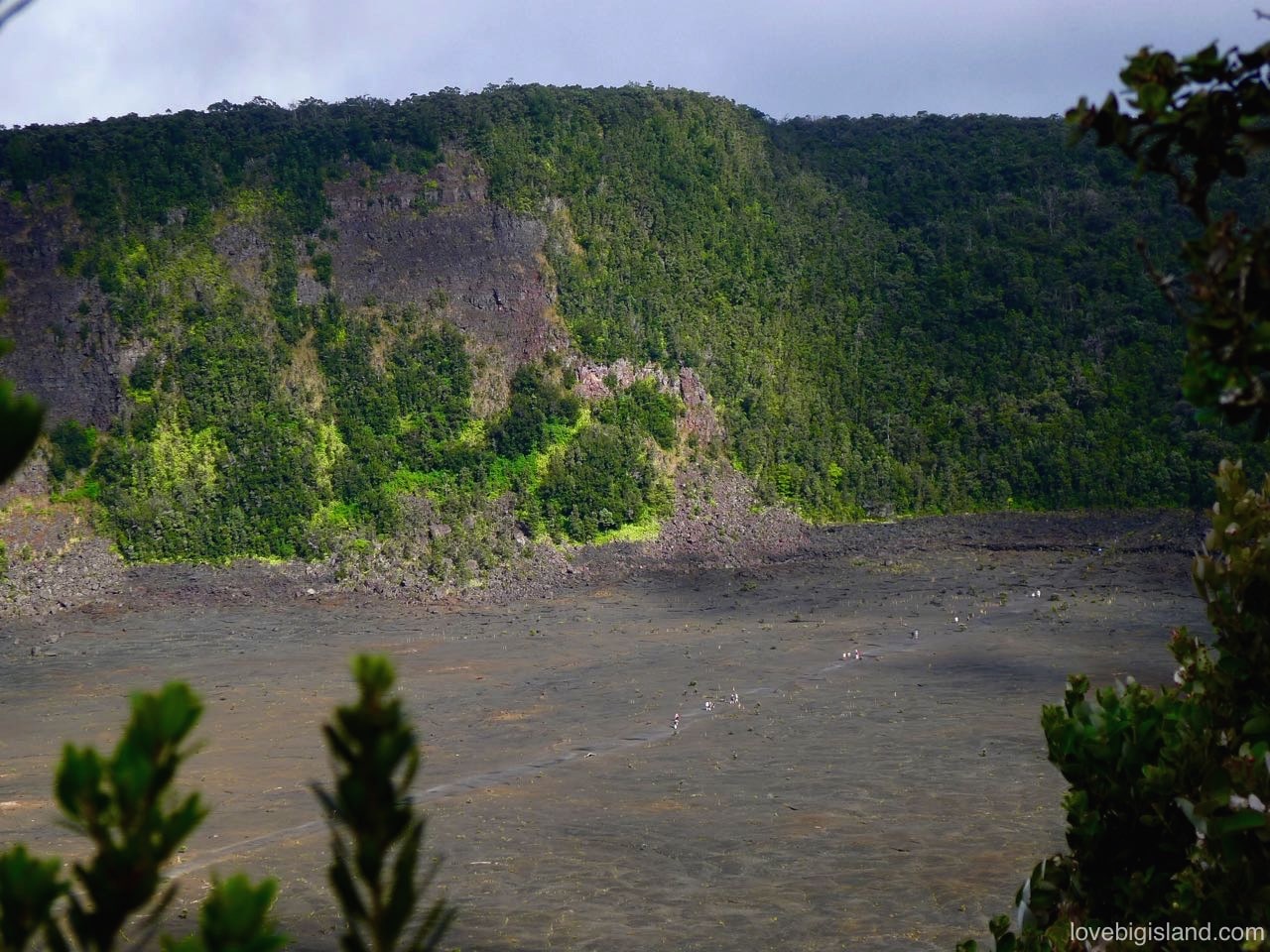
Hikers cross the floor of the Kīlauea Iki crater in the Hawaii Volcanoes National Park. Find more information about this hike on our website
Thurston Lava Tube
The Thurston lava tube is an easily accessible and very interesting lava tube close to the Kīlauea Iki parking lot. A 20 minute (1/3 mile) walk through a tree fern forest and a illuminated cave-like lava tube takes you from the main road through the Thurston Lava Tube and back to the parking lot.
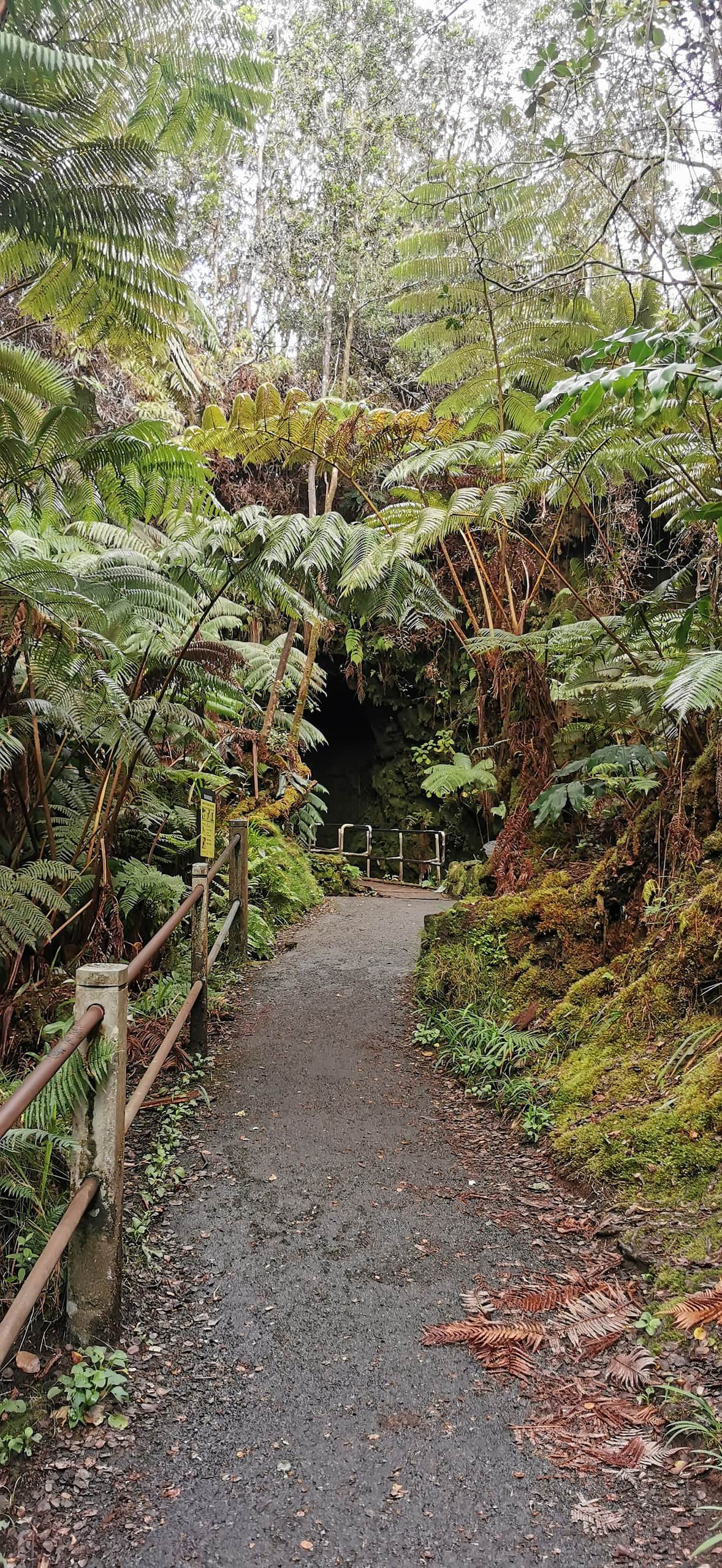
A lush, fern-filled rainforest path leads to the dark entrance of Thurston Lava Tube (Nāhuku), where visitors can explore a natural tunnel formed by ancient lava flows in Hawaiʻi Volcanoes National Park.
During daytime hours there the lava tube is illuminated, but between 8 p.m. and 8 a.m. there will be no lights on in the cave. The cave will remain open overnight for visitors that want to experience a pitch black lava tube :). Visitors must carry their own light source if planning to explore the lava tube in its dark, natural state. Park rangers recommend head lamps and flashlights; cell phones are not recommended as the only light source.
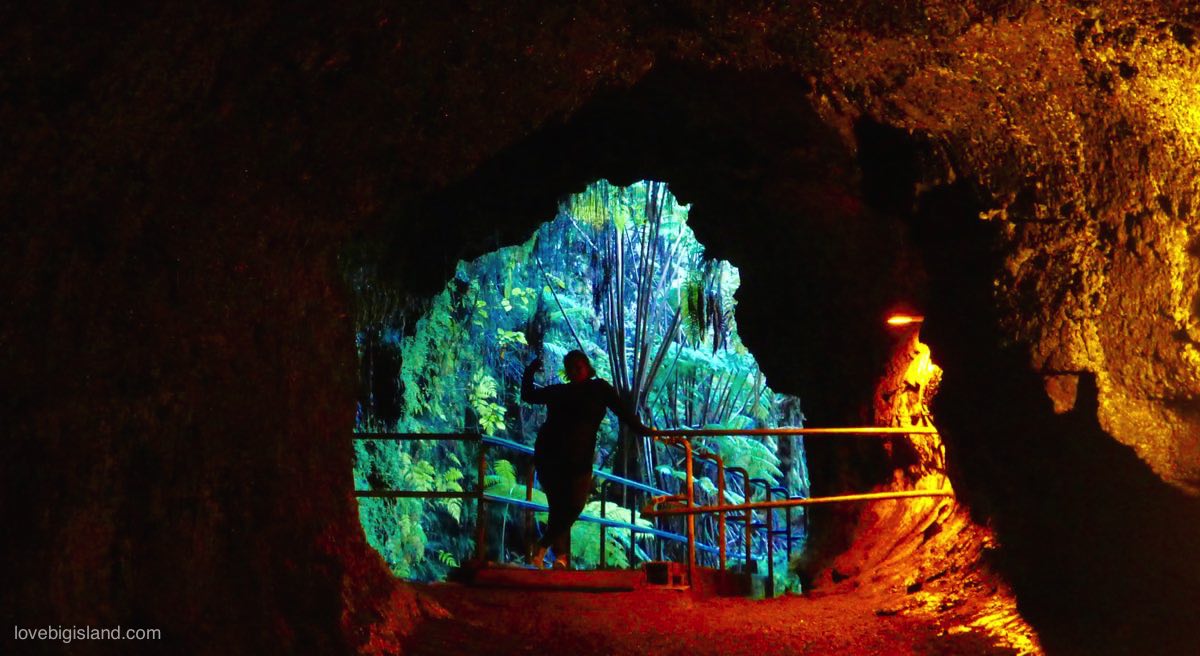
Explore this 500 year old lava cave that could fit a truck in the Hawaii Volcanoes National Park
You can see more pictures of Thurston lava tube on our website or on the official park website. We have also made a list of 5 Big Island lava tubes which you can explore after the Thurston lava tube if you want to do a deep dive into lava caves.
Good to know: Parking is very limited at the Nāhuku parking lot and it is very likely you won’t find a place to park at your first pass. Arrive early (before 9 am) or late (after 4 pm) to optimize your chances of finding a parking spot, or park at the Kīlauea Iki Overlook which is connected to the lava tubes by a scenic half-mile hike.
The Chain of Craters road
Takes you from the park entrance past many scenic points and volcanic craters all the way down to the ocean where the road finally disappears under a fresh sheet of lava (description of the crater rim drive tour on the national park website). The chain of craters road is one of our favorite scenic drives of the Big Island. The ranger station on the Chain of Craters Road is open daily from 10 am to 9 pm.
Chain of Craters audio guide
One very good way to explore the chain of craters road is with the help of a GPS assisted audio guide. Next to letting you know about all the activities and lookout points you pass, such guides also let you learn about the myths and legends that tell the story of this unique site. See for example this audio tour of the Hawaiʻi Volcanoes National Park by Shake Guide.
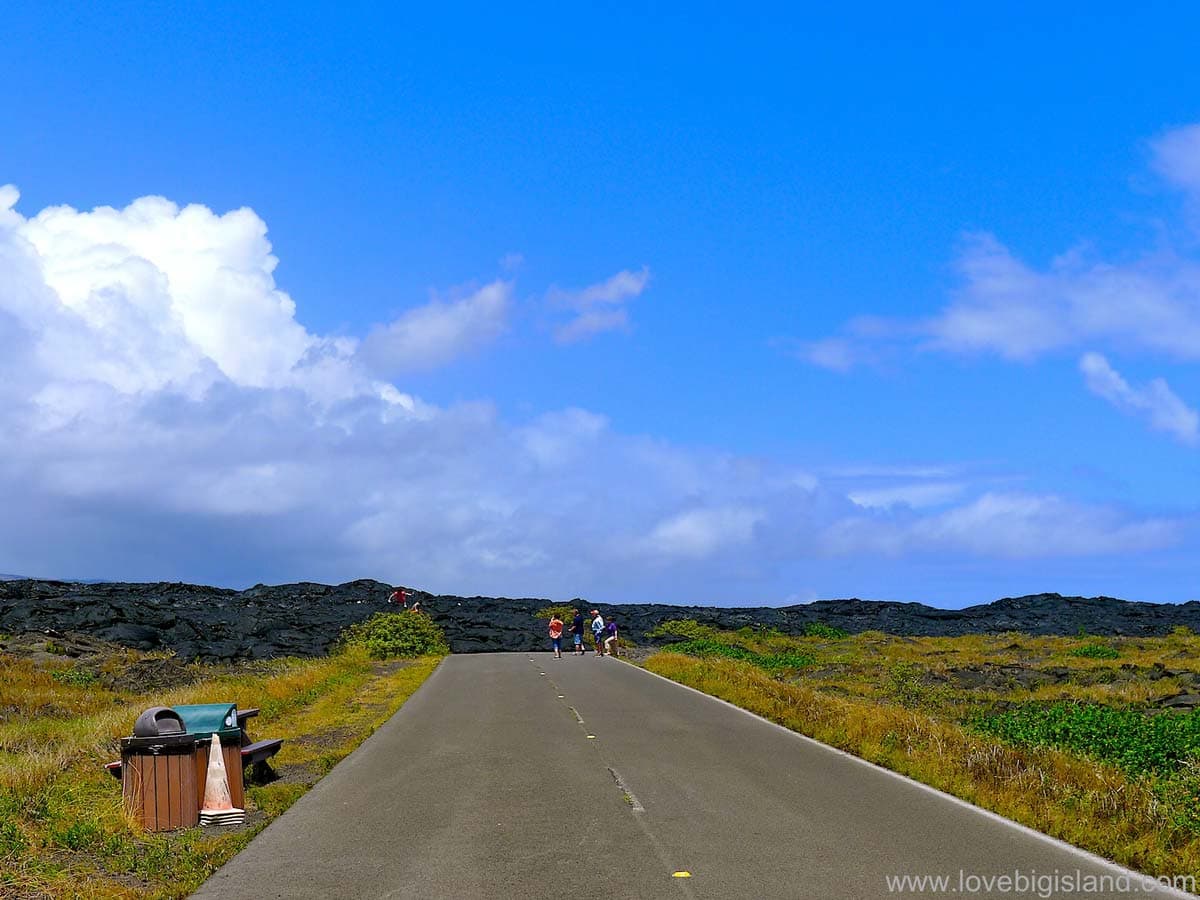
The scenic chain of craters road in the Hawaii Volcanoes National Park ends after 23 miles at lava flows that covered the road in several eruptions between 1986 and 1996
10+ day hikes in the park
There are more than 10 day hikes possible inside the park for which you can find a description at the park website. The 100+ miles of hiking trails take you through old lava tubes and lush rainforest, and over old and new, still steaming, lava flows. The park also organizes daily ranger-led hikes.
If you are looking for longer and more challenging hikes a good place to start is the Big Island Hikes website (the hikes are listed at the bottom of the page).
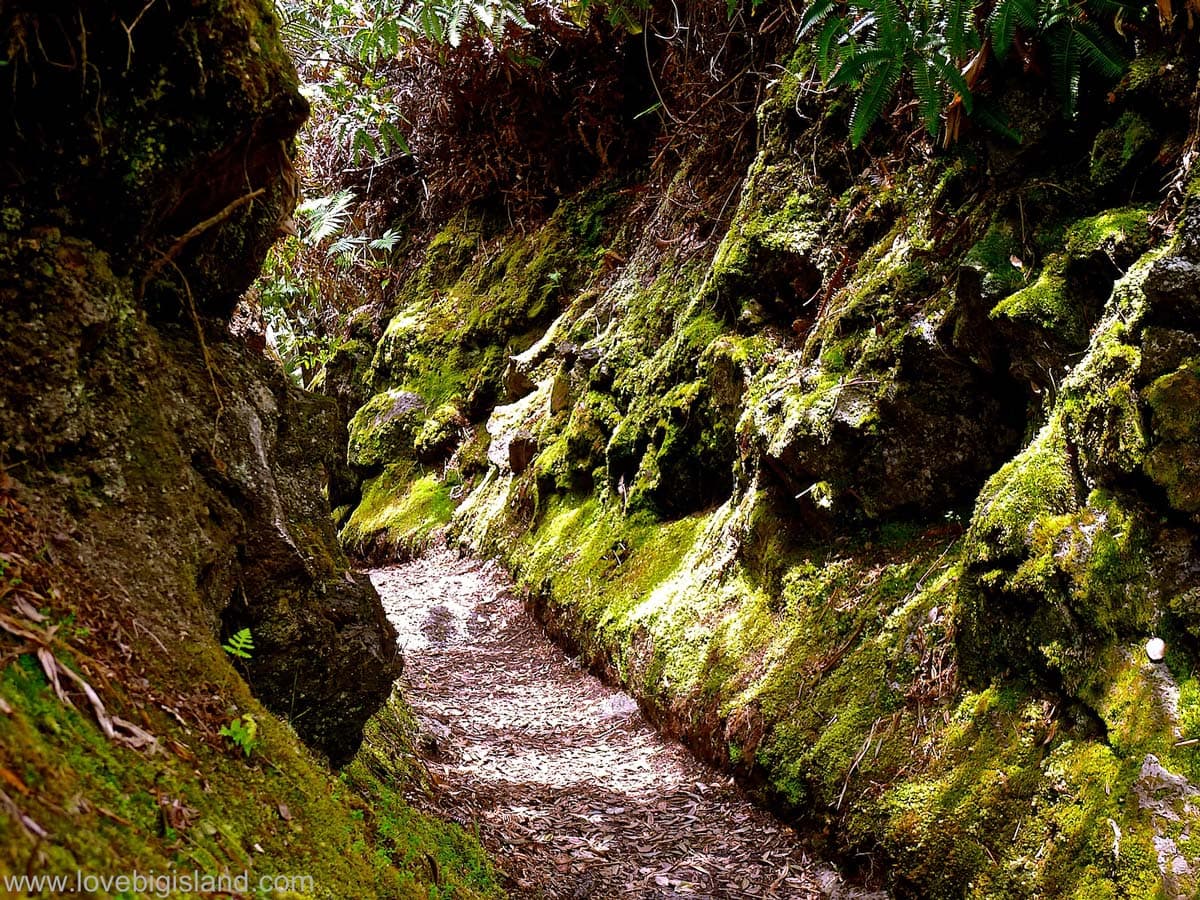
Part of the Halema’uma’u trail in the Hawaii Volcanoes National Park that takes you from the visitor center down to the Halema’uma’u crater floor
The Volcano Art Center Gallery
Is located directly next to the Kilauea Visitor Center and is open from 9:00 a.m to 5:00 p.m. daily. More info on the Volcano Art Center here.
The Ha‘akulamanu (Sulphur Banks) trail
The Sulphur Banks are an impressive reminder of the volcanic activity in the park because of the volcanic gases that seep out of the ground along with groundwater steam. It is an unusual spot with steaming cracks, colorful mineral deposits and the smell of sulfur (think: rotting eggs) in the air.
The see the sulphur banks you need to hike the easy 1.2 miles (2 km) round trip Haʻakulamanu (Sulphur Banks) trail that starts and ends at the far left of the Kīlauea Visitor Center parking lot past the Volcano Art Center Gallery. (more information on the park website)
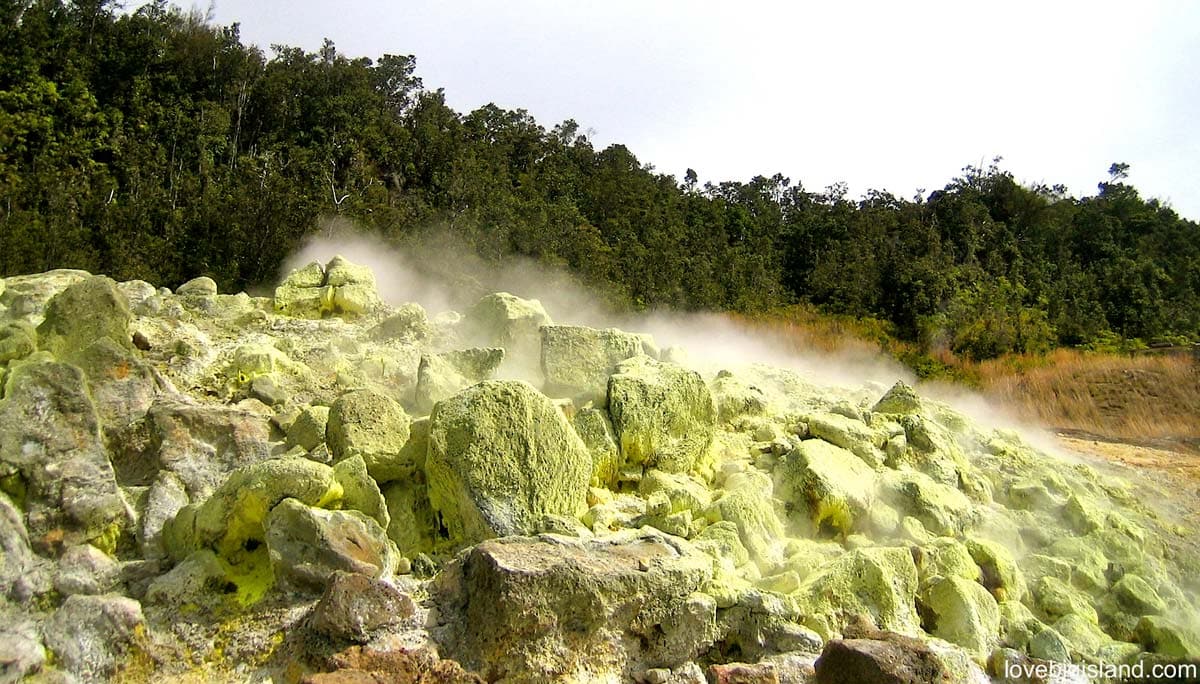
The sulfur banks are a short hike away from the steam vent parking area and are accessible along a paved path and boardwalk
The Mauna Loa Road Scenic drive
The Mauna Loa Strip Road is an 11.2 mile (one way) road which takes you to the Mauna Loa lookout point at an elevation of 6,662 feet (2031 meters). During the drive up (and down again) you pass many impressive volcanic features and get to see some sweeping views of the Kaʻu district and the Kilauea volcano.
This is one of our favorite local scenic drives, and you can read more about it in our article on the best scenic drives on the Big Island.
Special activities for kids in the Hawaii Volcanoes National Park
Children up to 12 years old can become junior rangers and receive a junior ranger badge. To become a junior ranger the kids have to complete a couple of activities while in the park. This is a free, fun and educational activity and we highly recommend it if you bring any children. There are programs for kids aged 7-12, and for those of age 6 and below.
More information including junior ranger handbooks which you can print out at home can be found at the be a junior ranger website.
Keanakāko’i Crater + Halema’uma’u overlook
This is a section of the Crater Rim Drive near the Devastation Trail parking lot that is open to hikers only. It offers an easily accessible, 0.7 mile, hike to the Keanakākoʻi Crater, and also has two overlook points that provide panoramic views of Halemaʻumaʻu Crater and Mauna Loa.
These two viewpoints are the main selling point of this small hike, as this is without doubt the best place the see the dramatically enlarged Halemaʻumaʻu crater.
Seeing lava in the park
Conditions for lava viewing (e.g., lava flowing into the ocean, accessibility of the lava flow) are ever changing. Please see our lava viewing guide for Hawaii for up-to-date information on where and how to see lava.
More pictures
See more pictures of our favorite places and activities in the Hawaii Volcanoes National Park. The following video shows of four of our favorite stops in the park:
- The Halemaʻumaʻu crater overlook
- The Thurston lava tube
- The Kīlauea Iki crater
- Part of the Chain of Craters road.

The above video was created by Will and Jim Pattiz, who have made it their mission to create stunning videos (and guides) of all the National Parks in the United States. Check out their other National Park videos and guides if you like their style.
Stay in (or near) the park overnight: camping and the Volcano House
There is so much to do in the park that many people choose to spend at least one night in (or close to) the park. There are two campsites in the park, as well as a hotel whose lounge offers stunning views of the Halemaʻumaʻu crater. Overnight camping is possible in the park on two separate campgrounds, one of which also has tent rentals and cabins available. The park hotel combines a great location with average and somewhat pricey rooms and is called the Volcano House (website).
You can also choose to stay in the very nearby (a few minutes from the park entrance) Volcano village if camping in the park or staying in the Volcano House hotel doesn’t appeal to you. The village is located in the same lush rainforest as the park and hosts many charming and affordable vacation rental houses.
Finally, if you are an active service member or have served in the US military you can also stay in the Kilauea Military Center (KMC, website). The KMC is located inside the park and offers 90 guest cottages and apartments with one, two, or three bedrooms, and a 110-bed dormitory.
Directions and opening hours
The Hawai’i Volcanoes National Park is open 24 hours a day, every day of the year. The Kilauea Visitor Center is located on Crater Rim Drive off of Highway 11 between the 28 and 29 mile marker south of Hilo. The visitor center is opened daily between 9:00 am and 5:00 pm.
The gate of the park stays open outside the official opening hours so don’t worry about staying late or arriving early (to avoid most other visitors).
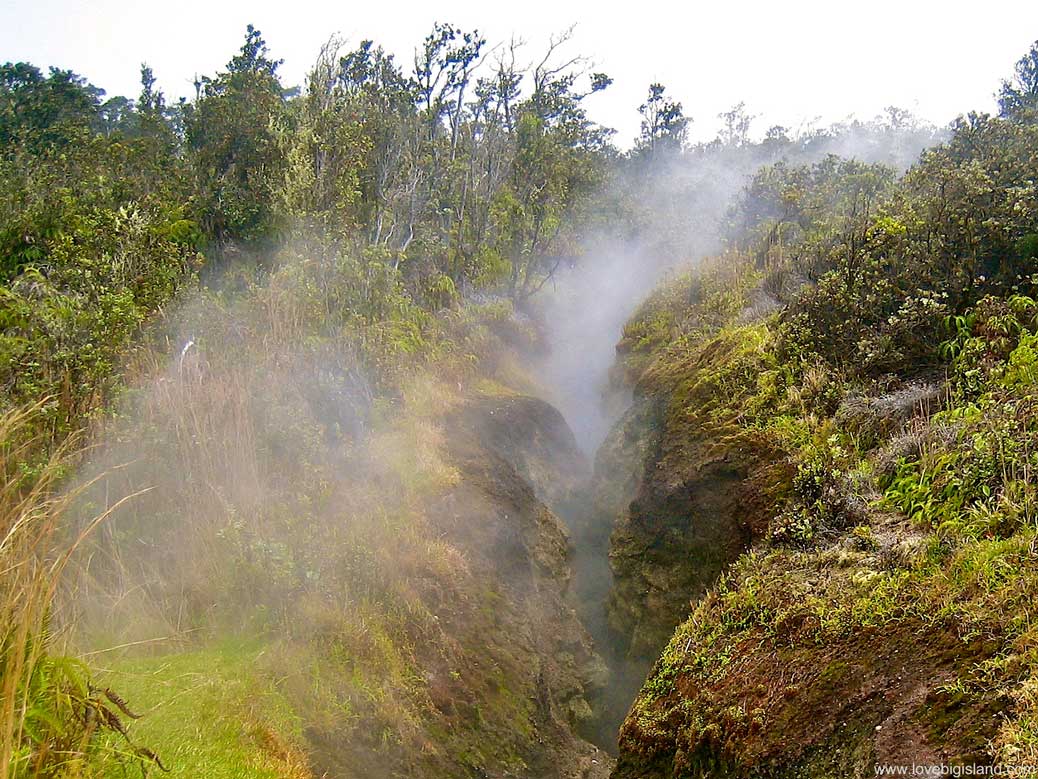
Steam vents at the Hawaii Volcanoes National Park
Entrance fees for the Hawaii Volcanoes National Park
General admission is $30.00 per private non-commercial vehicle or $15.00 for pedestrians or bicyclists. Keep the receipt, because it will allow you seven days entrance to the National Park.
If you are staying for a longer time in Hawaii you may also be interested in the annual “Hawaiʻi Tri-Park Pass” ($55.00). This pass allows access for one full year from date of first use at:
- The Hawaiʻi Volcanoes National Park (this page),
- The Puʻuhonua o Honaunau National Historical Park on the Big Island, and
- The Haleakala National Park on Maui.
The Tri-Park pass admits the pass holder and/or spouse along with accompanying persons in a single, private, non-commercial vehicle. When your entry is by other means (by bike, on foot, with the Hele-On bus, etc.) it covers the purchaser and accompanying immediate family (spouse, children, and parents). The pass is not refundable or transferable.
Map of Hawaii Volcanoes National Park
Below you can find the map of the (most popular) summit area of the Hawaii Volcanoes National Park. You can find larger maps of the complete park area and the island at the maps section of the national park website.
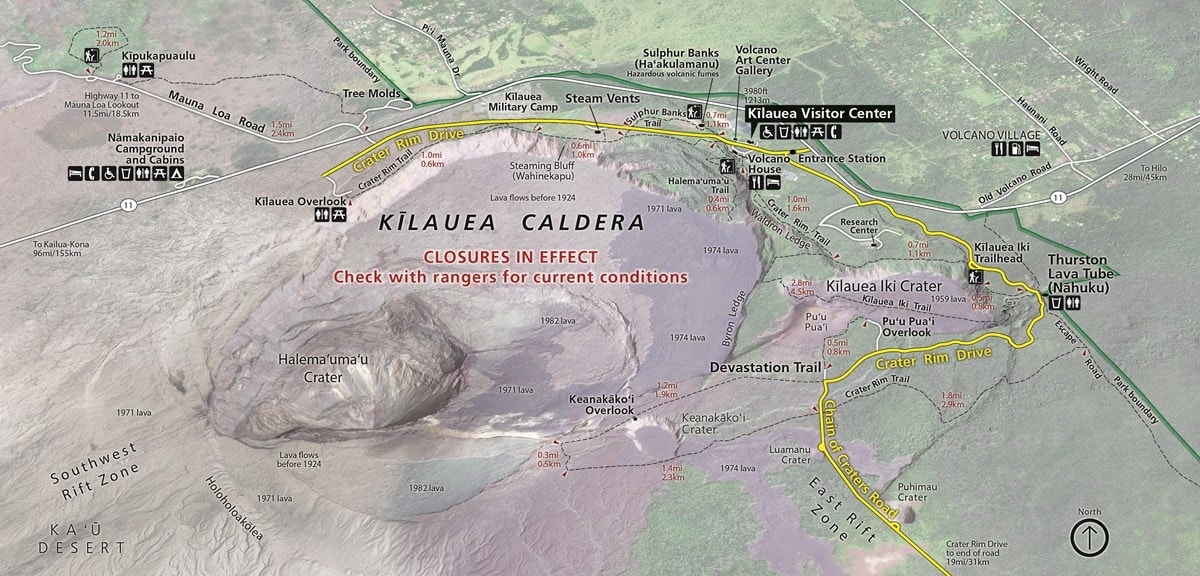
The Hawaiʻi Volcanoes National Park Summit Area Map (2019)