The Island of Hawaiʻi, or Big Island, is the youngest and largest of the Hawaiian islands – and it is still growing! Since the still ongoing 1983 eruption of the Kilauea volcano more than 600 acres have been added to the island.
The Big Island is almost twice as big as all other islands combined with a total land area of 4,028 square miles (total surface of all Hawaiian islands: 6,424 square miles). It also is the biggest island in the United States. Compared to the other US states, however, Hawai’i is tiny: you can find it at #47, between New Jersey (#46) and Connecticut (#48).
The Big Island is home to the tallest sea mountain and the largest volcano in the world but holds many more records. These are our Favorite Hawaiian Records:
Table of contents
- You can find 8/13 of the worldwide climate zones on the (tiny) Big Island
- The most voluminous volcano and the tallest sea mountain? Both on the Big Island!
- Do you like nature? 90% of our terrestrial native flora and fauna is endemic!
Table of Contents
- You can find 8/13 of the worldwide climate zones on the (tiny) Big Island
- The most voluminous volcano and the tallest sea mountain? Both on the Big Island!
- Do you like nature? 90% of our terrestrial native flora and fauna is endemic!
1: So many different climate zones
The big Island contains 8 of 13 different climate zones in the world, each with unique ecosystems. These ecosystems range from tropical dry forest to subalpine grasslands, from snowy alpine deserts to brackish anchialine pools, and from subterranean lava tube systems with eyeless creatures to windswept coastal dunes. The only zones missing are an arctic and saharan climatic zone.
This allows you experience within a matter of hours the lush fern forests of Puna, the sunny rugged lava plains of Kona, the cool and misty breezes of Waimea, the dry heat of Kau, and the snowy plains on Mauna Kea.
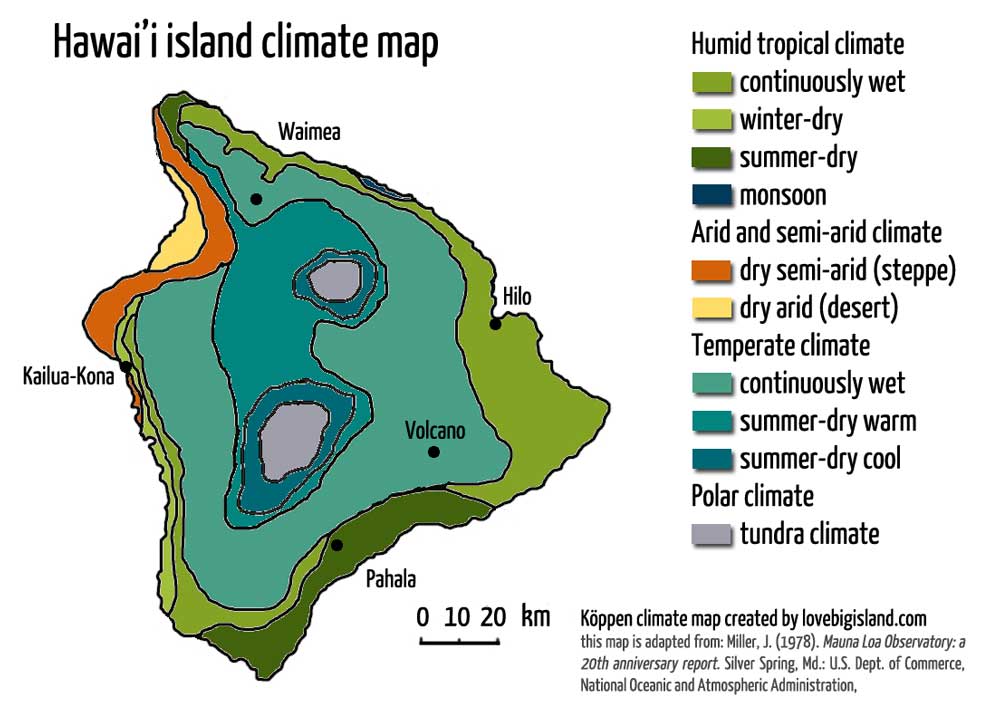
Climate map of the Hawaii Island (source) showing 10 different climate zones on the Big Island. Only 8 climates are “independent”. Temperate “summer dry” and “summer cool” both belong to the temperate dry climate. Tropical “winter dry” and “summer dry” both belong to the tropical dry climate
2: Hawai’i has got five record-breaking volcanoes!
The big island is built from five separate volcanoes: Kohala, MaunaKea, Hualālai, Mauna Loa and Kilauea. Of these, MaunaKea is with 13,796 feet the tallest mountain in the state and the tallest sea mountain in the world. If measured from the ocean floor it is with 33,000 feet taller than Mt. Everest, and it is home to many world-class telescopes.
Despite these impressive figures, Kilauea is the most famous of the Hawaiian volcanoes, and rightly so! It is located in the Hawaii Volcanoes National Park and has been erupting continuously since 1983. Kīlauea is one of the most active volcanoes of the world and is visited by millions of tourists each year, making it the most visited attraction in Hawaii and the most visited volcano in the world.
Keep reading about the volcanoes of the Big Island on our blog: The Volcanic history of Hawaii.
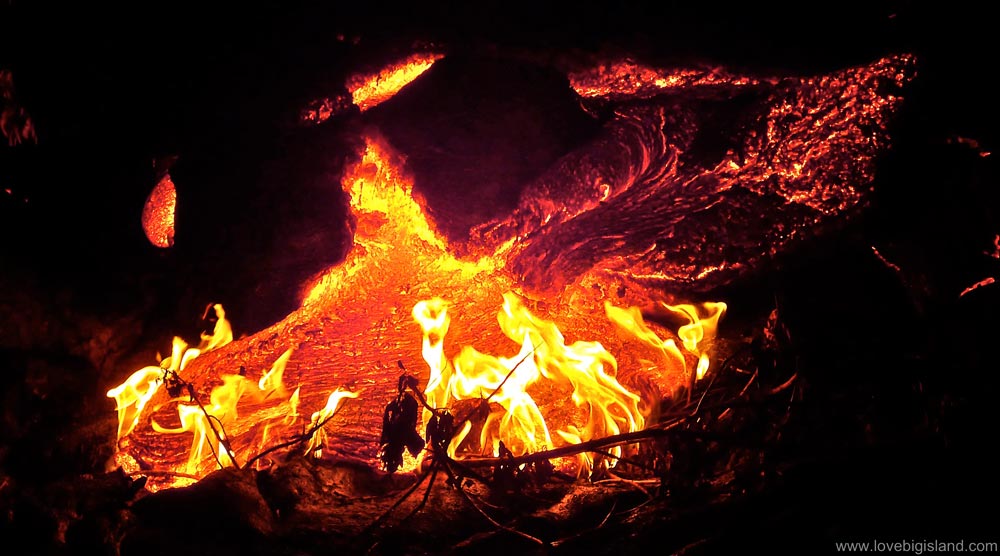
Lava from the Kilauea volcano on it’s way to the ocean. If the conditions are safe during your visit you can try to visit the lava yourself.
3: The Big Island’s incredibly diverse nature
The stunning geography of the Big Island is supplemented by an unique flora and fauna. Thanks to at least 5 million years of nearly complete isolation the Hawaiian islands now have a flora and fauna that is for a large part (~40%,) endemic. If you limit yourself to only the native species that live on land, this amount shoots up to 90%! You can find an incomplete list of these species on Wikipedia.
It is a misconception that 90% of all species found in Hawaii are endemic. This number only counts for those species that are both native and found on land. Those in the ocean (marine taxa) spread more easily outside the islands. You can read more about endemic species in Hawaii at our following resource:
Endemic and Native Species in Hawaii
In that article you can also find the following amazing facts:
Find your place on the Big Island
The Big island is surrounded by 266 miles of amazing coastline with white sand beaches, black sand beaches, and green sand beaches. Beyond these beaches are many coral reefs whose inhabitants come in all sizes and colors of the rainbow.
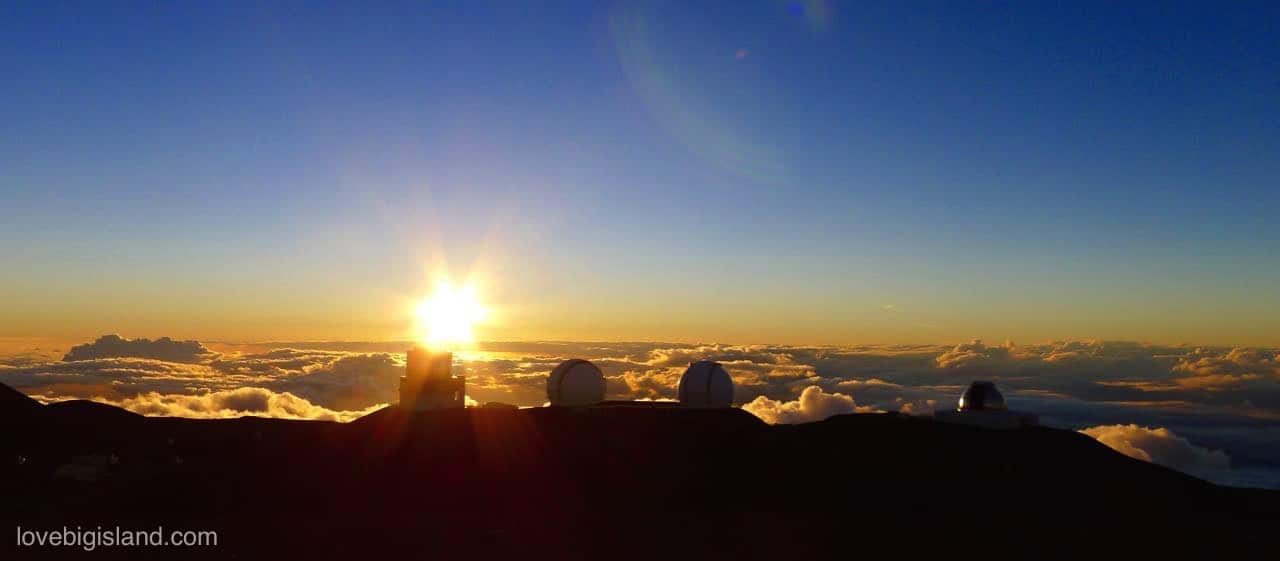
Telescopes of the Mauna Kea Observatory, Hawaii. Visible are: the Subaru Telescope, the W. M. Keck Observatory, and the NASA Infrared Telescope Facility
We think that all reasons listed here make the island of Hawai’i a truly miraculous place that satisfies most tastes.
Whether you like to go on a hiking or biking adventure or want visit its pristine beaches, you can do on the Big Island. Would you rather see red-hot lava or are you interested in the local arts and crafts? Again, the Big Island delivers. Or what about those of you that want to go night diving to see majestic manta rays swirling around you, sit under a palm tree and sip from a coconut or bathe under a waterfall? Rest assured, you can find it all on the Big Island!