Lava update: Kīlauea volcano is not erupting. Due to continued low rates of seismicity, HVO will issue weekly Kīlauea updates on Tuesdays until further notice. (read more).
In the meantime, see “No lava? No problem!” for all the ways you can explore older lava streams in the park.
Lava viewing is a must-do activity if you are lucky enough to be on the Big Island while one of the volcanoes is actively erupting. Hawaii wouldn’t exist if it were not for the continuous volcanic activity that created all the islands, and seeing this happening in “real-time” is, for many people, a once in a lifetime experience.
Table of contents
- Lava FAQ
- Where to see lava now? (2024)
- Lava Tours + DIY lava viewing (including tips on what to do when there is no lava)
- Ongoing and past eruptions from Kilauea and Mauna Loa
- Lava safety
Table of Contents
- Lava FAQ
- Where to see lava now? (2024)
- Lava Tours + DIY lava viewing (including tips on what to do when there is no lava)
- Ongoing and past eruptions from Kilauea and Mauna Loa
- Lava safety
Lava Q & A
We strive to make our lava viewing guide as complete as possible, which means that it sometimes can be difficult to quickly find the information you are looking for. Because of this we answer some of the most asked (and answered!) questions about seeing lava in Hawaii below:
No, the September 10th 2023 eruption has ended. Have a look at our often updated viewing tips to find out how to best see the lava.
There is no current eruption. See our guide to hiking to the lava flow to learn about your options when lava moves outside of the crater.
We do not recommend paying for a lava tour if your only goal is to see lava because you can easily and safely do this yourself. We do recommend tours for people interested in the added value of fully arranged day tours during which you learn about (and see many aspects of) our volcanoes. Read more in our guided volcano tours section.
Short answer: no. Lava boat tours are only organized when lava flows into the ocean. For a longer answer see our tips for choosing a lava boat tour
Following safety directions provided by the Hawaii Volcano National Park staff will allow you to see active eruptions in a safe and responsible manner. Read more about how to see lava yourself on our website.
No, the September 10th eruption has ended.
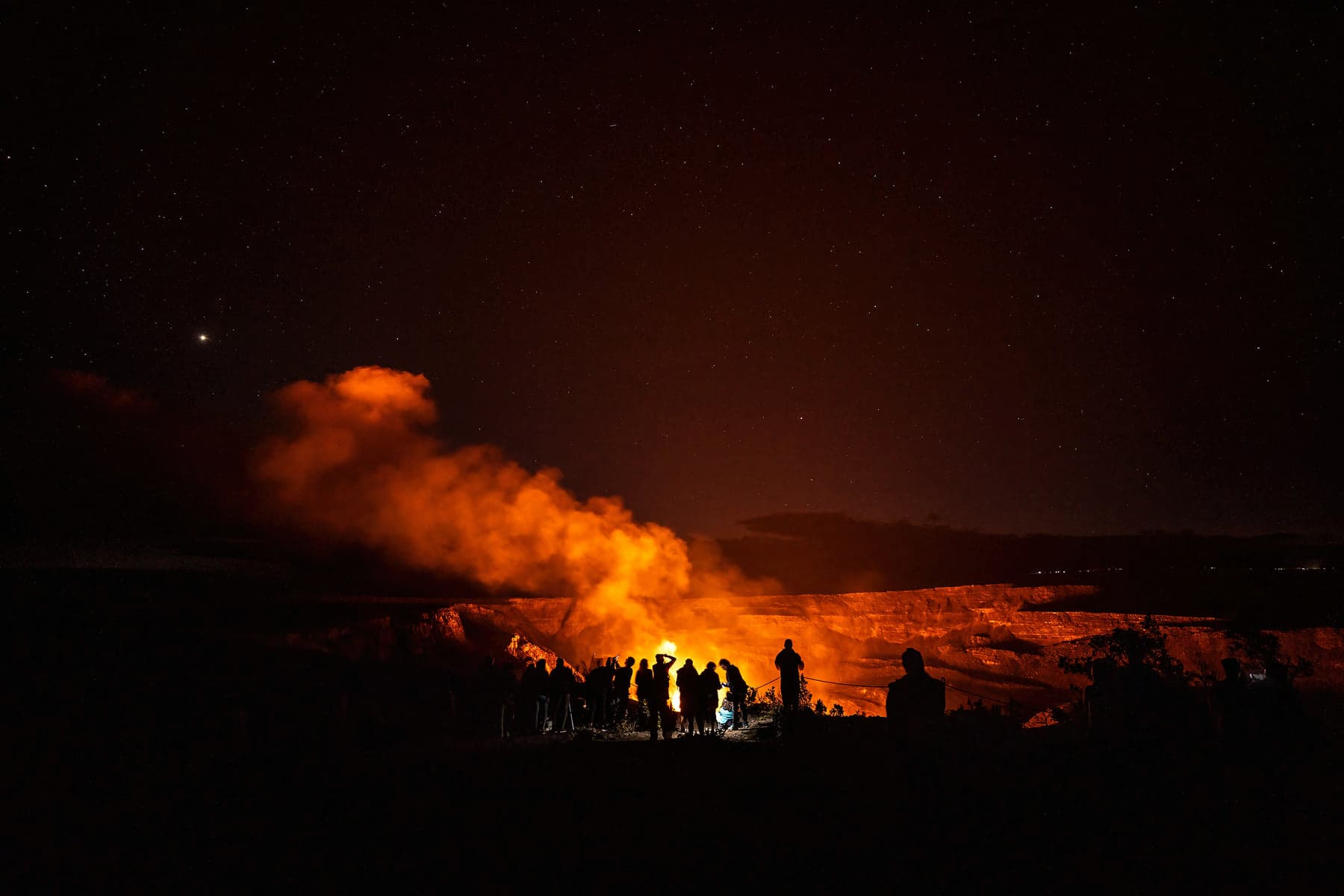
When relevant, set your alarm and go to the park to see the glow before sunrise! Viewpoints like Uēkahuna, Kūpinaʻi Pali and even Keanakākoʻi are packed at sunset, but are usually almost deserted before sun up. (Only relevant when an active lava lake is present in the Halemaʻumaʻu crater)
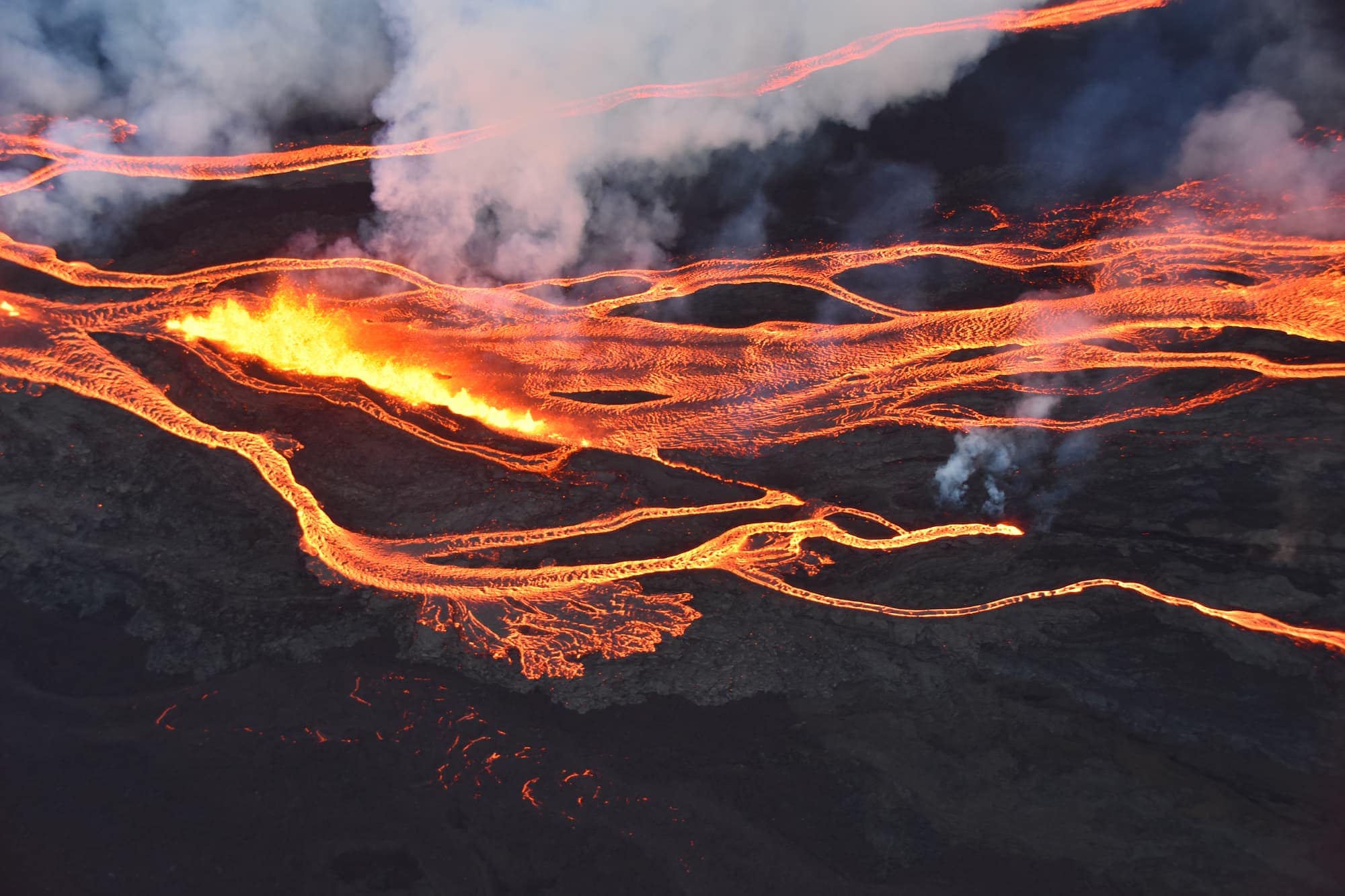
Mauna Loa is no longer erupting. Lava supply to the fissure 3 vent on the Northeast Rift Zone ceased on December 10, 2022, and sulfur dioxide emissions have decreased to near pre-eruption background levels. You can read more about the recent Mauna Loa eruption here.
Where is the lava located?
- Lava from the Kilauea volcano (the September 10, 2023 eruption has ended)
- Lava from possible eruptions of the Mauna Loa volcano (no current eruption)
Lava from the September 2023 Kilauea eruption
The September 10th eruption has ended. This means that the answer to the question “can we see lava in Hawaii?” is a currently “no“.
-> Current Kilauea eruption status: Kilauea is currently not erupting.
When, where, and how to best see the lava (in case of an ongoing eruption)
You can easily go see the activity in the park yourself (see our guide here – sunrise is the best time to skip the crowds), or join one of the many excellent tours that are organized by our local companies.
Important: the following information is only relevant when the eruption is active.
- Where? There is currently no active eruption.
- How? The best way to see the lava from this eruption is from one of the official viewpoints around the Halemaʻumaʻu crater. Note that the Keanakākoʻi viewing area is closed due to unsafe air quality from the lava lake plume. You can find some of our favorite viewpoints down this page here.
- How to avoid the crowds? The best time to see the lava is when its dark. One or 2 hours before sunrise is the best time to skip the crowds, bit late at night (after 10 pm) is a good alternative if you don’t like to wake up early. Sunset viewing is of course also possible, but you are likely to be stuck in a traffic jam together with other lava enthusiasts if you visit the park between 6 pm and 9 pm.
- Prepare in advance: Don’t forget your flashlight, warm attire, rain gear, and sturdy shoes. Keep an eye on the weather as rain and fog can obstruct the eruption view.
- Stay safe! Stay out of closed areas – rope lines and hazard signs are in place to safeguard you from dangerous volcanic fumes, unexpected rim collapses, and hidden cracks. Volcanic gas can be particularly risky for those with respiratory issues, young children, and pregnant women.
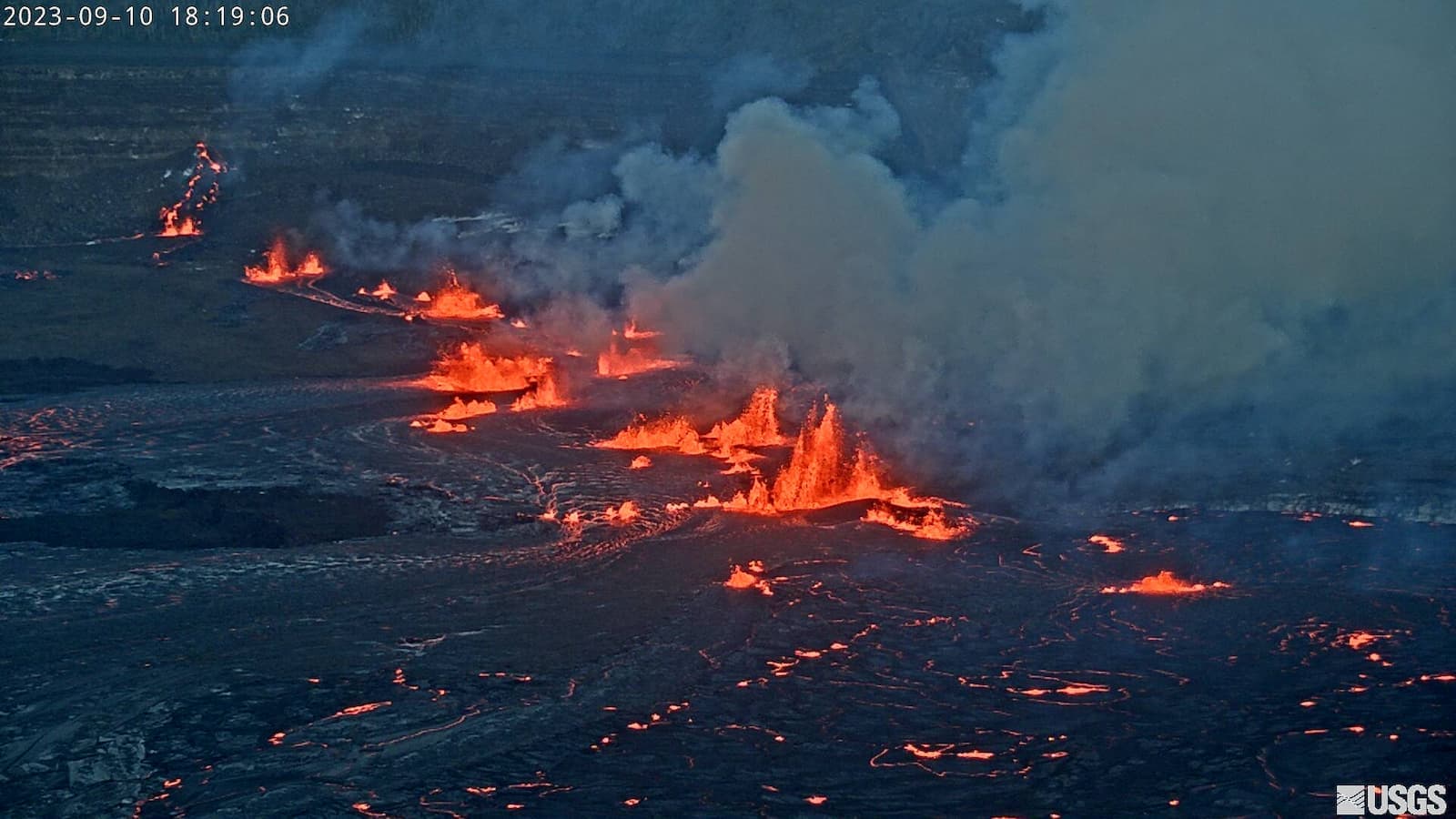
A few hours into the September 10 2023 summit eruption in the Hawaiʻi Volcanoes National Park. Image: USGS webcam.
Kilauea Activity Update for Tuesday, March 12th:
Activity summary: Kīlauea volcano is not erupting. Due to continued low rates of seismicity, HVO will issue weekly Kīlauea updates on Tuesdays until further notice.
Read the most recent update here.
Lava from the (now ended) 2022 Mauna Loa eruption
The 2022 Maunaloa eruption is over and there is no active lava visible on the surface. During nighttime spots of incandescence may remain near the vent, along channels, and at the flow front for days or weeks as the lava flows cool.
-> Current Mauna Loa eruption status: the Mauna loa eruption is over.
Big Island Lava Tours and how to see the lava yourself
Seeing the lava up-close-and-personal is an experience that few people ever forget. How close you can get to the lava depends on where the flow is active, and what lava viewing locations are accessible. Access to the flow could be restricted if local conditions are deemed unsafe or the path to the flow crosses private land. Most of the time the volcanoes on Hawaii erupt at a very calm pace (with ‘aloha’ if you will), and it is quite easy to get close to the action.
We give a very short summary of all options you have to see the lava, below:
- From up-close as it flows over the land and/or into the ocean. Conditions permitting, your options are:
- From a distance, e.g. with:
- No lava? no problem!
- Here is how to geek out on lava even when there is no ongoing eruption.
1: Hiking to the Lava: Guided Lava Tours and DIY (when possible)
Hiking to the lava is the best way to get up close. Sometimes, however, lava hikes are not possible because of no lava (there either is no lava flowing on the surface), or no access (access to the site of the eruption is restricted, too dangerous, or crosses private lands).
IF access to the flow is possible AND on public land you will be able to find several companies that offer guided hikes to the lava flow during daytime or at night.
We describe below:
- How to hike to the lava yourself, and
- When, why, and how to choose a guided Lava Lour.
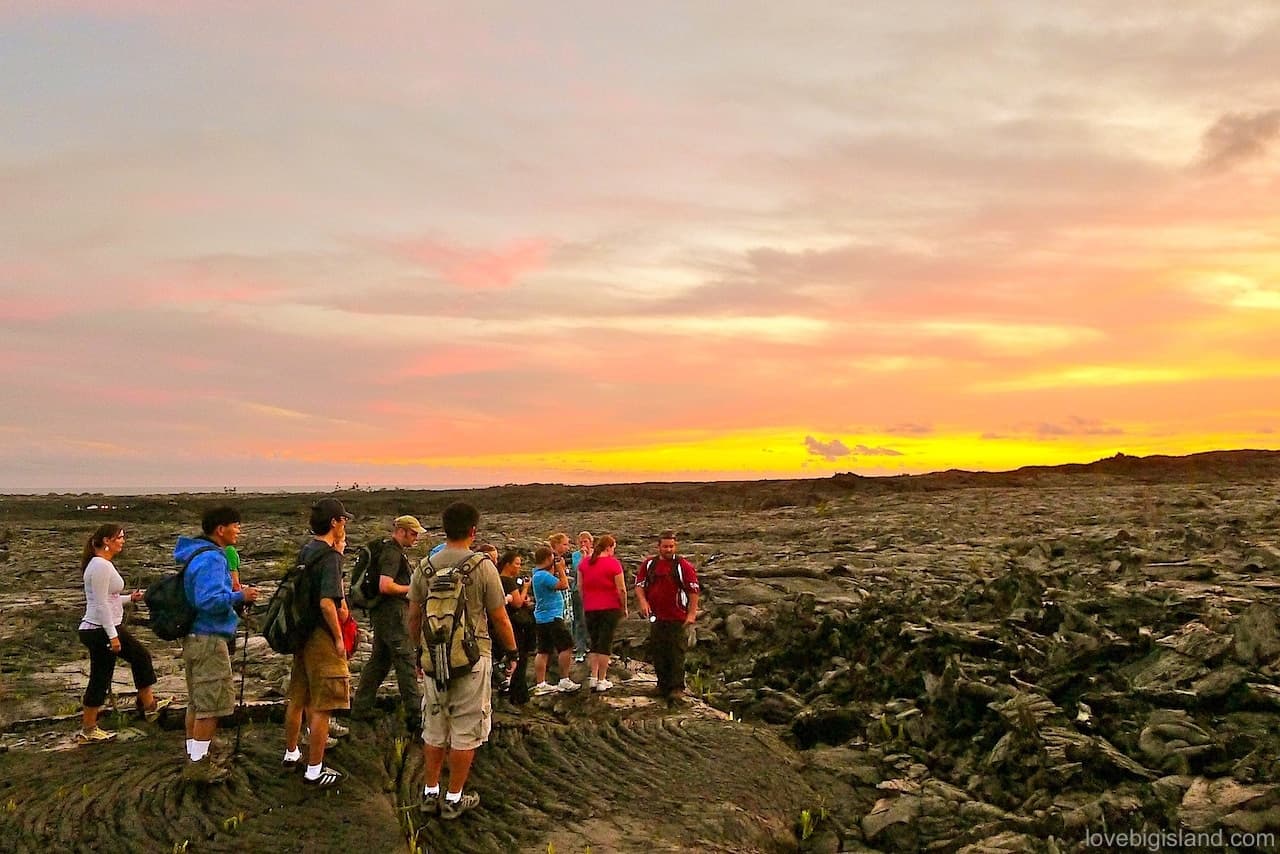
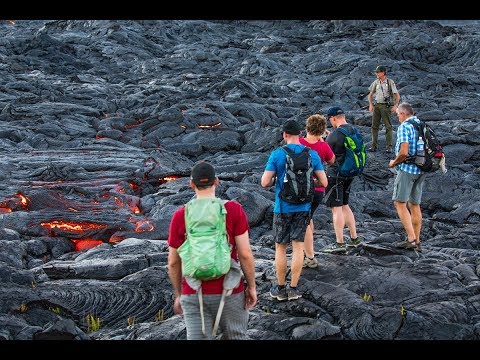
Hiking tours to the lava flow can be tiresome but are worth every drop of sweat!
Hiking to the lava yourself
Sometimes it is pretty straightforward to find your way to the lava yourself and it is good to remember that it is not always mandatory to join a lava viewing tour to see the lava. If you do plan for a DIY adventure please make sure to educate yourself on the risks, to dress properly, and to bring plenty of water and sunscreen. A good place to start doing this is by checking out our lava hiking safety chapter.
Besides safety, the most important distinction that determines whether you can hike out to the lava yourself is where the lava is flowing:
- Are the surface flows within the national park boundaries? Yay! If the park determines that access to the flow is safe you can go on a hike to see the lava. Because viewing conditions change on a daily basis you should look up the most recent information about the active surface flows shortly before you plan to see the lava yourself. The Hawaii Volcanoes National Park Visitor Center and the “what’s going on with the Volcano” web page of the Volcanoes National Park are good places to do so.
- Are the surface flows on privately owned lands? If the lava is outside of the park boundaries there is a good chance it is on privately owned lands and that you will be trespassing while hiking out. Make sure to get proper permission from the land owners before hiking up to these spots! By far the easiest way to see the lava in this case is to enlist a lava tour guide with proper permissions.
The following video by Ph.D. student-turned-filmmaker Tyler Hulett titled “Dawn of Fire” shows a time-lapse video of the slow-moving lava flows of the Kilauea volcano. This gives a good representation of what you might see when hiking to the lava:
This is one of our favorite videos to watch! It lets you get lost in the lava landscapes of the Kilauea volcano and even after dozens of repeat views we clicking back for more.
Big Island Lava Tours
Guided lava tours offer know-how, equipment, and access to restricted terrains where needed. Their guides are trained professionals that know the area intimately. The added value of using a lava tour guide is of course safety, but also getting to know the extremely interesting background information they can provide about the eruption, and, of course, the peace of mind of making a safe trek without getting lost.
These tours can last from 1 hour up to a whole day depending on how accessible the lava is. The hike almost always takes you over very uneven terrain it is important to have an honest conversation with the guides beforehand to make sure you are physically able to complete the hike.
A good option for a guided lava tour that explores the Hawaii Volcanoes National Park and stays in the park after dark to see the glow (when present) is the day-long “Volcano Unveiled” tour by Hawaii Forest & Trail:
Volcano Unveiled (in-depth volcano experience from Kona)
This experience takes you off-the-beaten path to journey through Hawaii Island’s incredible range of ecosystems and climate zones to learn all about volcanoes. An in-depth volcano experience on the Island of Hawaiʻi. National park certified guides share a mix of natural and cultural history about the island's formation, illuminating the stories behind the ever-changing landscape of our island home.
from:
$279
What is a suggested tour?Our suggested tours are hand-picked tours that receive consistent good reviews, give back to the community, and work hard to minimize their impact on the environment. Read more about these tours on our website.A larger list of outfitters that organize hikes to the lava can be found on the price comparison website hawaiiactivities1. These hiking tours are sometimes combined with other activities so make sure to thoroughly read the descriptions before booking.
Booking a lava hike tour far in advance is risky because at the time of your visit the lava may have stopped flowing. We strongly recommend to that you carefully review the cancellation conditions and, if they are strict, not to book these tours more than a few weeks in advance.
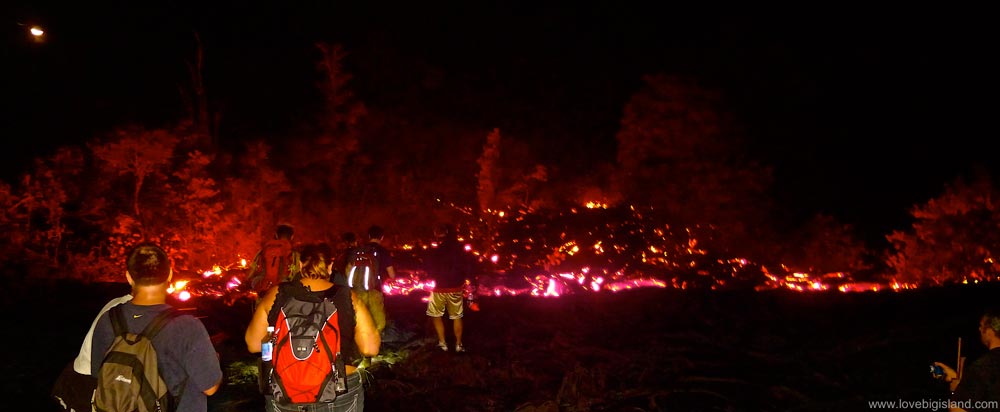
Visiting the Lava with a professional guide is a spectacular experience
2: Lava viewing from the ocean: lava boat tours (currently not possible)
If lava is flowing into the ocean you can enjoy viewing it from a close, safe distance by boat. Definitely a unique and thrilling experience!
Lava boat tours without limited entry approval from the US Coast Guard must keep a distance of 300 meters (984 feet) from the ocean entry point, and outside the designated safety zone (source). Under special circumstances tour operators are granted permission into the lava safety zone and can get closer to the point of ocean entry.
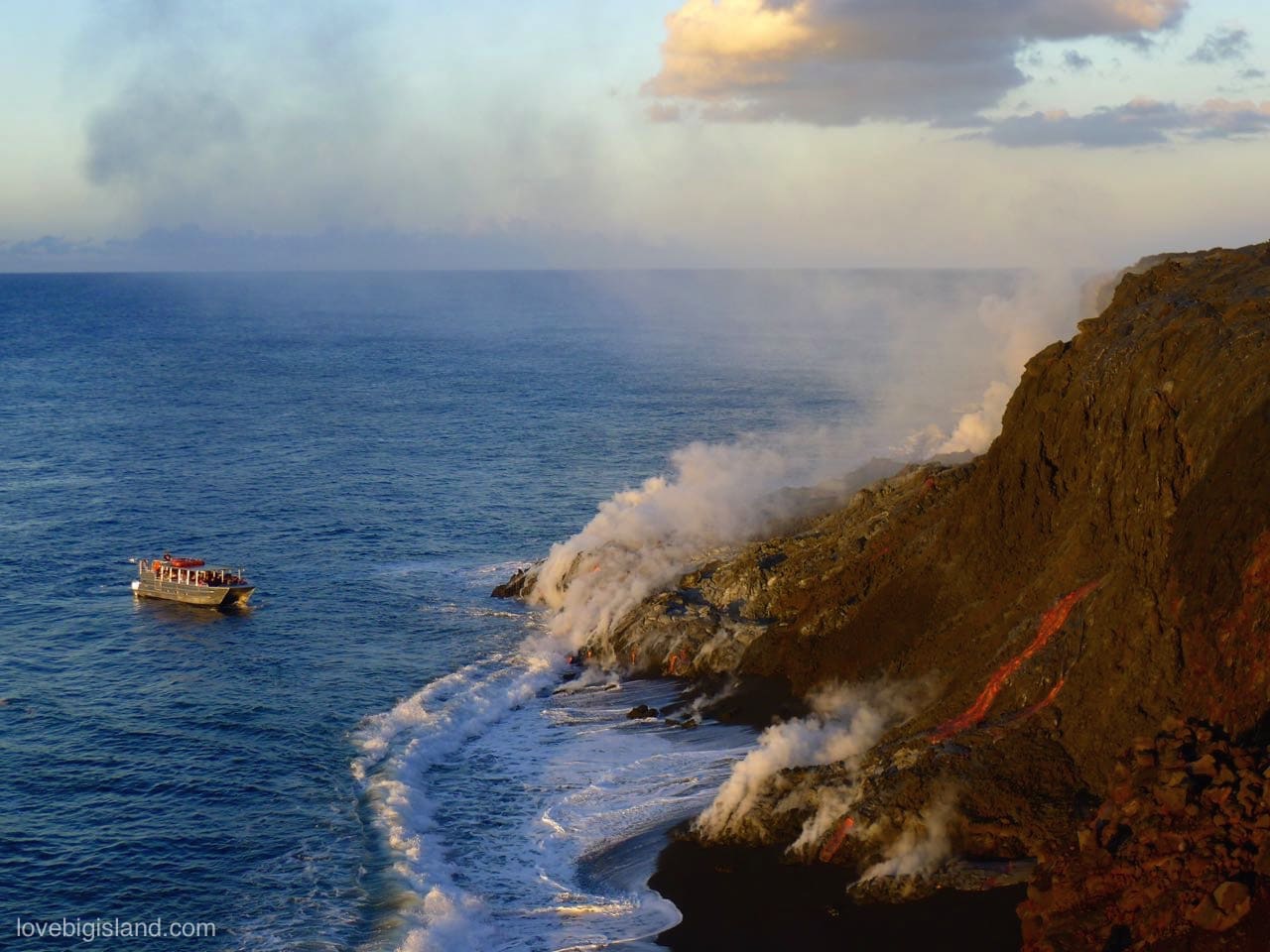
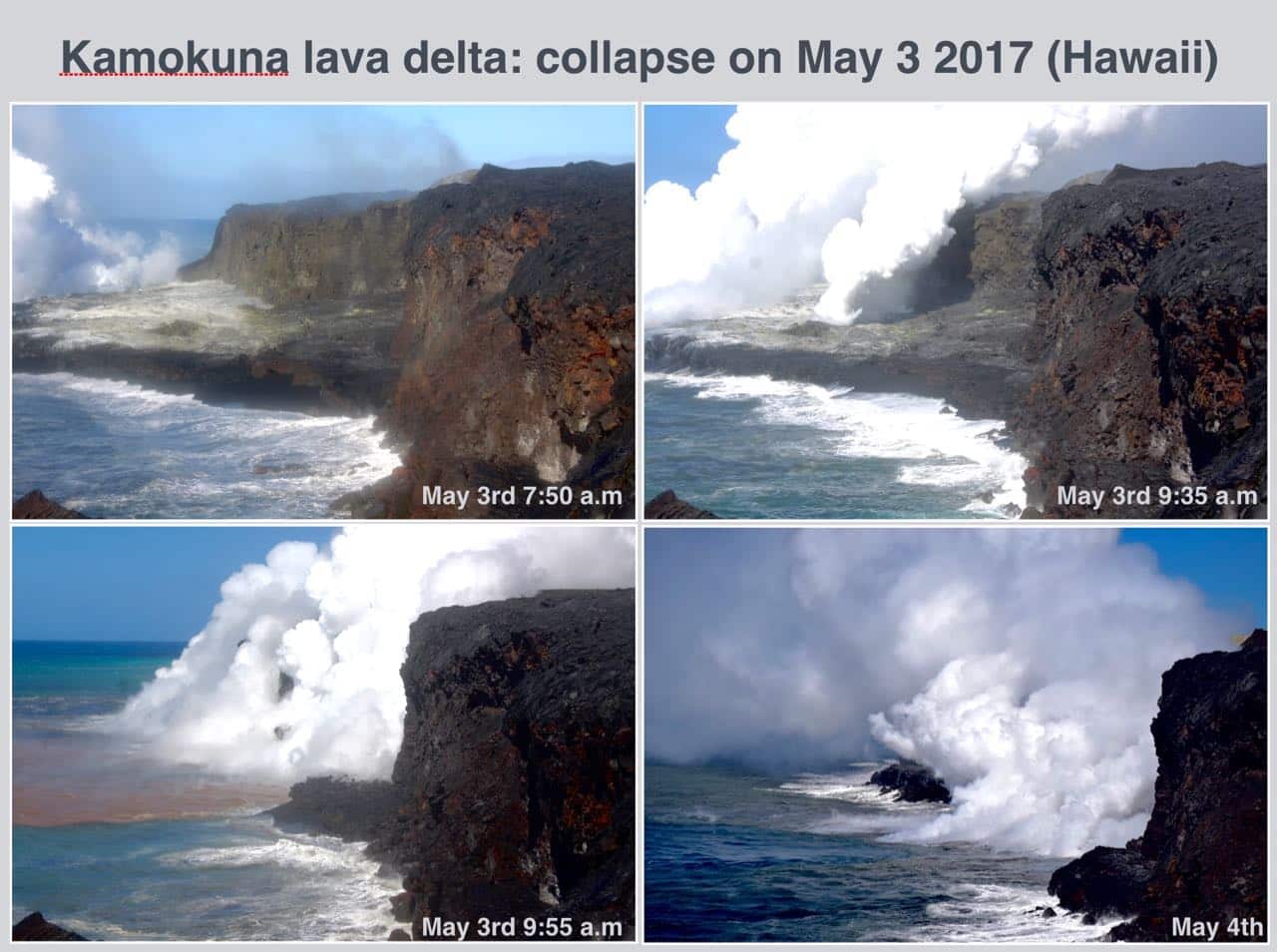
Lava enters the ocean while a lava boat gets close to the action. Photo taken in 2017 during the 61g Kamokuna ocean entry.
Safety and licensed lava boat tour operators
There are many possible risks when trying to see lava enter the ocean which we describe in our lava ocean entry safety guide and it is important that you choose your lava boat tour with care because of the many risks associated with seeing lava this way.
Make sure to always check if your tour operator is licensed to ensure that they possess the experience and training required to get you to the viewing area and back safely.
3: See the lava with a helicopter tour
Helicopter tours let you see the lava and volcanoes from above. A helicopter can get you close to a lot of action that is not accessible over land or water and gives you an impressive birds-eye perspective. Think, for example, about a look into the crater lake, seeing surface lava flows from the air, or lava burning through forests.
Helicopter tours are your best bet to see the lava when other ways such as a hike or boat tour are not possible because they are able to keep a safe distance while still offering an amazing perspective. If this is the case you should plan ahead because helicopter tours can fill up weeks in advance!
Tours that take you to see the lava depart from both Hilo and Kona – the ones from Hilo are shorter and more affordable. Still, helicopter tours are not cheap. The following tour from Hilo is an excellent way to see the current eruption activity.
Hilo Helicopter Tours: Lava, Rainforests, and waterfalls!
A Helicopter tour to see lava, rainforest and waterfalls. Discover what Kīlauea Volcano has left behind in the wake of its recent historic eruptive episode.
from:
$250
What is a suggested tour?Our suggested tours are hand-picked tours that receive consistent good reviews, give back to the community, and work hard to minimize their impact on the environment. Read more about these tours on our website.See also our own guide to helicopter tours on the Big Island for an overview of all helicopter tour operators and tour options.
4: Lava viewing at Public Viewing Areas
Most of the time when lava is flowing on the surface it is possible to see it at a safe distance from a public viewing area. From these areas active lava can be visible directly, or is accessible with a (short) hike. Public viewing opportunities change all the time but an example is the Steaming Bluff overlook of the Halemaʻumaʻu crater in the Hawaii Volcanoes National Park.
How to see the glow in the Halemaʻumaʻu Crater (last updated: September 17, 2023 – the eruption has ended)
- The eruption of the Kilauea Volcano within the Hawaiʻi Volcanoes National Park has ended.
- One of the best viewpoints is the Kilauea overlook point and anywhere along the caldera rim to Kūpinaʻi Pali. The parking lot here can fill up quickly though, so be prepared to go to a quieter overlook if the park is very busy.
- Another good place is from the Jaggar Museum. The museum itself is now closed but the parking lot is still opened. From there, take the sidewalk to the right as far as the fencing allows.
- The Keanakākoʻi viewing area is closed due to unsafe air quality. That big plume you see contains sulfur dioxide, other gases and shards of volcanic glass that pose a significant risk to anyone if inhaled. Stay safe and stay out of closed areas.
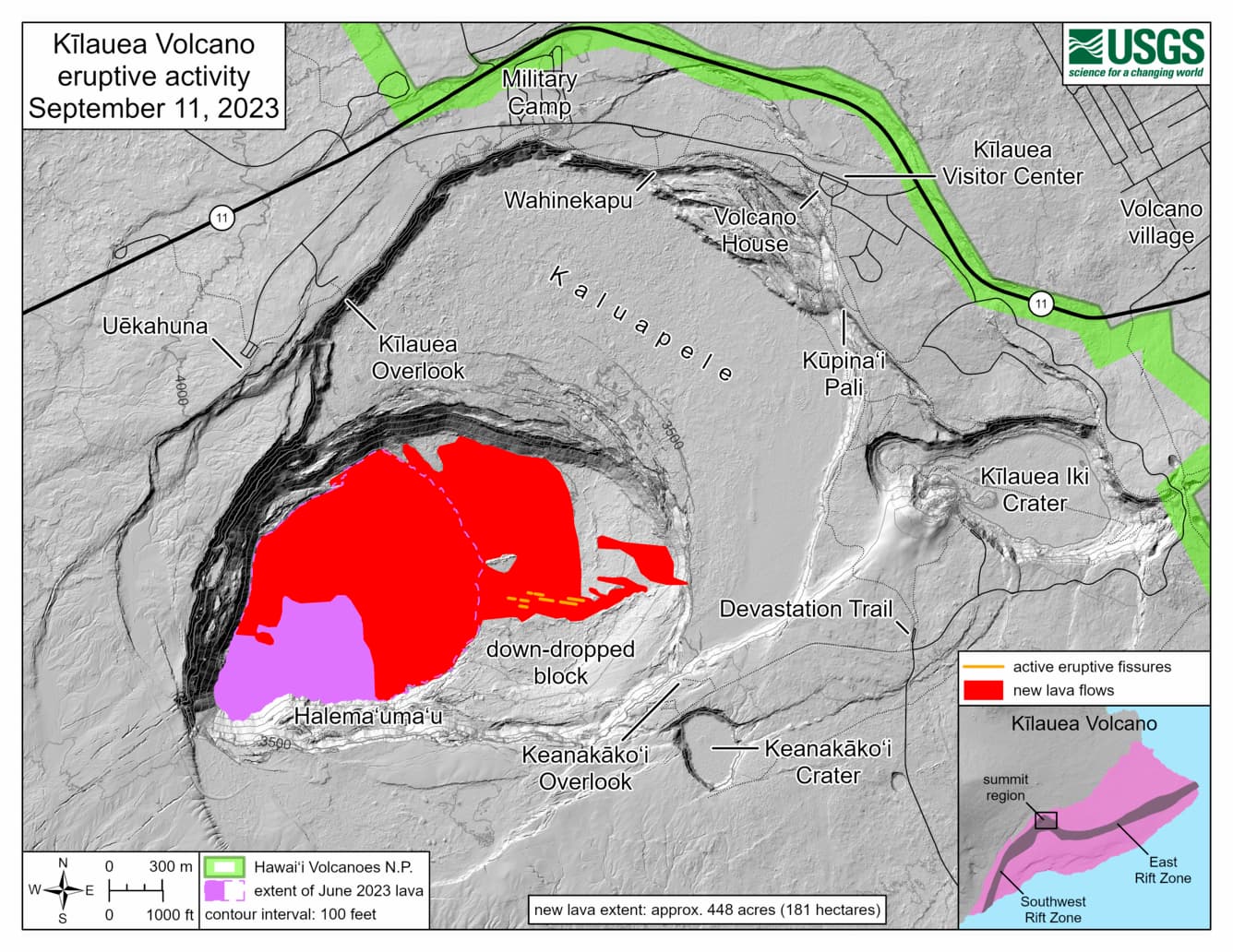
This map shows the location of the eruptive vent and the lava lake as they were on September 11, 2023, as well as several viewpoints. Image: USGS
5: No lava? No problem! Here is how to geek out on lava even when there is no ongoing eruption.
Even when there are no surface flows, you can still engage in extremely interesting activities to learn about lava and the cultural and natural history of the volcanoes of Hawaiʻi. After all, the Big Island is 100% created by volcanic eruptions, and you don’t need to see red-hot lava to be amazed by all the remnants of its creation! Here are some favorite options:
- See the aftermath of the 2018 LERZ eruption
- Or go explore lava tubes and other volcanic remnants
See the aftermath of the 2018 LERZ eruption
The 2018 Lower East Rift Zone (LERZ) eruption zone is a very interesting place to visit, as it offers a sobering perspective on the impact of eruptions on the local people and ecology of the island.
Starting in Pahoa you can stop in for a look at the Pahoa Lava Zone Museum. This is a small building featuring artifacts from the last eruption, photographs taken by locals, and exhibits from the now-abandoned Jaggar museum.
From Pahoa you can then follow Highway 132 to the South/East. This road was only recently rebuild over the still-cooling lava flows that covered it in 2018 and it provides some of the best impressions. You can follow this road up to a point that used to be called “4 Corners”, but now is only one corner and the end of the road. Be careful with parking and touching the ground because the rocks in the area can still be very hot. From here you can see a panorama of miles of new lava rock. With clear weather you can see all the way to the ocean.
Visit the Leilani Estates
You have probably heard about Leilani Estates, ground zero of the 2018 LERZ eruption and home to Ahu‘aila‘au (at the time known simply as “Fissure 8”). Leilani Estates is still a residential neighborhood and all roads except for Leilani Avenue are private. You cannot park along Leilani Avenue and the people living here don’t appreciate what they perceive as disaster tourism. Please show consideration for the residents and don’t drive into the neighborhood. You can see enough of the area while following Highway 130 to the South from Pahoa, for example at Lava Tree State Monument.
Following Hwy 130 further South brings you to Kalapana, after which you can drive up Highway 137 to Pohoiki which was nearly covered by the Leilani Eruption, and has massively changed as a result. This is one of our favorite scenic drives on the island!
Finally, you can also explore some of the properties that were (partially) inundated by lave during the 2018 LERZ eruption as part of a guided tour. See the LERZ4 website for more information.
No lava on the surface? No worries!
A visit to the Hawaii Volcanoes National Park and/or one of the many lava tubes on our island are great places to start if you want to immerse yourself in our volcanoes.
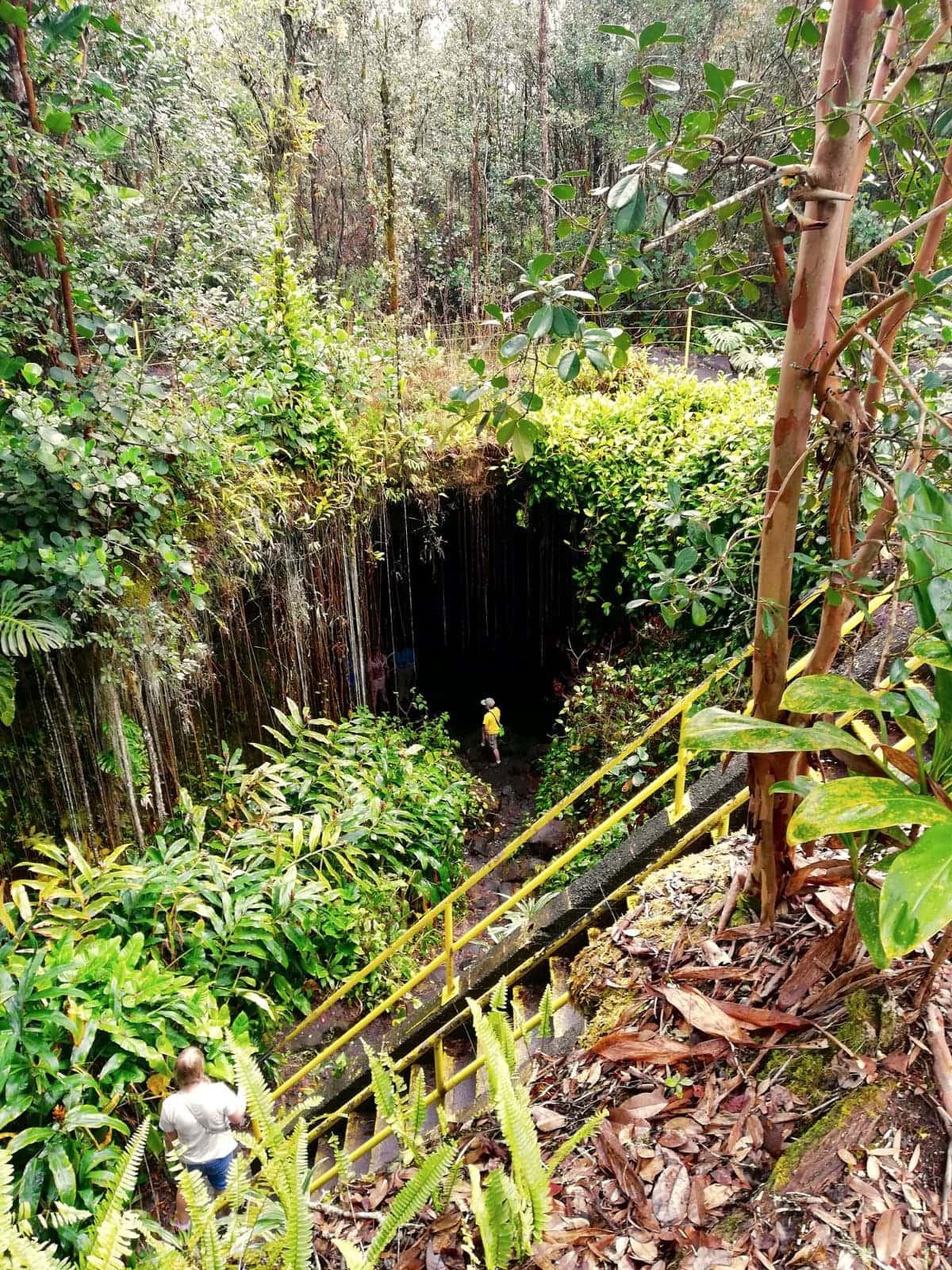
Climb down a steep ladder to get to the lava tube entrance of the Kaumana Caves close to Hilo
Guided volcano tours are perhaps an especially good option when there is no eruption. The advantage of these tours is that their guides are expertly trained and provide a wealth of volcano-related information. Volcano-related tours generally take you on fascinating hikes through the park, private lava tubes, and many other stunning places that are difficult to find or reach without a guide.
Volcano Unveiled (in-depth volcano experience from Kona)
This experience takes you off-the-beaten path to journey through Hawaii Island’s incredible range of ecosystems and climate zones to learn all about volcanoes. An in-depth volcano experience on the Island of Hawaiʻi. National park certified guides share a mix of natural and cultural history about the island's formation, illuminating the stories behind the ever-changing landscape of our island home.
from:
$279
What is a suggested tour?Our suggested tours are hand-picked tours that receive consistent good reviews, give back to the community, and work hard to minimize their impact on the environment. Read more about these tours on our website.We list some very well-respected tour operators that offers these tours in our volcano tours section.
Ongoing and historic eruptions
There are five (!) active volcanoes in the state of Hawaiʻi: four on the Big Island (Mauna Loa, Kilauea, Hualalai and, still under water but ever growing, Kama‘ehuakanaloa) and one on Maui (Haleakalā). The Kilauea volcano is one of the most active volcanoes in the world and is currently erupting.
We summarize for you below the most recent eruptions:
Kilauea
- The September 2023 Kilauea summit eruption
- The June 2023 Kilauea summit eruption
- The September 29, 2021 eruption in the Halemaʻumaʻu crater
- The December 20, 2020 eruption in the Halemaʻumaʻu crater
- The lower East Rift Zone (LERZ) eruption (2018)
- The 61g eruption (2016 – 2018)
- 7 earlier eruptions
- How to best check the eruption progress yourself (online resources)
Mauna Loa:
- The November 27, 2022 Mauna Loa eruption
1: The September 2023 Kilauea summit eruption
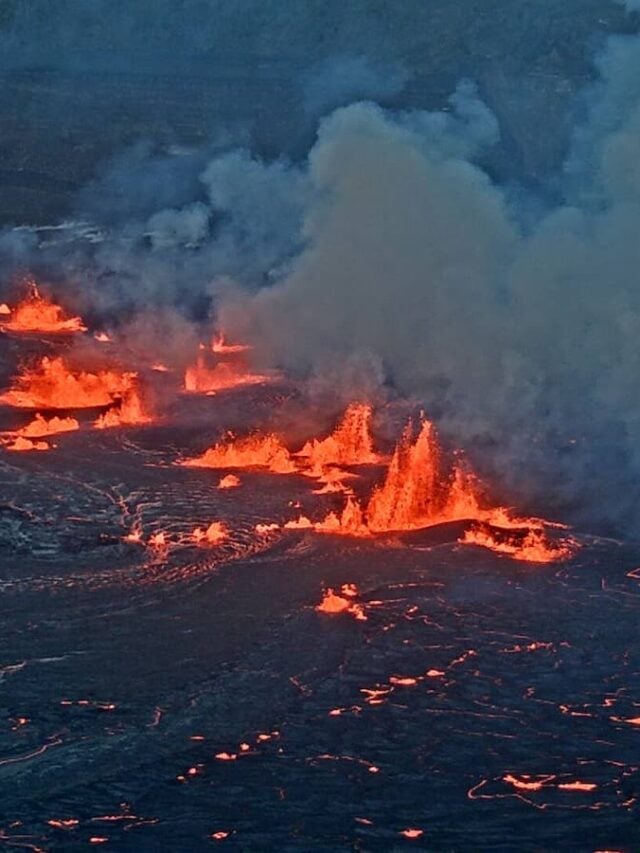
The newest eruption that began Sunday, September 10, started as a lava fountains bursting from within Halemaʻumaʻu. It ended on September 16, 2023.
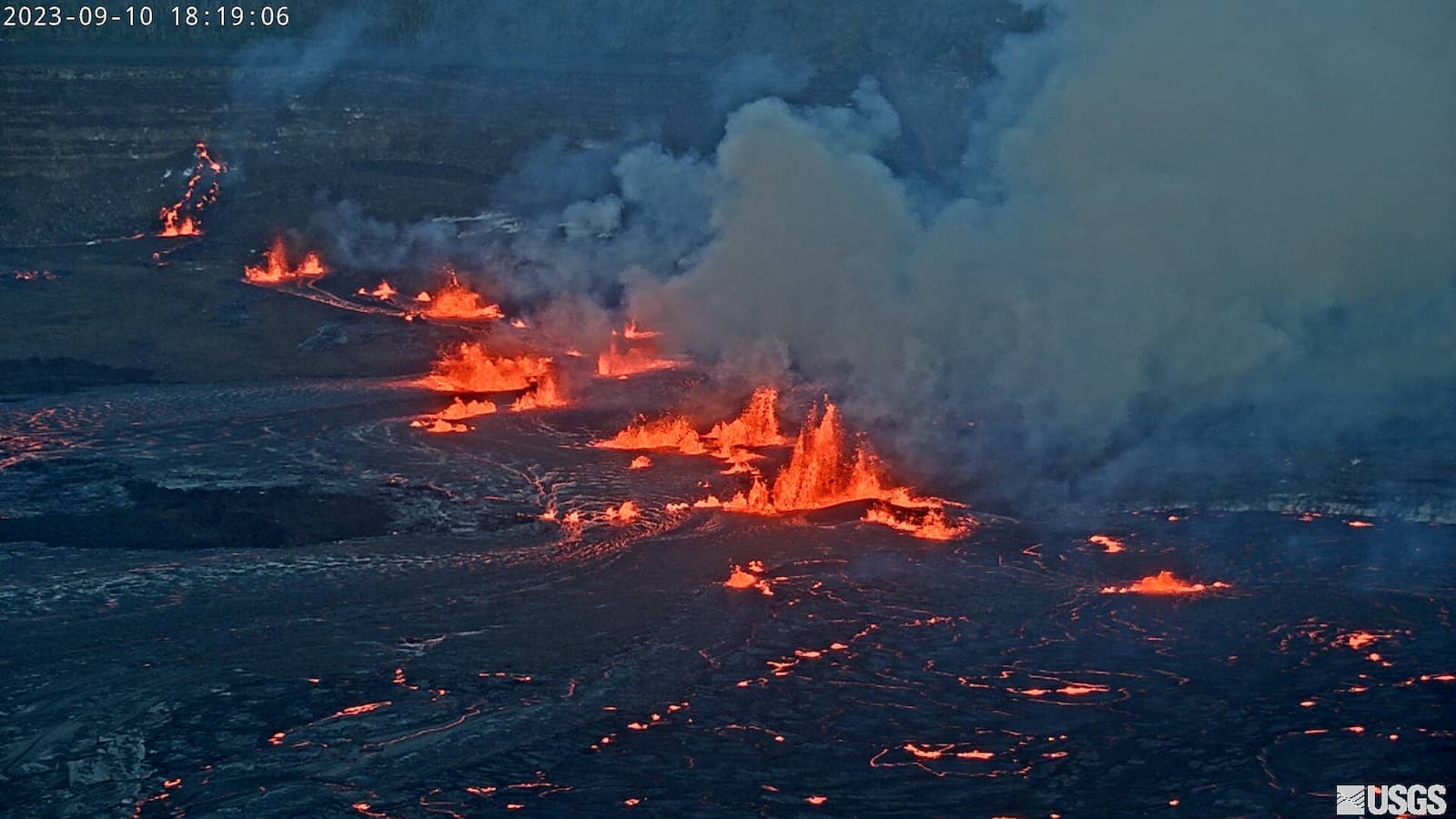
See a short summary of this spectacular but short summit eruption here.
2: The June 2023 Kilauea summit eruption
At approximately 4:43 a.m. HST on June 7, 2023, a new eruption started within Halemaʻumaʻu crater in Kīlauea’s summit caldera, within Hawai‘i Volcanoes National Park.
The eruption ended on the afternoon of June 19th. Seismic tremor—a signal resulting from subsurface fluid movement, and commonly associated with eruptive activity—started dropping around 4:00 p.m. Also, tiltmeters in the summit region detected a quick transition to inflationary tilt after tracking steady deflationary tilt since the morning of Saturday, June 17.
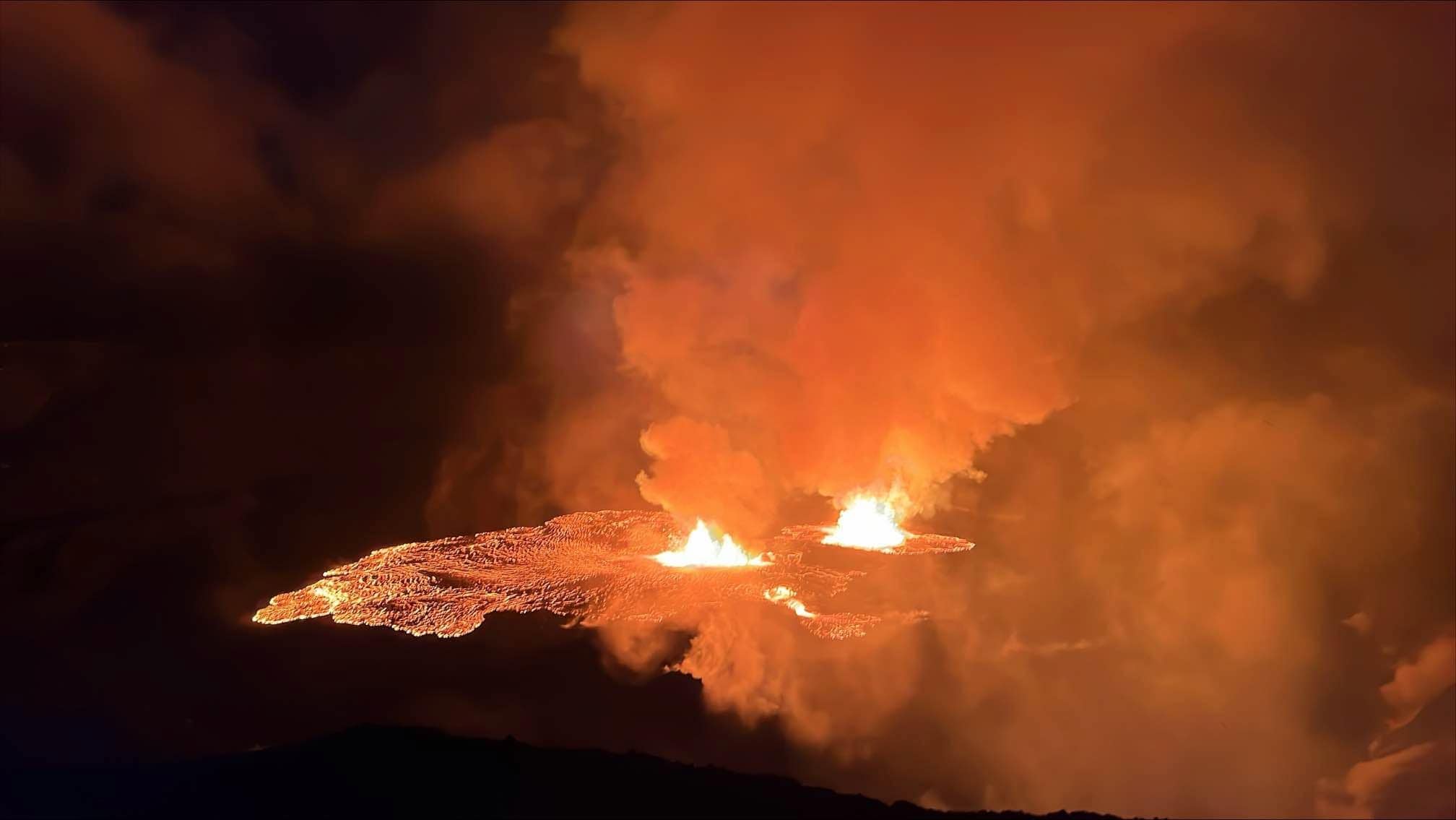
Kīlauea volcano started a new eruption in the Halemaʻuma crater at approximately 4:44 a.m. HST on June 7, 2023. Image credit: USGS
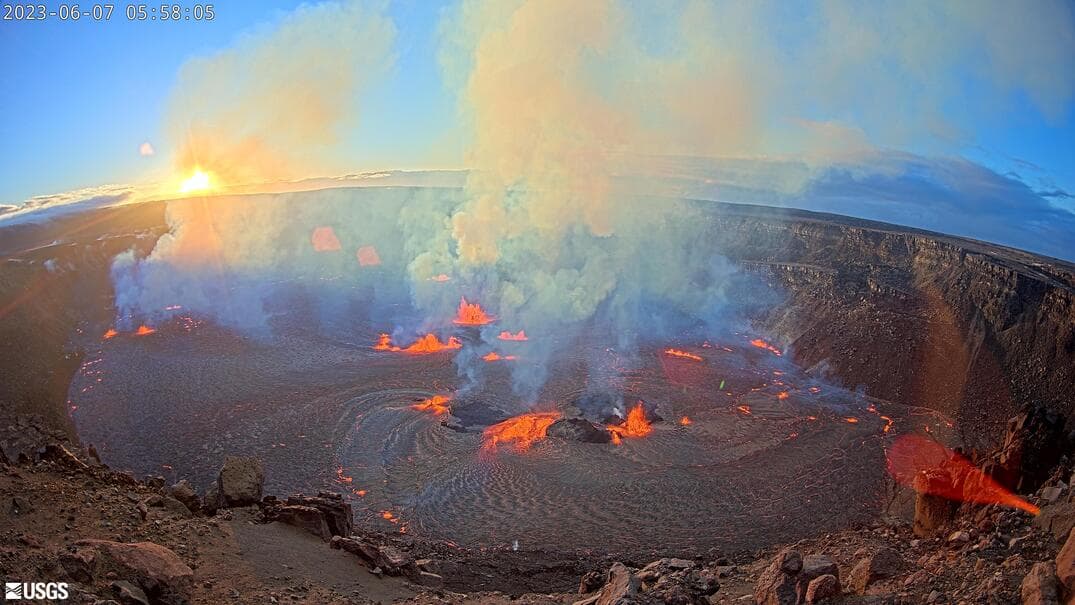
A first sunrise for the June 7, 2023 summit eruption in the Hawaiʻi Volcanoes National Park.
3: The September 29, 2021 eruption in the Halemaʻumaʻu crater [eruption ended as of March 7, 2023]
This eruption took place between September 29, 2021 and March 7, 2023.
No homes or infrastructure were threatened, and excellent views of her massive glowing, churning, flowing, fountaining lava lake were available from numerous overlooks along Kīlauea caldera rim for many months. The crater floor rose around 43 feet (13 meters) during the last 3 months and the full extent of new lava was mapped at 292 acres (118 hectares)!
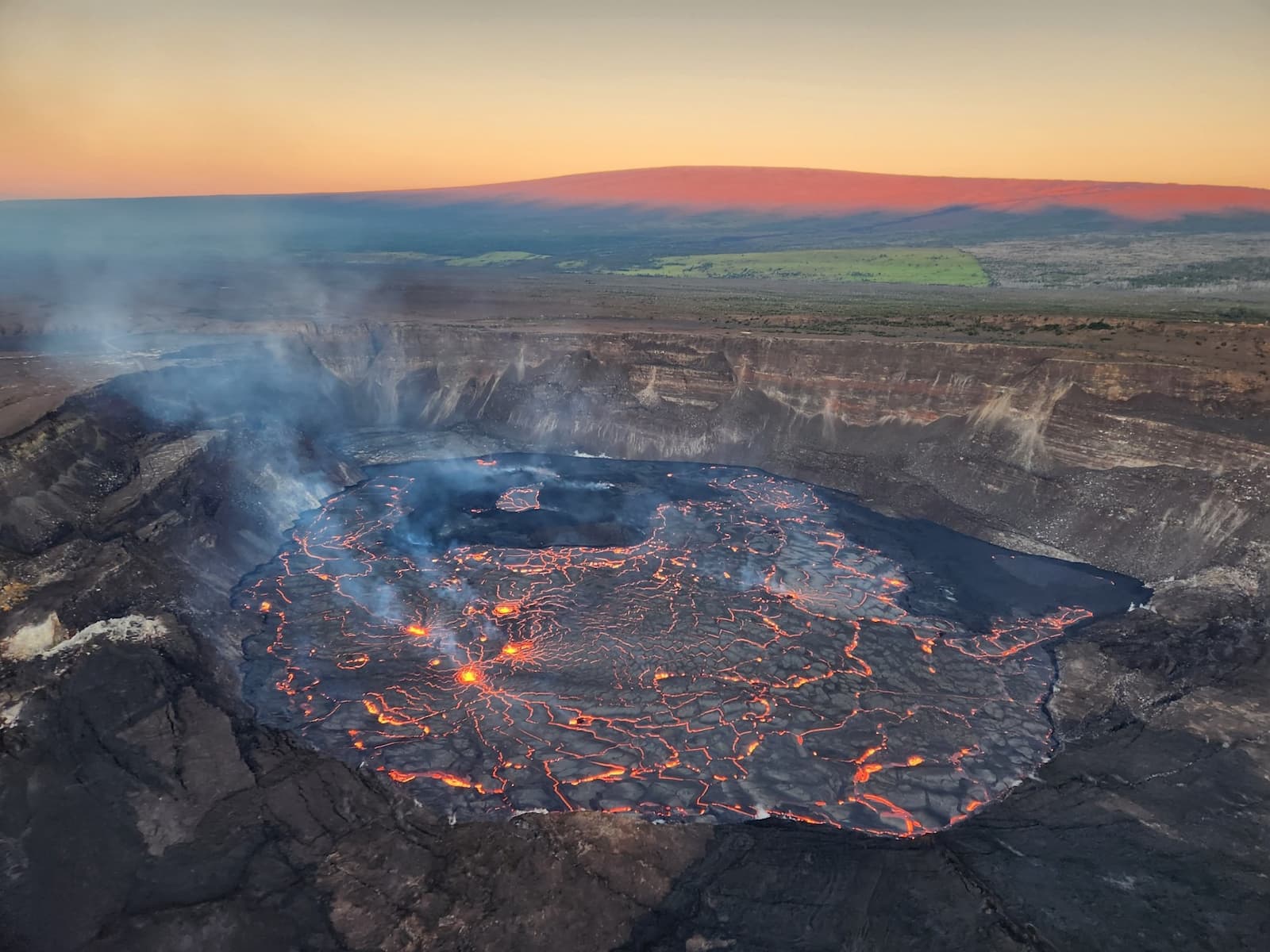
Aerial view of the 2023 eruption within Halema‘uma‘u crater. The eruption remained confined to Halemaʻumaʻu crater in the summit caldera and lava flows have inundated much of the crater floor (which is nearly 300 acres or 120 hectares). Mauna Loa is illuminated in the morning light in the background. Image credit: USGS.
4: The December 20, 2020 eruption in the Halemaʻumaʻu crater [ended]
This recent eruption within the Kīlauea’s summit caldera lasted from December 20, 2020 to mid-May 2021. The water lake that was previously forming in Halemaʻumaʻu disappeared and was replaced by a lake of lava. As of May 26, the Hawaii Volcano Observatory announced that the Kilauea Volcano is no longer erupting. Lava supply to the Halemaʻumaʻu lava lake has ceased and sulfur dioxide emissions have decreased to near pre-eruption background levels.
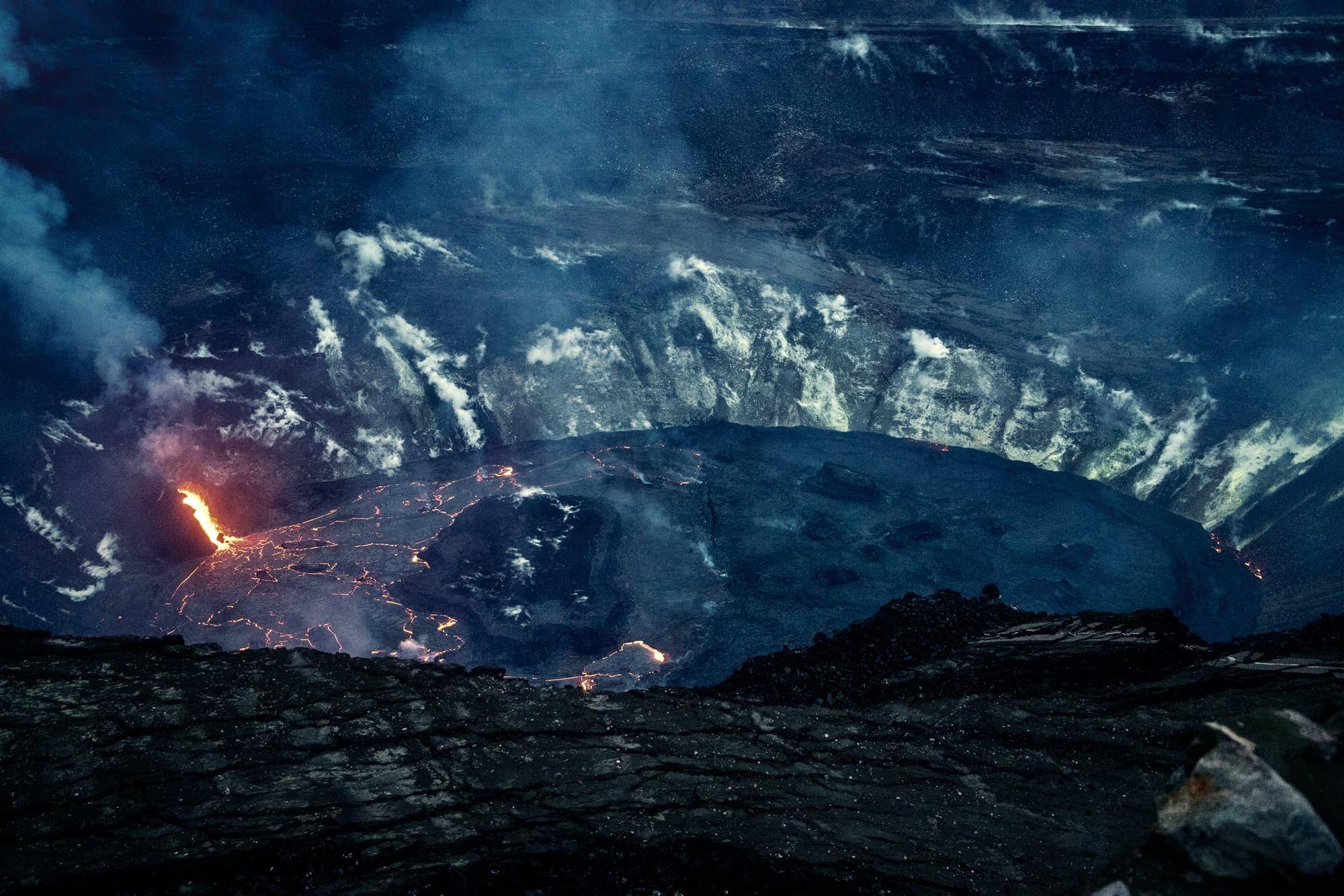
This photo, taken on January 19 2021, shows the slowly filling up Halemʻaumaʻu crater lava lake. This photo was taken by a HVO scientist from a for the public inaccessible part of the park. USGS photo by. H. Dietterich (public domain).
5: Kīlauea Volcano lower East Rift Zone / Lower Puna eruption [2018 LERZ]
The Kīlauea Volcano lower East Rift Zone (LERZ) eruption in lower Puna was preceded by the collapse of the Puʻu ʻŌʻō vent on April 30th and the onset of the draining of the Halamaʻumaʻu lava lake on May 2nd. On the 3rd of May 2018 several fissures in the Leilani Estates subdivision opened, marking the start of this new eruptive episode that didn’t stop until early September 2018: the Lower East Rift Zone eruption.
You can also find a really interesting summary of the LERZ eruption summarizing things that we have learned from this event in the journal of Science (our tip: start by browsing the figures and reading the chapter called “Synthesis of 2018 activity” to get a good overview of the article contents). Another good place to learn more is by this cool narrative put together by the USGS.
The 2018 Lower East Rift Zone eruption in numbers:
- 13.7 square miles of land inundated by lava (the surface of almost 6631 football fields!)
- 875 acres of new land created by ocean entries
- 716 dwellings destroyed by lava
- ~30 miles of roads covered by lava
- ~1 billion cubic yards of lava erupted (enough to fill at least 320,000 Olympic-size swimming pools!)
- ~60,000 earthquakes between April 30–August 4, 2018
Videos of the 2018 LERZ eruption
The best way of getting to know a volcano is to see it, and the same goes for individual eruptions. Many impressive and educational videos have been made about this eruption, but we highlight 1 here
ʻAilaʻau: Forest Eater
This is a short film by Lance Page from Page Films that takes viewers on a journey through the infamous 2018 eruption of Kilauea’s lower east rift zone. No text but 8 minutes of mesmerizing footage and sounds that make you feel like you were there. Highly recommended!
6: The 61g lava flow [2016-2018]
A breakout from the east flank of Pu‘u ‘Ō‘ō on May 24, 2016 marked the end of another fissure eruption on the flank of the Puʻu ʻŌʻō which started almost two years earlier on June 27, 2014. This was just in time for nearby residents, as the June 27th flow came very close to reaching the city of Pahoa.
This breakout was later named the 61g flow (Episode 61, “g” lava flow). It reached the base of the Pulama Pali by the end of June and entered the sea at Kamokuna on July 26, 2016.
Between July 2016 and March 2018 it was possible to see the ocean entry of lava flow 61g close to Kamukuna both from land and from the sea. In March the up-to-then stable ocean-entry plume stopped being visible, and the Puʻu ʻŌʻō crater collapse on April 30th, 2018 marked the end of the 61g eruption.
The 61g eruption was especially easy to see because the lava was slow-moving and accessible from both sides within the park. The presence of a nearby gravel road made the hike to the flow relatively easy and even allowed bike rentals to operate!
Past eruptions between 1924 and 2018
Kilauea is the youngest and most active Volcano in the state of Hawaii. The oldest lava flows belonging to Kilauea are dated between 210,000 and 280,000 years ago which is pretty young for a volcano. Its eruptions over the last 1000 years have shaped the whole south east side of the island and cover about 90% of its surface.
The last 100 years of volcanic activity can be divided in 7 eruptions. Click on the link in each episode to read an interesting summary on the USGS website.
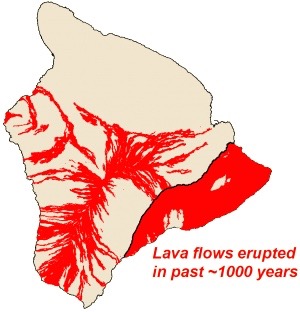
The Island of Hawai‘i with lava flows erupted in approximately the past 1,000 years shown in red. Image credit: USGS
- The May 1924 explosive eruption of Kīlauea in Halemaʻumaʻu (with the most powerful explosions at Kīlauea since the early 19th century)
- The Kīlauea 1955 Lower East Rift Zone Eruption in Lower Puna (the first eruption in historic times to occur in any populous area in a U.S. territory)
- The 1959 eruption of the Kīlauea Iki Crater (580 m (1,900 ft) high lava fountains!)
- The 1960 Kapoho eruption (when barriers were built in an attempt to divert lava flows)
- The 1969-1974 Mauna Ulu Eruption (with lava falls higher than Niagara)
- The Kīlauea’s summit eruption, 2008 – 2018 (lava lake viewing at the summit!)
- The 1983 – 2018 Pu‘u ‘Ō‘ō Eruption (read more about the latest two episodes below)
Did you know the air force once bombed a lava flow that threatened Hilo in 1935? Read about the Volcanic History of Hawaii in our blog if you want to learn more about the history of all 6 Big Island volcanoes, or the chapter below to learn about the most recent eruptive episodes of the Kilauea volcano:
4: Best online resources to monitor the eruption progress:
You can find a plethora of information about ongoing eruptions online, though not all of it is correct. Unfortunately, many news outlets over-sensationalize events for their own profits, which leads to a lot of misinformation.
Two official (USGS) resources that we keep an eye on and that can help you keep up-to-date with the status of possible ongoing eruptions are:
- The daily Kilauea volcano lava flow update
- The often updated USGS multimedia gallery.
The November 27, 2022 Mauna Loa eruption
The 2022 Maunaloa eruption is over and there is no active lava visible on the surface.